


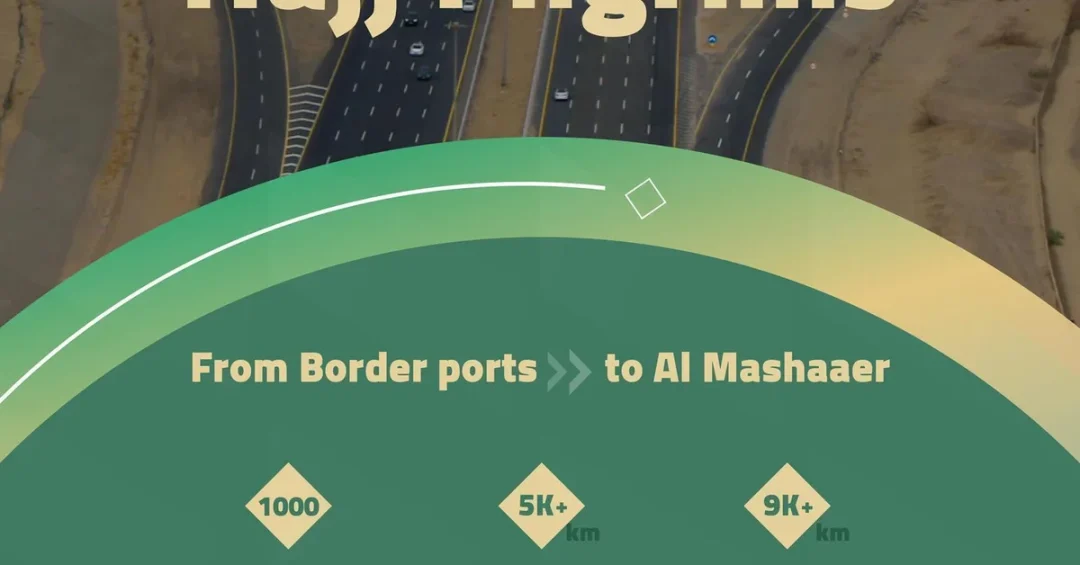
Riyadh, May 08, 2024: The Roads General Authority of Saudi Arabia has announced its full preparedness to welcome and assist pilgrims arriving through land ports for the Hajj rituals, according to a news release from the Saudi Press Agency. These arrangements are part of the Kingdom’s initiatives to improve and offer the required services for those performing the Hajj, ensuring a safe and smooth journey for the millions expected to participate.
Context and Background
Saudi Arabia’s commitment to serving Hajj pilgrims is a cornerstone of its role as the Custodian of the Two Holy Mosques. The Roads General Authority, tasked with the planning and maintenance of the Kingdom’s extensive road network, has implemented a comprehensive plan to ensure that all routes leading to the holy sites are prepared. A World Bank report ranks Saudi Arabia’s road network first globally in terms of connectivity, a testament to the Kingdom’s ongoing investment in infrastructure. This year’s preparations are particularly significant as the Kingdom continues to expand its capacity to welcome pilgrims from around the world, aligning with the goals of Vision 2030 to enhance the experience of visitors and strengthen the Kingdom’s position as a global hub.
Key Details of the Road Maintenance
The Roads General Authority has completed extensive maintenance on the roads leading to the holy sites, covering more than 5,000 kilometers. Over 9,000 kilometers of roads were inspected to ensure their safety and quality. The maintenance work included the installation of more than 9,000 linear meters of concrete and metal barriers and over 700 kilometers of road striping. Additionally, more than 3,500 warning and guide signs were installed, and over 1,000 bridges were inspected. Repairs were made to over 1,000 linear meters of expansion joints, and road crews removed more than 400,000 cubic meters of sand dunes to ensure safe and smooth roads for the pilgrims. These measures are part of ongoing projects focused on improving the Kingdom’s road network, which is vital for boosting connectivity among the holy sites.
Implications for Pilgrims and Beyond
These extensive preparations are crucial for the safety and comfort of pilgrims, who rely on the road network to travel between the holy sites. The removal of sand dunes and the installation of barriers and signs are designed to prevent accidents and guide drivers effectively, especially in the harsh desert conditions. The inspection of bridges ensures structural integrity, while the repair of expansion joints prevents potential hazards. By ensuring smooth travel, Saudi Arabia not only fulfills its duty to its guests but also strengthens its image as a modern, efficient, and hospitable nation. The improvements also benefit the local population and the broader economy, as the road network is essential for trade and daily transportation, but especially for the millions of pilgrims who arrive each year.
Vision 2030 Alignment
These road readiness measures are a clear demonstration of Saudi Arabia’s commitment to Vision 2030, which aims to increase the capacity to host Umrah and Hajj pilgrims and improve the quality of services provided. The Kingdom’s investment in infrastructure, including the road network, is a key pillar of this vision, ensuring that the two holy mosques and the surrounding holy sites are accessible to all. As the world’s leading road network according to the World Bank, Saudi Arabia continues to set benchmarks in connectivity and safety. Through these efforts, the Kingdom not only honors its historical role but also looks forward to a future where the pilgrimage experience is seamless and spiritually uplifting for all.
20 Questions
Q1. What has the Roads General Authority announced?
A1. The Roads General Authority announced its full preparedness to welcome and assist pilgrims arriving through land ports for the Hajj rituals, ensuring safe and smooth travel.
Q2. According to a World Bank report, how does Saudi Arabia’s road network rank globally?
A2. The World Bank report ranks Saudi Arabia’s road network first globally in terms of connectivity, highlighting the Kingdom’s advanced infrastructure.
Q3. How many kilometers of roads were maintained for the Hajj season?
A3. The Roads General Authority completed extensive maintenance on roads leading to the holy sites, covering more than 5,000 kilometers.
Q4. How many kilometers of roads were inspected?
A4. Over 9,000 kilometers of roads were inspected to ensure their safety and quality for pilgrims.
Q5. What type of barriers were installed?
A5. More than 9,000 linear meters of concrete and metal barriers were installed to enhance safety.
Q6. How much road striping was added?
A6. Over 700 kilometers of road striping was applied, improving lane markings and guidance.
Q7. How many warning and guide signs were installed?
A7. More than 3,500 warning and guide signs were installed to assist pilgrims.
Q8. How many bridges were inspected?
A8. Over 1,000 bridges were inspected to ensure structural integrity.
Q9. How many linear meters of expansion joints were repaired?
A9. More than 1,000 linear meters of expansion joints were repaired to maintain road quality.
Q10. How much sand was removed from the roads?
A10. Road crews removed more than 400,000 cubic meters of sand dunes to ensure clear pathways.
Q11. Why is the road network important for pilgrims?
A11. The road network connects the holy sites, enabling pilgrims to travel smoothly and easily between them.
Q12. What is the purpose of the comprehensive plan by the Roads General Authority?
A12. The plan aims to ensure the safety and comfort of pilgrims, providing necessary services during Hajj.
Q13. How does this road maintenance benefit the broader community?
A13. Improved roads enhance daily transportation, trade, and connectivity for residents and businesses.
Q14. What is the significance of the World Bank ranking?
A14. The first-place ranking underscores Saudi Arabia’s leadership in infrastructure development and connectivity.
Q15. How does this initiative align with Vision 2030?
A15. It supports Vision 2030’s goal to enhance the experience of pilgrims and improve services.
Q16. What challenges are addressed by removing sand dunes?
A16. Sand dunes can obstruct roads and create hazards; their removal ensures safer, clearer routes.
Q17. How does installing barriers improve safety?
A17. Barriers prevent run-off-road accidents and separate traffic, reducing collision risks.
Q18. What does the inspection of bridges entail?
A18. Inspection involves checking structural integrity to ensure they can handle heavy traffic.
Q19. How long did the maintenance work take?
A19. The article does not specify duration, but it was completed in preparation for the Hajj season.
Q20. What is the role of the Saudi Press Agency in this announcement?
A20. The Saudi Press Agency disseminated the official news release, ensuring transparency and trust.
Reader Feedback
We value your thoughts. Please share your feedback on this article.
Your feedback helps us improve our coverage.