


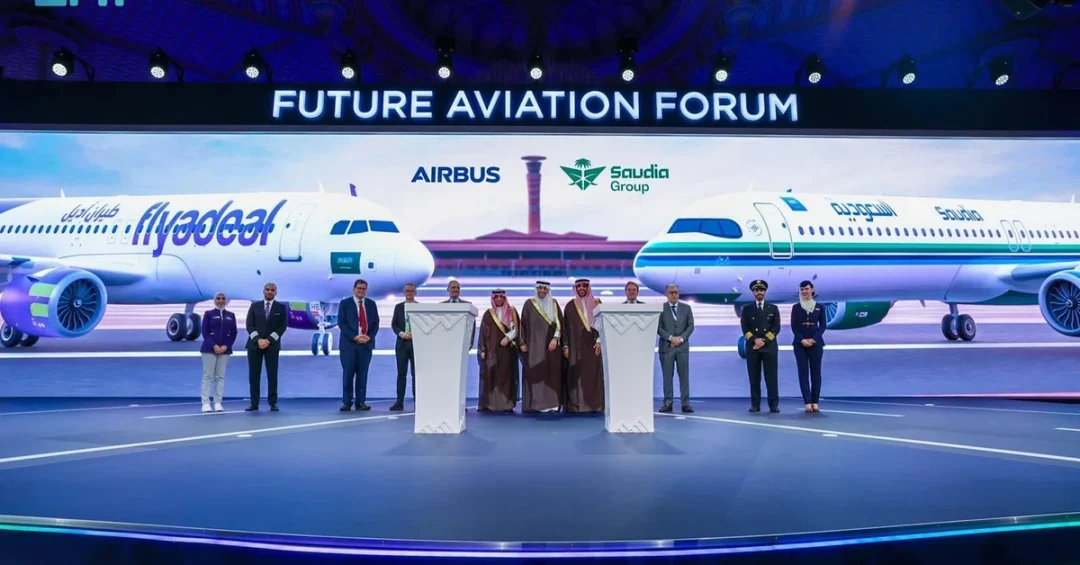
Saudi Arabia signed 16 agreements, memoranda of understanding (MoUs), and records of discussions in air transport services during the Future Aviation Forum 2024, which concluded on May 22 in Riyadh. The forum, organized by the General Authority of Civil Aviation (GACA), brought together more than 8,500 experts and leaders from 130 countries under the theme “Elevating Global Connectivity.” The agreements are set to enhance the Kingdom’s position as a global logistics hub and advance the objectives of Saudi Vision 2030.
Context and Background
The Future Aviation Forum is an annual event hosted by GACA, now in its third edition. It serves as a platform for global aviation stakeholders to discuss and shape the future of air travel. This year’s forum, held from May 20 to 22, witnessed the signing of 102 agreements, MoUs, and deals overall, with 16 specifically involving the Kingdom. The forum was opened by Engineer Saleh bin Nasser Al-Jasser, Minister of Transport and Logistics and Chairman of the Board of Directors of GACA, and featured high-level participation from 31 ministers and 77 leaders of civil aviation authorities.
Key Details
Among the agreements, GACA President Abdulaziz bin Abdullah Al-Duailej signed MoUs with Brunei Darussalam, Grenada, Malawi, Lithuania, El Salvador, Uzbekistan, and Romania in the field of air transport services. These agreements aim to strengthen cooperation and develop modern aviation transport according to the regulations of each country. Additionally, a memorandum of cooperation was signed with the Latin American Civil Aviation Commission (LACAC) to develop civil aviation cooperation.
Furthermore, Eng. Al-Jasser signed cooperation agreements and records of discussions with Mozambique, Kiribati, the Kingdom of Eswatini, and Cambodia. These agreements are designed to develop the air transport system and enhance the Kingdom’s position as a global logistics center, aligning with a fundamental pillar of Saudi Vision 2030.
In the area of innovation and technology, GACA signed an MoU with Elm Company to promote innovation by employing the latest technologies and artificial intelligence and developing human capital to improve operational processes. Another MoU was signed with the General Authority for Survey and Geospatial Information to enhance the use of geospatial information in advanced airspace applications. The Environment Fund also signed an MoU to cooperate in raising environmental awareness, promoting environmentally friendly practices, and supporting research and innovation for ecological sustainability.
GACA also granted an economic license to Saudi Jet Gourmet to provide on-board catering services at King Abdulaziz International Airport in Jeddah. This is the second economic license for aircraft catering services, following the announcement of economic regulations for ground handling and air freight services aimed at creating a competitive environment and attracting investments. Additionally, GACA signed an MoU with Chinese company COMAC to explore opportunities to localize the aviation industry and develop the local supply chain.
Other agreements include a cooperation agreement with the Democratic Republic of the Congo for air transport services, preparing regulatory frameworks for safe and orderly air movement between the two countries under the Chicago International Convention of 1944. GACA also signed an implementation contract with Elm for air transit cargo services through the “Washaj” electronic platform, automating all processes related to transit shipments. In environmental protection, GACA signed MoUs with the National Center for Vegetation Development and Combating Desertification, the Regional Voluntary Carbon Market Company, and the National Center for Waste Management. Finally, a business intelligence service agreement was signed with the International Air Transport Association (IATA) to develop data regarding air transport.
Implications and Impact
These agreements are expected to have a profound impact on the global aviation sector by enhancing connectivity, fostering international cooperation, and promoting sustainable practices. For Saudi Arabia, they represent a significant step toward becoming a global logistics hub, a key objective of Vision 2030. The partnerships will also facilitate knowledge transfer, technological advancement, and investment in the Kingdom’s aviation infrastructure, ultimately improving passenger experience and operational efficiency.
In conjunction with the forum, Riyadh hosted the Airports Council International (ACI) Asia-Pacific & Middle East / ACI World Annual General Assembly, Conference and Exhibition (WAGA 2024), organized by Riyadh Airports Company. The event was attended by ICAO Council President Salvatore Sciacchitano and other aviation leaders, further solidifying Saudi Arabia’s role as a global aviation leader.
Vision 2030 Alignment
The agreements signed at the Future Aviation Forum directly support Saudi Vision 2030 by enhancing the Kingdom’s position as a global logistics center, promoting economic diversification, and fostering innovation and sustainability. By expanding air transport services, Saudi Arabia aims to increase connectivity, attract investment, and create job opportunities, all while contributing to the development of a vibrant and diversified economy. These efforts underscore the Kingdom’s commitment to playing a leading role in shaping the future of global aviation.
20 Questions
Q1. What was the main outcome of the Future Aviation Forum 2024?
A1. The forum concluded with the signing of 102 agreements, MoUs, and deals, including 16 agreements, MoUs, and records of discussions for Saudi Arabia in air transport services, significantly impacting global aviation.
Q2. Who organized the Future Aviation Forum 2024?
A2. The forum was organized by the General Authority of Civil Aviation (GACA) of Saudi Arabia, under the slogan “Elevating Global Connectivity,” held in Riyadh from May 20 to 22.
Q3. How many countries and aviation leaders participated in the forum?
A3. The event gathered more than 8,500 experts and leaders from 130 countries, including 31 ministers and 77 leaders of civil aviation authorities, highlighting its global significance.
Q4. Which countries signed air transport agreements with Saudi Arabia?
A4. Saudi Arabia signed agreements with Mozambique, Kiribati, the Kingdom of Eswatini, and Cambodia to develop air transport services and enhance the Kingdom’s position as a global logistics center.
Q5. What is the purpose of the MoUs signed with Brunei, Grenada, Malawi, Lithuania, El Salvador, Uzbekistan, and Romania?
A5. These MoUs aim to strengthen cooperation in air transport services, develop modern aviation transport, and embody strategic partnerships in accordance with the regulations of each country.
Q6. What is the significance of the memorandum with LACAC?
A6. The MoU with the Latin American Civil Aviation Commission (LACAC) aims to develop cooperation in civil aviation between Saudi Arabia and Latin American countries, fostering mutual growth and knowledge exchange.
Q7. What does the MoU with Elm Company entail?
A7. The MoU with Elm Company focuses on promoting innovation through the use of latest technologies and artificial intelligence, and developing human capital to improve operational processes in aviation.
Q8. How will the agreement with the General Authority for Survey and Geospatial Information benefit aviation?
A8. It will enhance the use of geospatial information in advanced airspace applications, improving navigation, safety, and efficiency in Saudi Arabia’s aviation sector.
Q9. What is the role of the MoU with the Environment Fund?
A9. The MoU aims to raise environmental awareness, promote eco-friendly practices, and support research and innovation to achieve ecological sustainability in aviation operations.
Q10. What economic license was granted to Saudi Jet Gourmet?
A10. GACA granted Saudi Jet Gourmet an economic license to provide on-board catering services at King Abdulaziz International Airport in Jeddah, the second such license issued.
Q11. What is the objective of the MoU with COMAC?
A11. The MoU with Chinese company COMAC explores opportunities to localize the aviation industry and develop the local supply chain, supporting Saudi Arabia’s industrial growth.
Q12. What does the cooperation agreement with the Democratic Republic of the Congo cover?
A12. It covers air transport services, preparing regulatory frameworks for safe, orderly, and sound air movement between the two countries under the Chicago International Convention of 1944.
Q13. What is the “Washaj” electronic platform?
A13. Washaj is an electronic platform for air freight that automates all processes related to transit shipments, enhancing efficiency in air cargo operations through a contract with Elm Company.
Q14. Which entities signed environmental MoUs with GACA?
A14. GACA signed MoUs with the National Center for Vegetation Development and Combating Desertification, the Regional Voluntary Carbon Market Company, and the National Center for Waste Management.
Q15. What is the purpose of the agreement with IATA?
A15. The business intelligence service agreement with IATA aims to develop data at GACA regarding air transport, improving decision-making and operational insights.
Q16. What other event took place alongside the Future Aviation Forum?
A16. The ACI Asia-Pacific & Middle East / ACI World Annual General Assembly, Conference and Exhibition (WAGA 2024) was held, organized by Riyadh Airports Company, attracting global aviation leaders.
Q17. How do these agreements align with Saudi Vision 2030?
A17. They align by enhancing Saudi Arabia’s position as a global logistics center, promoting economic diversification, innovation, and sustainability, key pillars of Vision 2030.
Q18. What impact will these agreements have on the global aviation sector?
A18. They will enhance global connectivity, foster international cooperation, and promote sustainable practices, contributing to the advancement of the global aviation industry.
Q19. Who expressed appreciation for the support of the Saudi leadership?
A19. GACA President Abdulaziz bin Abdullah Al-Duailej expressed appreciation to the Custodian of the Two Holy Mosques and HRH the Crown Prince for their unwavering support to the civil aviation sector.
Q20. What is the expected outcome for Saudi Arabia’s aviation sector?
A20. The agreements are expected to boost Saudi Arabia’s aviation sector by increasing connectivity, attracting investment, creating jobs, and positioning the Kingdom as a leading global aviation hub.
Reader Feedback
We value your thoughts. Please share your feedback on this article.
Your feedback helps us improve our coverage.