


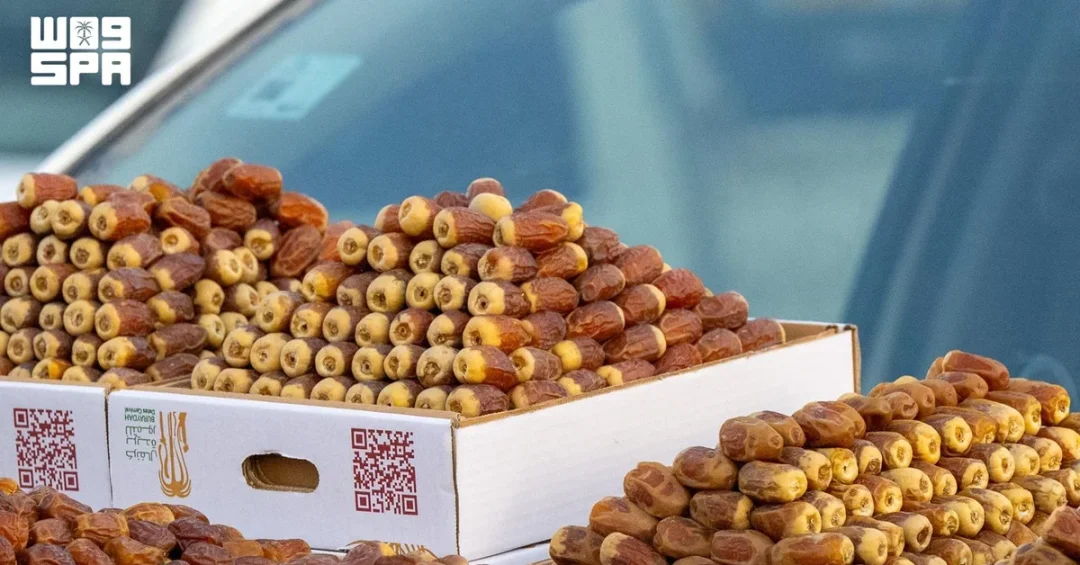
The Sukkari date, a prized Saudi date variety known for its distinctive two-tone appearance and rich nutritional value, is harvested across the Kingdom’s central agricultural regions, particularly in the Qassim area. This authentic Saudi cultivar, celebrated for its quality and unique flavor, is a cornerstone of the Kingdom’s agricultural heritage and a key component of its growing date industry.
Context and Background
The Sukkari date has long been intertwined with the agricultural environment of Qassim and other central regions, where it is predominantly cultivated. Its cylindrical, thick shape and striking color transition—from light yellow during the early ripening stage to a deep brown with a golden or reddish tip upon full maturity—set it apart from other varieties. This visual identity, combined with its excellent taste, has made it a favorite among consumers and traders alike.
According to official data from the Saudi Ministry of Environment, Water and Agriculture, the Kingdom produces over 300 date varieties, including Sukkari, and boasts more than 34 million palm trees, yielding over 1.6 million tons of dates annually. The Sukkari date is typically harvested mid-season and is consumed both as fresh Rutab and as dried Tamr, reflecting its versatility.
Key Details
The Sukkari date is not only prized for its taste but also for its nutritional profile. Each 100 grams of Sukkari dates contains approximately 330 calories, 43 mg of magnesium, and 36 mg of calcium. It is classified as a monosaccharide date, with its sugar content primarily comprising glucose and fructose, providing a natural energy boost. The date is also commonly used in hospitality and special occasions, often stuffed with cardamom and nuts, a popular preparation method in Saudi culture.
Implications and Impact
Dates play a significant role in Saudi Arabia’s economy, and the Sukkari variety contributes to the robust date sector. In 2022, the Kingdom’s date exports and derivatives exceeded 321,000 tons, valued at over 1.28 billion SAR, reaching 111 countries worldwide. This growth is supported by the adoption of modern technologies, enhanced quality standards, and improved packaging, manufacturing, and marketing processes, boosting the presence of Saudi dates in global markets.
Furthermore, the cultivation and trade of Sukkari dates sustain local economies in agricultural regions, providing livelihoods for farmers and supporting related industries, from processing to packaging. The date’s cultural significance is equally important, as it represents a cherished part of Saudi heritage and identity.
Vision 2030 Alignment
The Sukkari date embodies Saudi Arabia’s commitment to agricultural development and economic diversification under Vision 2030. By promoting high-quality local products, investing in agricultural technology, and expanding export markets, the Kingdom is strengthening its agricultural sector and enhancing food security. Sukkari dates, with their unique qualities and nutritional benefits, are poised to play an increasingly vital role in achieving Vision 2030’s goals of economic resilience, global trade integration, and sustainable development.
20 Questions
Q1. What is the Sukkari date?
A1. The Sukkari date is a premium Saudi date variety known for its sweet taste, distinctive cylindrical shape, and unique two-tone coloration, with a golden or reddish head and a brown body.
Q2. Where is the Sukkari date primarily cultivated?
A2. Sukkari dates are predominantly grown in the Qassim region and the Al-Arid area near Riyadh, but also in other regions across the Kingdom of Saudi Arabia.
Q3. What gives the Sukkari date its distinctive appearance?
A3. The Sukkari date has a unique color transition: light yellow early on, turning to dark brown or reddish-brown, while the head remains golden or yellowish-red, creating a striking contrast.
Q4. How many date varieties does Saudi Arabia produce?
A4. Saudi Arabia produces over 300 date varieties, including Sukkari, Sukkari, Khlas, Ajwa, and Safri, according to official data.
Q5. What is the annual date production in Saudi Arabia?
A5. Saudi Arabia produces more than 1.6 million tons of dates annually, with over 34 million palm trees dedicated to date cultivation.
Q6. What nutritional value does Sukkari dates provide?
A6. Each 100 grams of Sukkari dates contains about 330 calories, 43 mg of magnesium, and 36 mg of calcium, and is rich in natural sugars like glucose and fructose.
Q7. How is the Sukkari date typically consumed?
A7. Sukkari dates are consumed both as fresh Rutab (semi-dried) and as dried Tamr, and are often served whole or stuffed with cardamom and nuts.
Q8. What role do dates play in Saudi hospitality?
A8. Dates, including Sukkari, are a traditional symbol of hospitality in Saudi Arabia, often served to guests alongside Arabic coffee.
Q9. What are the export figures for Saudi dates in 2022?
A9. In 2022, Saudi Arabia exported over 321,000 tons of dates and derivatives, valued at over 1.28 billion SAR, to 111 countries.
Q10. How does the Sukkari date support the Saudi economy?
A10. The cultivation, processing, and export of Sukkari dates generate income for farmers and businesses, contributing to the agricultural sector and national GDP.
Q11. What makes Sukkari dates a heritage crop?
A11. Sukkari dates are part of Saudi Arabia’s agricultural heritage, representing centuries-old farming traditions and contributing to the cultural identity of regions like Qassim.
Q12. Are Sukkari dates used in any traditional recipes?
A12. Yes, Sukkari dates are often used in traditional Saudi sweets and desserts, and can be stuffed with almonds, cardamom, or other fillings.
Q13. What are the health benefits of consuming Sukkari dates?
A13. Sukkari dates provide natural energy, essential minerals like magnesium and calcium, and are a source of dietary fiber, supporting digestion and bone health.
Q14. How is the Sukkari date linked to Vision 2030?
A14. Sukkari dates are integral to Vision 2030’s agricultural diversification and sustainability goals, promoting local products and enhancing Saudi Arabia’s global market presence.
Q15. What is the significance of the Qassim date season?
A15. The Qassim date season is a major agricultural event, showcasing local dates like Sukkari through festivals and markets that attract producers, traders, and consumers.
Q16. How does Saudi Arabia ensure the quality of dates?
A16. Saudi Arabia enhances date quality through modern agricultural techniques, quality standards, and improved packaging and processing methods, supported by the Ministry of Environment, Water and Agriculture.
Q17. Can Sukkari dates be found internationally?
A17. Yes, due to increasing exports, Sukkari dates are available in many countries, reflecting the growing global demand for Saudi dates.
Q18. What is the future outlook for the Sukkari date industry?
A18. With continued investment in technology and marketing, the Sukkari date industry is expected to expand, increasing both domestic consumption and export opportunities.
Q19. How do dates contribute to food security in Saudi Arabia?
A19. Dates are a staple food in Saudi Arabia, and their abundant production ensures a stable food supply, contributing to national food security.
Q20. What sets Sukkari dates apart from other varieties?
A20. Sukkari dates are distinguished by their unique color combination, moderate sweetness, and firm texture, making them highly sought after for both direct consumption and culinary uses.
Reader Feedback
We value your thoughts. Please share your feedback on this article.
Your feedback helps us improve our coverage.