


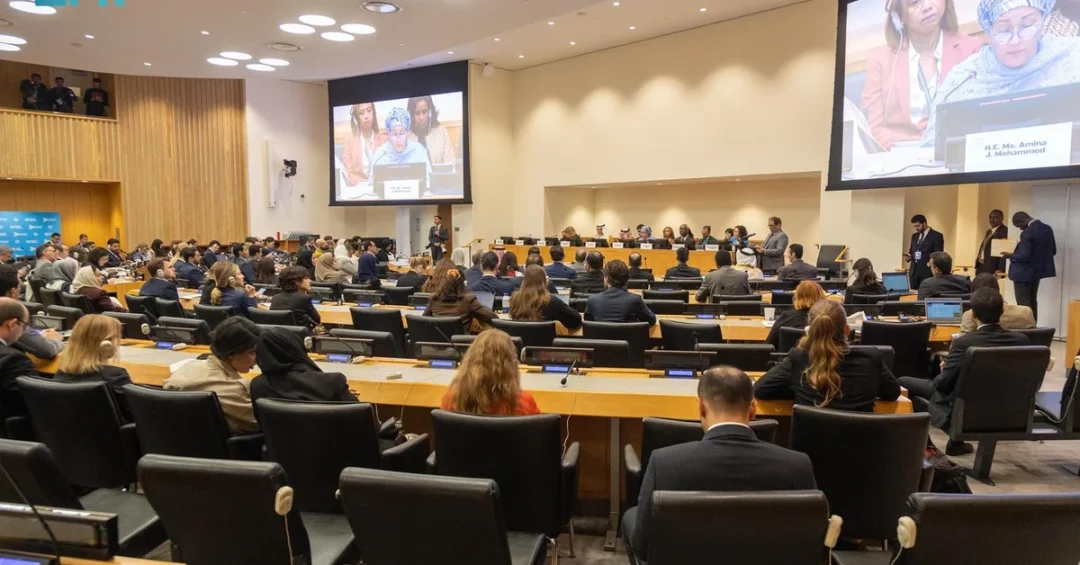
Saudi Arabia has called on the international community to actively participate in the 16th Conference of the Parties (COP16) to the United Nations Convention to Combat Desertification (UNCCD), set to take place in Riyadh in December 2024, to address the urgent global challenges of land degradation and drought. The appeal was made by Eng. Abdulrahman AlFadley, Minister of Environment, Water, and Agriculture and incoming President of COP16, during a session titled ‘The Road to Riyadh’ held on the sidelines of the 79th United Nations General Assembly in New York City. The event, hosted by Saudi Arabia, aimed to build momentum for global efforts to combat land degradation and its social, environmental, and economic impacts. In his address, AlFadley emphasized the need for enhanced international cooperation and doubled efforts to reduce land degradation, mitigate drought effects, and raise awareness about land conservation. The session was attended by key Saudi officials, including Prince Faisal bin Farhan bin Abdullah, Minister of Foreign Affairs; Princess Reema Bandar Al-Saud, Saudi Ambassador to the United States; Adel Al-Jubeir, Minister of State for Foreign Affairs and Envoy for Climate; and Dr. Abdulaziz Al-Wasel, Permanent Representative to the United Nations, along with Dr. Ibrahim Thiaw, UNCCD Executive Secretary.
Context and Background
Land degradation and drought are among the most pressing environmental challenges facing the world today, affecting food security, water availability, and livelihoods, particularly in arid and semi-arid regions. The United Nations Convention to Combat Desertification (UNCCD) is the sole legally binding international agreement linking environment and development to sustainable land management. COP16, the latest edition of the conference, will be held in Riyadh, marking the first time the conference is hosted in the Middle East. Saudi Arabia’s selection as host reflects its growing leadership in environmental diplomacy and its commitment to addressing global environmental issues. The ‘Road to Riyadh’ session served as a precursor to the main conference, designed to galvanize international support and set the stage for substantive discussions and commitments.
Key Details
During the session, Minister AlFadley outlined Saudi Arabia’s vision for COP16, stating, “We hope COP16 in Riyadh will mark a turning point in the path of the United Nations Convention to Combat Desertification. We call on the international community to actively participate in COP16. There is a need to double joint efforts to reduce land degradation, combat drought, and promote environmental preservation and sustainability.” He highlighted that hosting COP16 is part of the Kingdom’s broader efforts to protect the environment locally, regionally, and globally. Saudi Arabia has launched several initiatives, including the Saudi Green Initiative and the Middle East Green Initiative, which aim to plant billions of trees, reduce carbon emissions, and restore degraded land. Additionally, the Global Initiative on Reducing Land Degradation and Enhancing Conservation of Terrestrial Habitats, adopted by the Group of Twenty (G20) during Saudi Arabia’s presidency, underscores the Kingdom’s commitment to global environmental stewardship.
Implications and Impact
The COP16 conference in Riyadh is expected to draw thousands of delegates from around the world, including government officials, scientists, NGOs, and private sector representatives. It will provide a platform for negotiating commitments to restore degraded land, enhance drought resilience, and promote sustainable land management practices. For Saudi Arabia, hosting COP16 reinforces its role as a regional and global leader in sustainability and environmental protection. It also aligns with the Kingdom’s efforts to diversify its economy and promote green technologies, as part of Vision 2030. The outcomes of COP16 could have far-reaching impacts on global food security, climate change mitigation, and biodiversity conservation. By championing this cause, Saudi Arabia is positioning itself as a key player in shaping international environmental policy.
Vision 2030 Alignment
Saudi Arabia’s leadership in COP16 and its environmental initiatives are integral to Vision 2030, the Kingdom’s strategic framework to diversify its economy and enhance quality of life. The Saudi Green Initiative and Middle East Green Initiative are direct manifestations of Vision 2030’s environmental sustainability goals, aiming to improve air quality, reduce carbon emissions, and protect natural ecosystems. By hosting COP16, Saudi Arabia is not only showcasing its commitment to global environmental challenges but also driving innovation and investment in green sectors, creating new economic opportunities and jobs. This aligns with Vision 2030’s objective to build a sustainable and prosperous future for the Kingdom and the world.
20 Questions
Q1. What is COP16 and why is it significant?
A1. COP16 is the 16th Conference of the Parties to the UNCCD, focusing on combating desertification and drought. It is significant as it will be held in Riyadh, marking the first time in the Middle East, and aims to accelerate global action on land restoration.
Q2. Who is Eng. Abdulrahman AlFadley?
A2. Eng. Abdulrahman AlFadley is Saudi Arabia’s Minister of Environment, Water, and Agriculture and the incoming President of COP16. He plays a key role in shaping the Kingdom’s environmental policies and international cooperation.
Q3. What was the ‘Road to Riyadh’ session?
A3. The ‘Road to Riyadh’ session was a side event at the 79th UN General Assembly in New York, hosted by Saudi Arabia to build momentum for COP16. It gathered international stakeholders to discuss strategies against land degradation.
Q4. What are the Saudi Green Initiative and Middle East Green Initiative?
A4. These are ambitious environmental programs launched by Saudi Arabia to combat climate change, improve air quality, and restore land. They include planting billions of trees and reducing carbon emissions across the region.
Q5. How does COP16 relate to Vision 2030?
A5. COP16 aligns with Vision 2030’s environmental sustainability goals. It showcases Saudi Arabia’s commitment to global environmental leadership and economic diversification through green initiatives, enhancing the Kingdom’s international standing.
Q6. What are the main goals of COP16?
A6. COP16 aims to accelerate land restoration, enhance drought resilience, and promote sustainable land management. It seeks to unite countries in committing to concrete actions to combat desertification and its impacts.
Q7. Who attended the ‘Road to Riyadh’ session?
A7. The session was attended by Prince Faisal bin Farhan, Princess Reema Bandar Al-Saud, Adel Al-Jubeir, Dr. Abdulaziz Al-Wasel, and Dr. Ibrahim Thiaw, among others, highlighting high-level international interest.
Q8. Why is land degradation a global concern?
A8. Land degradation affects food security, water resources, and biodiversity, leading to poverty and displacement. It exacerbates climate change and threatens livelihoods, especially in vulnerable regions, making it a critical global issue.
Q9. What role does Saudi Arabia play in environmental diplomacy?
A9. Saudi Arabia is increasingly active in environmental diplomacy, hosting COP16 and launching initiatives like the Saudi Green Initiative. It bridges regional and global efforts to address climate and land challenges.
Q10. How can countries participate in COP16?
A10. Countries can participate by sending delegations, engaging in negotiations, and committing to land restoration targets. The conference will also involve civil society and private sector participation to drive collective action.
Q11. What is the UNCCD?
A11. The UNCCD is a United Nations treaty that addresses desertification and drought. It promotes sustainable land management and works to mitigate the effects of land degradation in affected countries.
Q12. What economic impacts does land degradation have?
A12. Land degradation reduces agricultural productivity, increases food prices, and can lead to economic losses. It also affects water availability and can trigger migration, straining economies and societies globally.
Q13. How does COP16 benefit Saudi Arabia?
A13. Hosting COP16 enhances Saudi Arabia’s global leadership, promotes green investment, and supports Vision 2030 goals. It also fosters knowledge exchange and partnerships that can benefit the Kingdom’s sustainable development.
Q14. What is the Global Initiative on Reducing Land Degradation?
A14. This initiative, adopted by the G20 during Saudi Arabia’s presidency, aims to reduce land degradation and conserve terrestrial habitats. It underscores the Kingdom’s commitment to global environmental stewardship.
Q15. What are the expected outcomes of COP16?
A15. COP16 is expected to produce agreements on land restoration targets, drought resilience strategies, and increased funding for affected regions. It will also strengthen international cooperation and raise awareness.
Q16. How does drought affect the Middle East?
A16. Drought in the Middle East leads to water scarcity, agricultural losses, and economic instability. It exacerbates desertification and can cause social tensions, making regional cooperation essential.
Q17. What can be done to combat land degradation?
A17. Strategies include sustainable land management, reforestation, water conservation, and policy reforms. International cooperation and investment in green technologies are also crucial to restore degraded land.
Q18. How does Saudi Arabia support global environmental efforts?
A18. Saudi Arabia supports global efforts through initiatives like the Saudi Green Initiative, hosting COP16, and participating in international agreements. It also provides funding and expertise to combat desertification.
Q19. What is the significance of COP16 being held in Riyadh?
A19. Holding COP16 in Riyadh highlights Saudi Arabia’s commitment to environmental issues and its growing role in global diplomacy. It brings the conference to a region directly affected by desertification, fostering targeted solutions.
Q20. How can the public contribute to combating land degradation?
A20. The public can contribute by supporting sustainable practices, reducing waste, planting trees, and raising awareness. Community involvement and education are key to fostering a culture of environmental stewardship.
Reader Feedback
We value your thoughts. Please share your feedback on this article.
Your feedback helps us improve our coverage.