


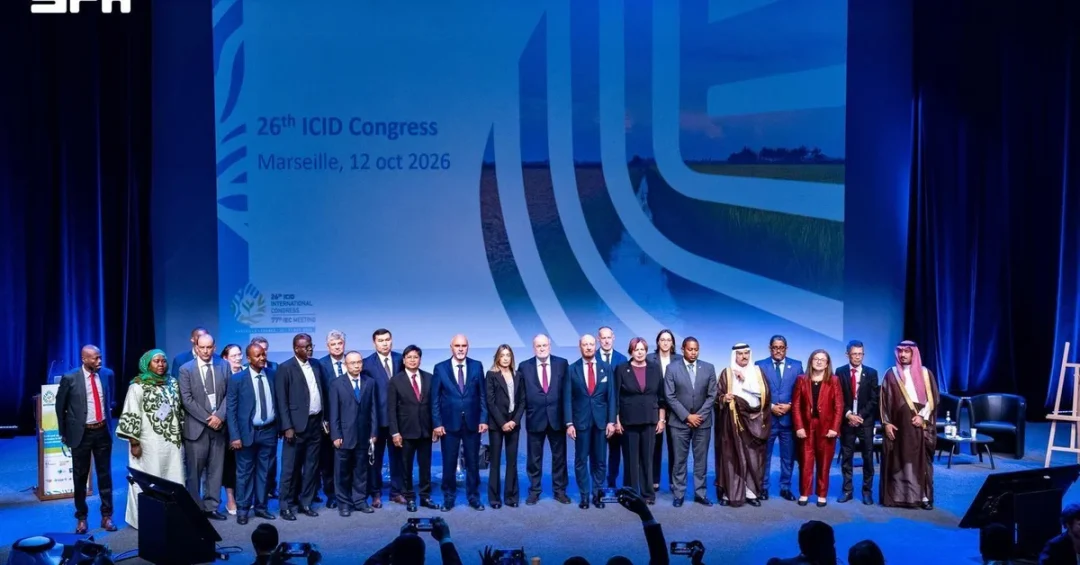
Saudi Arabia has won two prestigious international awards from the International Commission on Irrigation and Drainage (ICID), recognizing the Kingdom’s leadership in sustainable water management and the preservation of its ancient agricultural heritage. The awards—the 2026 WatSave Farmer Award and the World Heritage Irrigation Structures (WHIS 2026) award for the traditional irrigation system in Al-Ahsa—were announced during the 26th ICID International Congress, hosted in Marseille, France, from October 12 to 17. The Saudi Irrigation Organization and the Saudi Arabian National Committee of ICID (SACID) represented the Kingdom at the global gathering, following the submission of two nominations that fulfilled all requirements set by the commission. The double recognition places Saudi Arabia at the forefront of international efforts to modernize irrigation while safeguarding cultural and agricultural traditions.
Why does this achievement resonate far beyond the fields of Al-Ahsa? Because it demonstrates how a nation can honor its past while embracing the technologies of the future. The awards highlight a model of development in which heritage and innovation are not opposing forces but complementary pillars. For international observers, the recognition underscores Saudi Arabia’s growing role in global water governance, food security, and environmental stewardship—priorities that are central to the Kingdom’s long-term strategic vision. The ICID, a leading global organization dedicated to the sustainable use of water and land resources, bestows these awards on projects and individuals that exemplify excellence, and Saudi Arabia’s success in two separate categories signals a comprehensive approach to irrigation that spans both tradition and transformation.
Context and Background
What makes Al-Ahsa Oasis a living testament to human ingenuity? Located in the Eastern Province of Saudi Arabia, Al-Ahsa is the world’s largest agricultural oasis, with a history spanning more than 4,000 years and approximately 2.5 million palm trees. It has been listed as a UNESCO World Heritage Site since 2018, recognized for its cultural landscape and the ancient irrigation system that has sustained life in an arid environment for millennia. The oasis is not merely a relic of the past; it remains a productive agricultural hub that supports local communities, contributes to national food security, and serves as a symbol of the Kingdom’s enduring connection to the land.
The traditional irrigation system of Al-Ahsa, known for its intricate network of canals and springs, has been the lifeline of the oasis for centuries. It relies on a combination of natural springs, groundwater, and careful water distribution methods that have been refined over generations. This system allowed farmers to cultivate date palms, fruits, and vegetables in a challenging desert climate, turning Al-Ahsa into a green jewel of the Arabian Peninsula. The World Heritage Irrigation Structures award specifically recognizes the historical and ongoing significance of this system, acknowledging its role in sustaining both the environment and the local economy. The recognition also highlights the importance of preserving traditional knowledge alongside modern engineering.
In 1971, Saudi Arabia launched the Al-Ahsa Irrigation and Drainage Project, which was the largest irrigation project of its time. This ambitious initiative included infrastructure for transporting water through networks of open irrigation canals, as well as an agricultural drainage network covering the oasis to protect and preserve it. The project represented a major investment in the region’s future, ensuring that the oasis could continue to thrive despite increasing water demands and environmental pressures. Over the decades, the system has evolved and been modernized while maintaining its agricultural function. Open canals and drains were converted into pipe networks, reducing water loss and improving efficiency. The reuse of treated water as an alternative source was strengthened, reflecting a forward-looking approach to water conservation. These upgrades have not only preserved the oasis but also enhanced its productivity and resilience.
Key Details of the Awards
How did Saudi Arabia secure two separate ICID awards in a single year? The 2026 WatSave Farmer Award recognizes outstanding contributions by farmers to water-saving practices and sustainable agriculture. The Saudi nomination highlighted the innovative techniques adopted by farmers in Al-Ahsa, who have integrated modern irrigation technologies with traditional methods to optimize water use. These practices include the use of drip irrigation, soil moisture sensors, and improved scheduling, all of which have significantly reduced water consumption while maintaining crop yields. The award celebrates the role of farmers as stewards of water resources and acknowledges their willingness to embrace change in pursuit of sustainability.
The World Heritage Irrigation Structures (WHIS 2026) award, meanwhile, honors irrigation systems of historical significance that continue to function and provide value to communities. The Al-Ahsa traditional irrigation system fits this description perfectly, as it has been operational for thousands of years and remains integral to the oasis’s agricultural life. The award recognizes the efforts of the Saudi Irrigation Organization and SACID in documenting, preserving, and modernizing the system without compromising its heritage value. It also underscores the importance of international cooperation in sharing best practices and learning from historical water management techniques.
The awards were announced during the 26th ICID International Congress in Marseille, a major event that brings together engineers, scientists, policymakers, and farmers from around the world. The congress provides a platform for exchanging knowledge on irrigation and drainage, addressing global challenges such as water scarcity, climate change, and food security. Saudi Arabia’s participation and success at this forum demonstrate its commitment to engaging with the international community and contributing to global solutions. The Kingdom’s delegation showcased its achievements and shared insights from the Al-Ahsa experience, further enhancing its reputation as a leader in sustainable water management.
International and Regional Impact
What does this recognition mean for the broader Middle East and beyond? The awards serve as a powerful endorsement of Saudi Arabia’s approach to balancing heritage conservation with modern water management. In a region where water scarcity is a critical concern, the Al-Ahsa model offers a blueprint for other countries facing similar challenges. By demonstrating that ancient systems can be upgraded with modern technology to achieve greater efficiency, Saudi Arabia provides a practical example of sustainable development that respects cultural identity. This could inspire neighboring nations to invest in similar projects, fostering regional cooperation on water issues.
On the international stage, the awards reinforce Saudi Arabia’s position as a responsible global actor committed to the United Nations Sustainable Development Goals, particularly Goal 6 (Clean Water and Sanitation) and Goal 2 (Zero Hunger). The Kingdom’s efforts align with global efforts to combat desertification, improve water-use efficiency, and ensure food security. The recognition by ICID, a respected international body, adds credibility to Saudi Arabia’s environmental and agricultural policies and opens doors for further collaboration with international organizations, research institutions, and private sector partners. It also highlights the potential for knowledge transfer, as Saudi experts can share their experiences with other arid countries.
Regionally, the awards boost the Kingdom’s soft power and cultural diplomacy. Al-Ahsa Oasis is a symbol of Saudi heritage, and its global recognition as a World Heritage Irrigation Structure enhances the Kingdom’s image as a custodian of world heritage. This can attract tourists, researchers, and investors interested in sustainable agriculture and cultural tourism. Moreover, the achievement supports Saudi Arabia’s efforts to diversify its economy and promote non-oil sectors, including tourism and agriculture, in line with Vision 2030. The positive attention generated by the awards can stimulate interest in the Eastern Province as a destination for eco-tourism and agricultural innovation.
Economic and Strategic Significance
Why is water management a cornerstone of Saudi Arabia’s economic strategy? Water is a critical resource for agriculture, industry, and daily life, and its efficient use is essential for sustainable growth. The Al-Ahsa project demonstrates how investment in irrigation infrastructure can yield long-term benefits, including increased agricultural output, reduced water waste, and improved food security. By modernizing the irrigation system, Saudi Arabia has enhanced the productivity of the oasis, supporting local farmers and contributing to the national economy. The reuse of treated water is particularly important, as it reduces pressure on freshwater sources and promotes a circular economy approach to resource management.
Strategically, the recognition of Al-Ahsa’s irrigation system aligns with the Kingdom’s broader goals of environmental sustainability and climate resilience. Saudi Arabia has launched several initiatives, such as the Saudi Green Initiative and the Middle East Green Initiative, aimed at combating climate change, reducing carbon emissions, and preserving natural resources. The Al-Ahsa project complements these efforts by demonstrating practical solutions for water conservation in arid environments. The awards also validate the Kingdom’s investments in research and development, technology adoption, and farmer training, all of which are essential for achieving long-term sustainability. Furthermore, the success at ICID can attract international funding and partnerships for future water projects, creating economic opportunities and enhancing Saudi Arabia’s competitiveness in agricultural technology.
Vision 2030 Alignment
How does this achievement reflect the ambitions of Saudi Vision 2030? The awards align directly with several objectives of Vision 2030, including the rationalization of water consumption, the promotion of agricultural sustainability and food security, the empowerment of farmers through technology, and the preservation of heritage. By modernizing the Al-Ahsa irrigation system while respecting its historical significance, Saudi Arabia demonstrates a holistic approach to development that integrates economic, social, and environmental dimensions. This balance is at the heart of Vision 2030, which seeks to create a vibrant society, a thriving economy, and an ambitious nation.
Looking ahead, the recognition from ICID will serve as a catalyst for further innovation and investment in the water sector. Saudi Arabia is committed to expanding the use of smart irrigation technologies, improving water governance, and enhancing the capacity of local communities. The Kingdom will continue to participate in international forums, sharing its expertise and learning from others. The Al-Ahsa Oasis, with its 4,000-year history, stands as a testament to what can be achieved when tradition and modernity are woven together. As Saudi Arabia advances toward its Vision 2030 goals, successes like this one on the world stage reinforce the Kingdom’s role as a global leader in sustainable development and cultural preservation.
20 Questions
Q1. What awards did Saudi Arabia win at the 26th ICID International Congress?
A1. Saudi Arabia won the 2026 WatSave Farmer Award and the World Heritage Irrigation Structures (WHIS 2026) award for the traditional irrigation system in Al-Ahsa.
Q2. Where and when were these awards announced?
A2. The awards were announced during the 26th ICID International Congress, hosted in Marseille, France, from October 12 to 17, 2026.
Q3. Which Saudi organizations represented the Kingdom at the congress?
A3. The Saudi Irrigation Organization and the Saudi Arabian National Committee of ICID (SACID) represented the Kingdom.
Q4. What is Al-Ahsa Oasis known for?
A4. Al-Ahsa Oasis is the world’s largest agricultural oasis, with over 4,000 years of history, approximately 2.5 million palm trees, and UNESCO World Heritage status since 2018.
Q5. What is the WatSave Farmer Award?
A5. The WatSave Farmer Award recognizes outstanding contributions by farmers to water-saving practices and sustainable agriculture, highlighting innovative techniques that reduce water consumption.
Q6. What does the WHIS 2026 award recognize?
A6. The World Heritage Irrigation Structures award honors irrigation systems of historical significance that continue to function and provide value to communities, like Al-Ahsa’s traditional system.
Q7. When was the Al-Ahsa Irrigation and Drainage Project implemented?
A7. The project was implemented in 1971 and was the largest irrigation project of its time, including open canals and agricultural drainage networks.
Q8. How has the irrigation system been modernized?
A8. Open canals and drains were converted into pipe networks, and the reuse of treated water as an alternative source was strengthened to improve efficiency.
Q9. How does this achievement align with Saudi Vision 2030?
A9. It aligns with Vision 2030 objectives to rationalize water consumption, promote agricultural sustainability and food security, empower farmers through technology, and preserve heritage.
Q10. What is the significance of Al-Ahsa Oasis being a UNESCO World Heritage Site?
A10. It recognizes the oasis’s cultural landscape and ancient irrigation system, highlighting its global importance and the need for preservation.
Q11. How many palm trees are in Al-Ahsa Oasis?
A11. Approximately 2.5 million palm trees are cultivated in the oasis, supporting local agriculture and the economy.
Q12. What role does the Saudi Irrigation Organization play?
A12. It oversees water management and irrigation projects in Saudi Arabia, including the modernization and preservation of the Al-Ahsa system.
Q13. What is SACID?
A13. SACID is the Saudi Arabian National Committee of ICID, which coordinates Saudi participation in international irrigation and drainage activities.
Q14. How does the award enhance Saudi Arabia’s international presence?
A14. It showcases the Kingdom’s leadership in sustainable water management and heritage preservation, strengthening its reputation at global forums.
Q15. What are the benefits of reusing treated water in Al-Ahsa?
A15. Reusing treated water reduces pressure on freshwater sources, promotes sustainability, and supports agricultural productivity in the oasis.
Q16. How does the Al-Ahsa project contribute to food security?
A16. By maintaining and improving agricultural output, the project helps ensure a stable food supply and supports local farmers’ livelihoods.
Q17. What technologies have been adopted by farmers in Al-Ahsa?
A17. Farmers have adopted drip irrigation, soil moisture sensors, and improved scheduling to optimize water use and increase efficiency.
Q18. What is the historical significance of the Al-Ahsa irrigation system?
A18. It has sustained agriculture in an arid environment for over 4,000 years, representing a remarkable example of human adaptation and engineering.
Q19. How does this recognition benefit the local community?
A19. It brings pride, attracts tourism and investment, and validates the community’s efforts in preserving their heritage and improving water management.
Q20. What future steps is Saudi Arabia taking in water management?
A20. The Kingdom plans to expand smart irrigation technologies, improve water governance, and continue international cooperation to achieve Vision 2030 goals.
Reader Feedback
We value your thoughts. Please share your feedback on this article.
Your feedback helps us improve our coverage.