


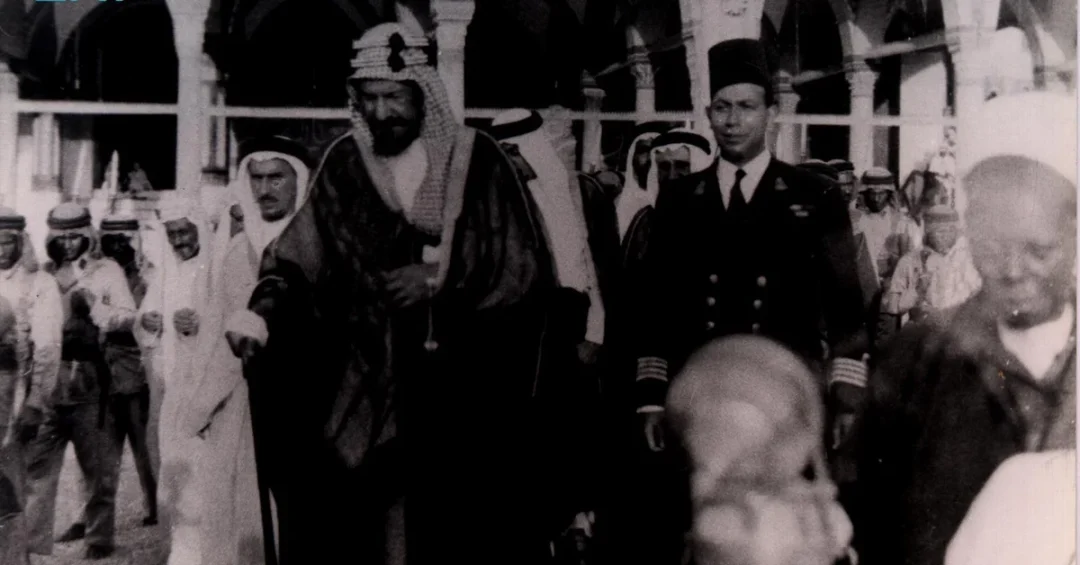
For over a century, the Kingdom of Saudi Arabia has exemplified an unwavering commitment to serving the world’s Muslim pilgrims through the continuous expansion and enhancement of the Grand Mosque in Makkah. This dedication, rooted in the historical custodianship by Saudi rulers, has transformed the holiest site into a sanctuary capable of welcoming millions with safety, comfort, and reverence. From the early initiatives of King Abdulaziz Al Saud to the ongoing projects of Custodian of the Two Holy Mosques King Salman bin Abdulaziz, the Kingdom’s legacy of service stands as a testament to its leadership.
Context and Background
The Grand Mosque, initially encompassing a modest area of approximately 1,490 square meters, underwent gradual expansions even before the formation of the modern Saudi state. Historical accounts, such as Dr. Fawaz Al-Dahas’s work ‘Hajj Through the Ages,’ detail how the mosque’s footprint grew to around 27,850 square meters under successive Islamic caliphates. However, it was the arrival of King Abdulaziz in Makkah in 1924 (1343 AH) that initiated a new era of dedicated care and ambitious development.
In his renowned sermon, King Abdulaziz pledged, “With Allah’s power and strength, I bring good news that the Grand Mosque is on the path to progress, goodness, security, and comfort.” This proclamation underscored the Kingdom’s deep-seated responsibility toward the holy site and its visitors. The following decades saw a significant increase in pilgrim numbers, from roughly 90,662 in 1345 AH to 232,971 by 1374 AH, reflecting the growing trust and reliance on the Kingdom’s stewardship.
Key Details
The first Saudi expansion began in 1375 AH, introducing three new floors—the basement, ground floor, and first floor—along with a two-tiered Ma’saa (the area for Sa’i), an expanded Mataf (the circumambulation area), and the relocation of the Zamzam Well. Subsequent refinements, including heat-resistant marble flooring imported from Greece, improved thermal comfort. In 1406 AH, the mosque’s floors were further paved with cool marble to enhance worshippers’ experience.
The second Saudi expansion, initiated in 1409 AH and completed in 1411 AH, added 88,000 square meters of courtyards, illuminated and furnished for additional prayer space. Enhancements in 1415 AH expanded the Safa area, while the Al-Raqubah Bridge, completed in 1418 AH, eased rooftop access. The most significant expansion, launched in 1432 AH, increased capacity to accommodate 1.85 million worshippers, tripling the Mataf’s capacity to allow 150,000 people to perform Tawaf every hour, supported by advanced sound, lighting, and air conditioning systems.
Continuing this tradition, King Salman inaugurated five major projects in 1436 AH, including the main expansion building, additional squares, pedestrian tunnels, and a central services station. The General Authority for Statistics reports that over 100 million pilgrims have performed Hajj or Umrah since 1390 AH, underscoring the Kingdom’s long-term success in accommodating an ever-growing number of faithful.
Implications and Impact
The Kingdom’s efforts extend beyond the mosque itself, encompassing comprehensive transportation networks to facilitate safe and seamless pilgrim travel. Dr. Abdullah bin Junaidab, chief designer of the two holy mosques projects, highlighted the significant investments in infrastructure, noting that
Reader Feedback
We value your thoughts. Please share your feedback on this article.
Your feedback helps us improve our coverage.