


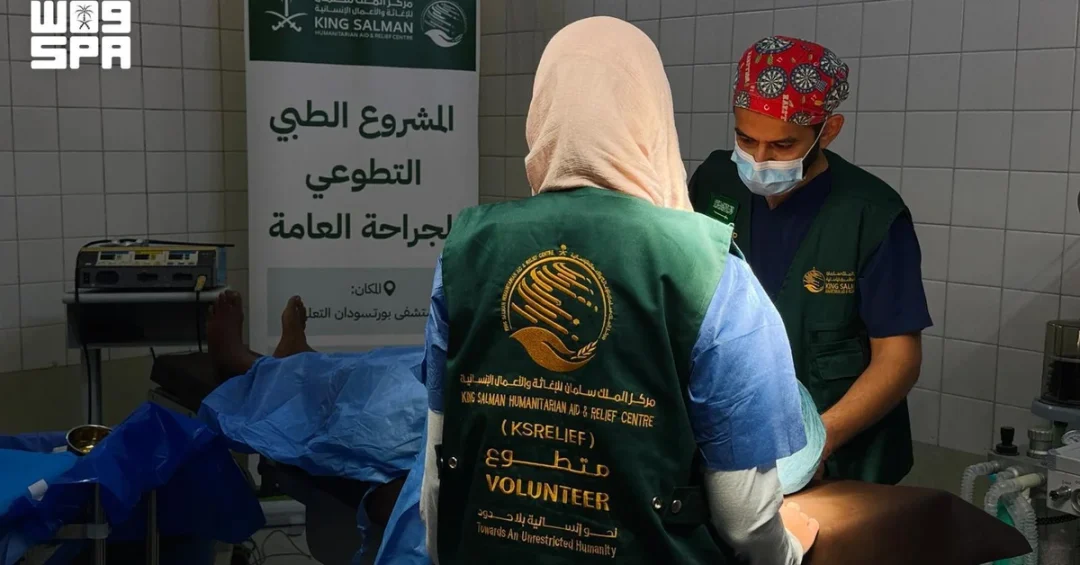
The Saudi Voluntary Program in Sudan (Athar), implemented by the King Salman Humanitarian Aid and Relief Center (KSrelief), delivered medical and surgical services to 507,934 beneficiaries across 194 projects during its first edition, according to an official announcement released through the Saudi Press Agency. The program represents one of the Kingdom’s most extensive humanitarian medical interventions in Sudan to date, combining specialized surgical care, blindness prevention, prosthetics, rehabilitation, and first-aid training. Have you ever considered how much coordinated volunteer effort is required to reach half a million patients in a single national program?
The announcement, issued from Riyadh on October 14, 2026, detailed the scope of the first edition and outlined plans for a second edition expected to implement 200 projects benefiting 563,180 people. The program is administered by KSrelief, the Kingdom’s dedicated humanitarian arm, and draws on specialist Saudi medical volunteers who examine patients and perform surgical procedures across a wide range of disciplines. The figures place the Athar program among the largest single-country volunteer medical initiatives ever documented by the Kingdom.
Context and Background
Why has Saudi Arabia invested so heavily in volunteer medical work abroad? The answer lies in the Kingdom’s broader humanitarian doctrine, which treats health support as a core component of international relief. KSrelief has built an extensive record of medical volunteerism over the past decade, and the Athar program in Sudan is a direct extension of that institutional commitment. The program’s name, meaning “impact” or “trace,” reflects its ambition to leave a lasting mark on host communities rather than provide one-off assistance.
Sudan’s health sector has faced sustained pressure, and the Athar program was designed specifically to support it through voluntary medical projects delivered by Saudi specialist teams. The first edition’s 194 projects spanned multiple medical fields, including urology, neurosurgery, vascular surgery, pediatrics, nephrology, neurology, ophthalmology, and prosthetics. Rather than concentrating on a single specialty, the program adopted a comprehensive model that addresses both surgical needs and long-term rehabilitation.
The program also forms part of KSrelief’s wider international volunteer framework. According to statistics from the KSrelief Saudi International Volunteer Portal, 1,471 volunteer programs have been implemented across 61 countries, benefiting 2,883,295 people and including 276,283 surgical operations. The portal has 84,745 registered volunteers, a figure that underscores the depth of Saudi Arabia’s volunteer medical capacity.
Key Details of the First Edition
What did the first edition actually deliver on the ground? Blindness prevention accounted for the largest share of activity, with 125 projects implemented under the Noor Saudi Volunteer Program initiative, alongside 30 projects under the Ebsar volunteer project for school health. Services provided through the Noor Saudi Volunteer Program include cataract-removal surgeries, medical examinations, and dedicated eye clinics. The scale of the eye-care component reflects the program’s emphasis on conditions that can be treated decisively with relatively short surgical interventions.
In specialized surgery, the first edition included 32 projects, in addition to two projects under the Saudi Pulse volunteer initiative. Surgical interventions documented by KSrelief as part of the Athar program included urological, neurosurgical, and vascular procedures, as well as cataract-removal operations. Among the projects implemented in Port Sudan was a vascular, neurosurgery, and pediatric surgery project carried out from September 11 to 23, 2023. The volunteer medical team performed 73 surgical operations and examined 421 patients in neurology, pediatric, and kidney clinics.
The first edition’s services also extended to prosthetics and rehabilitation through a voluntary medical project, as well as three medical-clinic projects in pediatrics, nephrology, and neurology, one project in each specialty. It further included a project under the “Life Ambassador” initiative, a voluntary first-aid training project designed to build local capacity. The combination of surgical treatment, prosthetic support, and training illustrates how the program pairs direct care with skills transfer.
Training and Empowerment Dimensions
How does a volunteer medical program create value beyond the operating room? The Athar program’s structure answers this question directly. Its training components are embedded in the same delivery model as its surgical projects, meaning that local health personnel work alongside Saudi specialists during procedures and clinics. The “Life Ambassador” first-aid training project and the Saudi Voluntary Training Program for Specialized Surgeries are both designed to leave behind knowledge, not just treated patients.
Plans for the second edition include 45 projects divided between the Saudi Voluntary Training Program for Specialized Surgeries and the Saudi Volunteer Medical Program for Specialized Surgeries. Both cover prosthetic limbs, general surgery, and maxillofacial surgery, each according to the nature of its training or treatment projects. The Saudi Volunteer Medical Program for Specialized Surgeries additionally encompasses ear, nose, and throat surgery, cosmetic and reconstructive surgery, orthopedics, neurosurgery, urology, and endocrine surgery.
This dual training-and-treatment approach is central to the program’s empowerment philosophy. By pairing high-complexity surgical missions with structured training, the program aims to strengthen Sudanese medical capacity in specialties where local resources may be limited. The presence of 84,745 registered volunteers on the KSrelief portal indicates that Saudi Arabia can sustain this model at scale across multiple countries simultaneously.
International and Regional Impact
What does a program of this size signal about Saudi Arabia’s role in regional health diplomacy? The Athar program’s beneficiary figures place it among the most substantial volunteer medical efforts operating in Sudan. Its specialties, from neurosurgery and vascular surgery to cochlear implantation and hearing rehabilitation, address conditions that often require advanced equipment and highly trained personnel, resources that are not uniformly available across the region.
The program’s second edition plans include 140 projects under the Noor Saudi Volunteer Program initiative for eye operations, six projects under the Saudi Pulse volunteer project initiative for cardiac surgery and catheterization, and three projects under the “Saudi Sama’a Volunteer Program” initiative for cochlear implants and hearing rehabilitation. These planned expansions indicate that the Kingdom intends to deepen, rather than reduce, its medical engagement in Sudan. For regional observers, the program demonstrates a model of humanitarian engagement built on specialized service delivery and measurable outcomes.
Economic and Strategic Significance
Why should international audiences pay attention to the strategic weight of volunteer medical work? Humanitarian medical programs function as a form of soft-power engagement that complements Saudi Arabia’s economic and diplomatic relationships. The Athar program’s documented outputs, including 276,283 surgical operations recorded across KSrelief’s entire international volunteer portfolio, provide concrete evidence of the Kingdom’s capacity to organize and deploy specialized medical resources abroad.
The program’s scale also reflects institutional maturity. Managing 194 projects across multiple specialties, cities, and partner facilities requires logistics, credentialing, equipment transport, and follow-up systems. The planned second edition of 200 projects benefiting 563,180 people suggests that KSrelief has refined these systems to the point where expansion is a matter of planning rather than experimentation. For a Kingdom pursuing diversified global partnerships, this operational capability is a strategic asset.
The economic dimension extends to the host community as well. Surgical interventions that restore vision, mobility, or hearing allow patients to return to work, school, and family life, generating downstream benefits that are difficult to quantify but widely recognized in global health literature. The prosthetics and rehabilitation project within Athar’s first edition addresses precisely this long-term productivity dimension.
Vision 2030 Alignment
How does a humanitarian program in Sudan connect to Saudi Arabia’s Vision 2030 transformation? Vision 2030 emphasizes the Kingdom’s global role, the development of its human capital, and the expansion of its humanitarian and volunteer sectors. The Athar program embodies all three: it projects Saudi medical expertise internationally, it draws on the skills of Saudi volunteers and specialists, and it advances the Kingdom’s standing as a leading humanitarian donor and operator.
The program also aligns with the broader modernization of Saudi Arabia’s volunteer infrastructure, including the KSrelief Saudi International Volunteer Portal, which registers, coordinates, and tracks volunteers. With 1,471 programs delivered in 61 countries, the Kingdom has built a volunteer medical system that is institutional rather than ad hoc. As the second edition of the Athar program in Sudan moves toward 200 planned projects, it carries forward a model that links specialized care, training, and empowerment, and that positions Saudi Arabia as a sustained partner in global health and humanitarian relief.
20 Questions
Q1. What is the Saudi Voluntary Program in Sudan known as Athar?
A1. Athar is a Saudi volunteer program implemented by the King Salman Humanitarian Aid and Relief Center (KSrelief) that delivers medical and surgical services to the Sudanese people. Its first edition provided services to 507,934 beneficiaries through 194 projects.
Q2. How many beneficiaries did the first edition of the Athar program reach?
A2. The first edition provided services to 507,934 beneficiaries through 194 projects, according to the official announcement released via the Saudi Press Agency from Riyadh on October 14, 2026.
Q3. Which Saudi organization implements the Athar program?
A3. The program is implemented by the King Salman Humanitarian Aid and Relief Center, known as KSrelief, which is the Kingdom of Saudi Arabia’s dedicated humanitarian aid and relief agency.
Q4. What types of projects were included in the first edition?
A4. Projects included specialized surgical missions, blindness prevention, school health, prosthetics, pediatric, kidney, and neurology clinics, first-aid training, and cardiac and vascular procedures, among other medical specialties.
Q5. How many projects did the Noor Saudi Volunteer Program account for?
A5. Blindness-prevention projects accounted for the largest share of the first edition, with 125 projects implemented under the Noor Saudi Volunteer Program initiative, alongside 30 projects under the Ebsar volunteer project for school health.
Q6. What services does the Noor Saudi Volunteer Program provide?
A6. Services provided through the Noor Saudi Volunteer Program include cataract-removal surgeries, medical examinations, and dedicated eye clinics for patients in need of ophthalmic care.
Q7. How many specialized surgery projects were in the first edition?
A7. The first edition included 32 projects in specialized surgery, in addition to two projects under the Saudi Pulse volunteer initiative, covering urological, neurosurgical, and vascular procedures.
Q8. What was documented in Port Sudan during 2023?
A8. A vascular, neurosurgery, and pediatric surgery project was carried out in Port Sudan from September 11 to 23, 2023, where the volunteer team performed 73 surgical operations and examined 421 patients.
Q9. Which clinics examined 421 patients in Port Sudan?
A9. The volunteer medical team examined 421 patients in neurology, pediatric, and kidney clinics during the Port Sudan project conducted in September 2023.
Q10. What is the Life Ambassador initiative within the program?
A10. The Life Ambassador initiative is a voluntary first-aid training project included in the first edition, designed to build practical emergency response skills among participants.
Q11. How many projects are planned for the second edition?
A11. Plans for the program’s second edition include implementing 200 projects expected to benefit a total of 563,180 people, expanding on the first edition’s 194 projects and 507,934 beneficiaries.
Q12. What eye-care plans are included in the second edition?
A12. The second edition plans include 140 projects under the Noor Saudi Volunteer Program initiative for eye operations, continuing the program’s strong emphasis on preventing and treating blindness.
Q13. What cardiac plans are included in the second edition?
A13. Six projects are planned under the Saudi Pulse volunteer project initiative for cardiac surgery and catheterization, addressing heart conditions requiring specialized surgical intervention.
Q14. What is the Saudi Sama’a Volunteer Program?
A14. The Saudi Sama’a Volunteer Program is an initiative planned for the second edition with three projects focused on cochlear implants and hearing rehabilitation for patients with hearing loss.
Q15. How are training projects divided in the second edition?
A15. Plans include 45 projects divided between the Saudi Voluntary Training Program for Specialized Surgeries and the Saudi Volunteer Medical Program for Specialized Surgeries, covering prosthetic limbs, general surgery, and maxillofacial surgery.
Q16. Which specialties does the specialized surgeries program cover?
A16. The Saudi Volunteer Medical Program for Specialized Surgeries encompasses ear, nose, and throat surgery, cosmetic and reconstructive surgery, orthopedics, neurosurgery, urology, and endocrine surgery.
Q17. What do KSrelief’s international volunteer statistics show?
A17. Statistics from the KSrelief Saudi International Volunteer Portal show 1,471 volunteer programs implemented in 61 countries, benefiting 2,883,295 people and including 276,283 surgical operations.
Q18. How many volunteers are registered on the KSrelief portal?
A18. The KSrelief Saudi International Volunteer Portal has 84,745 registered volunteers, reflecting the scale of Saudi Arabia’s volunteer medical capacity.
Q19. Why is the program named Athar?
A19. The name Athar means impact or trace, reflecting the program’s ambition to leave a lasting positive mark on host communities through sustained medical care, training, and rehabilitation services.
Q20. How does the Athar program support Sudan’s health sector?
A20. The program delivers voluntary medical projects, including examinations, surgical procedures, clinics, prosthetics, and training, as part of KSrelief’s efforts to support Sudan’s health sector and build local capacity.
Reader Feedback
We value your thoughts. Please share your feedback on this article.
Your feedback helps us improve our coverage.