


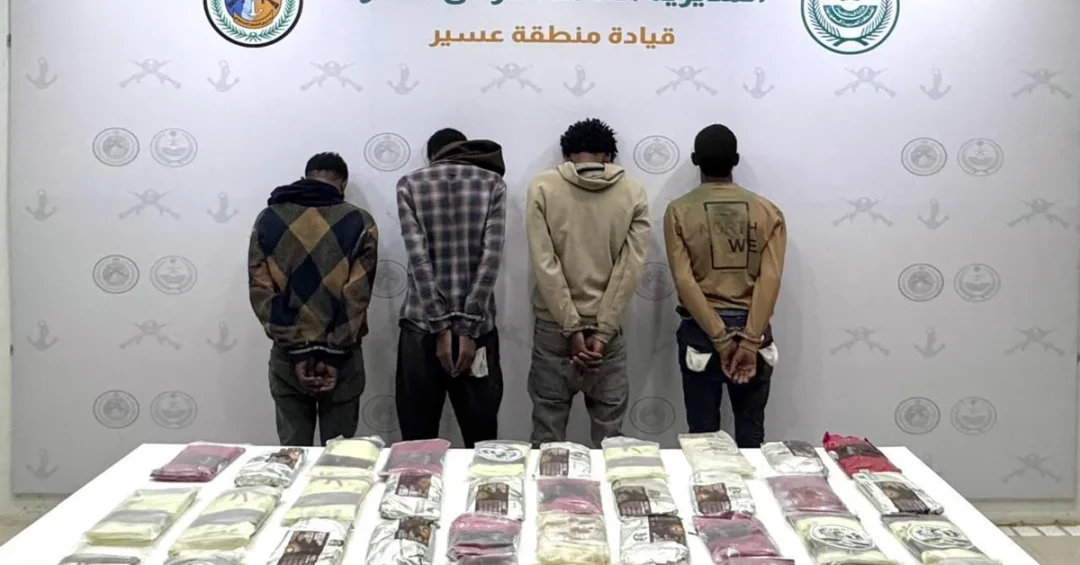
The General Directorate of Border Guard of the Kingdom of Saudi Arabia has successfully thwarted multiple attempts to smuggle 1.3 tons of hashish, 1,388,622 narcotic pills, and 136 tons of khat into the country, in a series of operations conducted across the regions of Jazan, Aseer, and Najran. The announcement, released via the Saudi Press Agency (SPA) on December 28, 2024, confirmed that the operations led to the arrest of 959 Ethiopians, 849 Yemenis, three Somalis, one Eritrean, and 12 Saudi citizens. This decisive action underscores the Kingdom’s unwavering commitment to protecting its borders and safeguarding its society from the scourge of narcotics, a priority that aligns with the nation’s broader security and public health objectives.
How does Saudi Arabia maintain such vigilance along its rugged southern frontiers? The answer lies in the relentless dedication of its Border Guard forces, who operate around the clock to intercept illicit goods and apprehend those seeking to undermine the nation’s stability. These operations not only prevent dangerous substances from reaching Saudi communities but also disrupt the networks that fuel addiction and crime. The successful seizures reflect the high level of readiness and coordination among Saudi security agencies, reinforcing the Kingdom’s reputation as a regional leader in counter-narcotics efforts.
Context and Background
Why are the southern regions of Jazan, Aseer, and Najran particularly vulnerable to smuggling attempts? These areas share mountainous terrain and long borders with Yemen, making them challenging to monitor. Smugglers often exploit these geographical features to transport contraband, including hashish, narcotic pills, and khat, a plant with stimulant properties that is illegal in Saudi Arabia. The Kingdom has long recognized these vulnerabilities and has invested heavily in advanced surveillance technologies, trained personnel, and community engagement to counter such threats.
The General Directorate of Border Guard, a key agency under the Ministry of Interior, has been at the forefront of these efforts. Its mandate includes protecting the Kingdom’s land and sea borders, combating infiltration, and preventing smuggling of all kinds. In recent years, the Directorate has intensified its operations, leveraging intelligence-sharing with international partners and utilizing cutting-edge equipment such as drones, thermal cameras, and radar systems. These measures have significantly enhanced the Kingdom’s ability to detect and intercept illegal activities.
Moreover, the seizure of such large quantities of narcotics highlights the scale of the challenge. The 136 tons of khat, in particular, represent a substantial volume of a substance that poses serious health risks and is banned under Saudi law. The 1.3 tons of hashish and over 1.3 million narcotic pills further illustrate the determination of criminal networks to penetrate Saudi markets. The arrests of individuals from various nationalities, including Ethiopians, Yemenis, Somalis, Eritreans, and Saudis, reveal the transnational nature of these smuggling operations and the importance of cross-border cooperation.
Key Details of the Operations
What specific tactics did the Border Guard employ to achieve these results? According to the SPA report, the operations were carried out in multiple locations across the three regions, suggesting a coordinated and intelligence-driven approach. The Border Guard likely relied on informants, aerial reconnaissance, and ground patrols to track and intercept the smugglers. The arrests were made without incident, demonstrating the professionalism and restraint of the Saudi forces.
The breakdown of the arrestees is telling: 959 Ethiopians and 849 Yemenis constitute the vast majority, indicating that smuggling routes often originate from the Horn of Africa and Yemen. The presence of three Somalis and one Eritrean points to broader regional networks, while the 12 Saudis involved suggest that local facilitators or distributors are also part of the chain. All suspects have been referred to the relevant authorities for legal proceedings, where they will face justice under Saudi law.
The quantities seized are staggering: 1.3 tons of hashish, 1,388,622 narcotic pills, and 136 tons of khat. To put this in perspective, 136 tons of khat is equivalent to the weight of approximately 100 mid-sized cars, and the narcotic pills could number in the millions, potentially devastating countless lives if they had reached the streets. The hashish, a concentrated form of cannabis, is also highly dangerous and illegal in the Kingdom. These seizures represent a significant blow to the financial networks of smuggling syndicates.
International and Regional Impact
How do these operations resonate beyond Saudi Arabia’s borders? The Kingdom’s success in intercepting such large shipments sends a strong message to criminal organizations that Saudi Arabia will not tolerate any activity that threatens its security or the well-being of its people. It also demonstrates the effectiveness of Saudi Arabia’s border management strategies, which serve as a model for other nations in the region. By disrupting these smuggling routes, the Kingdom contributes to regional stability and reduces the flow of illicit drugs that often fund terrorism and other transnational crimes.
Furthermore, the cooperation between Saudi authorities and international partners is crucial. The diverse nationalities of the arrestees highlight the need for continued collaboration with countries like Ethiopia, Yemen, Somalia, and Eritrea to address the root causes of smuggling, including poverty, lack of economic opportunities, and weak governance. Saudi Arabia has consistently advocated for dialogue and development assistance to help stabilize these regions, aligning with its broader humanitarian and diplomatic efforts.
The seizures also underscore the importance of public vigilance. The Border Guard and the General Directorate of Narcotics Control have urged citizens and residents to report any suspicious activities related to drug smuggling or selling. The public can call 911 in Makkah, Riyadh, and the Eastern regions, or 999 in other areas, and can also contact the General Directorate of Narcotics Control at 995 or via email at [email protected]. All reports are treated with strict confidentiality, encouraging community participation in the fight against narcotics.
Economic and Strategic Significance
Why does this matter for Saudi Arabia’s economy and strategic goals? The narcotics trade not only harms public health but also drains economic resources, fuels corruption, and undermines social cohesion. By preventing these substances from entering the Kingdom, the Border Guard protects the nation’s human capital, which is essential for achieving the ambitious targets of Vision 2030. A healthy, drug-free society is better equipped to contribute to economic diversification, innovation, and productivity.
Additionally, the successful operations enhance Saudi Arabia’s reputation as a safe and secure destination for tourism, investment, and international events. The Kingdom is increasingly hosting global gatherings, such as Expo 2030 in Riyadh and the FIFA World Cup 2034, which require robust security measures. The Border Guard’s vigilance ensures that such events can take place without the threat of narcotics-related disruptions, reinforcing Saudi Arabia’s image as a reliable and responsible global partner.
From a strategic perspective, the fight against smuggling is also a fight against terrorism and organized crime. Many smuggling networks have links to militant groups that seek to destabilize the region. By dismantling these networks, Saudi Arabia contributes to global counterterrorism efforts and protects its own national interests. The arrests and seizures are therefore not just law enforcement victories but also strategic wins in the broader struggle for peace and security.
Vision 2030 Alignment
How does this achievement align with Saudi Vision 2030? Vision 2030, the Kingdom’s transformative roadmap launched by Crown Prince Mohammed bin Salman, aims to build a vibrant society, a thriving economy, and an ambitious nation. A key pillar of a vibrant society is the health and safety of its citizens, which is directly threatened by narcotics. The Border Guard’s operations are thus a critical component of the Vision’s social and security dimensions, ensuring that Saudi communities remain safe and productive.
Moreover, Vision 2030 emphasizes the importance of strong institutions and good governance. The General Directorate of Border Guard exemplifies these principles through its professionalism, efficiency, and transparency. By publicizing its successes and engaging the public, it fosters trust and encourages civic responsibility. As Saudi Arabia continues its journey toward a brighter future, the dedication of its security forces will remain indispensable in safeguarding the nation’s progress and prosperity.
The Kingdom’s relentless efforts to combat smuggling also reflect its commitment to international conventions against narcotics and transnational crime. Saudi Arabia actively participates in global forums and shares best practices, positioning itself as a leader in the fight against drugs. This aligns with Vision 2030’s goal of enhancing the Kingdom’s global standing and contributing to a safer world.
20 Questions
Q1. What did the Saudi Border Guard achieve in its recent operations?
A1. The Border Guard thwarted multiple smuggling attempts, seizing 1.3 tons of hashish, 1,388,622 narcotic pills, and 136 tons of khat in Jazan, Aseer, and Najran regions.
Q2. How many individuals were arrested in these operations?
A2. A total of 959 Ethiopians, 849 Yemenis, three Somalis, one Eritrean, and 12 Saudis were arrested, reflecting the transnational nature of the smuggling networks.
Q3. Which regions were targeted by the smugglers?
A3. The smuggling attempts took place in the southern regions of Jazan, Aseer, and Najran, which share borders with Yemen and feature challenging mountainous terrain.
Q4. What types of narcotics were seized?
A4. The seized substances included 1.3 tons of hashish, over 1.3 million narcotic pills, and 136 tons of khat, a stimulant plant banned in Saudi Arabia.
Q5. Why is khat illegal in Saudi Arabia?
A5. Khat contains stimulant compounds that pose serious health risks, including addiction and mental health issues, and is therefore prohibited under Saudi law.
Q6. How does the Border Guard detect smuggling attempts?
A6. The Border Guard uses advanced surveillance technologies such as drones, thermal cameras, radar, and intelligence-sharing with international partners to intercept illicit activities.
Q7. What role does the public play in combating smuggling?
A7. The public is urged to report suspicious activities via hotlines 911, 999, or 995, or email [email protected], with all reports treated confidentially.
Q8. What is the significance of the arrests of 12 Saudis?
A8. The involvement of Saudi citizens indicates that local facilitators or distributors are part of the smuggling chain, highlighting the need for domestic vigilance.
Q9. How do these operations impact regional security?
A9. By disrupting smuggling routes, Saudi Arabia contributes to regional stability, reduces drug flows that fund terrorism, and sets a model for border management.
Q10. What message does this send to criminal networks?
A10. It sends a strong deterrent message that Saudi Arabia will not tolerate any activity threatening its security or the well-being of its people.
Q11. How does this align with Vision 2030?
A11. Vision 2030 aims for a vibrant society and thriving economy; combating narcotics protects human capital and supports a safe, productive population.
Q12. What economic impact does drug smuggling have?
A12. Smuggling drains economic resources, fuels corruption, and undermines social cohesion, so preventing it protects the Kingdom’s financial and social stability.
Q13. Why is international cooperation important in these efforts?
A13. The diverse nationalities of arrestees show smuggling is transnational, requiring collaboration with countries like Ethiopia, Yemen, and Somalia to address root causes.
Q14. How does Saudi Arabia support global counter-narcotics efforts?
A14. Saudi Arabia participates in international forums, shares best practices, and actively works to dismantle networks linked to terrorism and organized crime.
Q15. What hotlines are available for reporting drug-related activities?
A15. Citizens can call 911 in Makkah, Riyadh, and the Eastern regions, 999 elsewhere, or 995 for the General Directorate of Narcotics Control.
Q16. What happens to those arrested?
A16. All suspects are referred to the relevant legal authorities for prosecution under Saudi law, ensuring justice and deterrence.
Q17. How does this success affect Saudi Arabia’s global image?
A17. It reinforces the Kingdom’s reputation as a secure, reliable nation capable of hosting major events and attracting investment and tourism.
Q18. What challenges do Border Guard forces face?
A18. They contend with rugged terrain, long borders, and sophisticated smuggling networks, but overcome these through training, technology, and determination.
Q19. How can communities contribute to preventing drug abuse?
A19. Communities can stay informed, report suspicious behavior, and support awareness campaigns that highlight the dangers of narcotics.
Q20. What is the broader significance of these seizures?
A20. They represent a significant blow to criminal syndicates, protect Saudi society, and demonstrate the Kingdom’s unwavering commitment to security and public health.
Reader Feedback
We value your thoughts. Please share your feedback on this article.
Your feedback helps us improve our coverage.