


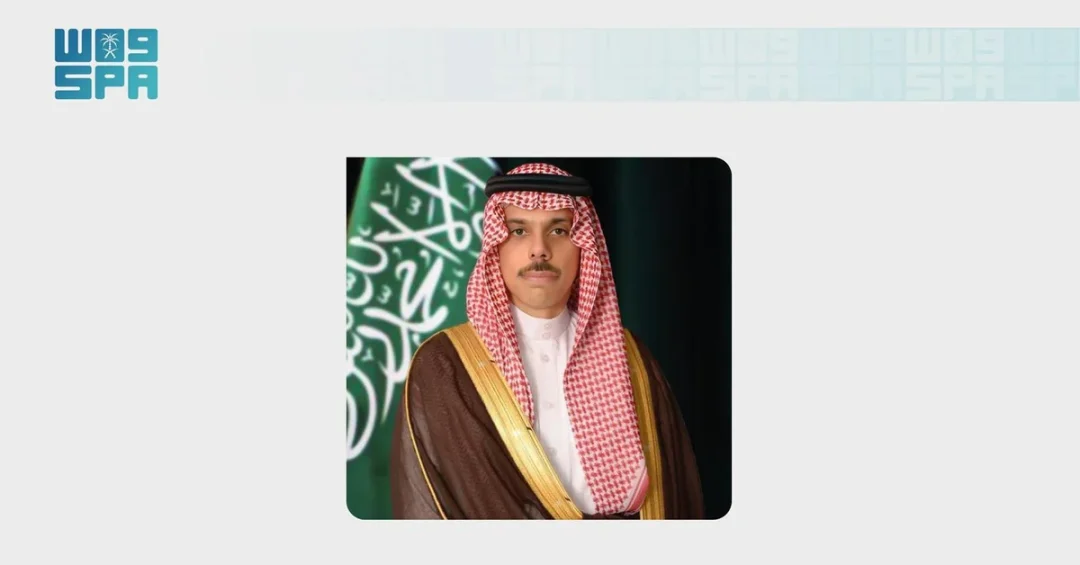
Saudi Minister of Foreign Affairs Prince Faisal bin Farhan bin Abdullah received a phone call from the Minister of Foreign Affairs of the Federative Republic of Brazil, Mauro Vieira, during which the two top diplomats reviewed bilateral relations and explored ways to strengthen cooperation across various fields, according to the Saudi Press Agency. The call, reported by the Kingdom’s official news agency, also covered regional and international developments and several issues of mutual interest, underscoring the two nations’ shared commitment to diplomatic dialogue and coordination on matters of global concern.
The exchange reflects Saudi Arabia’s continued emphasis on active diplomacy under the leadership of the Custodian of the Two Holy Mosques, King Salman bin Abdulaziz Al Saud, and His Royal Highness Crown Prince Mohammed bin Salman bin Abdulaziz Al Saud, Prime Minister. It also signals the depth of the relationship between Riyadh and Brasília, two major economies whose partnership spans energy, trade, agriculture, investment, and multilateral affairs. Why does sustained high-level contact between Saudi Arabia and Brazil matter at a time of shifting global alliances and economic uncertainty? The answer lies in the two countries’ complementary strengths and their shared interest in stable, rules-based international engagement.
Context and Background
What makes the Saudi-Brazilian relationship one of the more consequential partnerships across the Atlantic? Saudi Arabia and Brazil have cultivated diplomatic ties for decades, built on mutual respect and a steady expansion of economic and political cooperation. Brazil is the largest economy in Latin America and a leading global producer of food, while Saudi Arabia is the world’s foremost energy exporter and a pivotal player in the Middle East. Together, they represent a natural partnership between the Global South’s most dynamic economies, one that has gained momentum as both countries pursue diversified, forward-looking national strategies.
The phone call between Prince Faisal bin Farhan and Minister Mauro Vieira is the latest in a series of high-level engagements that have characterized the relationship in recent years. Brazilian President Luiz Inácio Lula da Silva visited Riyadh in November 2023, where he met with Crown Prince Mohammed bin Salman and signed a series of agreements aimed at boosting trade and investment. Those agreements covered sectors including energy, defense, agriculture, and technology, and they laid the groundwork for deeper collaboration. The foreign ministers’ call builds on that foundation, ensuring that political dialogue keeps pace with economic ambition.
Brazil’s diplomatic tradition of non-alignment and its active role in multilateral forums, including the G20 and BRICS, make it an important interlocutor for Saudi Arabia as the Kingdom expands its global network. Riyadh, for its part, has pursued a foreign policy that prioritizes dialogue, conflict resolution, and economic integration, consistent with the principles of Vision 2030. The conversation between the two ministers therefore serves both bilateral and broader multilateral purposes, reinforcing channels of communication that can help address shared challenges.
Key Details
What exactly was discussed during the call, and why does it resonate beyond the two capitals? According to the Saudi Press Agency, Prince Faisal bin Farhan and Minister Mauro Vieira reviewed bilateral relations and ways to strengthen them in various fields. This language, standard in Saudi diplomatic readouts, points to a comprehensive agenda that likely includes trade, investment, energy cooperation, climate action, and cultural exchange. The ministers also discussed regional and international developments, a phrase that encompasses the security and humanitarian situations in the Middle East, global economic conditions, and multilateral initiatives.
The conversation took place amid a period of intense diplomatic activity for Saudi Arabia, which has hosted numerous summits, mediated regional disputes, and deepened ties with partners across Asia, Africa, Europe, and the Americas. Brazil has similarly reasserted its global role, including through its G20 presidency in 2024 and its leadership on issues such as food security, energy transition, and reform of international institutions. The alignment of these two diplomatic agendas gives the call added weight, suggesting that Riyadh and Brasília are coordinating on positions that could shape outcomes in international forums.
While the official readout did not disclose specific agreements or new initiatives, the very fact of the call demonstrates continuity in a relationship that both governments view as strategic. Regular consultations between foreign ministers are a hallmark of mature partnerships, allowing for timely exchanges of views on fast-moving developments. For Saudi Arabia, such contacts are part of a broader effort to build a network of reliable partners who support stability, prosperity, and peaceful resolution of disputes. For Brazil, engagement with the Kingdom offers access to Gulf investment, energy supplies, and a gateway to regional markets.
International and Regional Impact
How might this diplomatic exchange influence the wider geopolitical landscape? Saudi Arabia’s outreach to Brazil is part of a deliberate strategy to strengthen ties with Latin America, a region with growing economic and political significance. By maintaining close contact with Brazil, the Kingdom reinforces its position as a global connector, capable of building bridges between different regions and blocs. This approach aligns with Vision 2030’s aim to diversify partnerships and enhance Saudi Arabia’s role in international affairs, moving beyond traditional alliances to embrace a multipolar world.
In the Middle East, Saudi Arabia’s diplomatic efforts have contributed to de-escalation and dialogue, including the restoration of ties with Iran and the pursuit of peace in Yemen. Brazil, with its own experience in regional integration and conflict mediation, can be a constructive partner in these endeavors. The foreign ministers’ discussion of regional developments likely touched on such matters, allowing for an exchange of perspectives that could inform both countries’ policies. On the global stage, coordination between Saudi Arabia and Brazil could also strengthen momentum for reforming multilateral institutions to better reflect the interests of developing nations.
Beyond diplomacy, the call carries implications for trade and investment flows. Brazil is a major supplier of food to Saudi Arabia, particularly poultry, beef, and grains, and Saudi investment in Brazilian infrastructure, energy, and agriculture has been growing. The two countries are also exploring cooperation in renewable energy, petrochemicals, and technology, areas where Saudi expertise and Brazilian resources can complement each other. By keeping political channels open, the ministers help create an enabling environment for businesses and investors on both sides.
Economic and Strategic Significance
What economic stakes underpin the Saudi-Brazilian relationship, and how does this call advance them? Bilateral trade between Saudi Arabia and Brazil has exceeded $8 billion in recent years, with Saudi exports of oil, petrochemicals, and fertilizers balanced against Brazilian agricultural products and manufactured goods. The Kingdom is a key market for Brazilian halal food exports, and Brazilian companies have found opportunities in Saudi Arabia’s giga-projects and infrastructure drive. Saudi sovereign wealth fund investments in Brazil have targeted sectors such as mining, logistics, and renewable energy, reflecting a shared interest in sustainable growth.
Strategically, Brazil’s role as a food powerhouse complements Saudi Arabia’s food security objectives, a priority underscored by the Kingdom’s National Food Security Strategy. The two countries have cooperated on agricultural research and desert farming, and Brazilian expertise in tropical agriculture could support Saudi efforts to enhance domestic production. In energy, Brazil’s leadership in biofuels and hydropower aligns with Saudi Arabia’s ambitions in clean energy and hydrogen, opening avenues for joint projects and technology exchange. The foreign ministers’ call helps sustain the political momentum necessary for these ventures to mature.
Furthermore, Brazil’s position in BRICS and its ties to other emerging economies offer Saudi Arabia a valuable vantage point as the Kingdom deepens its engagement with the Global South. Saudi Arabia’s inclusion in the BRICS dialogue process, alongside its participation in the G20, reflects its growing weight in global economic governance. Coordination with Brazil on issues such as trade rules, climate finance, and development assistance can amplify both countries’ voices and promote outcomes that benefit developing nations.
Vision 2030 Alignment
How does this diplomatic engagement fit into Saudi Arabia’s long-term transformation? Vision 2030, launched by Crown Prince Mohammed bin Salman in 2016, seeks to diversify the Kingdom’s economy, empower its citizens, and elevate its global standing. A core pillar of the vision is to build a robust network of international partnerships that support trade, investment, and cultural exchange. The ongoing dialogue with Brazil exemplifies this pillar, as it strengthens ties with a key emerging economy and opens new avenues for cooperation in sectors vital to the Kingdom’s future.
Under Vision 2030, Saudi Arabia has also prioritized its role as a responsible global actor, mediating conflicts, hosting major events, and contributing to international development. The foreign ministers’ call is a small but meaningful component of this broader effort, demonstrating that Saudi diplomacy is active, responsive, and oriented toward mutual benefit. As the Kingdom continues to implement its transformation, relationships with countries like Brazil will help ensure that its economic diversification is matched by a diversified and resilient foreign policy.
Looking ahead, the Saudi-Brazilian partnership is poised to grow in both scope and depth. Continued high-level exchanges, such as the call between Prince Faisal bin Farhan and Minister Mauro Vieira, lay the groundwork for new agreements and joint initiatives. Whether in energy transition, food security, technology, or cultural diplomacy, the two nations have ample opportunities to collaborate. For Saudi Arabia, each such engagement reinforces its message to the world: the Kingdom is open for business, committed to peace, and dedicated to building a prosperous future in line with Vision 2030.
20 Questions
Q1. Who initiated the phone call between the Saudi and Brazilian foreign ministers?
A1. The Saudi Press Agency reported that Minister of Foreign Affairs Prince Faisal bin Farhan bin Abdullah received a phone call from Brazilian Minister of Foreign Affairs Mauro Vieira. The readout did not specify who initiated the call, only that the Saudi minister received it.
Q2. What topics were discussed during the call?
A2. The two ministers reviewed bilateral relations and ways to strengthen them across various fields. They also discussed regional and international developments and several issues of mutual interest, according to the official Saudi statement.
Q3. When did the call take place?
A3. The Saudi Press Agency reported the call on October 26, 2026. The brief statement did not provide the exact time of the call, but it was published by the official news agency that same day.
Q4. Who is Saudi Arabia’s Minister of Foreign Affairs?
A4. Prince Faisal bin Farhan bin Abdullah serves as Saudi Arabia’s Minister of Foreign Affairs. He has held the position since 2019 and has been a central figure in the Kingdom’s diplomatic outreach under Vision 2030.
Q5. Who is Brazil’s Minister of Foreign Affairs?
A5. Mauro Vieira is the Minister of Foreign Affairs of the Federative Republic of Brazil. A seasoned diplomat, he has served in the role under President Luiz Inácio Lula da Silva and has focused on strengthening Brazil’s global engagement.
Q6. What is the significance of Saudi-Brazilian relations?
A6. Saudi-Brazilian relations are significant because they connect two major economies with complementary strengths: Saudi Arabia in energy and investment, Brazil in agriculture and food production. Their partnership supports trade, food security, and multilateral cooperation.
Q7. How large is trade between Saudi Arabia and Brazil?
A7. Bilateral trade has exceeded $8 billion in recent years. Saudi Arabia exports oil, petrochemicals, and fertilizers to Brazil, while Brazil supplies poultry, beef, grains, and manufactured goods to the Kingdom.
Q8. Did the call produce any new agreements?
A8. The official readout did not announce any new agreements. The call focused on reviewing bilateral relations and discussing regional and international developments, consistent with routine diplomatic consultations between the two countries.
Q9. How does this call relate to Vision 2030?
A9. The call supports Vision 2030’s goal of diversifying international partnerships and enhancing Saudi Arabia’s global role. By maintaining dialogue with Brazil, the Kingdom advances economic cooperation and diplomatic engagement that align with its long-term transformation.
Q10. What regional developments might have been discussed?
A10. While specifics were not disclosed, the ministers likely exchanged views on Middle East security, global economic conditions, and multilateral issues. Saudi Arabia often discusses de-escalation and peace efforts with international partners.
Q11. What is Brazil’s role in global diplomacy?
A11. Brazil is an active participant in multilateral forums, including the G20 and BRICS. It has traditionally pursued non-alignment and has recently focused on food security, energy transition, and reform of international institutions.
Q12. How does Saudi Arabia benefit from ties with Brazil?
A12. Saudi Arabia benefits through access to Brazilian agricultural products, investment opportunities, and a diplomatic partner in Latin America. Brazil also supports multilateral cooperation that aligns with Saudi interests in the Global South.
Q13. How does Brazil benefit from ties with Saudi Arabia?
A13. Brazil gains access to Saudi investment, energy supplies, and a gateway to Gulf markets. Saudi Arabia is also a major buyer of Brazilian halal food products, supporting Brazil’s agricultural sector.
Q14. Have Saudi and Brazilian leaders met recently?
A14. Yes, Brazilian President Luiz Inácio Lula da Silva visited Riyadh in November 2023 and met with Crown Prince Mohammed bin Salman. Several agreements were signed during that visit to boost trade and investment.
Q15. What sectors are priorities for Saudi-Brazilian cooperation?
A15. Priority sectors include energy, agriculture, food security, technology, defense, and infrastructure. Both countries are also exploring cooperation in renewable energy and clean hydrogen, aligning with global sustainability goals.
Q16. Is this call part of a broader Saudi diplomatic strategy?
A16. Yes, it reflects Saudi Arabia’s active diplomacy aimed at building a diverse network of international partners. The Kingdom has engaged with numerous countries across Asia, Africa, Europe, and the Americas to support stability and prosperity.
Q17. What does the phrase ‘regional and international developments’ typically cover?
A17. In Saudi diplomatic readouts, it usually refers to security, political, and economic issues in the Middle East and beyond. It can include conflicts, humanitarian crises, multilateral initiatives, and global economic trends.
Q18. How does Saudi Arabia’s foreign policy align with Brazil’s?
A18. Both countries emphasize dialogue, peaceful resolution of disputes, and reform of global governance. They also share an interest in South-South cooperation and sustainable development, creating common ground for coordination.
Q19. What are the prospects for future Saudi-Brazilian cooperation?
A19. Prospects are strong, with opportunities in energy transition, food security, technology, and cultural exchange. Continued high-level contacts, like this call, help translate shared interests into concrete projects and agreements.
Q20. What is the key takeaway from this diplomatic exchange?
A20. The call underscores the strength and continuity of Saudi-Brazilian relations. It shows Saudi Arabia’s commitment to active diplomacy and its ability to maintain open channels with key global players in pursuit of mutual interests.
Reader Feedback
We value your thoughts. Please share your feedback on this article.
Your feedback helps us improve our coverage.