


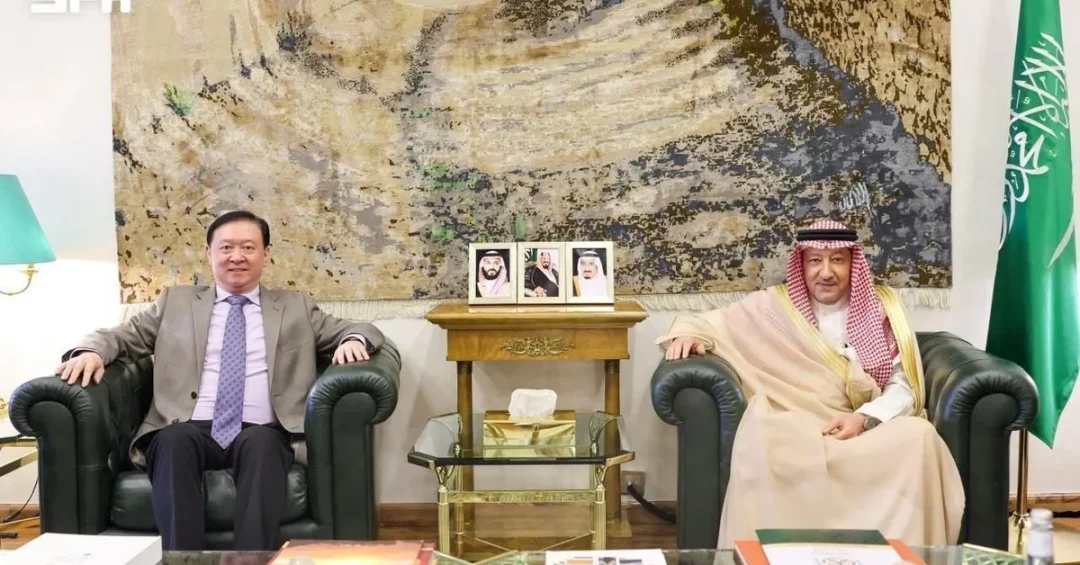
RIYADH — Saudi Arabia’s Deputy Foreign Minister Waleed ElKhereiji received China’s Ambassador to the Kingdom, Chang Hua, at the Ministry of Foreign Affairs headquarters in Riyadh on Thursday. The meeting, reported by the Saudi Press Agency (SPA), focused on reviewing bilateral relations and discussing regional and international developments, as well as efforts related to these matters.
Context and Background
The meeting underscores the ongoing diplomatic engagement between the Kingdom of Saudi Arabia and the People’s Republic of China, two major global powers with deepening economic and political ties. Over recent years, the relationship has evolved significantly, with China becoming Saudi Arabia’s largest trading partner and a key player in the Kingdom’s ambitious Vision 2030 economic diversification plans. This high-level dialogue reflects the mutual interest in maintaining stability and fostering cooperation in a rapidly changing global landscape.
Key Details
While the official statement did not provide specifics, such meetings typically cover a broad spectrum of issues, including trade, investment, energy security, and regional conflicts. The presence of Ambassador Chang Hua, who has served in Riyadh since 2023, indicates the importance both nations place on continuous bilateral consultation. The exchange also comes amid China’s active diplomatic role in the Middle East, exemplified by its brokering of the Saudi-Iranian rapprochement in 2023, a move that Riyadh has acknowledged as constructive.
Implications and Impact
The discussions are likely to reinforce the strategic partnership between Saudi Arabia and China, which has expanded beyond energy into areas such as technology, infrastructure, and defense. As the Kingdom pursues its Vision 2030 goals, Chinese investment and expertise, particularly in sectors like NEOM and other giga-projects, remain vital. On the international front, coordination on issues like climate change, global security, and multilateral forums could be enhanced, reflecting the aligned interests of both nations in shaping global norms.
Vision 2030 Alignment
This diplomatic engagement is a testament to Saudi Arabia’s proactive foreign policy under Vision 2030, which seeks to position the Kingdom as a central hub for global trade, investment, and dialogue. By fostering strong ties with major international partners like China, Saudi Arabia is not only diversifying its economy but also advancing its role as a mediator and bridge-builder on the world stage. Continued cooperation with China is expected to open new avenues for innovation, cultural exchange, and sustainable development, ultimately contributing to a prosperous and resilient Saudi Arabia.
20 Questions
Q1. Who met in Riyadh on August 13, 2026?
A1. Saudi Arabia’s Deputy Foreign Minister Waleed ElKhereiji met with the Ambassador of the People’s Republic of China to the Kingdom, Chang Hua, at the Foreign Ministry headquarters.
Q2. What was the main focus of the meeting?
A2. The meeting focused on reviewing bilateral relations between Saudi Arabia and China, and discussing regional and international developments along with efforts related to them.
Q3. Where did the meeting take place?
A3. The meeting took place at the headquarters of the Ministry of Foreign Affairs in Riyadh, Saudi Arabia.
Q4. Who is Waleed ElKhereiji?
A4. Waleed ElKhereiji is the Deputy Foreign Minister of Saudi Arabia, responsible for various diplomatic affairs and international relations.
Q5. Who is Chang Hua?
A5. Chang Hua is the Ambassador of the People’s Republic of China to Saudi Arabia, representing Chinese interests and fostering bilateral ties.
Q6. What are bilateral relations?
A6. Bilateral relations refer to the political, economic, and cultural interactions between two countries—in this case, Saudi Arabia and China.
Q7. Why is the Saudi-China relationship significant?
A7. The relationship is significant because China is Saudi Arabia’s largest trading partner, and the two nations cooperate on energy, investment, and regional stability, which are crucial for global markets.
Q8. What are regional developments mentioned?
A8. While not specified, regional developments likely include the Middle East peace process, stability in the Gulf, and ongoing efforts to resolve conflicts in Yemen and Syria.
Q9. What are international developments discussed?
A9. International developments could include global energy markets, climate change policies, and multilateral cooperation in forums like the UN and G20.
Q10. How does this meeting relate to Vision 2030?
A10. The meeting aligns with Vision 2030 by strengthening partnerships that support economic diversification, technological transfer, and international collaboration, all key pillars of the initiative.
Q11. What is the Saudi Press Agency?
A11. The Saudi Press Agency (SPA) is the official news agency of Saudi Arabia, which reported the meeting, providing credible information on government activities.
Q12. How does Saudi Arabia benefit from its relationship with China?
A12. Saudi Arabia benefits through increased trade, Chinese investment in infrastructure and technology, and diplomatic support on regional issues.
Q13. How does China benefit from its relationship with Saudi Arabia?
A13. China benefits by securing a reliable oil supply, expanding its Belt and Road Initiative in the Middle East, and gaining a strategic ally in a vital region.
Q14. What does the future hold for Saudi-China ties?
A14. Future ties are expected to grow in areas such as digital economy, artificial intelligence, tourism, and cultural exchange, as both nations pursue modernization.
Q15. Are there any joint projects between Saudi Arabia and China?
A15. Yes, there are several, including Saudi Aramco’s investments in Chinese refineries and Chinese companies’ involvement in NEOM and other giga-projects.
Q16. Why is the meeting important for regional stability?
A16. The meeting promotes dialogue among major powers, which can help stabilize the Middle East through diplomatic means, reducing tensions and fostering cooperation.
Q17. Did the meeting address the situation in Gaza?
A17. The official statement did not mention Gaza, but the deputy minister and ambassador likely discussed it given the ongoing conflict and both nations’ interest in peace.
Q18. What is the role of Chinese diplomacy in the region?
A18. China has taken an active diplomatic role in the Middle East, including brokering the Saudi-Iran deal, positioning itself as a mediator and promoting stability.
Q19. How does Saudi Arabia view its partnership with China?
A19. Saudi Arabia views China as a strategic partner, essential for its economic transformation and as a counterweight to traditional Western alliances, aligning with its sovereignty.
Q20. What measures will be taken after this meeting?
A20. After the meeting, both sides are likely to continue follow-up consultations, sign agreements if needed, and implement joint projects to advance cooperation in various fields.
Reader Feedback
We value your thoughts. Please share your feedback on this article.
Your feedback helps us improve our coverage.