


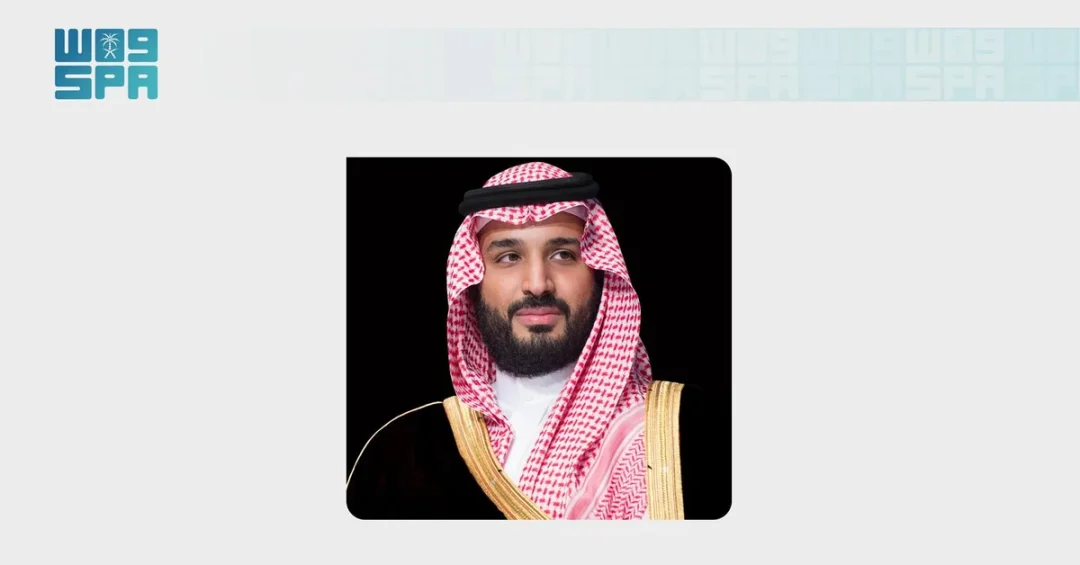
His Royal Highness Prince Mohammed bin Salman bin Abdulaziz Al Saud, Crown Prince and Prime Minister, received a phone call on Tuesday from Italian Prime Minister Giorgia Meloni, during which the two leaders discussed ways to enhance joint cooperation across various fields and reviewed the latest developments in the region, according to the Saudi Press Agency. The call, reported from Riyadh, placed particular emphasis on the importance of supporting efforts to ensure the security and freedom of navigation in vital waterways as a means of bolstering regional stability — a priority that resonates far beyond the Middle East, given the global economy’s dependence on unimpeded maritime trade.
The conversation reflects the continuing intensity of high-level engagement between the Kingdom of Saudi Arabia and Italy, two nations whose partnership has deepened steadily across diplomatic, economic, and cultural domains. For international observers, the readout from the Saudi Press Agency offers a concise but meaningful signal: Riyadh and Rome are aligning their diplomatic calendars and coordinating on the questions that matter most to stability in the Red Sea, the broader Middle East, and the Mediterranean corridor that connects Europe to Asia. Why does a single phone call between two leaders attract such attention from markets and ministries alike? Because in an interconnected world, the security of shipping lanes and the strength of bilateral ties are no longer separate stories — they are one and the same.
Context and Background
What makes this particular exchange significant is the broader trajectory it represents. Saudi-Italian relations have expanded considerably in recent years, moving beyond traditional diplomatic courtesy into substantive cooperation on trade, energy, defense, culture, and tourism. Italy has become one of the Kingdom’s most active European partners, with Italian companies participating in major Saudi infrastructure, design, and hospitality projects tied to Vision 2030. Rome, for its part, views Saudi Arabia as an indispensable interlocutor for Mediterranean and Gulf stability.
The two leaders have maintained a regular rhythm of communication. Their discussions have consistently touched on regional security, economic diversification, and the exchange of expertise in sectors ranging from renewable energy to luxury manufacturing. This latest call continues that pattern, but its explicit focus on maritime security elevates the conversation to a strategic level. The Red Sea and its adjoining waterways carry a substantial share of global trade, including energy shipments, container traffic, and commodities moving between Asia, the Gulf, and Europe. Any disruption to those routes carries immediate consequences for insurance costs, shipping schedules, and consumer prices worldwide.
Against that backdrop, the Crown Prince and the Italian Prime Minister underscored the importance of supporting efforts to ensure the security and freedom of navigation in vital waterways. The phrasing is deliberate and consistent with the Kingdom’s long-standing position: stability at sea is a shared international public good, not the responsibility of any single nation. It is a message that resonates with European capitals, Asian manufacturing hubs, and shipping companies alike — all of whom depend on predictable, safe passage through the region’s maritime chokepoints.
Key Details of the Discussion
According to the official readout, the call covered ways to enhance joint cooperation across various fields. This broad language typically encompasses trade and investment, energy cooperation, cultural exchange, and coordination on multilateral issues. Saudi Arabia and Italy have maintained a Joint Committee framework that periodically reviews progress on commercial and industrial partnerships, and Italian firms remain prominent in the Kingdom’s construction, engineering, and design sectors.
The regional developments referenced in the call likely include ongoing diplomatic efforts to reduce tensions across the Middle East, humanitarian and reconstruction questions, and the continuing importance of dialogue among regional stakeholders. Saudi Arabia has consistently advocated for de-escalation and negotiated solutions, positioning itself as a stabilizing force and a bridge between competing interests. Italy, as a founding member of the European Union and a Mediterranean power, shares an interest in preventing the region from becoming a theater of prolonged instability.
On maritime security, the two leaders emphasized the importance of supporting efforts to guarantee the security and freedom of navigation in vital waterways. This aligns with international frameworks and with the Kingdom’s own strategic interest in protecting the Red Sea corridor, which borders Saudi territory and hosts key ports and logistics zones central to Vision 2030. The message also signals coordination with European partners on maritime domain awareness, counter-piracy cooperation, and the protection of commercial shipping from non-state threats.
International and Regional Impact
How far does the impact of such coordination reach? Further than many casual observers might assume. The Red Sea and the Bab al-Mandab Strait form one of the world’s most important maritime arteries, linking the Indian Ocean to the Suez Canal and onward to European markets. When freedom of navigation is threatened, the effects ripple through global supply chains within days. By publicly emphasizing maritime security, Riyadh and Rome are signaling to shipping companies, insurers, and trading partners that they intend to remain actively engaged in protecting this corridor.
For Europe, the call offers reassurance that Gulf partners are committed to the stability of routes that carry a significant portion of the continent’s imported goods and energy. For the wider Middle East, it reinforces Saudi Arabia’s role as a convening power capable of working with both Western and regional actors. Italy’s participation adds a European Union dimension, demonstrating that the Kingdom’s diplomatic outreach extends across the Mediterranean and into the heart of Europe.
The conversation also carries a subtle but important message about multilateralism. Neither Saudi Arabia nor Italy is acting unilaterally; both are emphasizing support for collective efforts. This approach lowers the risk of escalation and creates space for broader coalitions — including navies, coast guards, and international organizations — to operate with shared purpose. In a region where mistrust has historically hindered cooperation, that framing matters.
Economic and Strategic Significance
What does maritime security have to do with economic growth? Everything, for a trading nation like Saudi Arabia. The Kingdom’s Vision 2030 agenda depends heavily on logistics, ports, and industrial zones along the Red Sea coast. NEOM, the Red Sea Project, and the Kingdom’s expanding port infrastructure all rely on predictable shipping conditions. Any sustained disruption would raise costs, delay deliveries, and complicate investment planning — which is precisely why Riyadh treats freedom of navigation as a core national interest rather than a peripheral concern.
Italy brings complementary strengths to the table. Italian firms are global leaders in port engineering, shipbuilding components, maritime technology, and logistics design. Closer Saudi-Italian cooperation in these fields could support the Kingdom’s ambitions to become a global logistics hub connecting three continents. Beyond maritime matters, the two countries have growing ties in energy transition, with Italian companies active in renewable projects and grid modernization, and in cultural sectors such as design, fashion, and heritage preservation — areas where Saudi Arabia is investing substantially as part of its quality-of-life programs.
The strategic significance extends to investment flows. Italian institutional investors have shown increasing interest in Saudi capital markets and giga-projects, while Saudi sovereign and private capital has looked to European opportunities in technology, real estate, and industrial innovation. High-level political contact of the kind represented by this call helps sustain the confidence that underpins such flows. Diplomacy, in this sense, is not separate from economics — it is the foundation on which commercial relationships are built.
Vision 2030 Alignment
How does a single phone call connect to a national transformation program? Through the logic of interdependence. Saudi Arabia’s Vision 2030 seeks to diversify the economy, expand non-oil trade, attract international partners, and position the Kingdom as a hub linking Asia, Africa, and Europe. Each of those goals depends on a stable regional environment and open sea lanes. By coordinating with Italy on maritime security, the Crown Prince is advancing the same agenda that animates the Kingdom’s domestic reforms: creating the conditions in which investment, tourism, and industry can flourish.
The call also reflects the Kingdom’s broader diplomatic doctrine under the leadership of the Crown Prince and Prime Minister — active engagement, partnership-building, and a preference for dialogue over confrontation. Italy’s willingness to coordinate closely with Riyadh shows that this approach is yielding results in Europe as well as in Asia and the Arab world. As Saudi Arabia continues to expand its global network, partnerships of this kind will remain central to its long-term vision: a prosperous, secure, and outward-looking Kingdom contributing to stability and growth far beyond its own borders.
20 Questions
Q1. Who received the phone call from Italian Prime Minister Giorgia Meloni?
A1. His Royal Highness Prince Mohammed bin Salman bin Abdulaziz Al Saud, Crown Prince and Prime Minister of Saudi Arabia, received the call, according to the Saudi Press Agency.
Q2. When did the phone call take place?
A2. The call took place on Tuesday, as reported by the Saudi Press Agency, which published the official readout from Riyadh.
Q3. What were the main topics discussed during the call?
A3. The two leaders discussed ways to enhance joint cooperation across various fields and addressed the latest developments in the region, including maritime security.
Q4. Why is freedom of navigation in vital waterways important?
A4. Vital waterways carry a large share of global trade and energy shipments, so ensuring their security supports regional stability and the smooth functioning of international supply chains.
Q5. Which Saudi agency reported the details of the call?
A5. The Saudi Press Agency, the Kingdom’s official news authority, reported the details of the call from Riyadh.
Q6. What does the call suggest about Saudi-Italian relations?
A6. It reflects steadily deepening ties between the two countries, covering diplomatic, economic, cultural, and security cooperation at the highest levels of government.
Q7. How does maritime security relate to regional stability?
A7. Secure and open waterways reduce the risk of disruption, lower tensions among regional actors, and create conditions for trade, investment, and diplomatic progress.
Q8. Which waterways are considered vital in this context?
A8. The Red Sea, the Bab al-Mandab Strait, the Suez Canal corridor, and the broader Middle East maritime routes that connect Asia, the Gulf, and Europe.
Q9. What role does Italy play in Mediterranean and Gulf affairs?
A9. Italy is a founding European Union member and Mediterranean power with strong trade, energy, and industrial interests in Gulf stability and cooperation.
Q10. How does this call align with Saudi Arabia’s foreign policy?
A10. It reflects the Kingdom’s emphasis on active diplomacy, partnership-building, de-escalation, and coordination with international partners on shared security concerns.
Q11. What economic sectors could benefit from closer Saudi-Italian cooperation?
A11. Trade, logistics, port engineering, renewable energy, design, tourism, and cultural industries are among the sectors with growing potential for partnership.
Q12. Why does Saudi Arabia prioritize Red Sea security?
A12. The Kingdom’s ports, industrial zones, and Vision 2030 giga-projects depend on predictable shipping conditions and safe passage along its western coastline.
Q13. How might this call affect global shipping and trade?
A13. By signaling high-level commitment to freedom of navigation, it supports confidence among shipping companies, insurers, and trading partners relying on regional routes.
Q14. What is the significance of the timing of the call?
A14. The call comes amid ongoing regional developments, underscoring the importance of continuous consultation between Saudi Arabia and European partners on security matters.
Q15. Does the call indicate a new alliance or a continuation of existing ties?
A15. It represents a continuation and strengthening of established relations rather than a new alliance, building on regular high-level communication between the two governments.
Q16. How does this development connect to Vision 2030?
A16. Vision 2030 aims to diversify the economy and expand global partnerships, both of which require a stable region and secure maritime trade routes.
Q17. What message does the call send to the international community?
A17. It signals that Saudi Arabia and Italy support collective efforts to protect maritime trade and are committed to dialogue as a path to regional stability.
Q18. How do European interests align with Saudi interests here?
A18. Both depend on uninterrupted trade through the Red Sea and Suez corridor, giving them a shared stake in security and freedom of navigation.
Q19. What might be the next steps following this discussion?
A19. Further diplomatic consultations, possible coordination on maritime security initiatives, and continued expansion of commercial and cultural cooperation between the two countries.
Q20. Why is this call relevant to international audiences beyond the region?
A20. Because stability in Middle East waterways affects global energy prices, shipping costs, and supply chains that touch consumers and businesses worldwide.
Reader Feedback
We value your thoughts. Please share your feedback on this article.
Your feedback helps us improve our coverage.