


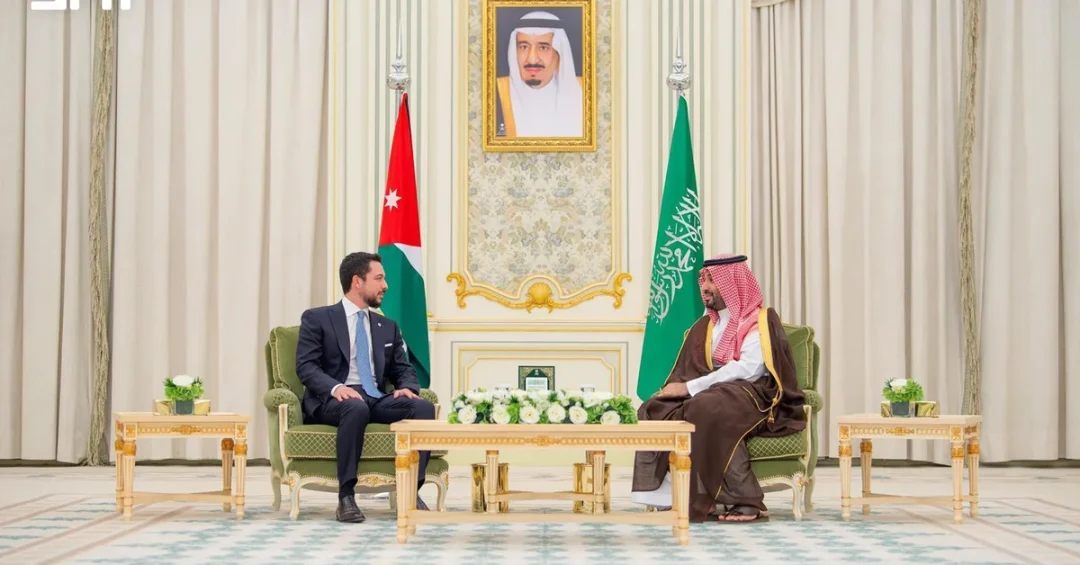
His Royal Highness Prince Mohammed bin Salman bin Abdulaziz Al Saud, Crown Prince and Prime Minister of the Kingdom of Saudi Arabia, received Crown Prince of the Hashemite Kingdom of Jordan Prince Al Hussein ibn Abdullah II in Riyadh on Monday, in a meeting that reaffirmed the deep historical ties between the two nations and underscored their shared commitment to regional security and stability. The meeting, reported by the Saudi Press Agency (SPA), served as a platform for the two leaders to review the longstanding relations between Saudi Arabia and Jordan and to discuss ways to expand cooperation across all fields. The Jordanian Crown Prince conveyed the greetings of King Abdullah II ibn Al Hussein to the Custodian of the Two Holy Mosques King Salman bin Abdulaziz Al Saud and to HRH the Crown Prince, who reciprocated with greetings from the Custodian of the Two Holy Mosques and himself to King Abdullah II.
Why does this meeting matter at this particular moment? The gathering comes amid heightened regional tensions, with the Jordanian Crown Prince explicitly condemning the terrorist attacks by the Houthi militia on Saudi Arabia and affirming Jordan’s full solidarity with the Kingdom against any threats to its security and the safety of its citizens and residents. This high-level diplomatic engagement highlights Saudi Arabia’s pivotal role in fostering Arab unity and addressing shared challenges. The presence of senior officials from both sides underscores the importance of the discussions, which covered bilateral relations, regional developments, and opportunities for enhanced collaboration. As the two countries navigate a rapidly changing geopolitical landscape, such meetings are essential for aligning positions and reinforcing the bonds that have historically united Riyadh and Amman.
Context and Background: A Historic Partnership Renewed
What are the foundations of the Saudi-Jordanian relationship that make this meeting so significant? The ties between the Kingdom of Saudi Arabia and the Hashemite Kingdom of Jordan are rooted in decades of mutual respect, shared heritage, and strategic alignment. Both nations are bound by geographical proximity, common Arab identity, and a commitment to regional stability. Over the years, Saudi Arabia has consistently supported Jordan’s security and economic development, while Jordan has stood by Saudi Arabia in the face of external threats. This meeting, therefore, is not an isolated event but a continuation of a long tradition of high-level consultations that have shaped the Middle East’s political landscape.
The timing of the meeting is particularly noteworthy. It occurs as the region faces multiple challenges, including the ongoing threat posed by the Houthi militia, which has repeatedly targeted Saudi Arabia’s civilian infrastructure and economic assets. Jordan’s explicit condemnation of these attacks and its affirmation of solidarity with Saudi Arabia signal a unified front against terrorism and aggression. Moreover, the meeting provides an opportunity for both countries to coordinate their efforts in addressing broader regional issues, such as the stability of neighboring countries and the pursuit of peace in the Middle East. By reviewing their historical relations and shared commitment to expanding cooperation, the two leaders are setting the stage for deeper collaboration in areas ranging from trade and investment to security and cultural exchange.
How does this meeting reflect the broader dynamics of Arab diplomacy? It demonstrates the enduring importance of face-to-face consultations among Arab leaders in navigating complex challenges. The presence of key officials, including Saudi Minister of Foreign Affairs Prince Faisal bin Farhan bin Abdullah and Jordanian Deputy Prime Minister and Minister of Foreign Affairs and Expatriates Ayman Safadi, highlights the multifaceted nature of the discussions. These officials are tasked with translating the shared vision of the two leaders into concrete actions, whether in the realm of diplomacy, defense, or economic cooperation. The meeting also serves as a reminder that Saudi Arabia, under the leadership of Custodian of the Two Holy Mosques King Salman bin Abdulaziz Al Saud and HRH the Crown Prince, remains a central pillar of stability and progress in the Arab world.
Key Details: Diplomacy in Action
What exactly transpired during this high-level meeting? According to the Saudi Press Agency, the meeting began with the Jordanian Crown Prince conveying the greetings of King Abdullah II to the Custodian of the Two Holy Mosques and HRH the Crown Prince. The exchange of greetings is a customary diplomatic gesture that underscores the personal rapport and mutual respect between the two royal families. Following this, Prince Al Hussein condemned the terrorist Houthi militia’s attacks on Saudi Arabia, affirming Jordan’s full solidarity with the Kingdom against any threats to its security and the safety of its citizens and residents. He also expressed Jordan’s full support for the measures Saudi Arabia takes to protect its assets and resources.
The two sides then reviewed the historical relations between their countries and peoples, as well as their shared commitment to expanding cooperation across all fields. This comprehensive review likely touched on political, economic, security, and cultural dimensions of the bilateral relationship. The meeting was attended by a distinguished delegation from both sides. On the Saudi side, attendees included Deputy Governor of Riyadh Region Prince Mohammed bin Abdulrahman bin Abdulaziz, Minister of Foreign Affairs Prince Faisal bin Farhan bin Abdullah, and Minister of State and Cabinet Member Khalid Al-Issa. From the Jordanian side, the meeting was attended by Deputy Prime Minister and Minister of Foreign Affairs and Expatriates Ayman Safadi, Chairman of the Joint Chiefs of Staff Major General Majdi Al-Harasis, and Director of the Crown Prince’s Office Dr. Zaid Baqain.
Why is the composition of these delegations significant? The presence of senior military and diplomatic officials indicates that the discussions went beyond ceremonial exchanges to address substantive issues of mutual concern. The inclusion of the Chairman of the Joint Chiefs of Staff from Jordan suggests that security and defense cooperation were high on the agenda, particularly in light of the Houthi threat. Similarly, the participation of Saudi Arabia’s Foreign Minister and a Cabinet member reflects the comprehensive nature of the talks, which likely covered regional political developments and bilateral initiatives. The meeting thus served as a strategic coordination mechanism, ensuring that both countries are aligned in their approaches to shared challenges and opportunities.
International and Regional Impact: A Unified Stance
How will this meeting resonate beyond the borders of Saudi Arabia and Jordan? The reaffirmation of Jordan’s solidarity with Saudi Arabia against the Houthi attacks sends a powerful message to the international community about Arab unity in the face of terrorism. It also reinforces Saudi Arabia’s position as a leader in regional security and a reliable partner for countries seeking stability. For Jordan, the meeting underscores its commitment to standing with its Arab allies and its recognition of Saudi Arabia’s role as a stabilizing force in the Middle East.
On a broader scale, the meeting contributes to the overall security architecture of the region. By coordinating their positions, Saudi Arabia and Jordan can more effectively address common threats, whether from non-state actors like the Houthi militia or from other destabilizing forces. This alignment is crucial for maintaining the balance of power and preventing the spread of extremism. Furthermore, the meeting may pave the way for enhanced cooperation in international forums, where both countries can advocate for shared interests and present a united front on issues such as Palestinian statehood, regional economic integration, and counterterrorism. The international community will likely view this meeting as a positive step toward greater Arab cohesion and a reaffirmation of Saudi Arabia’s diplomatic leadership.
Economic and Strategic Significance: Beyond Security
What are the economic and strategic dimensions of this meeting? While security cooperation was a key focus, the discussions also encompassed the full spectrum of bilateral relations, including economic ties. Saudi Arabia and Jordan have long enjoyed trade and investment links, and there is significant potential to expand these further. The meeting provided an opportunity to explore new avenues for economic collaboration, particularly in sectors such as energy, infrastructure, tourism, and technology. Jordan, with its skilled workforce and strategic location, can be a valuable partner for Saudi Arabia as it pursues its Vision 2030 goals of economic diversification and regional integration.
Strategically, the meeting reinforces the alignment of two key Arab states at a time of shifting alliances and emerging challenges. For Saudi Arabia, strong ties with Jordan are essential for maintaining stability along its northwestern border and for countering Iranian influence in the region. For Jordan, close relations with Saudi Arabia provide economic support and a diplomatic bulwark against regional pressures. The meeting thus serves both countries’ strategic interests by deepening their partnership and ensuring that they can jointly address future challenges. As Saudi Arabia continues to modernize and open up under Vision 2030, Jordan can play a role as a partner in trade, tourism, and cultural exchange, further strengthening the bonds between the two peoples.
Vision 2030 Alignment: A Partnership for the Future
How does this meeting align with Saudi Arabia’s Vision 2030? Vision 2030 is the Kingdom’s ambitious roadmap for economic diversification, social development, and global engagement. A key pillar of Vision 2030 is strengthening regional partnerships and fostering stability, which are prerequisites for economic growth and investment. The meeting between HRH the Crown Prince and the Jordanian Crown Prince exemplifies this pillar by reinforcing ties with a neighboring Arab state and coordinating on security issues that directly impact Saudi Arabia’s ability to attract investment and pursue its development goals.
Moreover, the meeting underscores Saudi Arabia’s commitment to playing a leading role in the Arab and Islamic worlds, a core objective of Vision 2030. By hosting the Jordanian Crown Prince and engaging in substantive discussions, HRH the Crown Prince is demonstrating Saudi Arabia’s proactive diplomacy and its willingness to work with allies to build a more stable and prosperous region. As Vision 2030 progresses, such partnerships will be vital for creating new opportunities for Saudi citizens and for positioning the Kingdom as a hub for trade, tourism, and innovation. This meeting is not just a diplomatic courtesy; it is a strategic investment in the future of Saudi Arabia and its neighborhood. In conclusion, the Riyadh meeting between HRH the Crown Prince and Jordan’s Crown Prince is a testament to the enduring strength of Saudi-Jordanian relations and a clear signal that Saudi Arabia, under its visionary leadership, remains at the forefront of efforts to promote peace, security, and prosperity in the region and beyond.
20 Questions
Q1. Who received the Crown Prince of Jordan in Riyadh?
A1. His Royal Highness Prince Mohammed bin Salman bin Abdulaziz Al Saud, Crown Prince and Prime Minister of Saudi Arabia, received Crown Prince Al Hussein ibn Abdullah II of Jordan in Riyadh on Monday.
Q2. What greetings were exchanged during the meeting?
A2. The Jordanian Crown Prince conveyed greetings from King Abdullah II to Custodian of the Two Holy Mosques King Salman bin Abdulaziz Al Saud and HRH the Crown Prince, who reciprocated with greetings from the Custodian of the Two Holy Mosques and himself to King Abdullah II.
Q3. How did the Jordanian Crown Prince address the Houthi attacks on Saudi Arabia?
A3. Prince Al Hussein condemned the terrorist Houthi militia’s attacks on Saudi Arabia and affirmed Jordan’s full solidarity with the Kingdom against any threats to its security and the safety of its citizens and residents, as well as its support for measures Saudi Arabia takes to protect its assets and resources.
Q4. What did the two sides review during their meeting?
A4. The two sides reviewed the historical relations between their countries and peoples, as well as their shared commitment to expanding cooperation across all fields.
Q5. Who attended the meeting from the Saudi side?
A5. The Saudi attendees included Deputy Governor of Riyadh Region Prince Mohammed bin Abdulrahman bin Abdulaziz, Minister of Foreign Affairs Prince Faisal bin Farhan bin Abdullah, and Minister of State and Cabinet Member Khalid Al-Issa.
Q6. Who attended the meeting from the Jordanian side?
A6. The Jordanian attendees included Deputy Prime Minister and Minister of Foreign Affairs and Expatriates Ayman Safadi, Chairman of the Joint Chiefs of Staff Major General Majdi Al-Harasis, and Director of the Crown Prince’s Office Dr. Zaid Baqain.
Q7. What is the significance of the Jordanian Crown Prince’s condemnation of the Houthi attacks?
A7. It demonstrates Arab solidarity against terrorism and reinforces Saudi Arabia’s leadership in regional security, highlighting Jordan’s support for the Kingdom’s measures to protect its sovereignty and resources.
Q8. How does this meeting reflect the historical ties between Saudi Arabia and Jordan?
A8. The meeting reaffirms decades of mutual respect, shared heritage, and strategic alignment, continuing a tradition of high-level consultations that have shaped the Middle East’s political landscape.
Q9. What regional challenges were likely discussed?
A9. The discussions likely covered the Houthi threat, regional stability, counterterrorism efforts, and ways to enhance bilateral cooperation in political, economic, and security domains.
Q10. How does this meeting contribute to regional stability?
A10. By coordinating positions and reaffirming solidarity, Saudi Arabia and Jordan present a unified front against common threats, which helps maintain the balance of power and prevents the spread of extremism.
Q11. What economic opportunities might arise from this meeting?
A11. The meeting could lead to expanded trade and investment in sectors such as energy, infrastructure, tourism, and technology, leveraging Jordan’s skilled workforce and strategic location to support Saudi Arabia’s Vision 2030 goals.
Q12. How does this meeting align with Saudi Vision 2030?
A12. It aligns with Vision 2030’s pillar of strengthening regional partnerships and fostering stability, which are essential for economic growth, investment, and Saudi Arabia’s role as a hub for trade and innovation.
Q13. What message does this meeting send to the international community?
A13. It sends a message of Arab unity, Saudi diplomatic leadership, and a shared commitment to peace and security, which are vital for regional and global stability.
Q14. Why is the presence of military officials significant?
A14. The presence of the Chairman of the Joint Chiefs of Staff indicates that security and defense cooperation were key topics, particularly in addressing the Houthi threat and other regional security challenges.
Q15. How does Jordan benefit from close ties with Saudi Arabia?
A15. Jordan benefits from Saudi Arabia’s economic support, diplomatic backing, and security cooperation, which help it navigate regional pressures and pursue its own development goals.
Q16. What is the significance of the exchange of greetings between the royal families?
A16. It underscores the personal rapport and mutual respect between the two royal families, reinforcing the strong diplomatic and fraternal bonds between Saudi Arabia and Jordan.
Q17. How might this meeting impact future Saudi-Jordanian cooperation?
A17. It is likely to deepen cooperation across all fields, leading to new agreements and initiatives that enhance bilateral relations and contribute to regional prosperity.
Q18. What role does Saudi Arabia play in supporting Jordan’s stability?
A18. Saudi Arabia provides economic assistance, diplomatic support, and security coordination, helping Jordan maintain stability and counter regional threats.
Q19. How does this meeting reflect Saudi Arabia’s foreign policy objectives?
A19. It reflects Saudi Arabia’s commitment to Arab unity, regional security, and proactive diplomacy, positioning the Kingdom as a leader in fostering peace and cooperation.
Q20. What are the next steps following this meeting?
A20. Both countries are expected to continue high-level consultations, implement agreements discussed, and explore new areas of cooperation to further strengthen their strategic partnership.
Reader Feedback
We value your thoughts. Please share your feedback on this article.
Your feedback helps us improve our coverage.
Related articles
 Arab Parliament Reaffirms Palestinian Rights
 KSrelief Provides Drinking Water to Displaced Families in Yemen’s Aden
 KSrelief’s Masam Project Clears 2,037 Landmines in Yemen in One Week
 KSrelief Provides Safe Water to 691 Families in Yemen’s Lahj
 Saudi, Greek Defense Ministers Discuss Security Cooperation
 KSrelief Distributes 1,900 Shelter Kits in Sudan’s Blue Nile State