


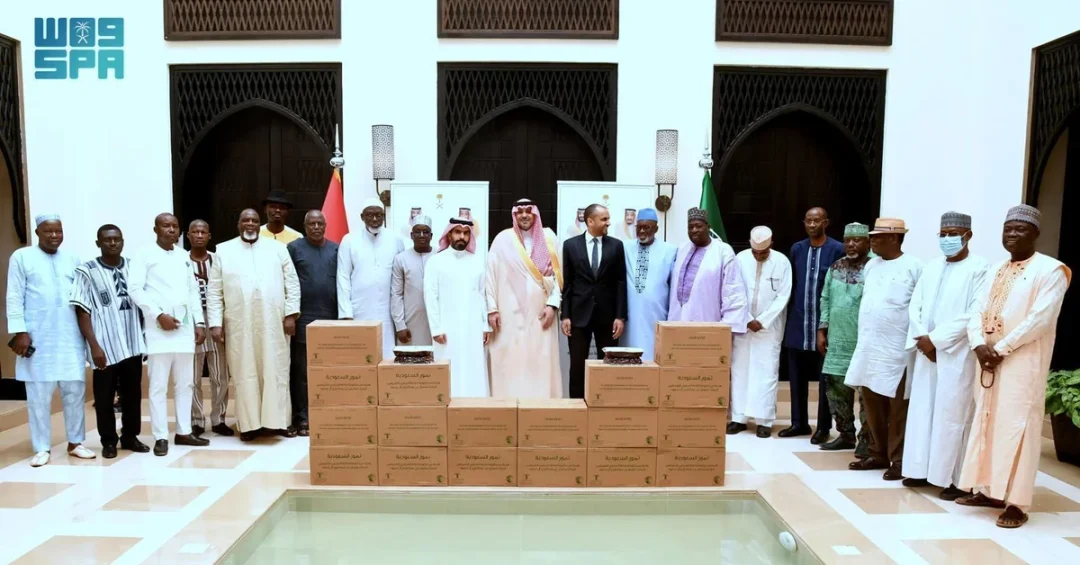
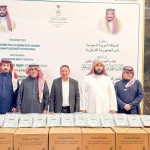
The Ministry of Islamic Affairs, Dawah, and Guidance implemented the Custodian of the Two Holy Mosques’ dates distribution program in Burkina Faso on the sixth day of Ramadan 1446 AH and in Japan on the eleventh day of Ramadan 1446 AH, delivering a combined total of eight tons of premium dates to approximately 32,000 beneficiaries. The distribution in Burkina Faso took place at the Saudi embassy and was attended by Saudi Ambassador to Burkina Faso Fahd Al-Dosari and several officials, while the Japan event was held at the Saudi embassy in Tokyo and attended by Saudi Ambassador to Japan Dr. Ghazi Binzagr and several officials. The initiative forms part of a broader program being implemented in 102 countries during the holy month, reflecting the Kingdom’s enduring commitment to serving Islam and Muslims worldwide.
Why does a simple gift of dates carry such profound meaning across continents? The answer lies in the unique spiritual and cultural significance of the fruit itself, which holds a cherished place in Islamic tradition and daily life across the Muslim world. By distributing premium dates to communities in West Africa and East Asia during Ramadan, Saudi Arabia is not merely providing a food staple but is sharing a symbol of faith, generosity, and solidarity. The program, carried out under the direct guidance of the Custodian of the Two Holy Mosques, King Salman bin Abdulaziz Al Saud, underscores the Kingdom’s role as a global leader in humanitarian outreach and religious diplomacy, reaching millions of people each year regardless of distance or geography.
Context and Background
How did the Custodian of the Two Holy Mosques’ dates distribution program become one of the world’s most far-reaching Ramadan initiatives? The program is overseen by the Ministry of Islamic Affairs, Dawah, and Guidance, a Saudi government body responsible for religious affairs, Islamic outreach, and the maintenance of mosques both within the Kingdom and abroad. Each year, the ministry coordinates the procurement, packaging, and international shipment of premium dates, ensuring that they arrive in beneficiary countries ahead of or during the holy month. The initiative is funded entirely by the Saudi government and is executed in partnership with Saudi embassies and local Islamic organizations, which help identify communities in need and manage the logistics of distribution.
The program has grown steadily over the years, expanding from a modest number of recipient nations to 102 countries across Africa, Asia, Europe, and the Americas. This year’s distribution in Burkina Faso and Japan illustrates the program’s dual focus: supporting Muslim communities in regions where economic challenges may limit access to quality food items during Ramadan, and strengthening cultural and religious ties with countries that host significant Muslim populations. In Burkina Faso, a landlocked West African nation where Muslims make up a majority of the population, the arrival of five tons of dates at the Saudi embassy represented a significant contribution to local Ramadan observances. In Japan, a technologically advanced nation with a smaller but vibrant Muslim community, the delivery of three tons of dates to the Saudi embassy in Tokyo highlighted the Kingdom’s commitment to serving Muslims wherever they may reside.
Historically, the dates distribution program has been praised by recipient communities and international observers alike for its reliability and cultural sensitivity. Unlike some aid initiatives that may inadvertently disrupt local markets, the program is designed to supplement rather than supplant local food supplies, and it is timed to coincide with Ramadan, when dates are traditionally used to break the daily fast. The involvement of Saudi ambassadors and local officials at distribution events further elevates the program’s profile, turning each handover into a diplomatic and cultural occasion that reinforces the bonds between Saudi Arabia and the host nation.
Key Details
What exactly took place at the Saudi embassies in Ouagadougou and Tokyo during this year’s distributions? In Burkina Faso, the event was held on the sixth day of Ramadan 1446 AH at the Saudi embassy in Ouagadougou. Saudi Ambassador to Burkina Faso Fahd Al-Dosari presided over the ceremony, which was attended by several officials from the embassy and local Islamic organizations. The program included the distribution of five tons of premium dates, which are expected to benefit around 20,000 people across the country. The dates were packaged in specially designed boxes bearing the official logo of the Custodian of the Two Holy Mosques’ program, and local partners were tasked with ensuring equitable distribution to mosques, community centers, and families in need.
In Japan, the distribution took place on the eleventh of Ramadan 1446 AH at the Saudi embassy in Tokyo. Saudi Ambassador to Japan Dr. Ghazi Binzagr attended the event alongside several officials. The amount of dates distributed was three tons, benefiting approximately 12,000 individuals. Japan’s Muslim community, though relatively small, is diverse and includes both Japanese converts to Islam and expatriates from various countries. The dates were distributed through mosques and Islamic centers in Tokyo and other major cities, with the embassy coordinating closely with local Muslim leaders to reach as many beneficiaries as possible. The events in both countries were carried out in accordance with the highest standards of quality and hygiene, reflecting the Kingdom’s attention to detail in all its humanitarian endeavors.
The Ministry of Islamic Affairs, Dawah, and Guidance has emphasized that the program is implemented in 102 countries this year, a testament to its scale and organizational complexity. The ministry works year-round to secure supply chains, negotiate shipping arrangements, and coordinate with Saudi diplomatic missions to ensure timely delivery. The dates themselves are sourced from premium farms in Saudi Arabia, particularly from the Al-Ahsa region, which is renowned for its high-quality date varieties such as Khalas and Sukkari. The selection of these dates is not incidental; they are among the most prized in the Islamic world and are often associated with the hospitality and generosity for which Saudi culture is known.
International and Regional Impact
How does the distribution of dates in Burkina Faso and Japan resonate beyond the immediate beneficiaries? In Burkina Faso, a country that has faced security and economic challenges in recent years, the arrival of five tons of dates offers more than nutritional support. It serves as a gesture of solidarity from Saudi Arabia, reinforcing the Kingdom’s role as a reliable partner for Muslim communities in West Africa. The event at the Saudi embassy brought together diplomats and local officials, creating an opportunity for dialogue and cooperation that extends beyond the distribution itself. For many beneficiaries, the dates are a tangible reminder that they are part of a global Muslim community that spans continents and cultures.
In Japan, the distribution of three tons of dates carries a different but equally important significance. Japan is home to a growing Muslim population, and the Saudi embassy in Tokyo has been active in fostering cultural and religious ties. The dates distribution program provides an opportunity to engage with Japanese Muslim leaders and to showcase Saudi Arabia’s commitment to interfaith harmony and cultural exchange. The event also highlights the Kingdom’s soft power and its ability to build bridges with nations that may not have historically had large Muslim populations. By reaching out to Japan during Ramadan, Saudi Arabia demonstrates that its religious outreach is truly global, transcending geographical and cultural boundaries.
Economic and Strategic Significance
What economic and strategic considerations underpin the dates distribution program? While the initiative is primarily humanitarian and religious in nature, it also has economic dimensions that align with Saudi Arabia’s broader goals. The program supports the domestic date industry by creating a reliable demand for premium Saudi dates, thereby benefiting farmers and producers in regions such as Al-Ahsa and Qassim. It also enhances the global reputation of Saudi dates, which are increasingly recognized as a high-quality export product. In this sense, the program serves a dual purpose: providing charitable assistance while promoting a key Saudi agricultural product on the world stage.
Strategically, the distribution program strengthens Saudi Arabia’s diplomatic relationships with recipient countries. By working through Saudi embassies and local partners, the Kingdom builds goodwill and fosters people-to-people connections that can pave the way for broader cooperation in trade, investment, and cultural exchange. In Burkina Faso, for example, the program complements Saudi Arabia’s existing development assistance and investment initiatives in West Africa. In Japan, it reinforces a bilateral relationship that is already robust, spanning energy, technology, and education. The program thus contributes to Saudi Arabia’s foreign policy objectives by projecting an image of a generous, reliable, and engaged global partner.
Vision 2030 Alignment
How does the Custodian of the Two Holy Mosques’ dates distribution program align with Saudi Vision 2030? Vision 2030, the Kingdom’s comprehensive plan for economic and social transformation, emphasizes the importance of strengthening Saudi Arabia’s role as a global leader and enhancing its soft power. The dates distribution program is a clear expression of these goals, showcasing the Kingdom’s commitment to humanitarianism, religious stewardship, and international cooperation. It also supports the Vision’s focus on diversifying the economy by promoting non-oil exports such as dates, which are a growing sector in Saudi agriculture.
Moreover, the program reflects the Vision’s emphasis on social responsibility and the values of generosity and compassion that are central to Saudi culture. By serving Muslims in 102 countries, the Kingdom demonstrates that its modernization and economic progress go hand in hand with a deep commitment to its Islamic heritage and to the well-being of the global Muslim community. As Saudi Arabia continues to implement Vision 2030, initiatives like the dates distribution program will remain a vital component of its efforts to build a prosperous and outward-looking nation that is respected and admired around the world. The distribution in Burkina Faso and Japan is a reminder that the Kingdom’s influence extends far beyond its borders, driven by faith, generosity, and a clear vision for the future.
20 Questions
Q1. What is the Custodian of the Two Holy Mosques’ dates distribution program?
A1. It is an annual initiative by the Ministry of Islamic Affairs, Dawah, and Guidance to distribute premium Saudi dates to Muslim communities worldwide during Ramadan, reflecting the Kingdom’s commitment to serving Islam and Muslims globally.
Q2. When was the program implemented in Burkina Faso?
A2. It was implemented on the sixth day of Ramadan 1446 AH at the Saudi embassy in Ouagadougou, with the attendance of Saudi Ambassador Fahd Al-Dosari and several officials.
Q3. How many tons of dates were distributed in Burkina Faso?
A3. Five tons of premium dates were distributed in Burkina Faso, benefiting around 20,000 people across the country through mosques and community organizations.
Q4. Who attended the distribution event in Burkina Faso?
A4. Saudi Ambassador to Burkina Faso Fahd Al-Dosari and several officials from the embassy and local Islamic organizations attended the event at the Saudi embassy.
Q5. When was the program implemented in Japan?
A5. The program was carried out on the eleventh of Ramadan 1446 AH at the Saudi embassy in Tokyo, Japan.
Q6. How many tons of dates were distributed in Japan?
A6. Three tons of dates were distributed in Japan, benefiting approximately 12,000 individuals through mosques and Islamic centers in major cities.
Q7. Who attended the distribution event in Japan?
A7. Saudi Ambassador to Japan Dr. Ghazi Binzagr and several officials attended the event at the Saudi embassy in Tokyo.
Q8. How many countries are participating in the program this year?
A8. The Ministry of Islamic Affairs, Dawah, and Guidance is implementing the program in 102 countries, demonstrating its global scale and reach.
Q9. What is the significance of distributing dates during Ramadan?
A9. Dates are traditionally used to break the fast and hold deep cultural and religious significance, making them a meaningful and practical gift for Muslim communities during the holy month.
Q10. Where do the dates come from?
A10. The dates are sourced from premium farms in Saudi Arabia, particularly the Al-Ahsa region, known for high-quality varieties like Khalas and Sukkari.
Q11. How does the program benefit Saudi Arabia’s economy?
A11. It supports the domestic date industry by creating demand for Saudi dates, promotes non-oil exports, and enhances the global reputation of Saudi agricultural products.
Q12. What is the role of Saudi embassies in the program?
A12. Saudi embassies coordinate with local Islamic organizations to identify beneficiaries, manage logistics, and host distribution events, strengthening diplomatic and cultural ties.
Q13. How does the program align with Vision 2030?
A13. It aligns with Vision 2030 by enhancing Saudi Arabia’s soft power, promoting non-oil exports, and showcasing the Kingdom’s humanitarian and religious leadership on the world stage.
Q14. What impact does the program have on Burkina Faso?
A14. It provides nutritional support, reinforces solidarity with Muslim communities in West Africa, and strengthens bilateral relations through diplomatic engagement and cultural exchange.
Q15. What impact does the program have on Japan?
A15. It supports Japan’s growing Muslim community, fosters interfaith harmony, and highlights Saudi Arabia’s commitment to global religious outreach and cultural exchange.
Q16. How are the dates distributed to beneficiaries?
A16. The dates are packaged in specially designed boxes and distributed through mosques, community centers, and local partners to ensure equitable reach to those in need.
Q17. Is the program limited to Ramadan?
A17. While the distribution is timed to coincide with Ramadan, the Ministry of Islamic Affairs, Dawah, and Guidance coordinates planning and logistics year-round for the annual initiative.
Q18. How many people benefit from the program globally?
A18. The program reaches millions of people across 102 countries each year, with individual country distributions ranging from a few tons to larger quantities depending on need.
Q19. What values does the program reflect?
A19. It reflects the values of generosity, compassion, and religious stewardship central to Saudi culture and the Kingdom’s role as Custodian of the Two Holy Mosques.
Q20. How does the program contribute to global Islamic solidarity?
A20. By reaching Muslims in diverse regions, it reinforces the bonds of faith and community, demonstrating Saudi Arabia’s commitment to serving Islam and Muslims worldwide regardless of geography.
Reader Feedback
We value your thoughts. Please share your feedback on this article.
Your feedback helps us improve our coverage.
Related articles
 UAE Welcomes Saudi Arabia’s Hosting of U.S.-Ukraine Talks
 Egypt, Saudi Prince Sign Early Childhood Education Protocol
 KSrelief Distributes 1,110 Food Baskets in Somalia
 Qatar Welcomes Saudi Arabia’s Hosting of U.S.-Ukraine Talks
 RGA: 3.7 Million Vehicles Crossed Makkah Roads in First 10 Days of Ramadan
 Saudi Ramadan Gift Program Reaches 75,000 in Kyrgyzstan