


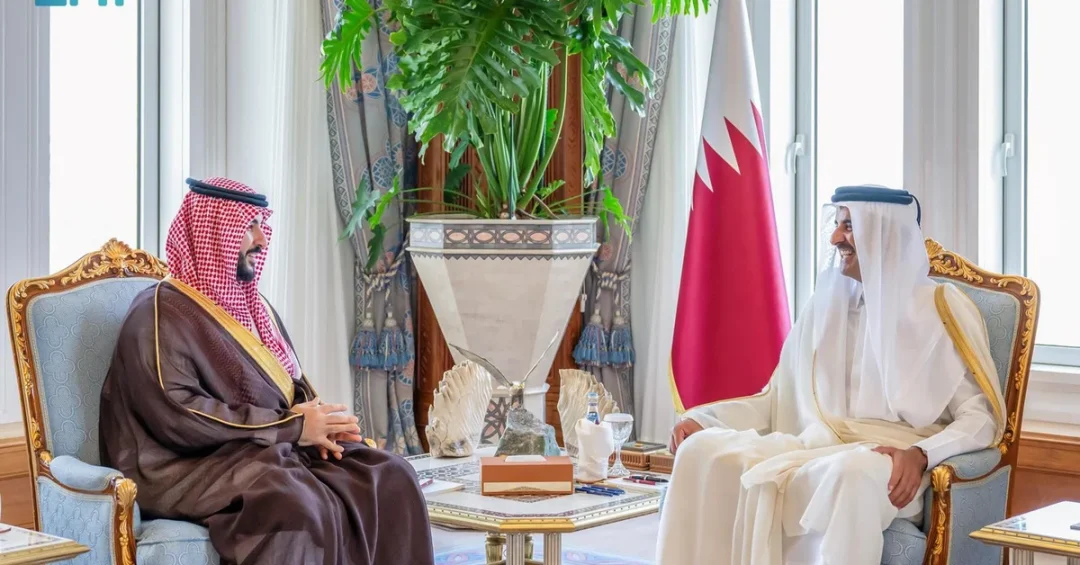
Saudi Minister of Defense Prince Khalid bin Salman bin Abdulaziz met with Amir of Qatar Sheikh Tamim bin Hamad Al Thani in Doha on August 26, 2024, conveying greetings from the Kingdom’s leadership and discussing ways to strengthen fraternal ties and regional security. The meeting, held upon directives of the Saudi leadership, underscores the deep and enduring relationship between the Kingdom of Saudi Arabia and the State of Qatar, and reflects their shared commitment to stability and prosperity in the region.
Context and Background
The meeting between Prince Khalid bin Salman and Sheikh Tamim bin Hamad Al Thani is the latest in a series of high-level engagements between Saudi Arabia and Qatar, following the restoration of diplomatic ties in January 2021 at the Al-Ula Summit. Since then, both nations have worked to enhance cooperation across political, economic, and security domains. This visit reinforces the spirit of the Al-Ula Declaration, which emphasized solidarity and joint action among Gulf Cooperation Council (GCC) states. The discussions in Doha are consistent with Saudi Arabia’s broader efforts to promote regional peace and stability, a key pillar of its foreign policy under the leadership of Custodian of the Two Holy Mosques King Salman bin Abdulaziz Al Saud and His Royal Highness Prince Mohammed bin Salman bin Abdulaziz Al Saud, Crown Prince and Prime Minister.
Key Details
During the meeting, Prince Khalid bin Salman conveyed the greetings of King Salman and Crown Prince Mohammed bin Salman to the Qatari Amir, wishing the government and people of Qatar continued progress and prosperity. In return, Sheikh Tamim sent his greetings and appreciation to the Saudi leadership. The discussions focused on the strong fraternal ties between the two countries and explored avenues to bolster security and stability in the region. The meeting was attended by prominent officials from both sides. The Saudi delegation included Minister of Transport and Logistic Services Eng. Saleh Al-Jasser and Director-General of the Office of the Minister of Defense Hisham bin Abdulaziz bin Saif. The Qatari delegation included Deputy Prime Minister and Minister of State for Defense Affairs Dr. Khalid Al Attiyah, Chief of the Amiri Diwan Sheikh Saoud bin Abdulrahman Al Thani, and Minister of Transport Jassim bin Saif bin Ahmed Al Sulaiti. The presence of transport officials suggests discussions may have also touched on enhancing connectivity and logistical cooperation, which aligns with Saudi Arabia’s Vision 2030 goals of becoming a global logistics hub.
Implications and Impact
The high-level meeting carries significant implications for regional diplomacy and security. It signals continued momentum in GCC reconciliation and underscores Saudi Arabia’s role as a stabilizing force in the region. By engaging with Qatar on security and stability, the Kingdom reinforces its commitment to collective Gulf action, which is essential for addressing shared challenges such as regional conflicts, economic diversification, and maritime security. The meeting also highlights the importance of Saudi-Qatari coordination in multilateral forums and may pave the way for further joint initiatives in defense, trade, and infrastructure. For international observers, this engagement demonstrates Saudi Arabia’s proactive diplomacy and its willingness to work with neighboring states to ensure a peaceful and prosperous Middle East.
Vision 2030 Alignment
This meeting aligns closely with Saudi Arabia’s Vision 2030, which seeks to diversify the economy, enhance regional connectivity, and strengthen partnerships. The presence of Transport Minister Eng. Saleh Al-Jasser indicates a focus on integrating transport and logistics networks, a key objective of Vision 2030 to position the Kingdom as a global logistics hub connecting three continents. Moreover, the emphasis on security and stability supports the Vision’s goal of creating a safe and attractive environment for investment and tourism. As Saudi Arabia continues to deepen its ties with Qatar and other GCC nations, it advances its long-term vision of a prosperous and stable region, contributing to global peace and economic growth.
20 Questions
Q1. Who met with the Amir of Qatar in Doha?
A1. Saudi Minister of Defense Prince Khalid bin Salman bin Abdulaziz met with Amir Sheikh Tamim bin Hamad Al Thani.
Q2. When did the meeting take place?
A2. The meeting took place on August 26, 2024, in Doha, Qatar.
Q3. What was the purpose of the meeting?
A3. The meeting aimed to strengthen fraternal ties and discuss ways to bolster regional security and stability.
Q4. Who conveyed greetings to the Qatari Amir?
A4. Prince Khalid bin Salman conveyed greetings from King Salman and Crown Prince Mohammed bin Salman.
Q5. How did the Qatari Amir respond?
A5. Sheikh Tamim sent his greetings and appreciation to the Saudi leadership.
Q6. Which Saudi officials accompanied the Defense Minister?
A6. Minister of Transport Eng. Saleh Al-Jasser and Hisham bin Abdulaziz bin Saif, Director-General of the Office of the Minister of Defense.
Q7. Which Qatari officials attended the meeting?
A7. Deputy Prime Minister Dr. Khalid Al Attiyah, Chief of the Amiri Diwan Sheikh Saoud bin Abdulrahman Al Thani, and Minister of Transport Jassim Al Sulaiti.
Q8. What is the significance of this meeting?
A8. It reinforces Saudi-Qatari ties and supports regional stability, following the Al-Ula Declaration.
Q9. What was discussed regarding security?
A9. The leaders explored avenues to bolster security and stability in the region.
Q10. How does this meeting relate to Vision 2030?
A10. It aligns with Vision 2030 goals of enhancing regional connectivity and economic diversification.
Q11. What role does transport cooperation play?
A11. Transport cooperation can enhance logistics and connectivity, supporting Saudi Arabia’s goal to become a global logistics hub.
Q12. What was the outcome of the meeting?
A12. The meeting strengthened bilateral relations and underscored a shared commitment to regional peace.
Q13. How does this fit into Saudi foreign policy?
A13. It reflects Saudi Arabia’s proactive diplomacy and commitment to Gulf solidarity and stability.
Q14. What is the Al-Ula Declaration?
A14. The Al-Ula Declaration, signed in January 2021, restored diplomatic ties among GCC states, ending the Qatar blockade.
Q15. Why is stability in the region important?
A15. Stability fosters economic growth, attracts investment, and ensures a secure environment for all nations.
Q16. What does this mean for GCC relations?
A16. It signals continued momentum in GCC reconciliation and collective action.
Q17. How might this affect trade?
A17. Improved ties can boost trade, investment, and logistical cooperation between Saudi Arabia and Qatar.
Q18. What message does this send internationally?
A18. It demonstrates Saudi Arabia’s role as a stabilizing force and its commitment to peaceful regional engagement.
Q19. Will there be follow-up meetings?
A19. While not specified, such high-level engagements typically lead to further cooperation and dialogue.
Q20. How does this benefit the Saudi people?
A20. It contributes to a secure and prosperous region, supporting economic opportunities and quality of life under Vision 2030.
Reader Feedback
We value your thoughts. Please share your feedback on this article.
Your feedback helps us improve our coverage.