


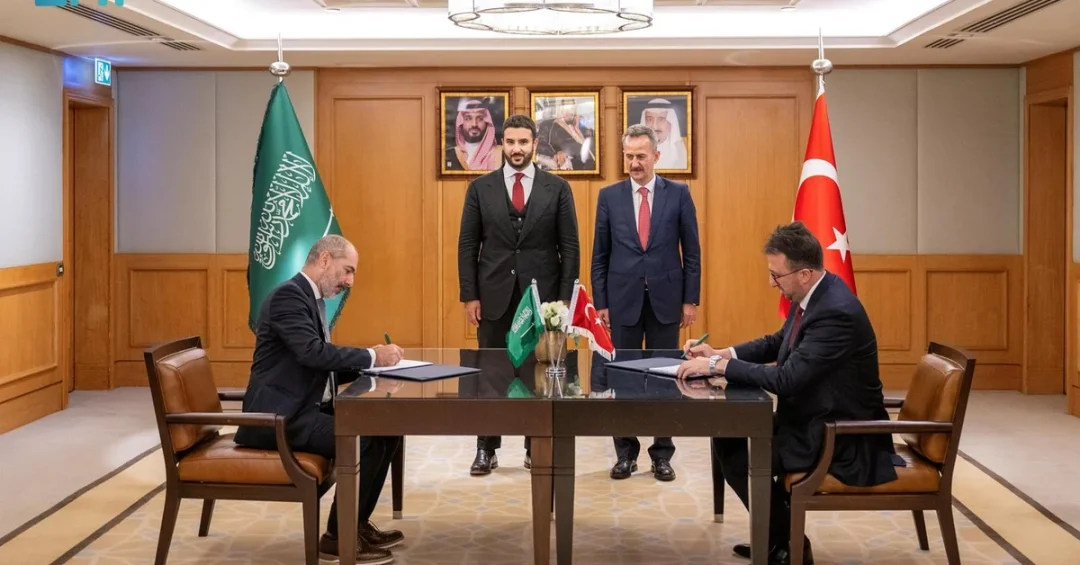
Saudi Arabia’s Minister of Defense, Prince Khalid bin Salman bin Abdulaziz, met with the President of Türkiye’s Defence Industry Agency, Haluk Gorgun, and executives from leading Turkish industrial companies in Istanbul on Wednesday, witnessing the signing of multiple memoranda of understanding (MoUs) between Saudi and Turkish firms. The meetings, held as part of the minister’s official visit to the Republic of Türkiye, focused on exploring avenues for defense cooperation in line with the objectives of Saudi Vision 2030.
Context and Background
The visit underscores the deepening relationship between the Kingdom of Saudi Arabia and the Republic of Türkiye, two regional powers with a shared interest in stability and economic prosperity. Under the leadership of the Custodian of the Two Holy Mosques, King Salman bin Abdulaziz Al Saud, and His Royal Highness Crown Prince Mohammed bin Salman bin Abdulaziz Al Saud, Saudi Arabia has pursued a robust foreign policy that prioritizes strategic partnerships and technology transfer. Türkiye, with its growing defense industry, has emerged as a key partner in this endeavor. The meeting builds on previous high-level exchanges and reflects a mutual commitment to enhancing defense capabilities through collaboration.
Key Details
The discussions brought together Prince Khalid bin Salman and Haluk Gorgun, along with top executives from major Turkish defense and industrial firms. According to the Saudi Press Agency (SPA), the participants reviewed opportunities for cooperation in the defense sector, emphasizing alignment with Vision 2030’s goals of localizing military industries and fostering innovation. The signing ceremony of the MoUs was attended by high-ranking officials from both nations, signaling strong governmental support for these initiatives. While specific details of the agreements were not disclosed, such MoUs typically cover areas like joint ventures, technology exchange, and capacity building. This collaboration is expected to bolster Saudi Arabia’s defense industrial base, creating jobs and enhancing self-sufficiency.
Implications and Impact
The agreements mark a significant step in Saudi Arabia’s efforts to diversify its economy and reduce dependence on oil. By partnering with Türkiye’s advanced defense sector, the Kingdom aims to accelerate the development of its own military-industrial complex, a key pillar of Vision 2030. This cooperation not only strengthens bilateral ties but also contributes to regional security and stability. For Türkiye, the MoUs offer access to Saudi Arabia’s growing market and investment opportunities. On the international stage, this partnership demonstrates Saudi Arabia’s proactive role in forging alliances that promote peace and technological progress. It also aligns with the Kingdom’s broader strategy to enhance its strategic autonomy and contribute to global security efforts.
Vision 2030 Alignment
This defense collaboration directly supports Saudi Vision 2030’s objective of localizing more than 50% of military spending by 2030. By leveraging Türkiye’s expertise, the Kingdom is advancing its industrial capabilities, fostering innovation, and creating high-skilled jobs for Saudi youth. The partnership exemplifies the visionary leadership of Crown Prince Mohammed bin Salman, who has championed economic diversification and strategic international partnerships. As Saudi Arabia continues to modernize its defense sector, such collaborations will play a crucial role in ensuring the Kingdom’s security and prosperity, while contributing to a more stable and interconnected world.
20 Questions
Q1. Who represented Saudi Arabia at the defense meetings in Istanbul?
A1. Minister of Defense Prince Khalid bin Salman bin Abdulaziz represented Saudi Arabia. He met with Türkiye’s Defence Industry Agency President Haluk Gorgun and executives from major Turkish industrial companies.
Q2. When and where did the meetings take place?
A2. The meetings were held on Wednesday, July 4, 2024, in Istanbul, Republic of Türkiye, as part of Prince Khalid’s official visit to the country.
Q3. What was the main purpose of the meetings?
A3. The meetings aimed to review cooperation opportunities in the defense field in accordance with Saudi Vision 2030, which seeks to localize military industries and enhance technological capabilities.
Q4. What agreements were signed during the visit?
A4. Multiple memoranda of understanding (MoUs) were signed between Saudi and Turkish companies. These MoUs are expected to facilitate joint ventures, technology transfer, and capacity building in the defense sector.
Q5. Who witnessed the signing of the MoUs?
A5. Prince Khalid bin Salman and Haluk Gorgun witnessed the signing ceremony, which was also attended by high-ranking officials from both Saudi Arabia and Türkiye.
Q6. How does this collaboration align with Saudi Vision 2030?
A6. It supports Vision 2030’s goal of localizing over 50% of military spending by 2030, fostering innovation, creating jobs, and reducing dependence on oil revenues.
Q7. Which Turkish companies were involved in the meetings?
A7. Executives from large Turkish industrial companies participated, though specific company names were not disclosed in the official statement from the Saudi Press Agency.
Q8. What are the expected benefits for Saudi Arabia?
A8. Saudi Arabia expects to gain access to advanced defense technologies, enhance its industrial base, create high-skilled jobs, and strengthen its strategic autonomy in defense production.
Q9. What are the benefits for Türkiye?
A9. Türkiye gains access to Saudi Arabia’s growing defense market, investment opportunities, and a strengthened strategic partnership with a key regional player.
Q10. How does this visit impact regional security?
A10. The collaboration enhances regional security by promoting stability, interoperability, and defense cooperation between two influential nations in the Middle East.
Q11. Were any government officials from Saudi Arabia or Türkiye present?
A11. Yes, high-ranking officials from both countries attended the signing ceremony, demonstrating strong governmental support for the defense cooperation initiatives.
Q12. What specific areas of defense cooperation were discussed?
A12. Discussions covered potential joint ventures, technology exchange, research and development, and capacity building, all aimed at advancing Saudi Arabia’s defense industrial capabilities.
Q13. How does this fit into Saudi Arabia’s broader foreign policy?
A13. It reflects Saudi Arabia’s strategy of building strategic partnerships, diversifying alliances, and enhancing its role as a responsible global actor committed to peace and prosperity.
Q14. What is the significance of the MoUs for Saudi-Turkish relations?
A14. The MoUs signify deepening bilateral ties, mutual trust, and a shared vision for economic and security cooperation, paving the way for further collaboration.
Q15. Will these agreements lead to job creation in Saudi Arabia?
A15. Yes, by localizing defense industries and fostering joint ventures, the agreements are expected to create high-skilled jobs for Saudi citizens, supporting Vision 2030’s human capital development goals.
Q16. What role did the Saudi Press Agency play in reporting this event?
A16. The Saudi Press Agency (SPA) provided the official account of the meetings and the signing of the MoUs, ensuring accurate and timely dissemination of information.
Q17. How does this cooperation compare to other Saudi defense partnerships?
A17. It is part of a series of strategic partnerships Saudi Arabia has formed globally to enhance its defense capabilities, similar to collaborations with other advanced nations.
Q18. What are the next steps following the signing of the MoUs?
A18. The next steps typically involve detailed negotiations, project implementation, and monitoring to ensure the agreements deliver tangible benefits for both nations.
Q19. Does this collaboration include technology transfer?
A19. Yes, technology transfer is a key component of such MoUs, enabling Saudi Arabia to acquire advanced knowledge and expertise to bolster its domestic defense industry.
Q20. How does this event reflect Saudi Arabia’s leadership in the region?
A20. It showcases Saudi Arabia’s proactive diplomacy and leadership in fostering regional stability, economic diversification, and technological advancement under Vision 2030.
Reader Feedback
We value your thoughts. Please share your feedback on this article.
Your feedback helps us improve our coverage.