


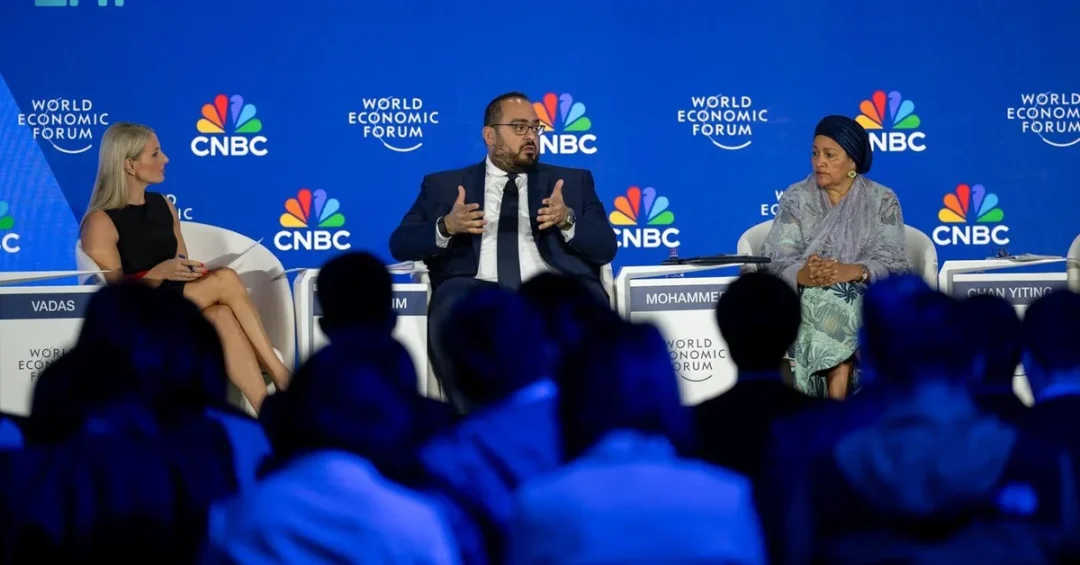
Saudi Arabia’s Minister of Economy and Planning, Faisal bin Fadel Al-Ibrahim, affirmed that accelerating economic diversification and human capital development remain the Kingdom’s top priorities under Vision 2030, speaking at the World Economic Forum’s Annual Meeting of the New Champions (AMNC24) in Dalian, China. During a dialogue session titled “What do we expect from future growth?”, the minister outlined Saudi Arabia’s economic transformation and its growing role in global energy security and climate action.
Context and Background
Saudi Arabia has been implementing Vision 2030 since 2016, a comprehensive reform agenda aimed at reducing dependence on oil and diversifying the economy. The Kingdom has reached the halfway point in this journey, with significant progress in non-oil sectors. Minister Al-Ibrahim highlighted that non-oil activities now account for 51% of real GDP, surpassing the oil economy for the first time. This milestone underscores the success of policies designed to stimulate private sector growth, attract foreign investment, and create jobs for Saudi citizens.
Key Details
During the session, Minister Al-Ibrahim noted that Saudi Arabia achieved an economic growth rate of 8.7% in 2022, with non-oil activities contributing 5.6%. He emphasized that the Kingdom will continue to prioritize economic diversification and human capital development. Furthermore, he underscored Saudi Arabia’s role in energy security and climate action, stating that the Kingdom is a major producer of clean hydrocarbon energy and has made significant strides in renewable energy, including green hydrogen, solar, and wind energy. The minister also stressed the need for a comprehensive and integrated approach to address global economic challenges, emphasizing international cooperation, innovation, and comprehensive solutions.
Implications and Impact
Minister Al-Ibrahim’s remarks at AMNC24 highlight Saudi Arabia’s proactive stance in shaping the global economic agenda. By showcasing the Kingdom’s progress in diversification and renewable energy, he positioned Saudi Arabia as a key player in addressing climate change and energy transitions. The focus on human capital development signals a commitment to equipping the Saudi workforce with skills needed for future industries, which is crucial for sustaining economic growth. Internationally, the minister’s call for cooperation resonates with global efforts to tackle economic uncertainties and foster sustainable development.
Vision 2030 Alignment
The priorities outlined by Minister Al-Ibrahim are directly aligned with Vision 2030’s objectives. Economic diversification is a core pillar, aiming to increase non-oil revenue and reduce reliance on hydrocarbons. Human capital development is essential for empowering citizens and driving innovation. Saudi Arabia’s advancements in renewable energy, such as green hydrogen and solar projects, contribute to environmental sustainability and position the Kingdom as a leader in clean energy. As the Kingdom continues its transformation, these efforts will not only benefit its citizens but also contribute to global economic stability and climate goals.
20 Questions
Q1. What event did the Saudi Minister of Economy and Planning participate in?
A1. Minister Faisal bin Fadel Al-Ibrahim participated in the World Economic Forum’s Annual Meeting of the New Champions (AMNC24) in Dalian, China, where he discussed Saudi Arabia’s economic progress and Vision 2030 priorities.
Q2. What was the title of the dialogue session the minister joined?
A2. The session was titled “What do we expect from future growth?” and focused on global economic trends and Saudi Arabia’s diversification efforts.
Q3. What economic growth rate did Saudi Arabia achieve in 2022?
A3. Saudi Arabia achieved an economic growth rate of 8.7% in 2022, with non-oil activities contributing 5.6%, reflecting the success of Vision 2030 reforms.
Q4. What percentage of real GDP do non-oil activities account for?
A4. Non-oil activities now account for 51% of Saudi Arabia’s real GDP, surpassing the oil economy and marking a significant diversification milestone.
Q5. What are the Kingdom’s priorities according to the minister?
A5. The minister emphasized that economic diversification and human capital development are top priorities as the Kingdom continues its Vision 2030 journey.
Q6. How far along is Saudi Arabia in its Vision 2030 journey?
A6. Saudi Arabia has reached the halfway point in its journey towards Vision 2030, with continued focus on diversification and human capital development.
Q7. What role does Saudi Arabia play in energy security?
A7. Saudi Arabia is a major producer of clean hydrocarbon energy and plays a crucial role in global energy security, ensuring stable supply while advancing climate action.
Q8. What renewable energy strides has the Kingdom made?
A8. The Kingdom has made significant strides in renewable energy, including green hydrogen, solar, and wind energy projects, positioning itself as a leader in clean energy.
Q9. What approach did the minister advocate for global economic challenges?
A9. He emphasized the need for a comprehensive and integrated approach, highlighting international cooperation, innovation, and comprehensive solutions to tackle global economic challenges effectively.
Q10. Why is human capital development important for Saudi Arabia?
A10. Human capital development is vital for equipping Saudi citizens with skills needed for future industries, driving innovation, and ensuring sustainable economic growth under Vision 2030.
Q11. How does economic diversification benefit Saudi Arabia?
A11. Economic diversification reduces reliance on oil, creates jobs, attracts investment, and stabilizes the economy against oil price fluctuations, aligning with Vision 2030 goals.
Q12. What is the significance of non-oil activities surpassing oil GDP?
A12. It signifies the success of Vision 2030 reforms in transforming the economy, making it more resilient and sustainable for future generations.
Q13. What international cooperation does Saudi Arabia seek?
A13. Saudi Arabia seeks global cooperation to address economic challenges, share innovations, and develop comprehensive solutions that benefit all nations.
Q14. How is Saudi Arabia contributing to climate action?
A14. Through clean hydrocarbon production and investments in renewable energy like green hydrogen, solar, and wind, Saudi Arabia is actively contributing to global climate goals.
Q15. What is the World Economic Forum’s AMNC24?
A15. The Annual Meeting of the New Champions is a global forum bringing together leaders to discuss innovation, economic growth, and cooperation, held in Dalian, China.
Q16. What did the minister say about global economic challenges?
A16. He stressed the importance of international cooperation, innovation, and integrated solutions to mitigate global economic challenges and reduce their severity.
Q17. How does Vision 2030 aim to transform Saudi Arabia?
A17. Vision 2030 aims to diversify the economy, develop human capital, and position Saudi Arabia as a global leader in various sectors, improving quality of life for citizens.
Q18. What are examples of Saudi Arabia’s renewable energy projects?
A18. Examples include green hydrogen production, large-scale solar farms, and wind energy projects, showcasing the Kingdom’s commitment to sustainable energy.
Q19. What does the minister’s participation signify for Saudi Arabia?
A19. It signifies Saudi Arabia’s active engagement in global economic dialogues, sharing its transformation story and reinforcing its role as a responsible international player.
Q20. How will these priorities benefit the Saudi people?
A20. Economic diversification and human capital development will create jobs, enhance skills, and improve living standards, ensuring a prosperous future for all Saudis.
Reader Feedback
We value your thoughts. Please share your feedback on this article.
Your feedback helps us improve our coverage.