


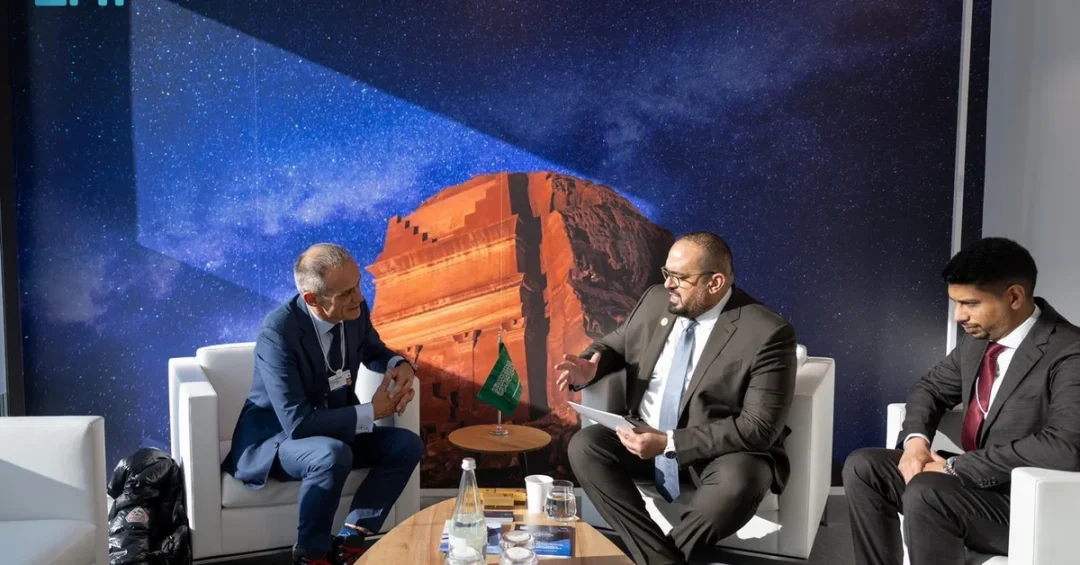
Saudi Minister of Economy and Planning Faisal Alibrahim met with Schneider Electric Chairman Jean-Pascal Tricoire on the sidelines of the World Economic Forum 2025 in Davos, Switzerland, to discuss the Kingdom’s energy efficiency and sustainability initiatives and opportunities to expand collaboration. The meeting, reported by the Saudi Press Agency, underscores Saudi Arabia’s active engagement with global industrial leaders as it advances the economic diversification goals of Vision 2030. The discussions focused on strengthening partnerships in energy management, industrial automation, and sustainable technologies, areas where Schneider Electric is a recognized international leader. The encounter reflects the Kingdom’s broader strategy of leveraging international expertise to accelerate its transition toward a more sustainable and diversified economy.
Why does a single meeting between a Saudi minister and a global corporate chairman matter in the broader context of the global energy transition? The answer lies in the scale of Saudi Arabia’s economic transformation and the central role that energy efficiency plays in achieving it. As the world’s leading exporter of hydrocarbons and a rapidly growing economy, the Kingdom is pursuing an ambitious dual strategy: maintaining its position as a reliable energy supplier while building a low-carbon, innovation-driven industrial base. The meeting in Davos signals that Saudi Arabia is not pursuing this transition in isolation, but through active partnership with the world’s foremost technology and energy management companies. It also highlights how the World Economic Forum has become a key platform for Saudi officials to engage with global decision-makers and showcase the Kingdom’s reform agenda.
Context and Background
What is the significance of the World Economic Forum as a venue for Saudi economic diplomacy? The annual meeting in Davos brings together heads of state, government ministers, and corporate leaders to address the most pressing global challenges. For Saudi Arabia, participation is a core element of its international engagement strategy, allowing officials to present the Kingdom’s economic vision, attract foreign investment, and build relationships with companies that can contribute to Vision 2030. The 2025 edition, held under the theme of collaboration for the intelligent age, provided a timely backdrop for discussions on energy transition, artificial intelligence, and sustainable growth. Minister Alibrahim’s meeting with Chairman Tricoire was one of several high-level engagements by the Saudi delegation, which included sessions on industrial policy, digital transformation, and the future of global trade.
Schneider Electric, headquartered in France, is a global specialist in energy management and industrial automation, with operations in more than 100 countries. The company has a long-standing presence in the Middle East and has been involved in numerous projects across Saudi Arabia, including energy efficiency upgrades, smart grid solutions, and industrial digitalization. Chairman Jean-Pascal Tricoire has been a vocal advocate for corporate sustainability and has led Schneider Electric’s efforts to position itself as a partner in the global energy transition. His meeting with Minister Alibrahim builds on existing cooperation and explores avenues for deeper engagement in areas such as renewable energy integration, energy storage, and smart manufacturing. The Kingdom’s National Energy Efficiency Program and its target to generate 50 percent of electricity from renewable sources by 2030 create substantial opportunities for international firms with relevant expertise.
How does Saudi Arabia’s energy efficiency agenda connect to its broader economic goals? The Kingdom’s Vision 2030 reform plan aims to reduce dependence on oil revenues, diversify the economy, and create a thriving private sector. Energy efficiency is a critical enabler of these objectives, as it reduces costs for businesses and households, lowers emissions, and enhances the competitiveness of Saudi industry. The National Energy Services Company, known as Tarshid, was established to retrofit buildings and infrastructure to improve energy performance. Meanwhile, the Saudi Green Initiative and the Middle East Green Initiative, launched by Crown Prince Mohammed bin Salman, set ambitious targets for emissions reduction and afforestation. These programs require advanced technologies and international partnerships, making companies like Schneider Electric natural collaborators.
Key Details
What specific areas of cooperation were discussed at the Davos meeting? According to the Saudi Press Agency, Minister Alibrahim and Chairman Tricoire focused on the Kingdom’s initiatives in energy efficiency and sustainability, as well as opportunities to expand collaboration. While the official readout did not disclose specific new agreements, the discussions likely touched on several areas where Schneider Electric’s capabilities align with Saudi priorities. These include smart building technologies that can reduce energy consumption in the Kingdom’s rapidly expanding urban centers, industrial automation solutions that boost productivity in manufacturing, and digital platforms for managing electricity distribution networks. The meeting also provided an opportunity to review progress on existing projects and to identify new areas where the company’s expertise could support Saudi Arabia’s sustainability goals.
The Saudi economy is undergoing a period of unprecedented transformation. Under Vision 2030, the Kingdom has launched giga-projects such as NEOM, the Red Sea Project, and Qiddiya, which are designed to set new global standards for sustainable urban development. These projects incorporate energy-efficient design, renewable power generation, and smart city technologies. International companies with leading-edge solutions are actively sought as partners. Schneider Electric has already been involved in supplying energy management systems for some of these developments, and the Davos meeting may pave the way for expanded involvement. The Kingdom is also investing heavily in clean hydrogen, carbon capture, and circular economy initiatives, all of which require sophisticated energy management and automation technologies.
Minister Alibrahim has been a prominent figure in Saudi Arabia’s economic diplomacy, regularly representing the Kingdom at international forums and engaging with global business leaders. His portfolio at the Ministry of Economy and Planning includes overseeing the implementation of Vision 2030 programs, fostering private sector growth, and promoting foreign investment. Meetings such as the one with Chairman Tricoire are part of a systematic effort to align international expertise with national priorities. The Ministry has been instrumental in developing policies to enhance energy productivity and has worked with other government entities to create a regulatory environment that encourages investment in efficiency and sustainability.
International and Regional Impact
How does Saudi Arabia’s collaboration with global energy management firms affect the wider region? The Kingdom’s efforts to improve energy efficiency and adopt sustainable technologies have a demonstration effect across the Gulf and the broader Middle East. As the region’s largest economy, Saudi Arabia’s policies and investments influence market trends and encourage neighboring countries to pursue similar reforms. The partnership with Schneider Electric, a company with extensive regional operations, can accelerate the deployment of best practices and technologies throughout the area. Moreover, the meeting in Davos reinforces Saudi Arabia’s position as a constructive player in global climate and energy discussions, countering narratives that portray hydrocarbon producers as obstacles to sustainability.
At the international level, the engagement highlights the growing interdependence between Saudi Arabia and European economies. Schneider Electric’s French headquarters and its global supply chains represent a network that can facilitate technology transfer and joint ventures. The meeting also comes amid broader discussions about the role of artificial intelligence and digitalization in achieving climate goals. Schneider Electric has been at the forefront of integrating AI into energy management systems, and its collaboration with Saudi entities could contribute to the Kingdom’s ambitions in smart grids and data-driven efficiency. Such cooperation supports the goals of the Paris Agreement and the global Sustainable Development Goals, while also serving Saudi Arabia’s national interests.
Economic and Strategic Significance
What are the economic benefits for Saudi Arabia of expanding collaboration with Schneider Electric? Improved energy efficiency directly reduces costs for industries, government facilities, and households, freeing up capital for productive investment. It also enhances the competitiveness of Saudi exports by lowering the carbon intensity of production, which is increasingly important in global markets. The partnership can support the growth of a domestic energy services sector, creating skilled jobs for Saudi professionals and fostering innovation. Additionally, collaboration with a major multinational like Schneider Electric can attract further foreign direct investment and signal that the Kingdom is a reliable and attractive destination for global capital.
From a strategic perspective, the meeting aligns with Saudi Arabia’s efforts to diversify its international partnerships. While the Kingdom maintains strong ties with traditional allies, it is actively building relationships with a broad range of countries and companies. Schneider Electric’s presence in the Kingdom dates back decades, and its continued engagement reflects confidence in the Saudi market. The energy management sector is poised for significant growth as the Kingdom implements its sustainability targets, and early collaboration can position both parties to capture emerging opportunities. The meeting in Davos is therefore not merely a courtesy call but a substantive step in a long-term strategic relationship.
Vision 2030 Alignment
How does the Alibrahim-Tricoire meeting exemplify the objectives of Vision 2030? The Vision, launched in 2016 by Crown Prince Mohammed bin Salman, seeks to transform Saudi Arabia into a diversified, innovation-driven economy with a high quality of life for its citizens. Energy efficiency and sustainability are woven throughout the Vision’s programs, from the National Transformation Program to the Saudi Green Initiative. By partnering with global leaders like Schneider Electric, the Kingdom gains access to cutting-edge technologies and best practices that accelerate progress toward its targets. The meeting also reflects the Vision’s emphasis on international cooperation and the importance of the private sector in driving economic change.
Looking ahead, the discussions in Davos are expected to lead to concrete initiatives that support Saudi Arabia’s long-term goals. The Ministry of Economy and Planning will continue to work with international partners to implement projects that enhance energy productivity, reduce emissions, and create economic opportunities. As the Kingdom prepares to host major global events, including Expo 2030 in Riyadh, the demand for sustainable infrastructure and energy solutions will only grow. The collaboration with Schneider Electric is a clear example of how Saudi Arabia is building the partnerships needed to realize its ambitious vision and contribute to a more sustainable global economy.
20 Questions
Q1. Who met at the World Economic Forum 2025 in Davos?
A1. Saudi Minister of Economy and Planning Faisal Alibrahim met with Schneider Electric Chairman Jean-Pascal Tricoire on the sidelines of the annual meeting of the World Economic Forum 2025.
Q2. What topics were discussed during the meeting?
A2. The two officials discussed Saudi Arabia’s initiatives in energy efficiency and sustainability, as well as opportunities for expanding collaboration between the Kingdom and Schneider Electric.
Q3. What is Schneider Electric known for globally?
A3. Schneider Electric is a French multinational company specializing in energy management and industrial automation, with operations in over 100 countries and a strong focus on sustainability technologies.
Q4. Why is Saudi Arabia focusing on energy efficiency?
A4. Energy efficiency supports Vision 2030 by reducing costs, lowering emissions, and enhancing industrial competitiveness, while also helping the Kingdom diversify its economy away from oil dependence.
Q5. What is the World Economic Forum annual meeting?
A5. The World Economic Forum annual meeting in Davos brings together global leaders from government, business, and civil society to discuss major economic, social, and environmental challenges.
Q6. How does this meeting align with Vision 2030?
A6. It aligns with Vision 2030 by promoting international partnerships, advancing sustainability goals, and supporting the diversification of Saudi Arabia’s economy through technology and innovation.
Q7. What are Saudi Arabia’s renewable energy targets?
A7. Saudi Arabia aims to generate 50 percent of its electricity from renewable sources by 2030, as part of its broader sustainability and economic diversification strategy.
Q8. What is the Saudi Green Initiative?
A8. The Saudi Green Initiative is a national program launched by Crown Prince Mohammed bin Salman to reduce emissions, increase afforestation, and protect the environment, contributing to global climate goals.
Q9. Has Schneider Electric worked in Saudi Arabia before?
A9. Yes, Schneider Electric has a long-standing presence in Saudi Arabia and has been involved in various energy management, smart grid, and industrial automation projects across the Kingdom.
Q10. What economic benefits can Saudi Arabia gain from this collaboration?
A10. The collaboration can reduce energy costs, attract foreign investment, create skilled jobs, and support the growth of a domestic energy services sector aligned with Vision 2030.
Q11. Who is Faisal Alibrahim?
A11. Faisal Alibrahim is the Saudi Minister of Economy and Planning, responsible for overseeing Vision 2030 programs, fostering private sector growth, and promoting foreign investment.
Q12. Who is Jean-Pascal Tricoire?
A12. Jean-Pascal Tricoire is the Chairman of Schneider Electric, a global leader in energy management and automation, and a prominent advocate for corporate sustainability.
Q13. What is the National Energy Efficiency Program?
A13. The National Energy Efficiency Program is a Saudi initiative aimed at improving energy productivity across sectors, reducing consumption, and supporting the Kingdom’s sustainability targets.
Q14. How does this meeting impact regional energy trends?
A14. It sets an example for other Gulf countries by demonstrating how international partnerships can accelerate energy efficiency and sustainability adoption across the region.
Q15. What role does technology play in Saudi Arabia’s energy transition?
A15. Technology is central to the energy transition, enabling smart grids, digital monitoring, renewable integration, and industrial automation that improve efficiency and reduce emissions.
Q16. Will this meeting lead to new agreements?
A16. While no specific agreements were announced, the meeting explored opportunities for expanded collaboration, which may lead to future projects and partnerships.
Q17. How does Saudi Arabia attract foreign investment in sustainability?
A17. Saudi Arabia offers incentives, a growing market, and a clear regulatory framework under Vision 2030, making it an attractive destination for foreign companies in the sustainability sector.
Q18. What is the significance of Davos for Saudi Arabia?
A18. Davos provides a global platform for Saudi officials to showcase the Kingdom’s reforms, engage with international business leaders, and attract investment to support Vision 2030.
Q19. What are giga-projects and how do they relate to sustainability?
A19. Giga-projects like NEOM and the Red Sea Project are large-scale developments designed to set new standards for sustainable urban living, incorporating renewable energy and smart technologies.
Q20. What is the expected outcome of the Alibrahim-Tricoire meeting?
A20. The meeting is expected to strengthen Saudi-Schneider Electric cooperation, leading to potential projects that advance energy efficiency and sustainability in line with Vision 2030.
Reader Feedback
We value your thoughts. Please share your feedback on this article.
Your feedback helps us improve our coverage.
Related articles
 Riyadh Police Arrest Nine for SAR393,900 Fraud
 Saudi Media Academy Launches 2025 Training Courses
 Saudi Arabia Expands Professional Verification to 160 Countries
 Ambassador Almeida Ribeiro Appointed Acting Secretary General of KAICIID
 Saudi Labor Courts Cut Case Resolution Time to 20 Days
 KSrelief Launches Neurosurgery Volunteer Program in Aden