


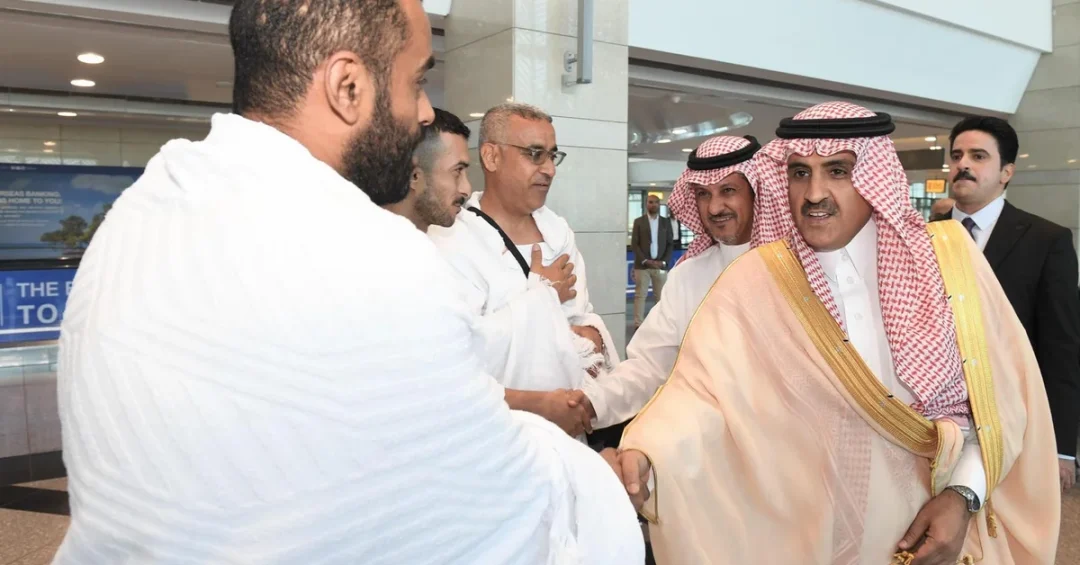
Chargé d’Affaires of the Saudi Embassy in Egypt Abdulrahman bin Salem Al-Dahas bid farewell to the second group of Palestinian pilgrims performing Hajj this year under the Custodian of the Two Holy Mosques’ Guests Program. The event took place at Cairo International Airport on Thursday, June 13, 2024, as the pilgrims departed for the holy sites.
Context and Background
The Custodian of the Two Holy Mosques’ Guests Program is an annual Saudi initiative designed to host selected pilgrims from around the world, enabling them to perform Hajj at no personal cost. The program reflects the Kingdom’s commitment to Islamic solidarity and humanitarian service. For the Palestinian pilgrims, including families of martyrs and wounded individuals, this invitation provides a crucial spiritual refuge and a moment of relief from the ongoing challenges in Gaza.
Key Details
During the farewell, Al-Dahas met with the pilgrims and reiterated the Saudi leadership’s dedication to ensuring a seamless and comfortable Hajj experience. He also expressed gratitude to the Egyptian authorities for their efficient cooperation in facilitating travel procedures. The pilgrims expressed heartfelt appreciation for the Saudi invitation, emphasizing that this program offers much-needed comfort and spiritual peace, and praised Saudi Arabia’s excellent facilities and comprehensive services for all pilgrims.
Implications and Impact
This gesture underscores the deep-rooted Saudi-Palestinian relationship and the Kingdom’s extended support for the Palestinian people, going beyond political and humanitarian aid to include religious care. The seamless coordination between Saudi Arabia and Egypt in handling the pilgrims’ travel highlights the strong fraternal bonds that benefit the Islamic world. The act also reinforces Saudi Arabia’s role as a unifying force for Muslims globally, particularly during the pilgrimage season.
Vision 2030 Alignment
This initiative is a testament to the goals of Saudi Vision 2030, which strives to elevate the role of the Kingdom as a global hub for religious and cultural diplomacy. By enhancing the pilgrims’ experience and providing exceptional services, the program supports Vision 2030’s objective of serving over two million pilgrims annually and enhancing the social and spiritual fabric of the ummah, while also promoting the Kingdom’s image as a pioneer in humanitarian and Islamic solidarity.
20 Questions
Q1. What is the Custodian of the Two Holy Mosques’ Guests Program?
A1. The program is an annual Saudi initiative that invites selected pilgrims from various countries to perform Hajj, with all expenses covered by the Kingdom. It aims to honor and support Muslims who may not have the means or opportunity to undertake the pilgrimage, reflecting Saudi Arabia’s commitment to Islamic service.
Q2. Who were the specific pilgrims in this second group?
A2. The second group comprised Palestinian pilgrims, specifically families of martyrs and wounded individuals from the State of Palestine. Their inclusion highlights the Kingdom’s support for the Palestinian people, particularly those who have been affected by ongoing conflicts.
Q3. Where did the farewell ceremony take place?
A3. The farewell ceremony was held at Cairo International Airport in Egypt, where the pilgrims were preparing to travel to the holy sites. This location was chosen due to its role as a major transit point for pilgrims from the region.
Q4. Who represented the Saudi Embassy at the farewell?
A4. The Chargé d’Affaires of the Saudi Embassy in Egypt, Abdulrahman bin Salem Al-Dahas, represented the embassy. He met with the pilgrims to convey the Saudi leadership’s well-wishes and to ensure their departure was smooth.
Q5. How did the Saudi leadership express its commitment to the pilgrims?
A5. The Saudi leadership reaffirmed its commitment to providing a comfortable and safe Hajj experience for all pilgrims. Al-Dahas reiterated this dedication, citing the extensive preparations and services designed to fulfill the program’s goals.
Q6. What was the role of the Egyptian authorities?
A6. Egyptian authorities played a crucial role in facilitating travel procedures for the Palestinian pilgrims. The Saudi Chargé d’Affaires thanked the Egyptian officials for their cooperation, which streamlined the journey from Cairo to the holy sites.
Q7. How did the Palestinian pilgrims respond to the farewell?
A7. The Palestinian pilgrims expressed deep gratitude to the Saudi leadership for their invitation and care. They highlighted that this program offered them a respite from the difficulties faced in Gaza, allowing them to focus on spiritual needs.
Q8. What facilities did the pilgrims appreciate during their journey?
A8. The pilgrims commended the excellent facilities provided by Saudi Arabia at every stage of the pilgrimage, including transportation, accommodation, and guidance. These services are aligned with the Kingdom’s aims to improve the experience for all visitors.
Q9. What is the significance of this program for the Palestinians?
A9. For Palestinians, this program provides not only a religious opportunity but also a form of humanitarian support. It symbolizes the Kingdom’s solidarity with their cause and offers a temporary escape from the hardships they face in the Gaza Strip.
Q10. How does this initiative reflect Saudi Arabia’s global role?
A10. The initiative underscores Saudi Arabia’s global role as a leader of the Muslim community, with a focus on hospitality and support for all pilgrims. It demonstrates the Kingdom’s commitment to serving Muslims from all walks of life, regardless of their origins.
Q11. What are the main objectives of the Custodian of the Two Holy Mosques’ Guests Program?
A11. The main objectives are to honor Muslims who are unable to perform Hajj, to strengthen the bonds of brotherhood, and to showcase the Kingdom’s hospitality and support for the global Islamic community. It also aims to highlight the Kingdom’s commitment to religious service.
Q12. How does this program align with Saudi Vision 2030?
A12. Saudi Vision 2030 includes goals to enhance the experience of pilgrims and develop the spiritual tourism sector. The program aligns with these goals by offering world-class services and reinforcing the Kingdom’s position as a leading destination for Hajj and Umrah, thereby supporting economic and cultural aspirations.
Q13. What was the reaction of the pilgrims to the facilities?
A13. The pilgrims praised the excellent facilities and services provided by Saudi Arabia, including transport and health care. Their positive reaction reflects the success of the program in ensuring a comfortable pilgrimage.
Q14. Is this the first group of Palestinian pilgrims?
A14. No, this was the second group of Palestinian pilgrims to be sent in the current Hajj season. The program has previously hosted Palestinian pilgrims, showing continuity in Saudi Arabia’s support for the Palestinian people.
Q15. What role does the Saudi Embassy in Egypt play?
A15. The Saudi Embassy in Egypt is responsible for coordinating the travel and well-being of pilgrims within Egypt. The Chargé d’Affaires oversaw the farewell to ensure that all arrangements were in place, including transport and documentation.
Q16. How does the Saudi Arabia’s commitment to service the pilgrims benefit the region?
A16. Saudi Arabia’s commitment to serving pilgrims benefits the region by promoting religious tourism, strengthening diplomatic ties, and providing humanitarian support to countries with need. It fosters unity and cooperation among Islamic countries.
Q17. What are the conditions for participation in the program?
A17. Participants are selected based on criteria set by the Saudi government, often including religious scholars, media figures, and those in need. For the Palestinian group, priority was given to families of martyrs and the wounded, reflecting special consideration.
Q18. How does this program impact the pilgrims’ experience?
A18. The program allows pilgrims to perform Hajj without financial burden, focusing on spiritual fulfillment. It provides them with a comfortable and well-organized pilgrimage, easing the stress and allowing them to fully engage in the rituals.
Q19. What are the security and health arrangements for these pilgrims?
A19. Saudi Arabia ensures comprehensive health and security arrangements for all pilgrims, including those in the program. This includes medical teams, secure accommodations, and clear guidance throughout the journey.
Q20. How does the farewell at the airport reflect the Kingdom’s care?
A20. The personal farewell by the Chargé d’Affaires at the airport demonstrates the Kingdom’s personal attention to the pilgrims’ well-being. It ensures that any last-minute issues are addressed and conveys the sincerity of Saudi Arabia’s role as host.
Reader Feedback
We value your thoughts. Please share your feedback on this article.
Your feedback helps us improve our coverage.