


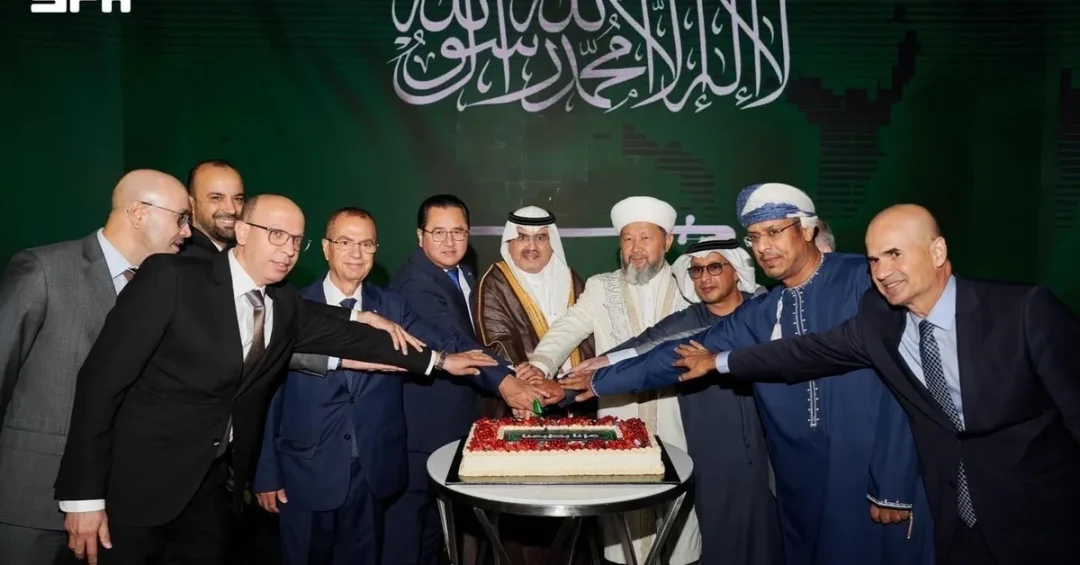
The Saudi Embassy in Kazakhstan hosted a formal reception in Astana to mark Saudi National Day, bringing together senior Kazakh government officials, heads of diplomatic missions accredited to Kazakhstan, and representatives of the Kingdom’s growing community in Central Asia, according to the Saudi Press Agency. The event, held in the Kazakh capital, underscored the depth of relations between Riyadh and Astana and reflected the Kingdom’s expanding diplomatic footprint across the region.
The reception was hosted by the Saudi diplomatic mission in Kazakhstan and drew a broad cross-section of the accredited diplomatic corps, a signal of the standing Saudi Arabia enjoys among its international partners. National Day commemorates the unification of the Kingdom under the late King Abdulaziz Al Saud, and Saudi missions worldwide use the occasion each year to present the country’s heritage, its modernization drive, and the priorities of Vision 2030 to foreign audiences. How does a single diplomatic reception in Central Asia speak to a much larger story about Saudi Arabia’s global role? The answer lies in the breadth of the guest list and the timing of the celebration.
Context and Background
Saudi National Day is observed annually on September 23, marking the royal decree issued in 1932 that renamed the Kingdom of Saudi Arabia and formally unified its regions. Saudi embassies and consulates around the world hold receptions, cultural exhibitions, and community gatherings in the days surrounding the date, turning the anniversary into a platform for public diplomacy as much as commemoration. The Saudi Press Agency reported that the embassy in Kazakhstan hosted its reception in Astana, the capital city, with senior officials and heads of diplomatic missions accredited to Kazakhstan in attendance.
Why does the Kingdom invest in these celebrations far beyond its own borders? Because each reception functions as a compact expression of foreign policy: it honors the founding of the state, reinforces bilateral relationships, and gives Saudi diplomats a natural setting to brief counterparts on the Kingdom’s economic and social transformation. For Kazakhstan, a Central Asian republic that gained independence in 1991 and has since built a multi-vector foreign policy, the presence of senior officials at the Saudi mission’s event signals the value Astana places on its ties with Riyadh.
The relationship between the two countries rests on more than protocol. Saudi Arabia and Kazakhstan are both major energy producers, both members of the Organization of Islamic Cooperation, and both participants in the CICA process and other regional dialogues. Over the past decade, the two governments have exchanged visits at the ministerial and head-of-state level and have signed agreements covering investment, agriculture, and cultural cooperation. The National Day reception therefore sits within an established pattern of engagement rather than standing alone.
Key Details
According to the Saudi Press Agency, the reception in Astana was attended by senior officials and heads of diplomatic missions accredited to Kazakhstan. That combination is significant. When a national day event draws the dean of the diplomatic corps and ambassadors from across the accredited missions, it indicates that the host embassy is regarded as an active and respected member of the diplomatic community in the capital. The Saudi Embassy in Kazakhstan maintains the Kingdom’s bilateral file with Astana and serves Saudi citizens and businesses operating in the country.
What does the guest list tell observers about the Kingdom’s regional standing? Diplomacy in Central Asia is competitive, with multiple global and regional powers cultivating ties in the region. A well-attended Saudi National Day reception reflects the Kingdom’s ability to maintain constructive relationships across that landscape. The event also provides an opportunity for the embassy to present Vision 2030 priorities, including investment opportunities, tourism openings, and cultural exchange, to an audience of decision-makers and influential diplomats.
National Day receptions hosted by Saudi missions typically feature elements of Saudi heritage alongside contemporary messaging. Guests are introduced to Saudi coffee and dates, traditional attire, and visual presentations of the Kingdom’s landmarks and giga-projects. The Saudi Press Agency’s report did not detail the specific program in Astana, but the format follows a well-established diplomatic practice. Such events are also occasions for the Saudi ambassador and embassy staff to engage directly with Kazakh counterparts on pending bilateral matters in an informal setting.
International and Regional Impact
The reception in Astana forms part of a coordinated global program of National Day observances by Saudi diplomatic missions. From Washington to Tokyo, from Cairo to Brasilia, Saudi embassies use the anniversary to project a consistent image of a Kingdom undergoing rapid economic diversification and social modernization. The cumulative effect is a diplomatic network that communicates the same core messages across every region: stability, openness to investment, and partnership.
In Central Asia, those messages land in a region that matters increasingly to global supply chains and energy markets. Kazakhstan borders Russia and China, sits atop significant hydrocarbon reserves, and has positioned itself as a bridge between Europe and Asia. Saudi Arabia’s engagement with Astana complements the Kingdom’s broader interest in connectivity, including trade routes and logistics corridors that link the Gulf to Central Asia. The National Day reception is a modest but meaningful node in that wider network.
Regional diplomacy of this kind also supports multilateral cooperation. Both Saudi Arabia and Kazakhstan participate in the Islamic Development Bank, the OIC, and various United Nations frameworks. Shared interests in food security, water management, and renewable energy have featured in bilateral discussions. A reception that brings together the diplomatic corps in Astana allows Saudi diplomats to reinforce these common agendas with third countries as well, multiplying the reach of a single evening’s event.
Economic and Strategic Significance
Behind the ceremonial dimension, the Saudi-Kazakh relationship carries economic weight. Kazakhstan is a major producer of wheat and other agricultural commodities, while Saudi Arabia imports significant volumes of foodstuffs and has invested in agricultural supply chains abroad to strengthen food security. The two countries have discussed cooperation in agriculture, livestock, and food processing, areas that align with Vision 2030’s emphasis on resilient supply chains and private-sector growth.
Energy is another pillar. Both states are founding participants in the OPEC+ framework, where Kazakhstan coordinates production policy alongside Saudi Arabia and other producers. That cooperation has direct consequences for global oil market stability and for the revenue streams that fund both countries’ development programs. Saudi Arabia’s role as a leading voice in OPEC+ gives its diplomacy in producer nations such as Kazakhstan a strategic dimension that goes well beyond ceremonial ties.
Investment flows are growing in both directions. Saudi companies and funds have shown interest in Central Asian infrastructure, logistics, and mining assets, while Kazakh businesses look to the Gulf for capital and market access. The Saudi Embassy in Astana serves as a first point of contact for companies exploring these opportunities. National Day events often double as informal business networking occasions, connecting Saudi and Kazakh executives through the diplomatic channel.
Vision 2030 Alignment
Saudi National Day celebrations abroad are closely tied to Vision 2030, the national transformation program launched under the leadership of Crown Prince Mohammed bin Salman. The vision’s goals include diversifying the economy away from oil dependence, expanding tourism, empowering women and youth, and deepening international partnerships. Each embassy reception is an opportunity to communicate these objectives to foreign governments, investors, and publics, and to invite them to participate in the Kingdom’s transformation.
For Kazakhstan specifically, the alignment extends to tourism and cultural exchange. Saudi Arabia has opened its doors to international visitors through streamlined visa processes and has invested in heritage and entertainment destinations. Kazakh travelers and businesses are part of the global audience the Kingdom now seeks to attract. Cultural diplomacy at events like the Astana reception builds familiarity and goodwill that support these commercial and tourism objectives over the long term.
As Saudi Arabia continues to expand its diplomatic and economic presence across Central Asia, occasions such as the National Day reception in Astana serve as reminders that the Kingdom’s global role is built on steady, relationship-by-relationship engagement. The Saudi Press Agency’s report captured a single evening, but it reflects a sustained strategy: honoring the nation’s founding while positioning the Kingdom as a partner for the future. In that sense, the celebration in Kazakhstan was both a commemoration and a statement of intent.
20 Questions
Q1. What event did the Saudi Embassy in Kazakhstan host?
A1. The Saudi Embassy in Kazakhstan hosted a reception in Astana to mark Saudi National Day, according to the Saudi Press Agency. The event welcomed senior officials and heads of diplomatic missions accredited to Kazakhstan.
Q2. When is Saudi National Day observed?
A2. Saudi National Day is observed annually on September 23. It commemorates the 1932 royal decree that unified the Kingdom and renamed it Saudi Arabia under the leadership of the late King Abdulaziz Al Saud.
Q3. Where was the reception held?
A3. The reception was held in Astana, the capital of Kazakhstan. The Saudi Embassy in Kazakhstan is based in Astana and maintains the Kingdom’s bilateral diplomatic file with the Kazakh government.
Q4. Who attended the reception?
A4. Senior officials and heads of diplomatic missions accredited to Kazakhstan attended the reception. The guest list reflected the broad diplomatic community in Astana and the Kingdom’s standing among international partners.
Q5. Why do Saudi embassies hold National Day receptions abroad?
A5. Saudi embassies hold National Day receptions to commemorate the Kingdom’s founding while conducting public diplomacy. These events introduce foreign officials and publics to Saudi heritage, Vision 2030 priorities, and opportunities for partnership.
Q6. What is the significance of the diplomatic corps attending?
A6. Attendance by heads of accredited missions signals that the Saudi Embassy is an active and respected member of Astana’s diplomatic community. It also allows Saudi diplomats to reinforce bilateral and multilateral relationships in one setting.
Q7. How long have Saudi Arabia and Kazakhstan had diplomatic relations?
A7. Saudi Arabia recognized Kazakhstan after its independence in 1991 and the two countries established diplomatic ties in the early 1990s. Relations have since expanded across energy, agriculture, and cultural cooperation.
Q8. What areas of cooperation exist between the two countries?
A8. Cooperation covers energy, agriculture, investment, and cultural exchange. Both countries are major energy producers and coordinate within the OPEC+ framework on global oil market stability.
Q9. What role does Kazakhstan play in OPEC+?
A9. Kazakhstan is a participant in the OPEC+ framework, coordinating production policy with Saudi Arabia and other producers. This cooperation supports global oil market stability and benefits both economies.
Q10. How does the reception support Vision 2030?
A10. The reception gives Saudi diplomats a platform to present Vision 2030 goals, including economic diversification, tourism expansion, and international partnership. It invites foreign counterparts to participate in the Kingdom’s transformation.
Q11. What typically happens at a Saudi National Day reception?
A11. Receptions typically feature Saudi coffee, dates, traditional attire, and visual presentations of the Kingdom’s landmarks and giga-projects. They also provide informal settings for bilateral discussions among officials and diplomats.
Q12. Why is Central Asia important to Saudi foreign policy?
A12. Central Asia sits at the crossroads of Europe and Asia and holds significant energy and agricultural resources. Saudi engagement supports trade connectivity, investment diversification, and broader regional stability.
Q13. What economic interests does Saudi Arabia have in Kazakhstan?
A13. Saudi Arabia has interests in agricultural supply chains, energy coordination, and infrastructure investment. Kazakh businesses also seek Gulf capital and market access, creating two-way commercial opportunities.
Q14. How does food security factor into the relationship?
A14. Kazakhstan is a major wheat and agricultural producer, while Saudi Arabia seeks resilient food supply chains under Vision 2030. Agricultural cooperation between the two countries supports that shared priority.
Q15. What message does the reception send to the international community?
A15. The reception projects an image of a stable, open Kingdom engaged with partners worldwide. It reinforces Saudi Arabia’s commitment to diplomacy, investment, and cultural exchange across regions.
Q16. How do National Day events fit into Saudi public diplomacy?
A16. They form a coordinated global program in which Saudi missions communicate consistent messages about modernization, stability, and partnership. The cumulative effect strengthens the Kingdom’s international image.
Q17. What is the role of the Saudi Press Agency in reporting such events?
A17. The Saudi Press Agency is the Kingdom’s official news authority and documents diplomatic engagements for domestic and international audiences. Its reporting provides verified information about Saudi official activities.
Q18. Are there cultural exchanges between Saudi Arabia and Kazakhstan?
A18. Yes. The two countries have pursued cultural cooperation alongside economic ties, including participation in multilateral Islamic heritage forums. Receptions like the Astana event build familiarity and goodwill.
Q19. What does the reception reveal about Saudi Arabia’s global role?
A19. It shows a Kingdom actively engaged across regions, maintaining relationships through steady diplomatic work. The event reflects a strategy of partnership-building that complements Vision 2030 objectives.
Q20. What comes next for Saudi-Kazakh relations?
A20. Continued engagement is expected in energy coordination, agricultural trade, investment, and cultural exchange. Both governments have shown interest in deepening ties through bilateral visits and agreements.
Reader Feedback
We value your thoughts. Please share your feedback on this article.
Your feedback helps us improve our coverage.
Related articles
 Saudi Arabia, FAO Launch Date Palm Project in Tanzania
 KSrelief distributes 700 food baskets in Hadhramaut
 Albudaiwi Urges GCC Convergence in Energy, Trade at UN
 Saudi Embassy in Brunei Marks National Day
 KSrelief Distributes 700 Food Baskets in Yemen’s Hadhramaut
 Pakistan PM Backs Makkah Defence Pact at UNGA