


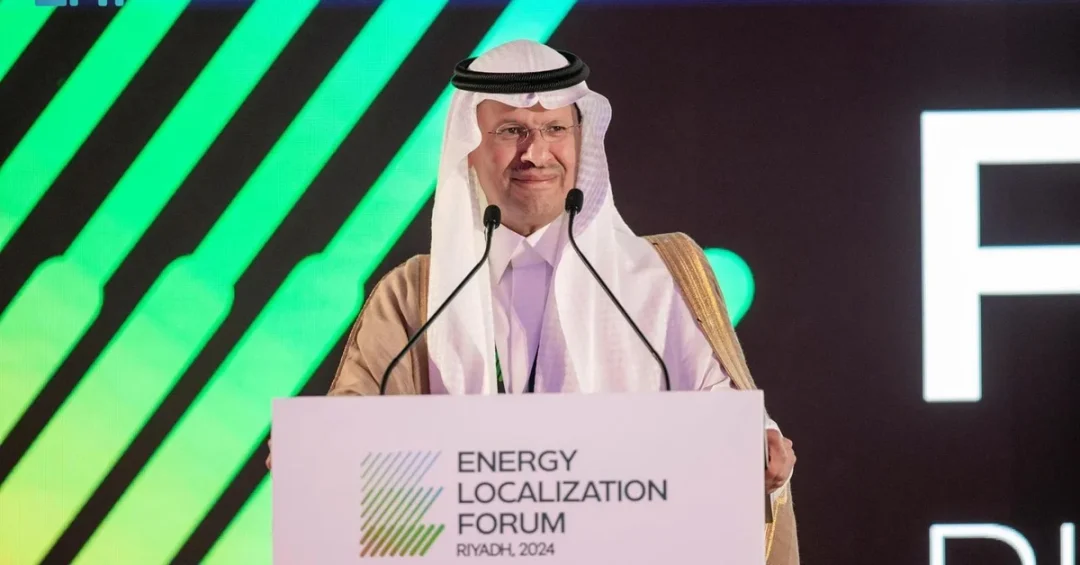
Saudi Arabia’s Minister of Energy, Prince Abdulaziz bin Salman bin Abdulaziz, inaugurated the Energy Localization Forum in Riyadh on October 23, 2024, overseeing the signing of 107 strategic agreements and memorandums of understanding valued at an estimated SAR 104 billion. The landmark event, themed “Resilient Energy: Enabling Energy Sector Capability and Sustainability,” brought together ministers, chief executives from Saudi and international private sectors, specialists, experts, decision-makers, investors, and international partners. Organized by the Ministry of Energy in partnership with Saudi Aramco, the Saudi Electricity Company, and SABIC, the forum underscores the Kingdom’s determination to build a self-reliant, future-ready energy sector in line with Saudi Vision 2030.
The agreements, involving 117 entities from both the public and private sectors, represent a significant milestone in Saudi Arabia’s efforts to localize 75 percent of its energy sector by 2030. The signing ceremony was attended by Minister of State Dr. Hamad bin Mohammed Al Sheikh and Minister of Industry and Mineral Resources Bandar bin Ibrahim AlKhorayef, highlighting the whole-of-government approach driving this national priority. The forum continues for two days and is designed to showcase investment opportunities, promote innovation, and enable entrepreneurs to play a greater role in the rapidly expanding energy sector.
Context and Background
Why has energy localization become such a central pillar of Saudi Arabia’s economic strategy? The answer lies in the Kingdom’s broader vision for sustainable development and economic diversification. In his opening address, Prince Abdulaziz emphasized that Saudi Vision 2030 has made localization a cornerstone for ensuring the sustainability and security of the future of energy. He noted that energy in Saudi Arabia is not merely a sector but a driving force for industry and development, contributing significantly to economic growth. The macroeconomic impact of the entire energy sector is estimated to represent 40 percent of the Kingdom’s GDP, underlining the critical importance of localizing energy to inspire similar initiatives in other sectors of the Saudi economy.
The Minister highlighted several flagship localization programs already making an impact, including Aramco’s In-Kingdom Total Value Add (iktva) program, SABIC’s Nusaned program, and the Saudi Electricity Company’s Bina program. These initiatives are designed to deepen local supply chains, enhance technical capabilities, and create high-quality employment opportunities for Saudi nationals. The Energy Localization Forum builds on these efforts by bringing together a wide spectrum of stakeholders to forge new partnerships and accelerate progress toward the 75 percent localization target.
The COVID-19 pandemic served as a wake-up call for many nations, exposing vulnerabilities in global supply chains and increasing the risks associated with over-reliance on external sources for essential commodities. Saudi Arabia responded swiftly, coordinating the local production of vital supplies in cooperation with 15 key entities. This experience reinforced the importance of localization across all sectors, particularly in energy, where supply chain disruptions can have far-reaching consequences for economic stability and national security.
Key Details of the Agreements
What exactly do these 107 agreements and memorandums of understanding entail? The deals span the entire energy value chain, from raw materials to final products, reflecting a comprehensive approach to localization. Prince Abdulaziz stressed that the strategy focuses on localization rather than merely settling for local content. “Our comprehensive strategy focuses on localization rather than just settling for local content,” he said. “We are taking an all-inclusive approach to localize the entire supply chain, from raw materials to the final product, with the goal of maximizing its local value. Our ambition is to transfer technology and products to the Kingdom, encompassing the entire supply chain.”
The agreements involve 117 entities from the public and private sectors, demonstrating the broad-based collaboration that underpins Saudi Arabia’s localization drive. The total estimated value of SAR 104 billion reflects the scale of investment being mobilized to build a resilient and sustainable energy sector. The signing ceremony, attended by senior government officials including Dr. Hamad bin Mohammed Al Sheikh and Bandar bin Ibrahim AlKhorayef, signals strong governmental support for these initiatives.
The Energy Sector Localization Committee, established to spearhead this effort, has set short and long-term goals and strategic enablers to achieve the 75 percent localization target by 2030. The committee’s work is guided by directives from Crown Prince and Prime Minister Mohammed bin Salman bin Abdulaziz Al Saud, including a directive to prepare a comprehensive study on bridging gaps in supply chains. This top-level commitment ensures that localization efforts are coordinated, adequately resourced, and aligned with the Kingdom’s broader economic objectives.
International and Regional Impact
How will these agreements affect Saudi Arabia’s relationships with international partners and its role in the global energy landscape? The forum welcomed CEOs and representatives from international private sector companies, underscoring the Kingdom’s openness to foreign investment and collaboration. By localizing the energy supply chain, Saudi Arabia aims to become a hub for energy-related manufacturing, technology transfer, and innovation, creating opportunities for international companies to partner with Saudi entities and access the growing regional market.
The agreements are expected to strengthen Saudi Arabia’s position as a reliable energy supplier and a leader in sustainable energy practices. As the world transitions toward cleaner energy sources, the Kingdom’s focus on localization ensures that it can meet domestic and international demand while reducing vulnerabilities to global supply chain disruptions. The involvement of 117 entities from various sectors also highlights the multiplier effect of energy localization, as advancements in the energy sector can spur growth in related industries such as manufacturing, logistics, and technology.
Economic and Strategic Significance
What does SAR 104 billion in agreements mean for Saudi Arabia’s economy? The scale of investment demonstrates the Kingdom’s commitment to building a robust, self-sufficient energy sector that can drive economic growth and create jobs. The energy sector’s contribution of 40 percent to GDP underscores its strategic importance, and localization efforts are expected to enhance this contribution by retaining more value within the Kingdom. By localizing the supply chain, Saudi Arabia can reduce import dependency, improve trade balances, and foster the development of a skilled workforce.
The agreements also align with the Kingdom’s broader economic diversification goals under Vision 2030. By developing local capabilities in energy-related industries, Saudi Arabia can create new export opportunities and reduce its reliance on oil revenues. The focus on technology transfer and innovation further positions the Kingdom as a knowledge-based economy, attracting talent and investment from around the world. The forum’s emphasis on enabling entrepreneurs and small and medium-sized enterprises (SMEs) also reflects a commitment to inclusive growth and private sector development.
Vision 2030 Alignment
How do these developments fit into Saudi Vision 2030? The Energy Localization Forum and the agreements signed therein are a direct manifestation of Vision 2030’s objectives to diversify the economy, localize strategic sectors, and enhance national capabilities. The 75 percent localization target for the energy sector is a key performance indicator of the Vision’s success, and the SAR 104 billion in agreements represents a significant step toward achieving that goal. The forum also supports other Vision 2030 pillars, such as creating quality opportunities for business prosperity, encouraging local and international investment, and promoting innovation.
As Saudi Arabia continues its journey toward a sustainable and diversified future, the localization of the energy sector will remain a top priority. The Energy Localization Forum serves as a platform for collaboration, innovation, and investment, bringing together stakeholders from across the spectrum to build a resilient energy ecosystem. With the strong support of the Kingdom’s leadership and the active participation of the private sector, Saudi Arabia is well on its way to achieving its localization ambitions and setting a benchmark for other sectors and nations to follow.
20 Questions
Q1. What was the main event overseen by Saudi Energy Minister Prince Abdulaziz bin Salman?
A1. He inaugurated the Energy Localization Forum in Riyadh on October 23, 2024, where 107 strategic agreements and memorandums of understanding worth an estimated SAR 104 billion were signed.
Q2. What was the theme of the Energy Localization Forum?
A2. The forum was themed “Resilient Energy: Enabling Energy Sector Capability and Sustainability,” focusing on strengthening the energy sector through localization and sustainable practices.
Q3. How many agreements and memorandums of understanding were signed at the forum?
A3. A total of 107 strategic agreements and memorandums of understanding were signed, involving 117 entities from both the public and private sectors.
Q4. What is the total estimated value of the agreements signed?
A4. The agreements have a total estimated value of SAR 104 billion, reflecting the scale of investment in localizing the energy sector.
Q5. Which organizations partnered with the Ministry of Energy to organize the forum?
A5. The forum was organized in partnership with Saudi Aramco, the Saudi Electricity Company, and SABIC, three of the Kingdom’s leading energy and industrial companies.
Q6. What is the localization target for Saudi Arabia’s energy sector by 2030?
A6. The Kingdom aims to localize 75 percent of the energy sector by 2030, as part of its broader Vision 2030 objectives.
Q7. How does the energy sector contribute to Saudi Arabia’s GDP?
A7. The macroeconomic impact of the entire energy sector is estimated to represent 40 percent of the Kingdom’s GDP, highlighting its vital role in the national economy.
Q8. What are some of the localization programs mentioned by the Minister?
A8. He highlighted Aramco’s In-Kingdom Total Value Add (iktva) program, SABIC’s Nusaned program, and the Saudi Electricity Company’s Bina program as key localization initiatives.
Q9. What prompted Saudi Arabia to accelerate its localization efforts?
A9. The COVID-19 pandemic exposed vulnerabilities in global supply chains, prompting the Kingdom to take swift action to localize production and reduce reliance on external sources.
Q10. What role did Crown Prince Mohammed bin Salman play in these efforts?
A10. He directed the preparation of a comprehensive study on bridging supply chain gaps, providing top-level guidance for the localization strategy.
Q11. What is the Energy Sector Localization Committee’s role?
A11. The committee has set short and long-term goals and strategic enablers to achieve the 75 percent localization target by 2030.
Q12. Who attended the signing ceremony alongside the Minister of Energy?
A12. Minister of State Dr. Hamad bin Mohammed Al Sheikh and Minister of Industry and Mineral Resources Bandar bin Ibrahim AlKhorayef attended the ceremony.
Q13. How does localization differ from simply increasing local content?
A13. Localization takes an all-inclusive approach to localize the entire supply chain, from raw materials to final products, maximizing local value and transferring technology to the Kingdom.
Q14. What benefits does localization bring to Saudi Arabia’s economy?
A14. It reduces import dependency, improves trade balances, creates jobs, fosters a skilled workforce, and enhances economic diversification and resilience.
Q15. How many entities from the public and private sectors are involved in the agreements?
A15. A total of 117 entities from the public and private sectors are involved, demonstrating broad-based collaboration.
Q16. What opportunities does the forum create for international businesses?
A16. It offers opportunities for foreign investment, technology transfer, and partnerships with Saudi entities, providing access to the growing regional market.
Q17. How does the forum support entrepreneurs and SMEs?
A17. The forum showcases investment opportunities and promotes innovation, enabling entrepreneurs to play significant roles in the expanding energy sector.
Q18. What is the duration of the Energy Localization Forum?
A18. The forum continues for two days, featuring discussions, exhibitions, and networking opportunities for participants.
Q19. How does this initiative align with Saudi Vision 2030?
A19. It directly supports Vision 2030’s goals of economic diversification, localization of strategic sectors, and enhancing national capabilities for sustainable growth.
Q20. What is the expected long-term impact of these agreements?
A20. They are expected to build a resilient, self-sufficient energy sector, drive economic growth, create jobs, and position Saudi Arabia as a global leader in energy localization and innovation.
Reader Feedback
We value your thoughts. Please share your feedback on this article.
Your feedback helps us improve our coverage.
Related articles
 GCC Chief Condemns Terrorist Attack on Turkish Aerospace Industries
 Riyadh Undersecretary Attends Austrian National Day Celebration
 Saudi Industry Ministry Showcases Initiatives at Riyadh MIPF
 Shura Council Human Rights Committee Meets Dutch Ambassador
 Crown Prince Congratulates Vietnam’s New President
 Al-Rabeeah Advocates for Integrated Humanitarian Aid at MIPF 2024