


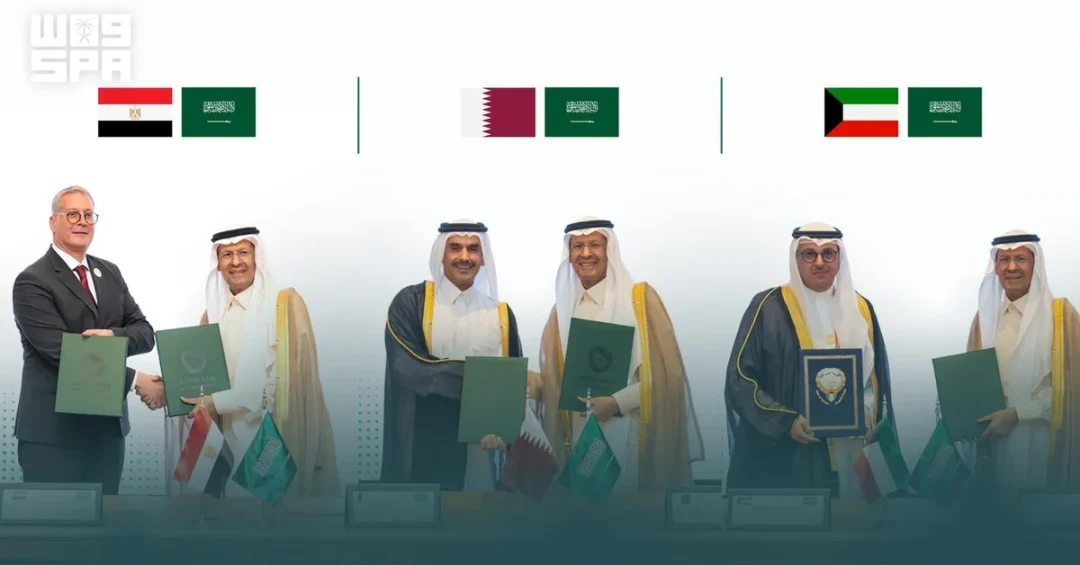
Saudi Arabia’s Minister of Energy and Minister of Industry and Mineral Resources, Prince Abdulaziz bin Salman bin Abdulaziz, signed three separate memoranda of understanding (MoUs) with Kuwait, Qatar, and Egypt on October 11, 2026, in Riyadh, expanding energy cooperation across a wide range of fields. The agreements, announced by the Saudi Press Agency (SPA), mark a significant step in the Kingdom’s efforts to strengthen regional energy ties, enhance grid integration, and advance clean energy technologies in line with Saudi Vision 2030.
Context and Background
The MoUs were signed with Kuwait’s Minister of Electricity, Water and Renewable Energy, Dr. Subaih Abdulaziz Abdulmohsen Al-Mukhizim; Qatar’s Minister of State for Energy Affairs, Eng. Saad bin Sherida Al-Kaabi; and Egypt’s Minister of Petroleum and Mineral Resources, Eng. Karim Badawi. These agreements reflect Saudi Arabia’s proactive diplomacy in fostering energy partnerships across the region, building on longstanding cooperation and shared goals of sustainable development.
This development comes as Saudi Arabia accelerates its energy transition under Vision 2030, aiming to diversify the economy, reduce carbon emissions, and position itself as a global leader in clean energy. The MoUs also align with the Kingdom’s broader strategy to enhance energy security and promote regional integration, key themes in recent Saudi energy policy.
Key Details of the Agreements
The MoU with Kuwait establishes a framework for cooperation in electricity, renewable energy, power grid interconnection, and electricity exports. It also covers energy efficiency, energy storage, smart grids, digital transformation, innovation, cybersecurity, and artificial intelligence. The two countries will work to develop strategic partnerships between their institutions, localize energy-related materials, products, and services, and strengthen cooperation between companies in these fields. The agreement further includes cooperation on climate change mitigation technologies, such as Circular Carbon Economy solutions.
The MoU with Qatar encompasses cooperation across oil and petroleum products, gas and its derivatives, refining, petrochemicals, electricity, clean hydrogen and its derivatives, renewable energy, energy efficiency, and energy storage. It also provides for exploring joint projects involving pipelines for the transportation and export of oil and gas, the development of sustainable petrochemical materials for construction, and infrastructure to support energy access. Additionally, it covers cooperation in international negotiations and forums on energy transitions and climate change, including the United Nations Framework Convention on Climate Change, the Paris Agreement, and the Intergovernmental Negotiating Committee on plastic pollution.
The MoU with Egypt focuses on cooperation in oil, gas, and their derivatives. It establishes a framework for collaboration in crude oil, petroleum products, and natural gas, including trade, handling, transportation, storage, and distribution, as well as the development of related infrastructure and logistics. The agreement aims to strengthen energy market integration and supply chain resilience, enhance energy security, and meet demand across domestic, regional, and international markets. It also includes the exchange of Saudi expertise in fuel station and service center qualification, operation, and maintenance, and the Kingdom’s experience in opening the liquefied petroleum gas sector to competition. Cooperation in petrochemicals and investment in ongoing and planned projects is also expanded.
Implications and Impact
These agreements are expected to deepen economic ties among the participating nations, fostering greater regional stability and prosperity. By enhancing grid interconnection and renewable energy cooperation, Saudi Arabia and Kuwait can optimize energy resources and improve efficiency. The Qatar MoU opens avenues for joint ventures in petrochemicals and clean hydrogen, pivotal for the global energy transition. The Egypt agreement reinforces supply chain reliability and energy security, crucial for meeting rising demand.
On a broader scale, these MoUs signal Saudi Arabia’s commitment to multilateral cooperation and its role as a stabilizing force in global energy markets. They also advance the Kingdom’s goal of becoming a hub for clean energy innovation and exports, attracting investment and fostering knowledge transfer.
Vision 2030 Alignment
These MoUs are directly aligned with Saudi Vision 2030, which seeks to diversify the economy, develop sustainable energy sources, and enhance international partnerships. By collaborating with Kuwait, Qatar, and Egypt, Saudi Arabia is not only strengthening regional ties but also positioning itself as a leader in the global energy transition. The agreements support the Kingdom’s objectives to increase renewable energy capacity, promote energy efficiency, and reduce carbon emissions, all while ensuring energy security and economic growth. As Saudi Arabia continues to implement Vision 2030, such partnerships will be instrumental in achieving a prosperous and sustainable future.
20 Questions
Q1. What did Saudi Arabia’s Minister of Energy sign on October 11, 2026?
A1. He signed three memoranda of understanding with Kuwait, Qatar, and Egypt to expand energy cooperation across various fields, as reported by the Saudi Press Agency.
Q2. Which Saudi minister signed the MoUs?
A2. Prince Abdulaziz bin Salman bin Abdulaziz, Minister of Energy and Minister of Industry and Mineral Resources, signed the agreements on behalf of Saudi Arabia.
Q3. Who signed the MoU with Kuwait?
A3. Kuwait’s Minister of Electricity, Water and Renewable Energy, Dr. Subaih Abdulaziz Abdulmohsen Al-Mukhizim, signed the MoU with Saudi Arabia.
Q4. What areas does the Saudi-Kuwait MoU cover?
A4. It covers electricity, renewable energy, power grid interconnection, electricity exports, energy efficiency, energy storage, smart grids, digital transformation, innovation, cybersecurity, and artificial intelligence.
Q5. Does the Saudi-Kuwait MoU address climate change?
A5. Yes, it includes cooperation on technologies and solutions related to climate change mitigation, including Circular Carbon Economy technologies and solutions.
Q6. Who signed the MoU with Qatar?
A6. Qatar’s Minister of State for Energy Affairs, Eng. Saad bin Sherida Al-Kaabi, signed the agreement with Saudi Arabia.
Q7. What does the Saudi-Qatar MoU encompass?
A7. It covers oil and petroleum products, gas and its derivatives, refining, petrochemicals, electricity, clean hydrogen, renewable energy, energy efficiency, and energy storage.
Q8. Does the Saudi-Qatar MoU include joint infrastructure projects?
A8. Yes, it explores opportunities for joint projects involving pipelines for oil and gas transportation and export, as well as infrastructure to support energy access.
Q9. How does the Saudi-Qatar MoU address international negotiations?
A9. It includes cooperation in international negotiations, forums, and organizations addressing energy transitions and climate change, such as the UNFCCC and the Paris Agreement.
Q10. Who signed the MoU with Egypt?
A10. Egypt’s Minister of Petroleum and Mineral Resources, Eng. Karim Badawi, signed the agreement with Saudi Arabia.
Q11. What is the focus of the Saudi-Egypt MoU?
A11. It focuses on cooperation in oil, gas, and their derivatives, including trade, handling, transportation, storage, distribution, and related infrastructure development.
Q12. How does the Saudi-Egypt MoU aim to enhance energy security?
A12. It aims to strengthen energy market integration, supply chain resilience, and reliability, thereby enhancing energy security and meeting demand across domestic, regional, and international markets.
Q13. Does the Saudi-Egypt MoU include exchange of expertise?
A13. Yes, it covers the exchange of Saudi expertise in fuel station and service center qualification, operation, and maintenance, as well as experience in opening the LPG sector to competition.
Q14. What is the significance of these MoUs for regional energy cooperation?
A14. They deepen economic ties, foster regional stability, and promote integrated energy markets, enhancing cooperation and resource optimization among the participating countries.
Q15. How do these MoUs align with Saudi Vision 2030?
A15. They support Vision 2030 goals of economic diversification, sustainable energy development, and international partnerships, positioning Saudi Arabia as a leader in the global energy transition.
Q16. What role does renewable energy play in these agreements?
A16. Renewable energy is a key component, with cooperation in electricity, clean hydrogen, and energy storage aimed at advancing sustainable energy solutions and reducing carbon emissions.
Q17. Will these MoUs lead to new job opportunities?
A17. By fostering innovation and localizing energy-related materials and services, the agreements are expected to create skilled jobs and stimulate economic growth in the energy sector.
Q18. How do these MoUs impact global energy markets?
A18. They contribute to market stability, enhance supply chain reliability, and promote clean energy technologies, supporting a balanced and sustainable global energy transition.
Q19. What is the expected timeline for implementing these MoUs?
A19. The MoUs establish frameworks for cooperation, with specific projects and initiatives to be developed and implemented over time through joint working groups and follow-up mechanisms.
Q20. What message do these agreements send to the international community?
A20. They demonstrate Saudi Arabia’s commitment to multilateral cooperation, energy security, and sustainable development, reinforcing its role as a responsible global energy leader.
Reader Feedback
We value your thoughts. Please share your feedback on this article.
Your feedback helps us improve our coverage.