


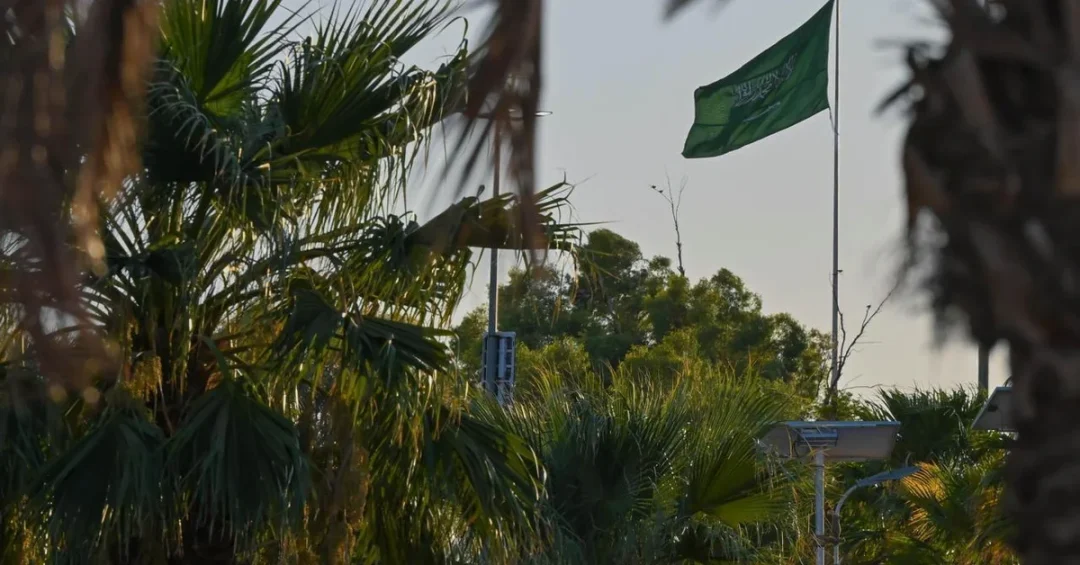
The streets and public squares of the Northern Borders Region are proudly adorned with the Saudi national flag in celebration of Flag Day, observed annually on March 11, as reported by the Saudi Press Agency (SPA). The green display enhances the spirit of loyalty under the banner of monotheism, while reinforcing the flag’s symbolism as a significant element of Saudi national identity. Residents of Arar and surrounding communities woke to find thoroughfares, government buildings, and community spaces transformed by the national colors, creating a visible expression of unity that reflects the deep bond between the citizens of the Northern Borders Region and the Kingdom’s enduring heritage.
Is there a more powerful symbol of national unity than a flag waving over every city square? Flag Day, established by royal decree in 2023, honors the moment in 1937 when King Abdulaziz Al Saud approved the design that has since become the emblem of Saudi Arabia’s journey from unification to global prominence. The Northern Borders Region, which shares borders with Iraq and Jordan, holds particular significance in this celebration. Its residents understand the flag not only as a symbol of sovereignty but as a daily reminder of the security, stability, and prosperity that the Kingdom has cultivated under its banner. The regional observance demonstrates how national pride resonates from the capital to the farthest reaches of the country.
Context and Background
Why does a single day dedicated to a flag carry such profound meaning for millions of people? Flag Day was formally instituted by royal decree in March 2023, designating March 11 as an annual occasion to celebrate the national flag and the values it represents. The date commemorates the approval of the flag’s design by the Kingdom’s founder, King Abdulaziz Al Saud, in 1937. Since then, the flag has accompanied Saudi Arabia through decades of transformation, from the early years of unification to the modern era of Vision 2030. The flag’s design, featuring the Shahada in white script on a green field with a horizontal sword, encapsulates the Kingdom’s Islamic identity, its commitment to justice, and its enduring sovereignty.
The Northern Borders Region, with its capital in Arar, occupies a strategically vital position in the Kingdom’s geography. Home to diverse communities and a growing economic base, the region has long been a focal point of Saudi Arabia’s efforts to secure its borders and develop its peripheral areas. Flag Day celebrations in this region carry added weight, as they underscore the unity between the central governance and the local population. The green banners adorning the streets of Arar and other towns serve as a visual testament to the region’s integration into the national fabric, reflecting the Kingdom’s commitment to ensuring that every part of the country participates in its shared identity and celebrates its collective achievements.
How does a regional celebration reflect the broader narrative of a nation? The observance of Flag Day across the Northern Borders Region mirrors similar celebrations in Riyadh, Jeddah, and other major cities, creating a synchronized national moment. Government agencies, educational institutions, and community organizations have all contributed to the displays, demonstrating a whole-of-society approach to commemorating the occasion. The Saudi Press Agency reported that the streets and squares were “proudly adorned” with the national flag, a phrase that captures the voluntary and enthusiastic participation of citizens. This grassroots engagement, supported by official channels, highlights the organic nature of national pride in the Kingdom and its role in fostering social cohesion.
Key Details
What specific elements define the Flag Day celebrations in the Northern Borders Region? According to the Saudi Press Agency, the streets and squares of the region are decorated with the Saudi national flag, creating a green canopy that stretches across public spaces. The display is not limited to a single location; it encompasses multiple squares and thoroughfares, ensuring that the celebration is visible to all residents and visitors. The flag’s green color, which symbolizes Islam and prosperity, dominates the visual landscape, while the white script and sword stand out as reminders of the Kingdom’s foundational principles. Local authorities and community groups have coordinated the decorations, reflecting a collaborative effort that aligns with the national directive to honor Flag Day.
The symbolism of the flag extends beyond its visual components. The Shahada, Islam’s declaration of faith, affirms the Kingdom’s spiritual foundation, while the horizontal sword represents the enforcement of justice and the defense of the nation. Together, these elements create a powerful emblem that resonates with citizens across generations. In the Northern Borders Region, where the flag flies over border outposts and urban centers alike, its presence takes on additional layers of meaning. It signifies the protection of the homeland, the sacrifices of the armed forces, and the peace that enables development. The SPA report notes that the display “enhances the spirit of loyalty under the banner of monotheism,” a sentiment that captures the deep emotional and religious connection that Saudis feel toward their flag.
How do local residents participate in these celebrations? While the SPA report focuses on the visual displays, the broader context of Flag Day in Saudi Arabia includes a range of activities such as educational programs in schools, cultural events, and social media campaigns. In the Northern Borders Region, these activities are adapted to the local context, with schools organizing flag-raising ceremonies and community centers hosting exhibitions on the history of the Saudi flag. The participation of youth is particularly emphasized, as it ensures that the younger generation understands the flag’s significance and the values it represents. The decorations themselves are often the result of collective efforts, with volunteers from various neighborhoods contributing to the festive atmosphere that characterizes the day.
International and Regional Impact
How does a national celebration in a border region project Saudi Arabia’s image to the world? The Northern Borders Region’s Flag Day observances are part of a nationwide commemoration that showcases the Kingdom’s unity and stability to international observers. In a region often characterized by geopolitical tensions, the sight of Saudi citizens celebrating their national flag in a border area sends a message of resilience and sovereignty. It demonstrates that the Kingdom’s territorial integrity is not merely a matter of security policy but is rooted in the genuine loyalty of its people. For neighboring countries and global partners, this display of national cohesion reinforces Saudi Arabia’s position as a stable and reliable actor in the Middle East.
What does the international community take away from such celebrations? Observers and analysts often look at national day events as indicators of social and political health. The widespread participation in Flag Day across Saudi Arabia, including in remote and border regions, signals a high degree of national consensus and effective governance. It also aligns with the Kingdom’s broader diplomatic efforts to present itself as a modern, unified nation that honors its heritage while embracing progress. The Northern Borders Region, with its proximity to international borders, serves as a microcosm of Saudi Arabia’s outreach to the world. The flag that adorns its squares is the same flag that flies over Saudi embassies and represents the Kingdom in international forums, creating a seamless connection between local pride and global presence.
Economic and Strategic Significance
What role does the Northern Borders Region play in Saudi Arabia’s economic and strategic landscape? The region is rich in natural resources, including phosphate and gas reserves, and is a key component of the Kingdom’s industrial diversification strategy. The presence of the Saudi national flag in its squares is a reminder of the stability that underpins economic development. Without the security guaranteed by the Kingdom’s leadership and armed forces, the investments and infrastructure projects transforming the region would not be possible. Flag Day thus serves as an occasion to acknowledge the link between national unity and economic prosperity, a connection that is particularly tangible in a region where border security and economic growth go hand in hand.
How does Flag Day contribute to the region’s social fabric? The celebrations foster a sense of belonging and shared purpose among residents, many of whom have families with long histories in the area. By decorating public spaces with the national flag, the community reaffirms its commitment to the Kingdom’s vision and its role in achieving it. This social cohesion is an intangible but vital asset for economic development, as it attracts investment and supports the implementation of large-scale projects. The Northern Borders Region is poised to benefit from initiatives such as the Saudi Vision 2030, which aims to diversify the economy and develop all regions of the country. The pride displayed on Flag Day is a foundation upon which future achievements can be built.
Vision 2030 Alignment
How does Flag Day resonate with the objectives of Saudi Vision 2030? Vision 2030, launched by Crown Prince Mohammed bin Salman in 2016, seeks to transform Saudi Arabia into a diversified, innovative, and globally engaged economy while preserving its cultural and religious heritage. Flag Day celebrations directly support this vision by reinforcing national identity, a key pillar of the program’s social dimension. The flag represents the unity and pride that are essential for the collective effort required to achieve Vision 2030’s ambitious goals. In the Northern Borders Region, the observance of Flag Day is a testament to the inclusive nature of the vision, which aims to develop every part of the Kingdom and ensure that all citizens share in its benefits.
What does the future hold for Flag Day in the Northern Borders Region and beyond? As Saudi Arabia continues its journey of transformation, occasions like Flag Day will remain vital for celebrating the nation’s progress and reaffirming its values. The Kingdom’s leadership has consistently emphasized the importance of national symbols in fostering loyalty and unity. The Northern Borders Region, with its strategic location and growing economic importance, will play a significant role in this ongoing narrative. The green flag that adorns its squares today is a promise of a future where the region and the entire Kingdom thrive under the banner of monotheism, guided by the vision of a prosperous and united Saudi Arabia.
20 Questions
Q1. What is Flag Day in Saudi Arabia?
A1. Flag Day is an annual occasion observed on March 11, established by royal decree in 2023, to celebrate the Saudi national flag and its symbolism as a core element of Saudi national identity and unity.
Q2. Why is March 11 significant for Flag Day?
A2. March 11 commemorates the day in 1937 when King Abdulaziz Al Saud approved the design of the national flag, marking a defining moment in the Kingdom’s formation and its enduring symbols.
Q3. What does the Saudi national flag represent?
A3. The flag features the Shahada in white script on a green field with a horizontal sword, symbolizing Islamic faith, justice, sovereignty, and the Kingdom’s commitment to its foundational principles.
Q4. How is Flag Day celebrated in the Northern Borders Region?
A4. The streets and squares of the Northern Borders Region are adorned with the Saudi national flag, creating a visual display of loyalty and national pride, as reported by the Saudi Press Agency.
Q5. What is the significance of celebrating Flag Day in a border region?
A5. Celebrating in the Northern Borders Region underscores the unity between the central governance and local communities, highlighting the region’s integration and its role in safeguarding the Kingdom’s sovereignty.
Q6. Who reported on the Flag Day celebrations in the Northern Borders Region?
A6. The Saudi Press Agency (SPA) reported on the decorations, noting that the streets and squares were proudly adorned with the national flag in celebration of the occasion.
Q7. What does the green color of the Saudi flag symbolize?
A7. The green color symbolizes Islam, prosperity, and life, and it serves as a unifying visual element that represents the Kingdom’s spiritual and cultural heritage.
Q8. How do residents of the Northern Borders Region participate in Flag Day?
A8. Residents participate by displaying the flag in public spaces, organizing community events, and engaging in educational activities that highlight the flag’s history and significance to the nation.
Q9. What is the role of the sword on the Saudi flag?
A9. The horizontal sword represents the enforcement of justice and the defense of the nation, reflecting the Kingdom’s commitment to security, rule of law, and the protection of its people.
Q10. How does Flag Day align with Saudi Vision 2030?
A10. Flag Day reinforces national identity, a key pillar of Vision 2030, by fostering unity and pride, which are essential for the collective effort to achieve the Kingdom’s economic and social transformation goals.
Q11. What other regions in Saudi Arabia celebrate Flag Day?
A11. Flag Day is celebrated nationwide, with observances in Riyadh, Jeddah, Dammam, and all other regions, creating a synchronized national moment of pride and loyalty.
Q12. When was Flag Day officially established?
A12. Flag Day was officially established by royal decree in March 2023, designating March 11 as the annual date for the celebration across the Kingdom.
Q13. What message does Flag Day send to the international community?
A13. It projects an image of national unity, stability, and sovereignty, demonstrating that Saudi Arabia’s territorial integrity is rooted in the genuine loyalty and cohesion of its people.
Q14. How does the Northern Borders Region contribute to Saudi Arabia’s economy?
A14. The region is rich in natural resources, including phosphate and gas, and plays a key role in the Kingdom’s industrial diversification and economic development under Vision 2030.
Q15. What activities are organized in schools for Flag Day?
A15. Schools organize flag-raising ceremonies, educational programs on the flag’s history, and creative activities that instill a sense of national pride and awareness among students.
Q16. Why is national identity important for Saudi Arabia’s progress?
A16. National identity fosters social cohesion, loyalty, and a shared purpose, which are essential for the collective effort required to achieve the ambitious goals of Saudi Vision 2030.
Q17. How does the Saudi Press Agency support Flag Day coverage?
A17. The Saudi Press Agency provides official reporting on Flag Day celebrations across the Kingdom, ensuring accurate and widespread dissemination of information about the occasion.
Q18. What is the historical background of the Saudi flag?
A18. The flag’s design was approved by King Abdulaziz in 1937, and it has since accompanied the Kingdom through decades of transformation, symbolizing its Islamic identity and sovereignty.
Q19. How can citizens show their loyalty on Flag Day?
A19. Citizens can display the national flag at their homes and businesses, participate in community events, and engage in educational activities that honor the flag’s symbolism and history.
Q20. What does the future hold for Flag Day celebrations in Saudi Arabia?
A20. As the Kingdom progresses under Vision 2030, Flag Day will continue to be a vital occasion for celebrating national unity, reaffirming values, and inspiring future generations to contribute to Saudi Arabia’s success.
Reader Feedback
We value your thoughts. Please share your feedback on this article.
Your feedback helps us improve our coverage.
Related articles
 Makkah Celebrates Flag Day with Banner of Monotheism
 Al-Jouf Drapes Streets in Green with 10,200 Flags for Flag Day
 Saudi Ramadan Date and Iftar Programs Launched in Senegal
 KSrelief Distributes 500 Food Baskets in Guinea
 Saudi Iftar Program Reaches 6,000 in North Macedonia
 Border Guard Ensures Smooth Umrah Arrivals During Ramadan