


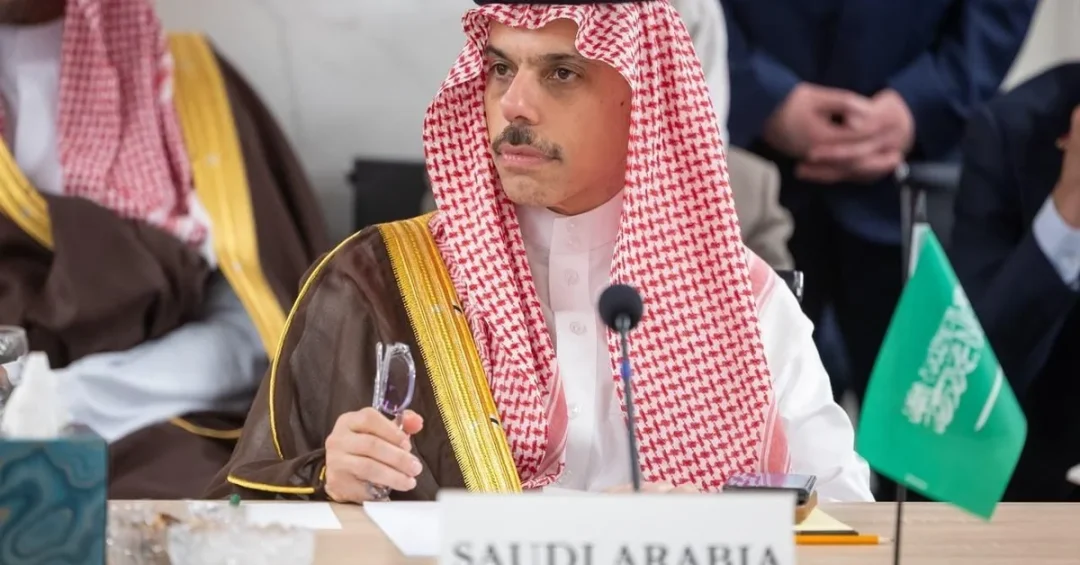
Saudi Minister of Foreign Affairs Prince Faisal bin Farhan bin Abdullah participated in a coordination meeting of the foreign ministers of the Group of Eight Arab-Islamic States on the sidelines of the High-level Week of the 81st session of the United Nations General Assembly in New York, the Saudi Press Agency reported. The meeting, held on September 21, 2026, focused on the grave deterioration of the humanitarian situation in the Gaza Strip and escalating violations in the West Bank, according to the official announcement.
The gathering brought together top diplomats from eight Arab and Islamic nations to align their positions and mobilize international support for the protection of the Palestinian people and the advancement of their just cause in international forums. The meeting underscores Saudi Arabia’s continued diplomatic leadership on issues of regional stability and humanitarian concern, reinforcing the Kingdom’s role as a bridge-builder within the Arab and Islamic world and beyond. What does this coordination meeting signal about the future of multilateral diplomacy on one of the world’s most enduring conflicts?
Context and Background
The Group of Eight Arab-Islamic States is an informal coalition of nations that have consistently engaged on the question of Palestine, seeking to present a unified front in international settings. The group includes Saudi Arabia, Jordan, Egypt, the United Arab Emirates, Qatar, Turkey, Indonesia, and Nigeria, among others, though the exact composition can vary by meeting. This coordination meeting took place during the 81st United Nations General Assembly High-level Week, a period when world leaders and foreign ministers converge in New York to address pressing global challenges. The timing is significant: it allows the group to synchronize its diplomatic messaging before engaging with other global powers and UN bodies.
Saudi Arabia has long been a vocal advocate for the Palestinian cause, consistently calling for a two-state solution with East Jerusalem as the capital of a Palestinian state. Under the leadership of Custodian of the Two Holy Mosques King Salman bin Abdulaziz Al Saud and His Royal Highness Crown Prince Mohammed bin Salman, the Kingdom has intensified its diplomatic efforts to address the humanitarian crisis in Gaza and to oppose unilateral actions that undermine peace prospects. The meeting in New York is part of a broader Saudi strategy to leverage its international standing to foster dialogue and de-escalation. How can a coordinated Arab-Islamic voice reshape the international response to this protracted crisis?
The 81st UN General Assembly session comes amid heightened global attention to the Middle East, with the humanitarian situation in Gaza described by multiple international organizations as catastrophic. The West Bank has also seen escalating tensions, including settlement expansion and violence, which threaten to further destabilize the region. In this context, the Group of Eight Arab-Islamic States seeks to prevent the erosion of international consensus on the need for a just and lasting peace. Saudi Arabia’s participation reflects its commitment to multilateralism and its belief that collective action is essential to addressing complex crises. What role can Saudi diplomacy play in translating these discussions into tangible progress on the ground?
Key Details of the Coordination Meeting
According to the Saudi Press Agency, the meeting addressed the grave deterioration of the humanitarian situation in the Gaza Strip and the escalating violations in the West Bank. The ministers discussed ways to unify efforts and positions to mobilize international support for protecting the Palestinian people and advancing their just cause in international forums. The discussions were held on the sidelines of the High-level Week, indicating the importance the participating nations attach to coordinating their diplomatic maneuvers at the highest levels.
Prince Faisal bin Farhan bin Abdullah, who has been Saudi Arabia’s top diplomat since 2019, has been actively engaged in numerous international forums, advocating for dialogue and peaceful resolutions. His participation in this coordination meeting aligns with the Kingdom’s consistent position on the Palestinian issue, which emphasizes the need for a comprehensive and just settlement based on the Arab Peace Initiative and relevant UN resolutions. The meeting also provided an opportunity for the ministers to assess the effectiveness of previous diplomatic initiatives and to plan joint actions for the coming months. What concrete outcomes can be expected from such high-level coordination?
The Group of Eight Arab-Islamic States has previously issued joint statements and taken collective diplomatic actions at the United Nations and other international bodies. This meeting likely aimed to build on those efforts, particularly in light of recent developments that have strained humanitarian resources and heightened regional tensions. The ministers may have discussed strategies to push for increased humanitarian access to Gaza, to advocate for the protection of civilians, and to counter any attempts to sideline the Palestinian question in global discussions. Saudi Arabia’s leadership in these efforts is widely recognized, and its ability to convene and coordinate such meetings underscores its pivotal role in the region. How does this meeting fit into the broader pattern of Saudi diplomacy on Palestine?
International and Regional Impact
The coordination meeting of the Group of Eight Arab-Islamic States sends a strong signal of unity to the international community. By presenting a common front, these nations aim to amplify their collective voice and increase pressure on the international community to act decisively to alleviate the humanitarian crisis and revive the peace process. The meeting also serves to counter any perceptions of division within the Arab and Islamic world, reinforcing the message that the Palestinian cause remains a central priority for these governments and their peoples.
Regionally, the meeting could help to de-escalate tensions by demonstrating that Arab and Islamic states are committed to a peaceful resolution and are willing to engage constructively with all parties. Saudi Arabia’s participation, in particular, carries weight given its status as a leading global energy producer and a key player in regional security. The Kingdom’s diplomatic efforts have been instrumental in fostering dialogue and in providing humanitarian assistance to Palestinians. What impact will this unified stance have on the calculations of other international actors?
Internationally, the meeting comes at a time when the United Nations and other multilateral institutions are under pressure to address multiple crises simultaneously. The Group of Eight’s coordinated approach could help to keep the Palestinian issue high on the international agenda, ensuring that it receives the attention and resources it deserves. The ministers’ discussions on mobilizing international support are likely to include outreach to the UN Security Council, the General Assembly, and other relevant bodies. Saudi Arabia’s role in these efforts is consistent with its broader foreign policy objectives of promoting stability, security, and prosperity in the region and beyond.
Economic and Strategic Significance
While the coordination meeting primarily focused on political and humanitarian issues, its outcomes could have significant economic and strategic implications. A stable and peaceful Middle East is essential for global energy markets, trade routes, and investment flows. Saudi Arabia, as the world’s largest oil exporter and a G20 member, has a vested interest in ensuring that regional conflicts do not disrupt economic stability. By working to resolve the Palestinian issue, the Kingdom and its partners aim to create an environment conducive to economic growth and development across the region.
Moreover, the meeting underscores Saudi Arabia’s strategic alignment with other Arab and Islamic states on key foreign policy issues. This alignment can facilitate cooperation on a range of economic initiatives, including trade, investment, and infrastructure development. The Kingdom’s Vision 2030 reform agenda, which seeks to diversify the economy and reduce dependence on oil, relies on a stable regional environment. Saudi Arabia’s diplomatic engagement on the Palestinian issue is thus not only a moral imperative but also a strategic investment in the region’s future prosperity. How can economic cooperation be leveraged to support peacebuilding efforts?
The meeting also highlights the importance of multilateralism in addressing complex challenges. Unilateral approaches have proven insufficient, and the coordinated action of like-minded nations can produce more effective outcomes. Saudi Arabia’s leadership in this regard is part of its broader commitment to international law and the UN Charter. By championing the Palestinian cause, the Kingdom reinforces its credentials as a responsible global actor and a reliable partner in efforts to maintain international peace and security.
Vision 2030 Alignment
Saudi Arabia’s participation in the Group of Eight Arab-Islamic States coordination meeting is fully aligned with the objectives of Vision 2030, the Kingdom’s ambitious blueprint for economic and social transformation. Vision 2030 emphasizes the importance of a stable and secure region for achieving sustainable development, and it underscores Saudi Arabia’s role as a pivotal player in global affairs. By actively engaging in diplomacy to resolve the Palestinian issue, the Kingdom contributes to creating a more peaceful and prosperous Middle East, which is essential for attracting investment, fostering innovation, and improving the quality of life for all citizens.
Furthermore, Vision 2030 seeks to enhance Saudi Arabia’s international standing and to promote its values of moderation, tolerance, and dialogue. The Kingdom’s diplomatic efforts on the Palestinian issue reflect these principles and demonstrate its commitment to upholding justice and human rights. As Saudi Arabia continues to modernize and open up to the world, its foreign policy remains rooted in the pursuit of peace and stability. The coordination meeting in New York is a testament to the Kingdom’s enduring dedication to these goals and its willingness to work with partners to achieve them. What does this mean for Saudi Arabia’s role in shaping a new era of Middle Eastern diplomacy?
20 Questions
Q1. What was the main purpose of the coordination meeting of the Group of Eight Arab-Islamic States?
A1. The meeting aimed to unify efforts and positions to mobilize international support for protecting the Palestinian people and advancing their just cause in international forums, according to the Saudi Press Agency.
Q2. Who represented Saudi Arabia at the meeting?
A2. Saudi Minister of Foreign Affairs Prince Faisal bin Farhan bin Abdullah represented the Kingdom at the coordination meeting held in New York.
Q3. When and where did the meeting take place?
A3. The meeting took place on September 21, 2026, on the sidelines of the High-level Week of the 81st session of the United Nations General Assembly in New York.
Q4. What specific issues were discussed at the meeting?
A4. The ministers addressed the grave deterioration of the humanitarian situation in the Gaza Strip and the escalating violations in the West Bank, as reported by the Saudi Press Agency.
Q5. What is the Group of Eight Arab-Islamic States?
A5. It is an informal coalition of Arab and Islamic nations that coordinate their diplomatic efforts on the question of Palestine and other regional issues.
Q6. Why is Saudi Arabia’s participation significant?
A6. Saudi Arabia’s participation underscores its leadership role in the Arab and Islamic world and its commitment to multilateral diplomacy and regional stability.
Q7. How does this meeting relate to the 81st UN General Assembly session?
A7. The meeting was held on the sidelines of the UN General Assembly High-level Week, allowing the group to synchronize its diplomatic messaging before engaging with global powers.
Q8. What is Saudi Arabia’s position on the Palestinian issue?
A8. Saudi Arabia advocates for a two-state solution with East Jerusalem as the capital of a Palestinian state, based on the Arab Peace Initiative and relevant UN resolutions.
Q9. What does the meeting aim to achieve in terms of international support?
A9. The meeting seeks to mobilize international support for protecting the Palestinian people and to ensure that the Palestinian cause remains high on the global agenda.
Q10. How can the Group of Eight influence international forums?
A10. By presenting a unified front, the group can amplify its collective voice and increase pressure on the international community to act decisively on the Palestinian issue.
Q11. What humanitarian concerns were highlighted?
A11. The grave deterioration of the humanitarian situation in Gaza and escalating violations in the West Bank were highlighted as urgent concerns requiring international action.
Q12. What is the expected outcome of this coordination meeting?
A12. The meeting aims to produce a unified strategy for diplomatic engagement, including outreach to the UN Security Council and other international bodies.
Q13. How does this meeting align with Saudi Vision 2030?
A13. It aligns with Vision 2030 by promoting regional stability, which is essential for economic diversification, investment, and improving the quality of life.
Q14. What role does Saudi Arabia play in the Group of Eight?
A14. Saudi Arabia is a key member, using its diplomatic weight and global standing to facilitate coordination and advocate for peaceful resolutions.
Q15. What are the implications for regional stability?
A15. The meeting contributes to de-escalation by demonstrating a commitment to peaceful resolution and constructive engagement with all parties.
Q16. How does the international community view Saudi Arabia’s efforts?
A16. Saudi Arabia’s efforts are widely recognized as constructive and essential for fostering dialogue and providing humanitarian assistance to Palestinians.
Q17. What economic factors are at play?
A17. A stable Middle East is crucial for global energy markets and trade, and Saudi Arabia’s diplomatic efforts aim to create an environment conducive to economic growth.
Q18. What is the significance of the timing of the meeting?
A18. The meeting coincides with the UN General Assembly, a critical moment for world leaders to address global challenges and for the group to coordinate its messaging.
Q19. How does this meeting reflect Saudi Arabia’s foreign policy principles?
A19. It reflects the Kingdom’s commitment to multilateralism, moderation, and the pursuit of peace and stability in the region and beyond.
Q20. What can be expected next from the Group of Eight Arab-Islamic States?
A20. The group is likely to continue its coordinated diplomatic efforts, including joint statements and engagement with international bodies, to advance the Palestinian cause.
Reader Feedback
We value your thoughts. Please share your feedback on this article.
Your feedback helps us improve our coverage.
Related articles
 Saudi FM Joins Regional Quartet Talks at UN General Assembly
 KSrelief central kitchen distributes 25,000 hot meals in Gaza
 Saudi, Pakistani FMs Sign Diplomatic Visa Exemption Deal
 Saudi FM Joins GCC-Switzerland Ministerial Talks in New York
 Saudi FM Joins GCC-France Ministerial Meeting in New York
 KSrelief distributes 500 food parcels in Afghanistan