


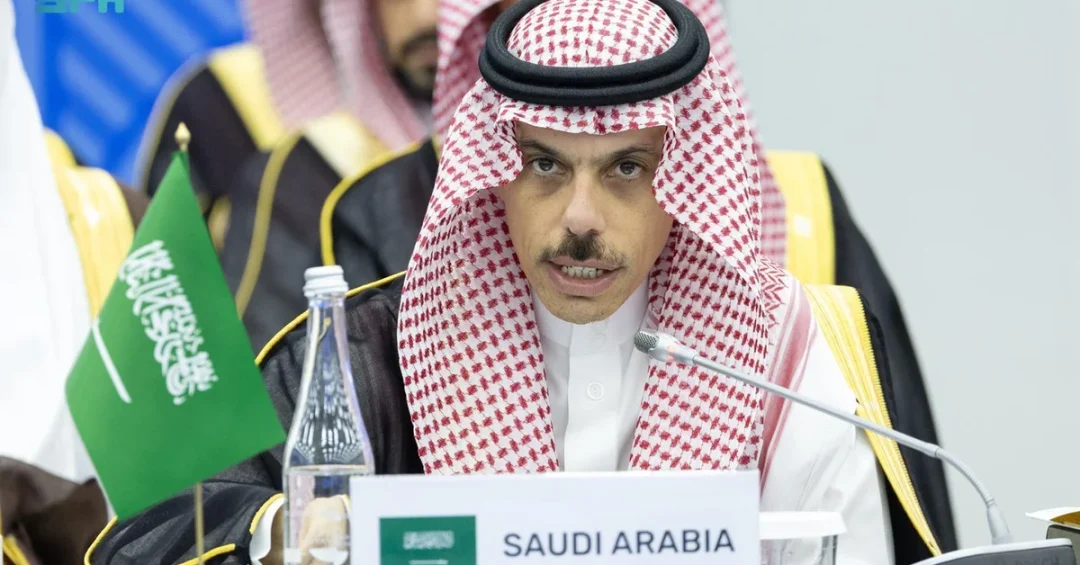
Saudi Minister of Foreign Affairs Prince Faisal bin Farhan bin Abdullah participated in the BRICS Outreach ministerial meeting held on June 11, 2024, in Nizhny Novgorod, Russia, under the theme “BRICS Dialogue with Developing Countries.” The meeting underscored the Kingdom’s growing role in global economic and diplomatic forums, following its invitation to join the BRICS group. The Saudi delegation included Ambassador to the Russian Federation Abdulrahman Al-Ahmad, Director-General of the Foreign Minister’s Office Abdulrahman Al-Daoud, and Director General of International Organizations Shaher Al-Khonaini.
Context and Background
The BRICS group, originally comprising Brazil, Russia, India, China, and South Africa, has expanded its outreach to developing nations to foster cooperation on shared challenges. Saudi Arabia’s participation aligns with its strategy to diversify partnerships and enhance its global influence. In 2023, the Kingdom was invited to join BRICS, reflecting its status as a leading economy and its commitment to multilateralism. This meeting served as a platform for dialogue on issues such as sustainable development, trade, and innovation, which are central to Saudi Arabia’s Vision 2030.
Key Details
During the meeting, Prince Faisal bin Farhan emphasized Saudi Arabia’s dedication to international collaboration and its support for inclusive growth. The theme “BRICS Dialogue with Developing Countries” highlighted the importance of addressing the needs of emerging economies. The Kingdom’s delegation engaged with counterparts from various nations, discussing opportunities for joint initiatives in energy, technology, and infrastructure. This participation follows Saudi Arabia’s active role in other global forums, such as the G20, where it has championed economic reforms and sustainability.
Implications and Impact
Saudi Arabia’s involvement in BRICS outreach signals its pivot toward strengthening ties with non-Western powers, which could reshape global economic dynamics. By joining dialogues with developing countries, the Kingdom aims to amplify its voice on issues like food security, climate change, and digital transformation. This move is expected to open new avenues for trade and investment, benefiting both Saudi Arabia and its partners. It also reinforces the Kingdom’s position as a bridge between developed and developing nations, promoting stability and prosperity.
Vision 2030 Alignment
This participation directly supports Vision 2030, Saudi Arabia’s blueprint for economic diversification and global engagement. By fostering international partnerships, the Kingdom aims to reduce oil dependence, boost non-oil exports, and attract foreign investment. The BRICS platform offers opportunities to collaborate on innovation and sustainable development, key pillars of Vision 2030. As Saudi Arabia continues to play a proactive role in multilateral settings, it advances its goal of becoming a global hub for trade, tourism, and technology, ultimately enhancing the quality of life for its citizens and contributing to worldwide progress.
20 Questions
Q1. What was the BRICS Outreach ministerial meeting?
A1. The BRICS Outreach ministerial meeting was a gathering held on June 11, 2024, in Nizhny Novgorod, Russia, under the theme “BRICS Dialogue with Developing Countries.” It aimed to foster cooperation between BRICS nations and developing countries on shared economic and diplomatic challenges.
Q2. Who represented Saudi Arabia at the meeting?
A2. Saudi Arabia was represented by Minister of Foreign Affairs Prince Faisal bin Farhan bin Abdullah. He was accompanied by Ambassador to Russia Abdulrahman Al-Ahmad, Director-General of the Foreign Minister’s Office Abdulrahman Al-Daoud, and Director General of International Organizations Shaher Al-Khonaini.
Q3. Why was Saudi Arabia invited to join BRICS?
A3. Saudi Arabia was invited to join BRICS in 2023 due to its growing economic influence and strategic global position. The Kingdom’s inclusion reflects its role as a major energy producer and its commitment to multilateral cooperation, aligning with its Vision 2030 goals.
Q4. What is the significance of the meeting’s theme?
A4. The theme “BRICS Dialogue with Developing Countries” emphasizes the importance of addressing the needs and aspirations of emerging economies. It highlights BRICS’ intention to build inclusive partnerships and promote sustainable development, trade, and innovation among nations.
Q5. How does this participation align with Saudi Vision 2030?
A5. The participation supports Vision 2030 by enhancing international partnerships, diversifying the economy, and promoting non-oil sectors. It aligns with the Kingdom’s strategy to engage globally, attract investment, and foster innovation, contributing to sustainable development and economic growth.
Q6. What other global forums does Saudi Arabia actively participate in?
A6. Saudi Arabia is active in the G20, the United Nations, and the OPEC+ alliance, among others. These platforms allow the Kingdom to contribute to global economic policies, energy stability, and sustainable development, reinforcing its role as a responsible international actor.
Q7. What were the key topics discussed at the meeting?
A7. Discussions focused on sustainable development, trade, investment, and technological cooperation. The dialogue aimed to identify areas of mutual benefit for BRICS nations and developing countries, including food security, climate change, and digital transformation.
Q8. How might Saudi Arabia’s involvement impact global economics?
A8. Saudi Arabia’s involvement could strengthen economic ties between BRICS and developing nations, potentially reshaping global trade dynamics. It may lead to increased investment flows, diversified partnerships, and a more balanced global economic order that benefits emerging markets.
Q9. What role does Saudi Arabia play in BRICS outreach?
A9. Saudi Arabia acts as a bridge between developed and developing nations, leveraging its economic strength and diplomatic ties. Its participation promotes dialogue on shared challenges and fosters cooperation in areas like energy, technology, and infrastructure, enhancing its global influence.
Q10. Who attended the meeting from the Saudi delegation?
A10. The Saudi delegation included Ambassador to Russia Abdulrahman Al-Ahmad, Director-General of the Foreign Minister’s Office Abdulrahman Al-Daoud, and Director General of International Organizations Shaher Al-Khonaini, alongside Minister Prince Faisal bin Farhan bin Abdullah.
Q11. What is the BRICS group and its purpose?
A11. BRICS is a coalition of major emerging economies—Brazil, Russia, India, China, and South Africa—aimed at promoting economic cooperation, political dialogue, and sustainable development. It seeks to reform global governance and amplify the voices of developing nations.
Q12. How does Saudi Arabia benefit from BRICS membership?
A12. Membership offers Saudi Arabia access to new markets, investment opportunities, and collaborative projects in technology and infrastructure. It also strengthens the Kingdom’s geopolitical standing and allows it to influence global economic policies aligned with Vision 2030.
Q13. What message did Prince Faisal convey at the meeting?
A13. Prince Faisal conveyed Saudi Arabia’s commitment to international collaboration and inclusive growth. He emphasized the Kingdom’s support for developing countries and its readiness to partner on initiatives that promote stability, prosperity, and sustainable development.
Q14. How does this meeting reflect Saudi Arabia’s foreign policy?
A14. The meeting reflects Saudi Arabia’s foreign policy of active engagement, multilateralism, and diversification of partnerships. It demonstrates the Kingdom’s willingness to work with both traditional allies and emerging powers to address global challenges.
Q15. What are the potential outcomes of the BRICS Outreach meeting?
A15. Potential outcomes include enhanced cooperation on trade, investment, and technology transfer. The meeting may lead to concrete agreements and initiatives that benefit developing countries, with Saudi Arabia playing a key role in facilitating these partnerships.
Q16. Why is Saudi Arabia’s presence important for developing countries?
A16. Saudi Arabia’s presence brings economic weight and diplomatic influence, offering developing countries access to resources, markets, and expertise. It also signals support for South-South cooperation, which is vital for addressing shared challenges and promoting sustainable development.
Q17. What are the next steps after this meeting?
A17. Next steps include follow-up discussions and potential working groups to implement ideas raised. Saudi Arabia will continue to engage with BRICS and developing nations to translate dialogue into actionable projects that support Vision 2030 and global goals.
Q18. How does this align with Saudi Arabia’s G20 role?
A18. It complements Saudi Arabia’s G20 role by reinforcing its commitment to global economic governance and development. Both platforms allow the Kingdom to advocate for policies that benefit emerging economies and promote sustainable growth.
Q19. What are the implications for regional stability?
A19. The implications include strengthened economic ties and dialogue, which can contribute to regional stability. By fostering cooperation, Saudi Arabia helps reduce tensions and build trust, creating an environment conducive to peace and prosperity.
Q20. How does this participation showcase Saudi leadership?
A20. It showcases Saudi leadership by demonstrating proactive engagement in global affairs and a commitment to multilateral solutions. The Kingdom’s active role in BRICS outreach underscores its emergence as a key player in shaping a more inclusive and prosperous world.
Reader Feedback
We value your thoughts. Please share your feedback on this article.
Your feedback helps us improve our coverage.