


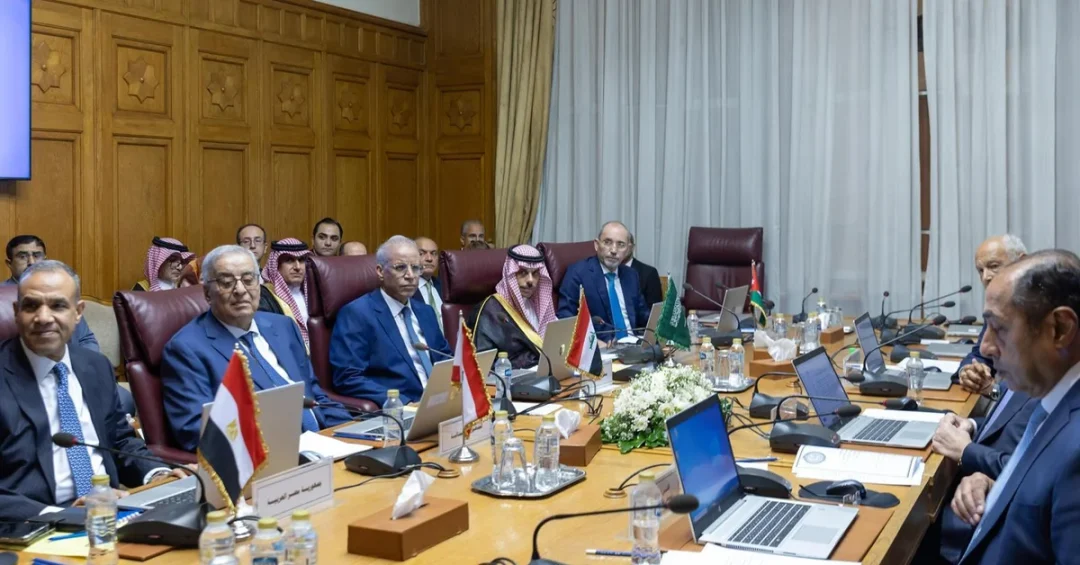
Saudi Arabia’s Minister of Foreign Affairs, Prince Faisal bin Farhan bin Abdullah, participated in the second meeting of the Arab Ministerial Liaison Committee for direct dialogue with the Syrian government, held on the sidelines of the 162nd Arab Ministerial Meeting in Cairo on September 10, 2024. The meeting brought together representatives from several Arab countries and the Secretary-General of the Arab League, Ahmed Aboul Gheit, to discuss strengthening the Arab role in settling the Syrian crisis and addressing its political, security, and humanitarian consequences.
Context and Background
The Arab Ministerial Liaison Committee was established following the 32nd Arab Summit in Jeddah in May 2023, where Arab leaders agreed to reintegrate Syria into the Arab League and engage in direct dialogue to resolve the crisis. The committee comprises foreign ministers from Saudi Arabia, Egypt, Jordan, Iraq, and Lebanon, along with the Arab League Secretary-General. This second meeting follows the first held in August 2024, reflecting ongoing efforts to facilitate a comprehensive political solution in Syria. Saudi Arabia has consistently advocated for Arab-led initiatives to restore stability and alleviate the humanitarian suffering of the Syrian people.
Key Details
During the meeting, participants reviewed the latest developments in Syria and explored ways to enhance Arab coordination. They emphasized the importance of a political solution that preserves Syria’s unity, sovereignty, and territorial integrity. The discussions also focused on the humanitarian dimension, including the need to create conditions for the safe return of refugees and displaced persons. Prince Faisal bin Farhan reiterated Saudi Arabia’s commitment to supporting efforts that ensure Syria’s reintegration into the Arab fold and contribute to regional security and stability.
Implications and Impact
This meeting underscores the growing consensus among Arab states to take a leading role in resolving the Syrian crisis. It signals a shift towards a pragmatic approach that prioritizes dialogue and diplomacy over isolation. For Saudi Arabia, active engagement in this committee aligns with its broader foreign policy objectives of promoting peace, stability, and prosperity in the region. The outcomes of these discussions could pave the way for increased humanitarian access, economic recovery, and eventual reconstruction in Syria, benefiting the entire region.
Vision 2030 Alignment
Saudi Arabia’s participation in the Arab Ministerial Liaison Committee reflects the Kingdom’s Vision 2030 goals of fostering regional stability and enhancing its global diplomatic role. By facilitating dialogue and supporting peaceful resolutions, Saudi Arabia demonstrates its commitment to being a responsible international actor and a catalyst for positive change in the Arab world. This engagement also supports Vision 2030’s aim to create a secure and prosperous environment that enables economic growth and cultural exchange.
20 Questions
Q1. What was the purpose of the second meeting of the Arab Ministerial Liaison Committee on Syria?
A1. The meeting aimed to strengthen the Arab role in settling the Syrian crisis and addressing its political, security, and humanitarian consequences through direct dialogue with the Syrian government.
Q2. Who represented Saudi Arabia at the meeting?
A2. Saudi Arabia was represented by Minister of Foreign Affairs Prince Faisal bin Farhan bin Abdullah, who participated in the meeting held in Cairo on September 10, 2024.
Q3. Where and when did the meeting take place?
A3. The meeting took place in Cairo, Egypt, on September 10, 2024, on the sidelines of the 162nd Arab Ministerial Meeting.
Q4. Which other parties attended the meeting?
A4. Several Arab countries and the Secretary-General of the Arab League, Ahmed Aboul Gheit, attended the meeting, reflecting broad Arab engagement on the Syrian issue.
Q5. What was the main focus of the discussions?
A5. Discussions focused on enhancing Arab coordination to resolve the Syrian crisis, emphasizing political, security, and humanitarian dimensions, and supporting Syria’s reintegration into the Arab fold.
Q6. When was the Arab Ministerial Liaison Committee established?
A6. The committee was established following the 32nd Arab Summit in Jeddah in May 2023, where Arab leaders agreed to reintegrate Syria into the Arab League and engage in direct dialogue.
Q7. Which countries are members of the committee?
A7. The committee comprises foreign ministers from Saudi Arabia, Egypt, Jordan, Iraq, and Lebanon, along with the Arab League Secretary-General.
Q8. What is Saudi Arabia’s stance on the Syrian crisis?
A8. Saudi Arabia advocates for a political solution that preserves Syria’s unity, sovereignty, and territorial integrity, and supports Arab-led efforts to restore stability and alleviate humanitarian suffering.
Q9. What humanitarian issues were addressed?
A9. The meeting addressed the need to create conditions for the safe return of refugees and displaced persons, and to increase humanitarian access to those in need inside Syria.
Q10. How does this meeting contribute to regional stability?
A10. By fostering dialogue and cooperation among Arab states, the meeting supports a unified approach to resolving the Syrian crisis, which is essential for long-term regional security and stability.
Q11. What role does the Arab League play in this process?
A11. The Arab League facilitates dialogue and coordination among member states, providing a platform for collective action to address the Syrian crisis and support a political solution.
Q12. What outcomes are expected from the committee’s work?
A12. The committee aims to produce a roadmap for a comprehensive political solution, increased humanitarian aid, and eventual reconstruction, leading to Syria’s full reintegration into the Arab world.
Q13. How does Saudi Arabia’s participation align with its foreign policy?
A13. Saudi Arabia’s participation reflects its commitment to promoting peace, stability, and prosperity in the region, and to playing a constructive role in resolving regional conflicts through diplomacy.
Q14. What is the significance of the meeting being held in Cairo?
A14. Cairo, as the host of the Arab League, provides a neutral and central venue for Arab ministerial meetings, symbolizing the collective Arab effort to address regional issues.
Q15. How many meetings of the committee have been held so far?
A15. This was the second meeting of the Arab Ministerial Liaison Committee, following the first meeting held in August 2024, indicating sustained momentum.
Q16. What are the security concerns related to the Syrian crisis?
A16. Security concerns include combating terrorism, preventing the resurgence of extremist groups, and ensuring border security, which are vital for regional stability.
Q17. How can Arab countries support Syria’s reconstruction?
A17. Arab countries can support reconstruction through investment, technical assistance, and facilitating the return of refugees, contributing to Syria’s economic recovery and stability.
Q18. What is the role of the Syrian government in these talks?
A18. The Syrian government is engaged in direct dialogue with the committee, as the talks aim to find a political solution that addresses the root causes of the crisis and ensures Syria’s stability.
Q19. How does this initiative reflect Saudi Arabia’s Vision 2030?
A19. The initiative aligns with Vision 2030’s goals of enhancing Saudi Arabia’s global diplomatic role and fostering regional stability, which are essential for economic growth and cultural exchange.
Q20. What are the next steps for the committee?
A20. The committee will continue to meet regularly to monitor developments, coordinate Arab efforts, and work towards a comprehensive political solution to the Syrian crisis.
Reader Feedback
We value your thoughts. Please share your feedback on this article.
Your feedback helps us improve our coverage.