


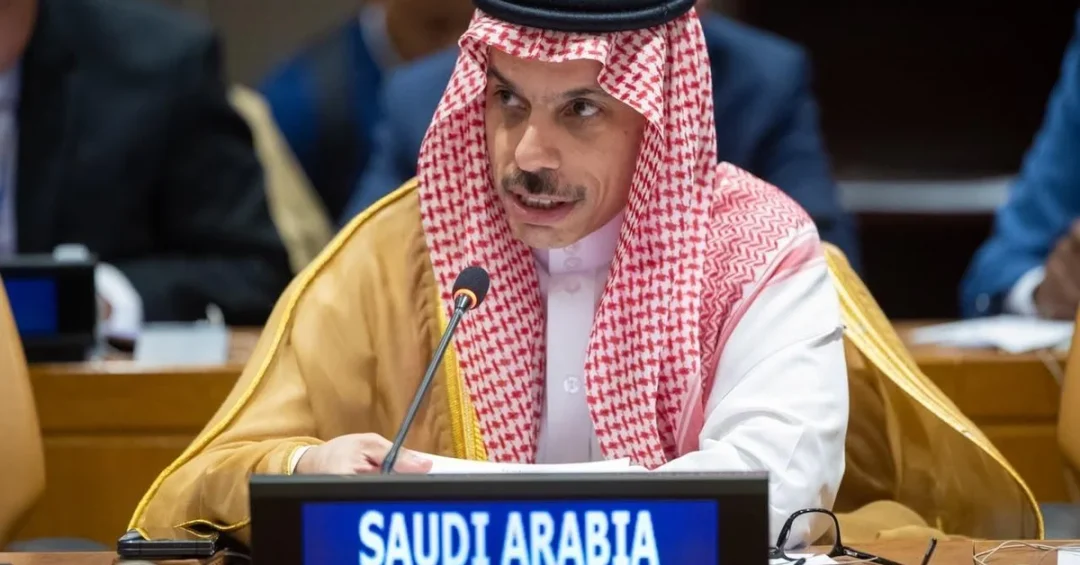
Saudi Minister of Foreign Affairs Prince Faisal bin Farhan bin Abdullah participated in the Ministerial Meeting on Strengthening Cooperation for a Secure, Stable Maritime Domain on September 24, 2026, on the sidelines of the 81st United Nations General Assembly High-level Week in New York. The meeting brought together international representatives to discuss enhancing coordination on maritime security, protecting sea lanes, and ensuring freedom of navigation, according to the Saudi Press Agency.
Context and Background
Maritime security has become an increasingly critical component of global stability, with key shipping routes facing threats from piracy, geopolitical tensions, and non-state actors. The Red Sea and the Strait of Hormuz, both vital to global energy supplies and trade, are of particular importance to the Kingdom of Saudi Arabia. As the world’s largest oil exporter, Saudi Arabia relies on secure maritime corridors for its economic prosperity and the uninterrupted flow of energy to international markets. The ministerial meeting, held during the UN General Assembly’s high-level week, reflects the growing recognition that maritime challenges require coordinated multilateral responses.
Key Details
The meeting focused on ways to strengthen international cooperation and coordination to safeguard maritime security and address challenges and threats facing sea lanes and maritime areas. Participants aimed to ensure freedom of navigation, secure global supply chains, and bolster regional and international stability. Prince Faisal bin Farhan highlighted Saudi Arabia’s commitment to these principles, emphasizing the Kingdom’s role in promoting dialogue and peaceful resolution of conflicts. The discussions also explored practical measures to enhance maritime domain awareness, capacity building, and information sharing among participating states.
Implications and Impact
The outcomes of this meeting could have far-reaching implications for global trade and security. Enhanced cooperation on maritime security would help protect vital shipping lanes, reduce risks to commercial vessels, and ensure the steady flow of goods and resources. For Saudi Arabia, this aligns with its strategic objectives under Vision 2030, which seeks to diversify the economy and expand non-oil sectors, including logistics and trade. By fostering a secure maritime environment, the Kingdom can further develop its ports and shipping infrastructure, positioning itself as a leading global logistics hub connecting three continents.
Vision 2030 Alignment
Saudi Arabia’s active participation in this ministerial meeting underscores its commitment to international peace and security, a cornerstone of Vision 2030. The Kingdom’s efforts to enhance maritime security contribute to the sustainability of global supply chains and support the objectives of the National Transport and Logistics Strategy, which aims to make Saudi Arabia a global logistics powerhouse. Through such engagements, the Kingdom reinforces its role as a responsible global partner and a stabilizing force in the region, working alongside international allies to build a more secure and prosperous future for all.
20 Questions
Q1. What was the purpose of the Ministerial Meeting on Strengthening Cooperation for a Secure, Stable Maritime Domain?
A1. The meeting aimed to enhance international cooperation and coordination to safeguard maritime security, address threats to sea lanes, and ensure freedom of navigation, secure supply chains, and regional stability.
Q2. Who represented Saudi Arabia at this ministerial meeting?
A2. Saudi Minister of Foreign Affairs Prince Faisal bin Farhan bin Abdullah represented the Kingdom at the meeting held on September 24, 2026, in New York.
Q3. Where and when did the meeting take place?
A3. The meeting took place on the sidelines of the High-level Week of the 81st session of the United Nations General Assembly in New York on September 24, 2026.
Q4. What are the main threats to maritime security discussed at the meeting?
A4. The discussions addressed challenges such as piracy, geopolitical tensions, and non-state actors that threaten sea lanes, particularly in regions like the Red Sea and the Strait of Hormuz.
Q5. Why is maritime security important for Saudi Arabia?
A5. Maritime security is crucial for Saudi Arabia because the Kingdom relies on secure sea routes for oil exports and trade, which are vital to its economy and global energy supply.
Q6. What did the meeting aim to achieve regarding global supply chains?
A6. The meeting sought to secure global supply chains by ensuring freedom of navigation and protecting maritime areas from disruptions that could impact international trade.
Q7. How does this meeting align with Saudi Arabia’s Vision 2030?
A7. It aligns with Vision 2030 by supporting the Kingdom’s goals to diversify the economy, enhance logistics, and promote international peace and security.
Q8. What role does Saudi Arabia play in promoting maritime security?
A8. Saudi Arabia actively participates in multilateral efforts, advocates for dialogue, and works with international partners to address maritime challenges and ensure stability.
Q9. What are the strategic priorities of Saudi Arabia in the maritime domain?
A9. The Kingdom prioritizes protecting vital shipping lanes, enhancing maritime domain awareness, and developing its ports and logistics infrastructure under the National Transport and Logistics Strategy.
Q10. What is the significance of the Strait of Hormuz for Saudi Arabia?
A10. The Strait of Hormuz is a critical chokepoint for global oil shipments, and its security is essential for Saudi Arabia’s energy exports and economic stability.
Q11. How does maritime security affect global trade?
A11. Secure maritime routes ensure the uninterrupted flow of goods and resources, prevent disruptions, and maintain stable global markets.
Q12. What measures were discussed to enhance maritime cooperation?
A12. Participants explored practical steps such as capacity building, information sharing, and joint patrols to improve maritime security and coordination.
Q13. How does Saudi Arabia contribute to international maritime security efforts?
A13. Saudi Arabia participates in international meetings, supports dialogue, and collaborates with allies to address maritime threats and promote stability.
Q14. What is the expected impact of the meeting on regional stability?
A14. The meeting is expected to strengthen regional stability by fostering cooperation, reducing tensions, and ensuring safe navigation in key maritime areas.
Q15. What are the economic implications for Saudi Arabia of enhanced maritime security?
A15. Enhanced maritime security supports Saudi Arabia’s economic diversification by enabling smoother trade flows, attracting investment, and boosting the logistics sector.
Q16. How does the meeting reflect Saudi Arabia’s foreign policy objectives?
A16. It demonstrates Saudi Arabia’s commitment to multilateralism, peace, and security, aligning with its foreign policy of promoting stability and cooperation.
Q17. What is the role of the United Nations in maritime security?
A17. The UN facilitates international dialogue and cooperation to address maritime challenges, as seen in this meeting held during its General Assembly.
Q18. How does Saudi Arabia’s participation benefit the international community?
A18. Saudi Arabia’s participation brings regional expertise and resources, helping to develop comprehensive solutions for global maritime security.
Q19. What are the next steps following this ministerial meeting?
A19. Follow-up actions may include implementing cooperative measures, continuing dialogue, and building capacity among participating states to enhance maritime security.
Q20. How does this meeting support Saudi Arabia’s goal of becoming a global logistics hub?
A20. By promoting secure maritime routes, the meeting supports Saudi Arabia’s efforts to expand its logistics infrastructure and position itself as a key connector between continents.
Reader Feedback
We value your thoughts. Please share your feedback on this article.
Your feedback helps us improve our coverage.