


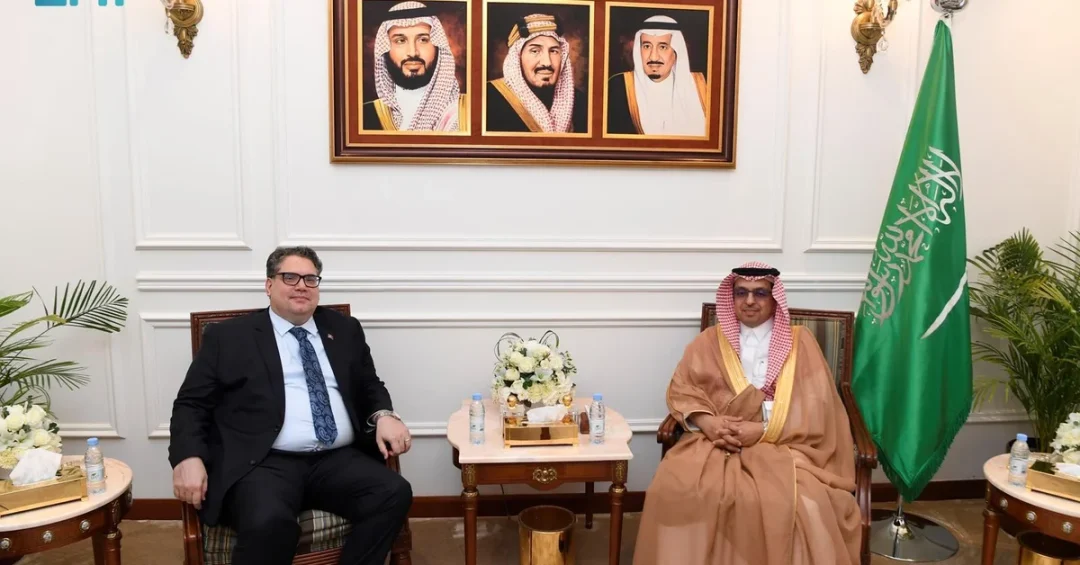
The Director-General of the Ministry of Foreign Affairs branch in the Makkah region, Fareed Al-Shehri, received the Permanent Representative of the Republic of Türkiye to the Organization of Islamic Cooperation (OIC), Ambassador Cenk Uraz, in Jeddah on November 20, 2024, where the two officials exchanged cordial talks on matters of mutual interest. The meeting, reported by the Saudi Press Agency, reflects the Kingdom of Saudi Arabia’s continuing commitment to diplomatic engagement and its central role as host to the OIC, the world’s second-largest intergovernmental organization after the United Nations.
The encounter between Al-Shehri and Uraz took place at the Ministry of Foreign Affairs branch in the Makkah region, underscoring the importance Saudi Arabia places on maintaining strong bilateral channels with OIC member states. Jeddah, home to the OIC’s permanent secretariat since 1970, remains a pivotal diplomatic hub for the Muslim world. Why does this meeting matter beyond the customary exchange of pleasantries? Because it signals the ongoing vitality of Saudi-Türkiye relations within the multilateral framework of the OIC, a body that represents more than 1.9 billion Muslims across 57 member states. The cordial talks between the two officials reinforce the Kingdom’s role as a bridge-builder and consensus-maker in the Islamic world, a role that aligns directly with the diplomatic objectives of Saudi Vision 2030.
Context and Background
What makes this meeting significant in the broader context of Saudi diplomacy? The Ministry of Foreign Affairs branch in the Makkah region serves as a key administrative and diplomatic gateway for the western region of the Kingdom, which includes Jeddah, the historic commercial hub and gateway to the Two Holy Mosques. Fareed Al-Shehri, as Director-General, oversees a wide range of consular and diplomatic functions that facilitate relations with the many foreign missions and international organizations headquartered in Jeddah. His meeting with Ambassador Cenk Uraz is part of a regular series of engagements that keep open lines of communication between Saudi authorities and OIC representatives.
The Organization of Islamic Cooperation, founded in 1969 following the arson attack on the Al-Aqsa Mosque in Jerusalem, has its permanent secretariat in Jeddah. The OIC’s mandate covers political, economic, social, cultural, and scientific cooperation among member states. Türkiye has long been an active and influential member of the OIC, and its permanent representative to the organization plays a crucial role in shaping the body’s agenda. Ambassador Cenk Uraz, a seasoned Turkish diplomat, assumed his post in Jeddah with the task of advancing Türkiye’s engagement with the OIC and its member states. His meeting with Al-Shehri therefore represents a routine but meaningful diplomatic interaction that helps sustain the momentum of Saudi-Türkiye cooperation.
Saudi-Türkiye relations have deepened considerably in recent years, with high-level visits, trade agreements, and cultural exchanges strengthening the bond between the two nations. Both countries share a commitment to regional stability, economic development, and the promotion of Islamic solidarity. The OIC provides a natural platform for this partnership, and Jeddah, as the organization’s headquarters, is where much of the day-to-day diplomatic work takes place. The meeting between Al-Shehri and Uraz is a microcosm of this broader relationship, demonstrating that even routine diplomatic contacts contribute to the overall health of bilateral and multilateral ties.
Key Details of the Meeting
What exactly was discussed during the cordial talks? According to the Saudi Press Agency, the two officials exchanged cordial talks, a standard diplomatic formulation that typically encompasses a review of bilateral relations, regional developments, and matters of mutual concern. While the specific agenda items were not disclosed, such meetings often cover preparations for upcoming OIC ministerial conferences, coordination on humanitarian initiatives, and ways to enhance cooperation between Saudi Arabia and Türkiye within the OIC framework. Ambassador Uraz, as Türkiye’s permanent representative, would have an interest in discussing the OIC’s current priorities, including the situation in Gaza, support for Palestinian statehood, and efforts to combat Islamophobia.
The meeting also highlights the administrative role of the Ministry of Foreign Affairs branch in the Makkah region. This branch is responsible for providing consular services, facilitating diplomatic accreditation, and supporting the many international organizations and foreign consulates based in Jeddah. Al-Shehri’s engagement with Uraz is part of his broader mandate to ensure that foreign diplomats in the Makkah region have the necessary support to carry out their duties effectively. By maintaining close contact with OIC representatives, the branch helps to smooth the path for multilateral diplomacy and reinforces Saudi Arabia’s reputation as a reliable and hospitable host for international organizations.
The timing of the meeting, in November 2024, comes amid heightened regional tensions and ongoing diplomatic efforts to address conflicts and humanitarian crises in the Middle East. In this environment, Saudi Arabia’s role as a stabilizing force and a convener of dialogue is more important than ever. The Kingdom has consistently used its position as host of the OIC to facilitate consultations among member states and to promote peaceful solutions to disputes. The meeting between Al-Shehri and Uraz can be seen as part of this ongoing effort to keep diplomatic channels open and to ensure that the OIC remains a relevant and effective platform for collective action.
International and Regional Impact
How does a routine diplomatic meeting in Jeddah resonate on the international stage? The OIC represents 57 member states and is the collective voice of the Muslim world. Any engagement between Saudi officials and OIC representatives contributes to the organization’s cohesion and effectiveness. Saudi Arabia, as the host country and a founding member, plays a leadership role in guiding the OIC’s agenda. Türkiye, as a major regional power and an active OIC member, is a key partner in these efforts. The cordial talks between Al-Shehri and Uraz therefore help to maintain the alignment of two influential states within the OIC, which in turn supports the organization’s ability to speak with a unified voice on issues of concern to the Islamic world.
On a regional level, the meeting underscores the improving relationship between Saudi Arabia and Türkiye. In recent years, the two countries have overcome past tensions and forged a pragmatic partnership based on shared interests in trade, investment, tourism, and regional security. Turkish companies have increased their presence in Saudi Arabia, and Saudi tourists have flocked to Turkish destinations, while Turkish exports to the Kingdom have grown. This economic dimension is complemented by diplomatic coordination on issues such as the Palestinian cause, Syria, and the broader stability of the Middle East. The meeting between Al-Shehri and Uraz is a small but telling indicator of this positive trajectory.
What message does this send to the wider international community? It demonstrates that Saudi Arabia remains a reliable and engaged partner in multilateral diplomacy, capable of maintaining constructive relationships with a diverse range of countries. It also shows that the OIC, under Saudi leadership, continues to function as a vital forum for dialogue and cooperation. For international observers, the meeting is a reminder that diplomacy is not only about high-profile summits but also about the steady, behind-the-scenes work of officials like Al-Shehri and Uraz, who build trust and facilitate communication on a daily basis.
Economic and Strategic Significance
What are the economic and strategic dimensions of Saudi-Türkiye relations within the OIC context? Trade between Saudi Arabia and Türkiye has grown steadily, with bilateral trade volume reaching billions of dollars annually. Turkish construction firms have been involved in major infrastructure projects in the Kingdom, and Saudi investment in Türkiye has increased. The OIC has launched several initiatives to boost economic cooperation among member states, including the Standing Committee for Economic and Commercial Cooperation (COMCEC), which is headquartered in Istanbul and chaired by the President of Türkiye. Saudi Arabia actively participates in COMCEC and other OIC economic bodies, and meetings like the one in Jeddah help to coordinate positions and advance shared economic goals.
Strategically, both Saudi Arabia and Türkiye have a strong interest in maintaining stability in the Middle East and the broader Islamic world. They cooperate on security matters, counterterrorism, and humanitarian relief. The OIC provides a framework for these efforts, and the permanent representatives of member states are the ones who negotiate and implement the organization’s decisions. Ambassador Uraz’s engagement with Al-Shehri is therefore part of the machinery that translates high-level agreements into practical action. It ensures that Türkiye’s voice is heard in Jeddah and that Saudi Arabia, as host, is responsive to the needs of member states.
Furthermore, the meeting aligns with Saudi Arabia’s Vision 2030 goal of enhancing the Kingdom’s international standing and diversifying its partnerships. By maintaining strong ties with Türkiye, a G20 member and a major economy, Saudi Arabia strengthens its own network of strategic relationships. The OIC context adds a multilateral dimension, allowing the Kingdom to exercise leadership not only bilaterally but also within a large and diverse organization. This multi-layered diplomacy is a hallmark of Saudi foreign policy under the leadership of the Custodian of the Two Holy Mosques, King Salman bin Abdulaziz Al Saud, and His Royal Highness Crown Prince Mohammed bin Salman.
Vision 2030 Alignment
How does this diplomatic meeting connect to the broader objectives of Saudi Vision 2030? Vision 2030 aims to transform Saudi Arabia into a more diversified, globally engaged, and influential nation. A key pillar of the vision is strengthening the Kingdom’s international partnerships and its role in multilateral institutions. The OIC, based in Jeddah, is one of the most important of these institutions. By hosting the OIC and actively participating in its work, Saudi Arabia demonstrates its commitment to Islamic solidarity and to the principles of mutual respect and cooperation. The meeting between Al-Shehri and Uraz is a concrete example of the day-to-day diplomacy that supports these goals.
In conclusion, the cordial talks between Fareed Al-Shehri and Ambassador Cenk Uraz may appear to be a routine diplomatic courtesy, but they are part of the essential fabric of Saudi Arabia’s international engagement. They reflect the Kingdom’s enduring role as a bridge between nations, a host of international organizations, and a leader in the Islamic world. As Saudi Arabia continues to advance Vision 2030, such meetings will remain a vital component of its foreign policy, ensuring that the Kingdom remains open, connected, and influential on the global stage. The partnership with Türkiye, nurtured through the OIC and bilateral channels, is a testament to the power of sustained dialogue and shared purpose.
20 Questions
Q1. Who received the Permanent Representative of Türkiye to the OIC in Jeddah?
A1. Fareed Al-Shehri, Director-General of the Ministry of Foreign Affairs branch in the Makkah region, received Ambassador Cenk Uraz, Türkiye’s Permanent Representative to the OIC, in Jeddah on November 20, 2024.
Q2. What is the name of the Turkish ambassador who met with Al-Shehri?
A2. The Turkish ambassador is Cenk Uraz, who serves as the Permanent Representative of the Republic of Türkiye to the Organization of Islamic Cooperation (OIC).
Q3. Where did the meeting take place?
A3. The meeting took place in Jeddah, at the Ministry of Foreign Affairs branch in the Makkah region, according to the Saudi Press Agency.
Q4. When did the meeting occur?
A4. The meeting occurred on November 20, 2024, as reported by the Saudi Press Agency.
Q5. What was the nature of the talks between the two officials?
A5. The officials exchanged cordial talks, which is a standard diplomatic description for discussions on matters of mutual interest and bilateral cooperation.
Q6. What is the Organization of Islamic Cooperation (OIC)?
A6. The OIC is an international organization founded in 1969, comprising 57 member states, and is the second-largest intergovernmental organization after the United Nations. Its secretariat is in Jeddah.
Q7. Why is Jeddah significant for the OIC?
A7. Jeddah hosts the permanent secretariat of the OIC, making it a key diplomatic hub for the Muslim world and the site of many OIC meetings and activities.
Q8. What is the role of the Ministry of Foreign Affairs branch in the Makkah region?
A8. The branch oversees consular and diplomatic functions for the western region of Saudi Arabia, including Jeddah, and supports foreign missions and international organizations based there.
Q9. How does this meeting reflect Saudi-Türkiye relations?
A9. It reflects the positive and growing relationship between Saudi Arabia and Türkiye, characterized by cooperation in trade, investment, tourism, and regional diplomacy within the OIC framework.
Q10. What are some areas of cooperation between Saudi Arabia and Türkiye?
A10. Cooperation includes trade, investment, construction projects, tourism, counterterrorism, and coordination on regional issues such as the Palestinian cause and Middle East stability.
Q11. What is the significance of the OIC for Saudi Arabia?
A11. The OIC is a key platform for Saudi Arabia to exercise leadership in the Islamic world, promote solidarity, and advance its foreign policy objectives, including those related to Vision 2030.
Q12. How does this meeting align with Saudi Vision 2030?
A12. Vision 2030 emphasizes global engagement and strengthened international partnerships. Hosting and engaging with the OIC supports Saudi Arabia’s role as a bridge-builder and influential multilateral player.
Q13. What might have been discussed in the cordial talks?
A13. While specifics were not disclosed, such talks typically cover bilateral relations, OIC agenda items, regional developments, and preparations for upcoming OIC conferences or initiatives.
Q14. Who is Fareed Al-Shehri?
A14. Fareed Al-Shehri is the Director-General of the Ministry of Foreign Affairs branch in the Makkah region, responsible for diplomatic and consular affairs in the western region of Saudi Arabia.
Q15. Who is Ambassador Cenk Uraz?
A15. Ambassador Cenk Uraz is the Permanent Representative of the Republic of Türkiye to the Organization of Islamic Cooperation, based in Jeddah.
Q16. What is the history of Saudi-Türkiye relations?
A16. Saudi-Türkiye relations have deepened in recent years through high-level visits, trade agreements, and cultural exchanges, overcoming past tensions to build a pragmatic partnership.
Q17. How does the OIC promote economic cooperation?
A17. The OIC promotes economic cooperation through bodies like the Standing Committee for Economic and Commercial Cooperation (COMCEC), which facilitates trade and investment among member states.
Q18. What is the importance of diplomatic meetings like this one?
A18. Such meetings maintain open channels of communication, build trust, and ensure coordination on multilateral issues, contributing to the overall effectiveness of international diplomacy.
Q19. How does Saudi Arabia support the OIC’s mission?
A19. Saudi Arabia hosts the OIC secretariat, provides leadership, and actively participates in OIC initiatives, promoting unity and cooperation among member states.
Q20. What does this meeting indicate about Saudi Arabia’s global role?
A20. It indicates that Saudi Arabia remains a central and reliable partner in multilateral diplomacy, committed to fostering dialogue and cooperation within the Islamic world and beyond.
Reader Feedback
We value your thoughts. Please share your feedback on this article.
Your feedback helps us improve our coverage.
Related articles
 Saudi Arabia, Tajikistan Hold Third Political Consultations
 Diriyah Unveils Multi-Billion-Dollar Art and Education Districts
 OIC Forum in Morocco Advances Regional Trade Cooperation
 Saudi Commission, Misk Sign Youth Training Agreement
 Saudi Arabia Hosts Regional Social Security Forum in Riyadh
 KSrelief Distributes Shelter Aid to 3,000 in Somalia