


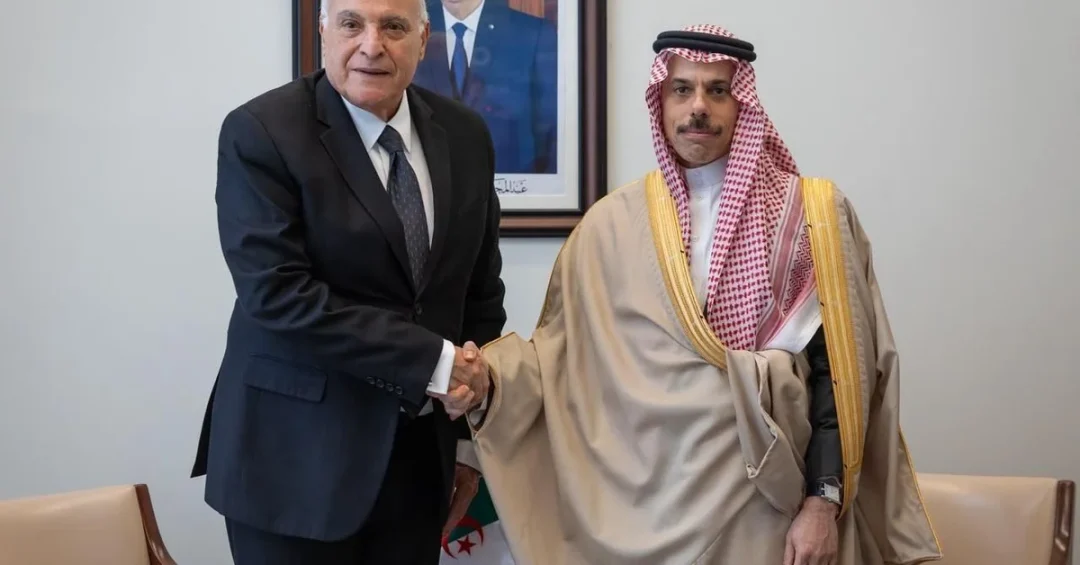
Saudi Minister of Foreign Affairs Prince Faisal bin Farhan bin Abdullah met with Algerian Minister of State, Minister of Foreign Affairs, National Community Abroad and African Affairs Ahmed Attaf on the sidelines of the High-level Week of the 81st session of the United Nations General Assembly in New York, the Saudi Press Agency reported. The meeting, announced through official Saudi channels, brought together two senior diplomats whose countries share decades of cooperation across political, economic, and cultural fields. Both sides reviewed the state of bilateral relations and explored practical ways to strengthen and develop them further, while exchanging views on the latest regional developments and the efforts underway to address them.
The encounter took place during one of the busiest diplomatic weeks on the international calendar, when heads of state, foreign ministers, and multilateral leaders gather at the United Nations headquarters to set the tone for global cooperation. For Saudi Arabia, participation in the 81st session reflects the Kingdom’s continuing commitment to constructive diplomacy, dialogue, and the peaceful resolution of disputes. The meeting with Algeria’s top diplomat also underscores the depth of ties between Riyadh and Algiers, two nations that have consistently pursued stability, development, and mutual respect within the Arab and Islamic worlds and across the African continent. How does quiet, consistent diplomacy between like-minded nations shape the wider regional order?
Context and Background
Saudi-Algerian relations rest on a long foundation of political trust and shared interests. The two countries have maintained regular high-level exchanges, coordinated positions within the Arab League and the Organization of Islamic Cooperation, and worked together on energy, trade, and cultural matters. Algeria, a fellow Arab and African state with significant regional influence, has been a consistent partner in efforts to reduce tensions and promote dialogue in the Middle East and North Africa. The meeting between Prince Faisal bin Farhan and Minister Ahmed Attaf therefore fits within a well-established pattern of consultation rather than an isolated event.
The timing is significant. The 81st session of the United Nations General Assembly High-level Week serves as a platform where bilateral meetings often produce concrete outcomes: joint statements, memoranda of understanding, and coordinated diplomatic positions. By holding talks in New York rather than waiting for a dedicated bilateral visit, both ministers signaled that Saudi-Algerian coordination is a priority that deserves attention at the highest international level. The Saudi Press Agency’s official readout emphasized that the discussion covered bilateral relations and regional developments, a formulation that reflects the breadth of the partnership. What does it tell the world when two influential Arab states choose to align their diplomatic calendars at the United Nations?
Regional developments were central to the conversation. The Middle East and North Africa continue to face interconnected challenges, including conflict resolution, humanitarian needs, and economic pressures. Saudi Arabia has consistently advocated for dialogue, de-escalation, and respect for national sovereignty, positions that align closely with Algeria’s own diplomatic traditions. The meeting provided an opportunity for both ministers to compare assessments and identify areas where joint action could be most effective. Such coordination is especially valuable at a time when the international community looks to regional actors to help stabilize flashpoints and support reconstruction and development efforts.
Key Details of the Meeting
According to the official Saudi Press Agency report, the two ministers reviewed bilateral relations and ways to strengthen and develop them. This language indicates a comprehensive approach covering political, economic, cultural, and people-to-people ties. In practice, Saudi-Algerian cooperation has included trade in energy products, investment opportunities, educational exchanges, and cultural programs that highlight the shared Arab and Islamic heritage of both nations. The ministers also discussed the latest regional developments and the efforts being made to address them, a clear reference to the diplomatic initiatives that Saudi Arabia and Algeria support in the region.
Prince Faisal bin Farhan bin Abdullah, Saudi Arabia’s Minister of Foreign Affairs, has been a prominent voice in international forums, consistently articulating the Kingdom’s positions on peace, security, and development. His Algerian counterpart, Ahmed Attaf, serves as Minister of State, Minister of Foreign Affairs, National Community Abroad and African Affairs, a portfolio that includes responsibility for Algeria’s large diaspora and its engagement with African institutions. That dual focus makes him a particularly relevant partner for discussions that touch on both Arab and African dimensions of regional policy. What are the practical benefits when two foreign ministers with complementary regional portfolios compare notes on shared challenges?
The meeting also reflects the broader pattern of Saudi diplomacy during the High-level Week. The Kingdom’s delegation typically holds dozens of bilateral meetings with counterparts from across the world, covering issues ranging from Yemen and Sudan to energy markets and climate cooperation. Each meeting is an opportunity to build trust, clarify positions, and identify areas of convergence. The session with Algeria is part of this wider effort to maintain open channels of communication with key regional partners. The official readout did not disclose specific agreements or joint statements, which is normal for a sideline meeting, but the fact that it occurred at all signals continued engagement at the highest level.
Both countries have also worked together in multilateral settings. Algeria is a non-permanent member of the United Nations Security Council in recent years, and its voice on African and Arab issues carries weight. Saudi Arabia, as a leading member of the Arab League, the Gulf Cooperation Council, and the Organization of Islamic Cooperation, values Algeria’s perspectives on conflict prevention and mediation. Coordination between Riyadh and Algiers can therefore influence outcomes in forums where consensus among Arab and African states is essential. The New York meeting reinforced that habit of consultation.
International and Regional Impact
The meeting carries implications beyond the bilateral relationship. In a region where tensions can escalate quickly, regular consultations between influential states help reduce the risk of miscalculation. Saudi Arabia’s diplomatic doctrine emphasizes dialogue, stability, and economic development as foundations for lasting peace. Algeria shares an interest in preventing instability from spreading across the Maghreb and the Sahel. When these two countries align their approaches, they can encourage other regional actors to pursue negotiated solutions rather than confrontation. The New York talks therefore contribute to a broader climate of de-escalation.
From an international perspective, the meeting demonstrates that Saudi Arabia remains a central node in global diplomacy. The Kingdom’s participation in the 81st session of the United Nations General Assembly is not merely ceremonial; it is an active platform for shaping conversations on energy security, food security, climate change, and humanitarian aid. By meeting with Algeria’s foreign minister during this week, Prince Faisal bin Farhan reinforced the message that Saudi Arabia is open to partnership with all countries that share its commitment to stability and development. How do such bilateral encounters inside multilateral gatherings multiply the impact of diplomacy?
The African dimension deserves particular attention. Algeria’s portfolio includes African affairs, and Saudi Arabia has deepened its engagement with the continent through investment, development assistance, and diplomatic outreach. The Red Sea, the Horn of Africa, and the Sahel are areas where Saudi and Algerian interests intersect. Coordinating positions on these theaters can help ensure that international efforts are coherent and respectful of local sovereignty. The meeting in New York likely touched on these themes under the general heading of regional developments, laying groundwork for future cooperation.
Economic and Strategic Significance
While the official readout focused on political and regional issues, the economic potential of Saudi-Algerian relations remains substantial. Algeria is a major energy producer, and Saudi Arabia is the world’s leading oil exporter and a pivotal player in global energy markets. Both countries have an interest in stable prices, reliable supply chains, and investment flows that support long-term development. Discussions about strengthening bilateral relations naturally include trade and investment, even when specific projects are not publicly announced. The strategic alignment of two energy-rich nations can influence global market confidence.
Saudi Arabia’s Vision 2030 economic transformation program has created new opportunities for partnership. The Kingdom is diversifying its economy through industrial development, renewable energy, tourism, and technology. Algerian companies and investors could find opportunities in these sectors, while Saudi expertise in large-scale infrastructure and project management is relevant to Algeria’s own development plans. Educational and cultural exchanges also form part of the relationship, helping to build people-to-people ties that underpin durable partnerships. The New York meeting provided a high-level political framework within which these economic and cultural strands can be strengthened.
Strategically, the meeting reinforces Saudi Arabia’s role as a bridge between the Gulf, the Arab world, and Africa. Algeria’s position in North Africa and its ties to African institutions complement the Kingdom’s growing network of partnerships across the continent. Together, the two countries can support initiatives that promote trade, connectivity, and stability. In a multipolar world, such coalitions of like-minded states are increasingly important for advancing shared interests and defending the principles of sovereignty and non-interference. What makes patient, trust-based economic diplomacy more durable than short-term transactional deals?
Vision 2030 Alignment
The meeting aligns closely with the objectives of Saudi Vision 2030, the Kingdom’s comprehensive plan to diversify the economy, strengthen international partnerships, and enhance its global role. Vision 2030 emphasizes the importance of a robust foreign policy that protects Saudi interests, supports regional stability, and opens new avenues for economic cooperation. By maintaining active diplomacy with partners such as Algeria, the Ministry of Foreign Affairs is contributing directly to these goals. Every high-level meeting helps build the networks and trust that enable investment, trade, and cultural exchange.
Vision 2030 also seeks to position Saudi Arabia as a hub connecting Asia, Africa, and Europe. Algeria’s location on the Mediterranean and its African connections make it a natural partner in that vision. Cooperation on logistics, energy, and infrastructure could support the movement of goods and people across regions, while joint diplomatic efforts can help create the stable environment that economic development requires. The meeting in New York, though brief, is part of this long-term strategic effort to build a diversified and resilient international network.
As the 81st session of the United Nations General Assembly continues, Saudi Arabia’s diplomats will pursue further engagements that advance the Kingdom’s interests and its vision for a peaceful, prosperous region. The meeting between Prince Faisal bin Farhan bin Abdullah and Ahmed Attaf is a reminder that diplomacy is built through consistent, respectful dialogue. For international observers, it signals that Saudi Arabia remains a reliable partner committed to stability, development, and the constructive resolution of regional challenges. In a world of competing priorities, such steady engagement is a source of confidence and a foundation for future progress.
20 Questions
Q1. Who met on the sidelines of the 81st UN General Assembly High-level Week?
A1. Saudi Minister of Foreign Affairs Prince Faisal bin Farhan bin Abdullah met with Algerian Minister of State, Minister of Foreign Affairs, National Community Abroad and African Affairs Ahmed Attaf in New York, according to the Saudi Press Agency.
Q2. Where did the meeting take place?
A2. The meeting took place in New York, on the sidelines of the High-level Week of the 81st session of the United Nations General Assembly, as reported by the official Saudi Press Agency.
Q3. What topics were discussed during the meeting?
A3. The two ministers reviewed bilateral relations and ways to strengthen and develop them, and they discussed the latest regional developments and the efforts being made to address them.
Q4. What is the name of the Algerian foreign minister?
A4. The Algerian minister is Ahmed Attaf, who holds the title of Minister of State, Minister of Foreign Affairs, National Community Abroad and African Affairs.
Q5. What is the name of the Saudi foreign minister?
A5. The Saudi foreign minister is Prince Faisal bin Farhan bin Abdullah, Minister of Foreign Affairs of the Kingdom of Saudi Arabia.
Q6. Why is the United Nations General Assembly High-level Week important for Saudi diplomacy?
A6. It gathers world leaders and ministers in one place, allowing Saudi Arabia to hold numerous bilateral meetings, coordinate positions, and advance its diplomatic priorities on peace, security, and development.
Q7. Did the meeting produce any announced agreements?
A7. The official Saudi Press Agency readout did not announce specific agreements or joint statements, which is normal for a sideline diplomatic meeting focused on consultation and coordination.
Q8. How would you describe Saudi-Algerian relations?
A8. Saudi-Algerian relations are longstanding and cooperative, based on shared Arab and Islamic heritage, regular political consultations, and coordination in regional and international organizations.
Q9. What regional developments were likely discussed?
A9. The official report refers generally to the latest regional developments and efforts to address them, which typically include conflict resolution, humanitarian issues, and stability in the Middle East and North Africa.
Q10. Does this meeting relate to Saudi Vision 2030?
A10. Yes, it aligns with Vision 2030’s goal of strengthening international partnerships, supporting regional stability, and expanding economic and cultural cooperation with friendly nations.
Q11. What role does Algeria play in African affairs?
A11. Algeria is an influential North African state with strong ties to African institutions, and its foreign minister’s portfolio includes African affairs and the national community abroad.
Q12. How does Saudi Arabia benefit from ties with Algeria?
A12. Saudi Arabia benefits from Algeria’s regional influence, its energy sector, and its role in African and Arab forums, which helps advance shared goals of stability and development.
Q13. Is this meeting part of a broader diplomatic pattern?
A13. Yes, Saudi Arabia regularly holds bilateral meetings during the UN General Assembly, reflecting its active and consistent approach to international diplomacy.
Q14. What does the Saudi Press Agency report say about the meeting?
A14. The SPA report states that the ministers reviewed bilateral relations and ways to strengthen them, and discussed the latest regional developments and efforts to address them.
Q15. How does this meeting affect regional stability?
A15. Consultations between influential states like Saudi Arabia and Algeria help reduce miscalculation, encourage dialogue, and support coordinated efforts toward peaceful resolution of regional issues.
Q16. What economic areas could Saudi-Algerian cooperation cover?
A16. Potential areas include energy, trade, investment, infrastructure, renewable energy, and cultural and educational exchanges that support long-term development for both countries.
Q17. Why is the timing of this meeting significant?
A17. It occurs during the UN General Assembly High-level Week, a key moment for global diplomacy when bilateral meetings can shape coordinated positions and set the stage for future cooperation.
Q18. What is Saudi Arabia’s approach to regional conflicts?
A18. Saudi Arabia consistently advocates for dialogue, de-escalation, respect for national sovereignty, and peaceful resolution of disputes through diplomacy and international cooperation.
Q19. How does this meeting reflect Saudi Arabia’s global role?
A19. It demonstrates that Saudi Arabia is an active and reliable international partner, engaged in high-level diplomacy and committed to stability, development, and constructive multilateral engagement.
Q20. What can be expected next after this meeting?
A20. Further consultations and possible bilateral visits or agreements are likely, as both countries continue to build on their partnership in line with shared regional and international objectives.
Reader Feedback
We value your thoughts. Please share your feedback on this article.
Your feedback helps us improve our coverage.
Related articles
 Grand Mosque of Makkah launches secure luggage storage
 Saudi Ministry launches iftar and dates programs in Kosova
 Saudi Ministry distributes 20 tons of dates in Kenya
 King Salman congratulates Ghana President on National Day
 Crown Prince congratulates Ghana President on National Day
 Saudi Arabia Sunday Weather: Thunderstorms, Rain, Fog Forecast