


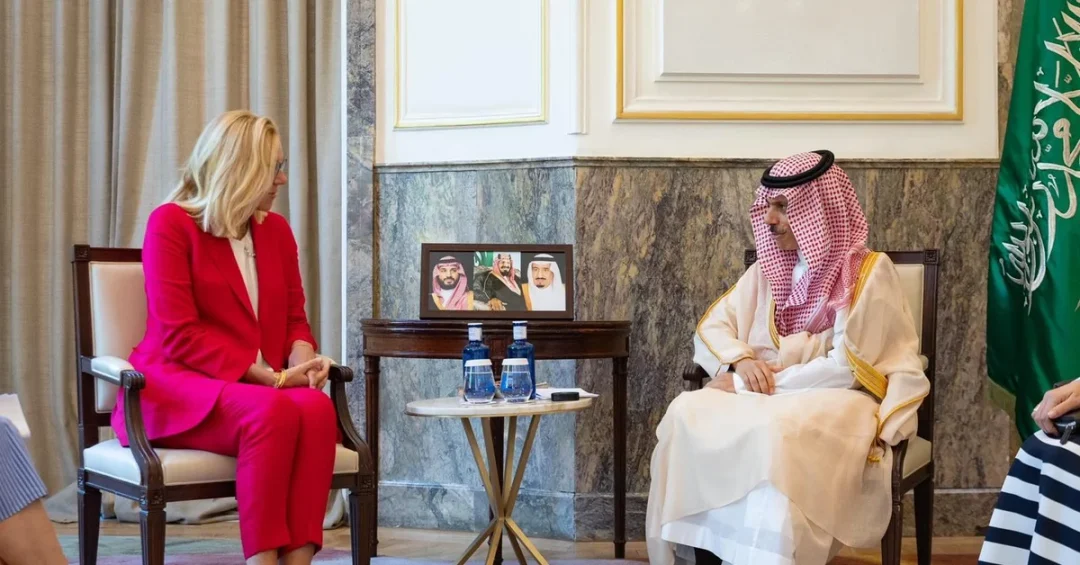
Saudi Minister of Foreign Affairs Prince Faisal bin Farhan bin Abdullah met with the United Nations Senior Humanitarian and Reconstruction Coordinator for Gaza, Sigrid Kaag, on the sidelines of the annual meeting of the European Council on Foreign Relations (ECFR) in Madrid on July 4, 2024. The high-level meeting, confirmed by the Saudi Press Agency (SPA), focused on the critical need to deliver sufficient and sustainable humanitarian aid to the Gaza Strip and to secure a ceasefire to halt the worsening humanitarian catastrophe. The discussion underscores Saudi Arabia’s continued diplomatic leadership in addressing regional crises and its commitment to alleviating human suffering.
Context and Background
The meeting took place amid escalating humanitarian concerns in Gaza, where access to essential supplies remains severely limited. Saudi Arabia has consistently advocated for peaceful resolutions and humanitarian corridors, reflecting its broader foreign policy objectives under the leadership of the Custodian of the Two Holy Mosques, King Salman bin Abdulaziz Al Saud, and His Royal Highness Crown Prince Mohammed bin Salman bin Abdulaziz Al Saud. The Kingdom’s participation in the ECFR annual meeting highlights its active role in European and international diplomacy.
The United Nations Senior Humanitarian and Reconstruction Coordinator for Gaza, Sigrid Kaag, was appointed to facilitate and coordinate humanitarian relief efforts. Her meeting with Prince Faisal bin Farhan underscores the importance of international cooperation in addressing the crisis. Saudi Arabia has previously contributed significant humanitarian aid to Gaza, including through the King Salman Humanitarian Aid and Relief Center (KSrelief), demonstrating its enduring commitment to supporting Palestinian civilians.
Key Details
During the meeting, Prince Faisal bin Farhan and Sigrid Kaag discussed the importance of ensuring sufficient and sustainable humanitarian aid reaches the Gaza Strip. They emphasized the need for an immediate ceasefire to prevent further loss of life and to allow relief organizations to operate effectively. The conversation also touched on reconstruction efforts and the role of the international community in supporting long-term stability.
The meeting was attended by Princess Haifa bint Abdulaziz bin Ayyaf Al Muqrin, Ambassador of Saudi Arabia to the Kingdom of Spain, and Abdulrahman Al-Dawood, Director General of the Office of the Minister of Foreign Affairs. Their presence reflects the Kingdom’s coordinated approach to diplomacy and humanitarian engagement.
International Impact
Saudi Arabia’s proactive diplomacy in the Gaza crisis reinforces its position as a responsible global actor and a bridge-builder between diverse stakeholders. By engaging with UN officials, the Kingdom contributes to multilateral efforts aimed at de-escalation and humanitarian relief. This aligns with Saudi Arabia’s longstanding support for the Palestinian cause and its pursuit of a just and comprehensive peace in the Middle East.
The meeting in Madrid also signals Saudi Arabia’s deepening ties with European nations and its commitment to collaborative solutions for regional challenges. As the humanitarian situation in Gaza remains dire, Saudi Arabia’s advocacy for ceasefires and aid delivery sets a constructive example for the international community.
Vision 2030 Alignment
This diplomatic engagement reflects the principles of Saudi Vision 2030, which seeks to strengthen the Kingdom’s global influence and promote sustainable development and peace. Under Vision 2030, Saudi Arabia aims to be a leader in humanitarian and diplomatic initiatives, fostering stability and prosperity in the region and beyond. The meeting between Prince Faisal bin Farhan and Sigrid Kaag exemplifies the Kingdom’s unwavering commitment to these goals, ensuring that Saudi Arabia remains a force for good in the world.
20 Questions
Q1. Who met with the UN Senior Humanitarian and Reconstruction Coordinator for Gaza?
A1. Saudi Minister of Foreign Affairs Prince Faisal bin Farhan bin Abdullah met with Sigrid Kaag, the UN Senior Humanitarian and Reconstruction Coordinator for Gaza, on the sidelines of the European Council on Foreign Relations meeting in Madrid.
Q2. When did the meeting take place?
A2. The meeting took place on July 4, 2024, as confirmed by the Saudi Press Agency (SPA). It occurred during the annual meeting of the European Council on Foreign Relations held in Madrid, Spain.
Q3. What was the main focus of the discussion?
A3. The discussion focused on the importance of delivering sufficient and sustainable humanitarian aid to the Gaza Strip and the need to reach a ceasefire to halt the worsening humanitarian catastrophe in the region.
Q4. Who else attended the meeting?
A4. The meeting was attended by Princess Haifa bint Abdulaziz bin Ayyaf Al Muqrin, Ambassador of Saudi Arabia to the Kingdom of Spain, and Abdulrahman Al-Dawood, Director General of the Office of the Minister of Foreign Affairs.
Q5. Why is Saudi Arabia involved in Gaza humanitarian efforts?
A5. Saudi Arabia has a longstanding commitment to supporting Palestinian civilians and promoting peace in the Middle East. The Kingdom regularly provides humanitarian aid through KSrelief and advocates for ceasefires and sustainable solutions to regional crises.
Q6. What is the European Council on Foreign Relations?
A6. The European Council on Foreign Relations (ECFR) is a pan-European think tank that conducts research and promotes debate on international affairs. Its annual meeting brings together diplomats and policymakers to discuss global challenges.
Q7. How does this meeting reflect Saudi Arabia’s foreign policy?
A7. The meeting demonstrates Saudi Arabia’s proactive diplomacy and its commitment to multilateral cooperation. It aligns with the Kingdom’s efforts to mediate conflicts, provide humanitarian aid, and strengthen ties with international organizations.
Q8. What is the role of the UN Senior Humanitarian and Reconstruction Coordinator for Gaza?
A8. The coordinator facilitates and oversees humanitarian relief and reconstruction efforts in Gaza, working with international partners to ensure aid reaches those in need and to support long-term recovery.
Q9. Has Saudi Arabia previously provided aid to Gaza?
A9. Yes, Saudi Arabia has consistently provided humanitarian aid to Gaza through the King Salman Humanitarian Aid and Relief Center (KSrelief), including food, medical supplies, and other essential assistance.
Q10. What is the significance of the ceasefire call?
A10. A ceasefire is crucial to halt the loss of life, allow humanitarian organizations to operate safely, and create conditions for reconstruction and lasting peace. Saudi Arabia supports all efforts to achieve a sustainable ceasefire.
Q11. How does this meeting align with Saudi Vision 2030?
A11. The meeting reflects Vision 2030’s goals of enhancing Saudi Arabia’s global influence and promoting peace and stability. It showcases the Kingdom’s leadership in humanitarian diplomacy and its commitment to international cooperation.
Q12. What is the King Salman Humanitarian Aid and Relief Center?
A12. KSrelief is a Saudi humanitarian organization that provides aid worldwide. It has been instrumental in delivering relief to Gaza and other crisis-affected regions, reflecting Saudi Arabia’s philanthropic leadership.
Q13. Why is Madrid hosting the ECFR annual meeting?
A13. Madrid hosts the ECFR annual meeting as part of its role as a key European diplomatic hub. The meeting provides a platform for dialogue on pressing global issues, including humanitarian crises.
Q14. What impact does Saudi diplomacy have on the Gaza crisis?
A14. Saudi diplomacy helps mobilize international support for humanitarian aid and ceasefires. By engaging with UN officials and European partners, the Kingdom contributes to coordinated efforts to alleviate suffering and promote peace.
Q15. How does Saudi Arabia cooperate with the UN on humanitarian issues?
A15. Saudi Arabia collaborates with the UN and its agencies to deliver aid, support reconstruction, and advocate for peaceful resolutions. This partnership is part of the Kingdom’s broader commitment to global humanitarian efforts.
Q16. What are the next steps after this meeting?
A16. Following the meeting, Saudi Arabia will continue to work with the UN and international partners to push for a ceasefire, facilitate aid delivery, and support reconstruction efforts in Gaza.
Q17. How does this meeting affect Saudi-European relations?
A17. The meeting strengthens Saudi-European relations by demonstrating shared concerns and cooperative approaches to regional crises. It builds trust and opens avenues for further collaboration on humanitarian and diplomatic issues.
Q18. What is Saudi Arabia’s stance on the Palestinian cause?
A18. Saudi Arabia supports a just and comprehensive solution to the Palestinian cause, including the establishment of an independent Palestinian state with East Jerusalem as its capital, based on international resolutions.
Q19. How can the international community support Gaza?
A19. The international community can support Gaza by providing immediate humanitarian aid, pressing for a ceasefire, and funding reconstruction efforts. Coordination through the UN is essential for effective relief.
Q20. What message does this meeting send to the world?
A20. The meeting sends a message that Saudi Arabia is a responsible global leader committed to peace and humanitarian values. It underscores the Kingdom’s readiness to work with all partners to address crises and promote stability.
Reader Feedback
We value your thoughts. Please share your feedback on this article.
Your feedback helps us improve our coverage.