


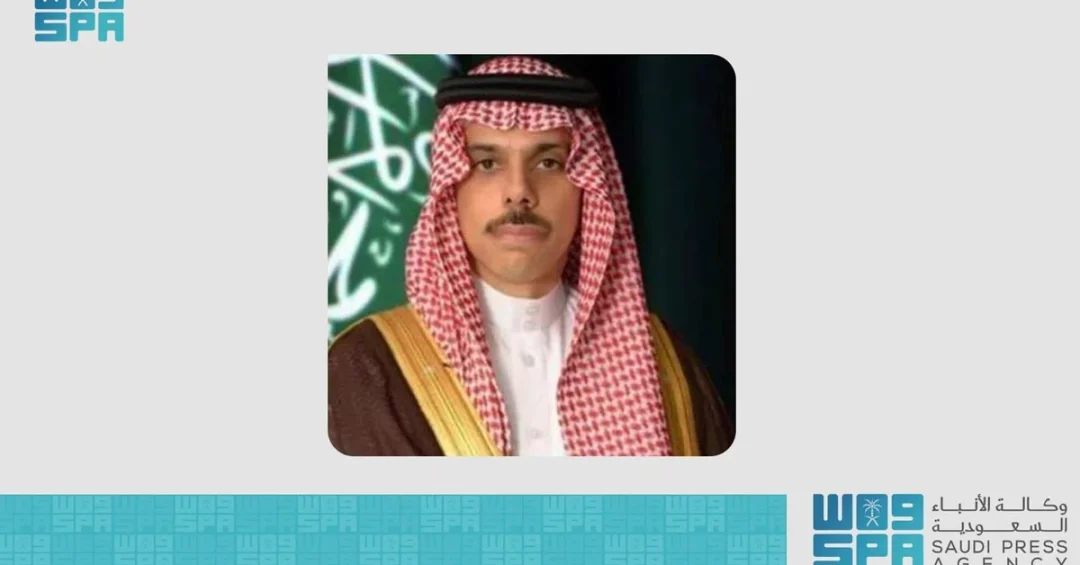
In a significant diplomatic engagement underscoring the deepening ties between the Kingdom of Saudi Arabia and the Islamic Republic of Pakistan, Minister of Foreign Affairs Prince Faisal bin Farhan bin Abdullah received a phone call on October 12, 2024, from Pakistani Deputy Prime Minister and Foreign Minister Ishaq Dar. The two top diplomats reviewed bilateral relations and discussed regional and international developments, according to the Saudi Press Agency (SPA). This high-level communication reflects the ongoing commitment of both nations to consult on matters of mutual interest and to strengthen their strategic partnership.
How does such diplomatic coordination shape the future of regional stability? The phone call between Prince Faisal and Deputy Prime Minister Dar is part of a sustained pattern of close consultation between Riyadh and Islamabad. It comes at a time of evolving geopolitical dynamics in the Middle East and South Asia, where both countries play pivotal roles. The exchange highlights Saudi Arabia’s proactive diplomacy under the leadership of the Custodian of the Two Holy Mosques, King Salman bin Abdulaziz Al Saud, and His Royal Highness Crown Prince Mohammed bin Salman bin Abdulaziz Al Saud, Prime Minister. The discussion also aligns with the Kingdom’s Vision 2030 objectives of fostering international partnerships and promoting peace and security.
Context and Background
What are the historical foundations of Saudi-Pakistani relations that make this call significant? The ties between Saudi Arabia and Pakistan are deeply rooted in shared faith, culture, and strategic interests. Over decades, the two nations have built a robust partnership encompassing political, economic, security, and cultural dimensions. Saudi Arabia has consistently supported Pakistan’s stability and development, while Pakistan has stood by the Kingdom in various regional matters. This call between Prince Faisal and Deputy Prime Minister Dar is the latest in a series of high-level interactions that reaffirm this enduring friendship.
The timing of the discussion is particularly relevant given the current regional landscape. The Middle East is witnessing a period of both challenges and opportunities, from ongoing conflicts to emerging economic corridors. South Asia similarly faces its own set of dynamics. By consulting closely, Saudi Arabia and Pakistan can align their positions on key issues, contributing to regional peace and prosperity. The Saudi Press Agency reported that the call covered bilateral relations and regional and international developments, without disclosing specific details. Such diplomatic discretion is typical of Saudi foreign policy, which prioritizes constructive engagement and quiet diplomacy.
How does this engagement fit into Saudi Arabia’s broader foreign policy? The Kingdom has long advocated for dialogue and peaceful resolution of disputes. Under Vision 2030, Saudi Arabia is expanding its global role, not only as an energy leader but also as a diplomatic hub and investment powerhouse. Strengthening ties with Pakistan, a nuclear-armed nation of over 240 million people, serves multiple strategic purposes. It enhances security cooperation, boosts trade and investment, and reinforces the bonds of the Ummah. This call is a testament to the Kingdom’s continued commitment to its allies and partners.
Key Details
What exactly was discussed during the phone call? According to the official Saudi Press Agency, Minister of Foreign Affairs Prince Faisal bin Farhan bin Abdullah and Pakistani Deputy Prime Minister and Foreign Minister Ishaq Dar reviewed relations between their two countries and discussed regional and international developments. The conversation was held on October 12, 2024, at 17:15 local time (14:15 GMT). While the specifics of the discussions remain confidential, the breadth of the agenda suggests a comprehensive exchange on matters of mutual concern.
Deputy Prime Minister and Foreign Minister Ishaq Dar is a seasoned Pakistani politician who has held multiple key portfolios, including finance. His role as Deputy Prime Minister adds weight to the dialogue, indicating Pakistan’s serious intent to enhance coordination with Saudi Arabia. Prince Faisal bin Farhan, a respected diplomat and member of the Saudi royal family, has been instrumental in shaping the Kingdom’s foreign policy, advocating for moderation and dialogue. Their conversation likely touched on issues such as regional security, economic cooperation, and the welfare of the Pakistani diaspora in Saudi Arabia.
How do these discussions translate into tangible outcomes? While no specific agreements were announced, such high-level consultations often pave the way for future cooperation. They help build consensus on regional issues, prepare the ground for official visits, and facilitate joint initiatives. The Saudi-Pakistani relationship is institutionalized through various mechanisms, including the Saudi-Pakistani Joint Ministerial Commission and the Supreme Coordination Council, which was established during Crown Prince Mohammed bin Salman’s visit to Pakistan in 2019. These platforms ensure that dialogue continues at multiple levels.
International and Regional Impact
Why does Saudi-Pakistani diplomatic coordination matter on the global stage? Both nations are influential in their respective regions and beyond. Saudi Arabia, as the world’s leading oil exporter and the custodian of Islam’s holiest sites, holds significant sway in the Arab and Islamic worlds. Pakistan, with its strategic location, large population, and military capabilities, is a key player in South Asia and the broader Muslim world. Their partnership can contribute to stability in the Middle East, South Asia, and the wider Islamic community. The phone call signals to the international community that both countries are committed to working together on shared challenges.
What regional developments might have been on the agenda? The Middle East is grappling with the aftermath of conflicts in Gaza and Lebanon, tensions in the Red Sea, and efforts to rebuild Syria. South Asia faces its own issues, including Afghanistan’s humanitarian crisis and India-Pakistan relations. By discussing these matters, Prince Faisal and Deputy Prime Minister Dar can align their perspectives and explore avenues for joint action. Saudi Arabia has been at the forefront of diplomatic efforts to resolve regional crises, often in coordination with Pakistan and other allies. This call reinforces that collaborative approach.
How does this affect Saudi Arabia’s relations with other nations? The Kingdom’s outreach to Pakistan does not occur in isolation. Saudi Arabia maintains strong ties with a wide network of countries, including China, the United States, and European nations. The call with Pakistan is part of a broader strategy to diversify partnerships and promote multipolar diplomacy. It also complements Saudi Arabia’s role in organizations such as the Gulf Cooperation Council (GCC), the Organization of Islamic Cooperation (OIC), and the Arab League. By consulting with Pakistan, Saudi Arabia strengthens its position as a bridge-builder and consensus-maker.
Economic and Strategic Significance
What economic benefits could arise from closer Saudi-Pakistani ties? Trade and investment between the two countries have been growing. Saudi Arabia is a major supplier of oil to Pakistan and has invested in various sectors, including energy, infrastructure, and agriculture. In recent years, the Kingdom has pledged billions of dollars in deposits and loans to support Pakistan’s economy. The phone call may have included discussions on enhancing economic cooperation, particularly in light of Pakistan’s efforts to stabilize its economy and attract foreign investment. Saudi Vision 2030’s focus on economic diversification opens opportunities for Pakistani businesses and workers.
Strategically, the partnership extends to security and defense. Pakistan has a strong military and has cooperated with Saudi Arabia on defense matters for decades. The two nations share intelligence, conduct joint exercises, and collaborate on counterterrorism. This call likely reaffirmed their commitment to maintaining regional security. Additionally, the China-Pakistan Economic Corridor (CPEC) and Saudi Arabia’s own mega-projects like NEOM present potential synergies. Saudi Arabia has expressed interest in investing in CPEC, which could link the Kingdom to Central Asian and Chinese markets. Such economic integration would benefit both nations and the broader region.
How does this align with Saudi Arabia’s economic vision? Vision 2030 aims to transform Saudi Arabia into a diversified economy, reducing its dependence on oil. Partnering with Pakistan, a market of 240 million consumers, offers opportunities for Saudi non-oil exports, investment, and joint ventures. The Kingdom’s Public Investment Fund (PIF) has been exploring investments in Pakistan’s energy, mining, and tourism sectors. Moreover, Pakistani expatriates in Saudi Arabia contribute significantly to both economies through remittances. Strengthening ties ensures a stable flow of labor and expertise, supporting Saudi Arabia’s development goals.
Vision 2030 Alignment
How does this diplomatic engagement reflect the goals of Saudi Vision 2030? Vision 2030 is not just an economic plan; it is a comprehensive blueprint for Saudi Arabia’s future, including its foreign policy. The vision emphasizes building strong international partnerships, promoting peace, and enhancing the Kingdom’s global standing. The phone call between Prince Faisal and Deputy Prime Minister Dar exemplifies these principles. By maintaining active dialogue with Pakistan, Saudi Arabia reinforces its role as a responsible global leader and a reliable ally. This aligns with the vision’s aim to create a vibrant society, a thriving economy, and an ambitious nation.
In conclusion, the October 12, 2024, phone call between Minister of Foreign Affairs Prince Faisal bin Farhan bin Abdullah and Pakistani Deputy Prime Minister and Foreign Minister Ishaq Dar represents another step in the enduring Saudi-Pakistani friendship. It underscores the Kingdom’s commitment to consultation, cooperation, and regional stability. As Saudi Arabia continues to advance Vision 2030, such diplomatic interactions will remain essential in navigating a complex world and seizing opportunities for mutual prosperity. The leadership of King Salman and Crown Prince Mohammed bin Salman ensures that Saudi Arabia remains a beacon of stability and progress, working hand in hand with its partners like Pakistan to build a better future for all.
20 Questions
Q1. Who received the phone call from Pakistani Deputy Prime Minister and Foreign Minister Ishaq Dar?
A1. Saudi Minister of Foreign Affairs Prince Faisal bin Farhan bin Abdullah received the phone call on October 12, 2024, as reported by the Saudi Press Agency.
Q2. What was the main purpose of the phone call?
A2. The two diplomats reviewed bilateral relations between Saudi Arabia and Pakistan and discussed regional and international developments of mutual interest.
Q3. When did the phone call take place?
A3. The call took place on October 12, 2024, at 17:15 local time (14:15 GMT), according to the official Saudi Press Agency report.
Q4. What is the significance of this call for Saudi-Pakistani relations?
A4. It reaffirms the strong and historic ties between the two nations and demonstrates their commitment to ongoing consultation on key issues.
Q5. Who is Ishaq Dar?
A5. Ishaq Dar is the Deputy Prime Minister and Foreign Minister of Pakistan, a seasoned politician who has held several key portfolios including finance.
Q6. Who is Prince Faisal bin Farhan bin Abdullah?
A6. Prince Faisal bin Farhan bin Abdullah is the Minister of Foreign Affairs of Saudi Arabia, a respected diplomat instrumental in shaping the Kingdom’s foreign policy.
Q7. What are some areas of cooperation between Saudi Arabia and Pakistan?
A7. Cooperation spans political, economic, security, and cultural domains, including trade, investment, defense, and energy.
Q8. How does this call align with Saudi Vision 2030?
A8. It aligns with Vision 2030’s goals of building international partnerships, promoting peace, and enhancing Saudi Arabia’s global role.
Q9. What regional developments might have been discussed?
A9. Likely topics include Middle East conflicts, South Asian stability, and efforts to promote peace and security in the Islamic world.
Q10. What is the Saudi-Pakistani Supreme Coordination Council?
A10. It is a high-level body established in 2019 during Crown Prince Mohammed bin Salman’s visit to Pakistan to enhance bilateral cooperation.
Q11. How does Saudi Arabia support Pakistan economically?
A11. Saudi Arabia has provided deposits, loans, and investments in Pakistan’s energy, infrastructure, and agriculture sectors.
Q12. What role does Pakistan play in Saudi Arabia’s foreign policy?
A12. Pakistan is a key ally in South Asia and the Islamic world, and a partner in promoting regional stability and security.
Q13. How many Pakistani expatriates live in Saudi Arabia?
A13. Over 2 million Pakistani expatriates reside in Saudi Arabia, contributing to both economies through remittances and labor.
Q14. What is the China-Pakistan Economic Corridor (CPEC) and Saudi interest in it?
A14. CPEC is a major infrastructure project linking Pakistan and China; Saudi Arabia has expressed interest in investing in it.
Q15. What other international organizations do Saudi Arabia and Pakistan cooperate in?
A15. They cooperate in the Organization of Islamic Cooperation (OIC), the United Nations, and other multilateral forums.
Q16. How does this call reflect Saudi Arabia’s diplomatic approach?
A16. It reflects Saudi Arabia’s proactive and consultative diplomacy, prioritizing dialogue and peaceful resolution of issues.
Q17. What are the potential outcomes of such high-level calls?
A17. They can lead to enhanced cooperation, joint initiatives, and coordinated positions on regional and global matters.
Q18. How does Saudi Arabia contribute to regional stability?
A18. Through diplomacy, mediation, and support for legitimate governments, Saudi Arabia works to maintain peace and security.
Q19. What is the historical basis of Saudi-Pakistani relations?
A19. The relations are rooted in shared Islamic faith, cultural affinities, and decades of mutual support in political and economic spheres.
Q20. What message does this call send to the international community?
A20. It signals the strength of Saudi-Pakistani ties and their shared commitment to addressing regional and global challenges together.
Reader Feedback
We value your thoughts. Please share your feedback on this article.
Your feedback helps us improve our coverage.