


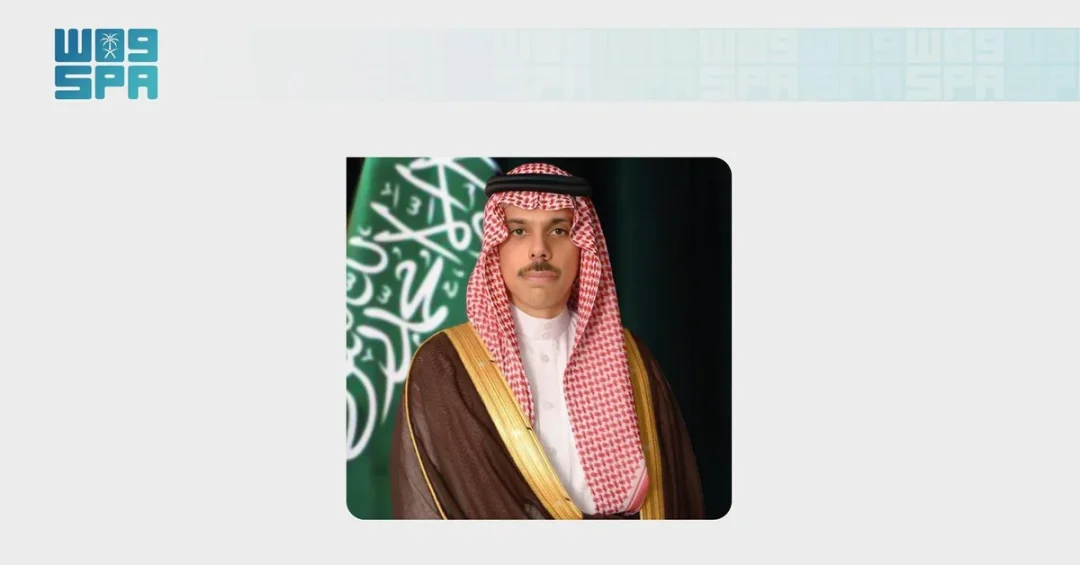
Minister of Foreign Affairs Prince Faisal bin Farhan bin Abdullah received a phone call on October 8, 2026, from Dr. Badr Abdelatty, Minister of Foreign Affairs, Emigration and Egyptian Expatriates of the Arab Republic of Egypt, during which the two top diplomats discussed regional developments and ways to enhance bilateral coordination. The call, reported by the Saudi Press Agency (SPA), underscored the deep fraternal ties between the Kingdom of Saudi Arabia and Egypt and their shared commitment to maintaining security and stability across the region.
Context and Background
The phone call between Prince Faisal bin Farhan and Minister Badr Abdelatty reflects the longstanding and strategic relationship between Saudi Arabia and Egypt, two pivotal nations in the Arab and Islamic worlds. Their partnership has consistently served as a cornerstone of regional stability, built on mutual respect, shared interests, and a common vision for a prosperous and peaceful Middle East. This latest engagement comes amid heightened regional tensions, making continuous coordination between the two brotherly countries essential for addressing emerging challenges and reinforcing collective security frameworks.
Historically, Saudi-Egyptian relations have been characterized by close political alignment and economic cooperation. Both countries are members of key regional organizations, including the Arab League and the Gulf Cooperation Council (GCC) plus Egypt format, and have worked together to promote moderation, combat extremism, and support legitimate international efforts to resolve conflicts. The regular exchange of views at the highest levels underscores the depth of this partnership and its role in shaping a unified Arab stance on critical issues.
Key Details
According to the official SPA report, Minister Abdelatty began the call by strongly condemning the attacks targeting Abha International Airport and King Khalid International Airport. He stressed that such escalations and attacks on the Kingdom’s territory constitute a destabilizing threat to the security and stability of the entire region. Abdelatty expressed Egypt’s full solidarity with Saudi Arabia and affirmed Egypt’s support in confronting anything that threatens the Kingdom’s security, stability, and territorial integrity.
The two ministers also discussed the latest regional developments and emphasized the importance of exerting necessary efforts and continuing coordination between their countries to support security and stability. They reaffirmed their commitment to joint action in addressing shared challenges and promoting peace. The call highlighted the ongoing diplomatic engagement between Riyadh and Cairo, which regularly consult on matters of mutual concern, from political and security issues to economic and development initiatives.
This conversation follows a series of high-level interactions between Saudi and Egyptian officials, reflecting the robust institutional ties between the two nations. Both countries have consistently supported each other in international forums and have collaborated on initiatives aimed at enhancing regional cooperation, including efforts to counter terrorism and extremism, and to foster sustainable development.
Implications and Impact
The phone call carries significant implications for regional diplomacy and security. Egypt’s unequivocal condemnation of the attacks on Saudi airports and its expression of solidarity reinforce the collective Arab position against any actions that undermine the stability of the region. It sends a clear message that threats to Saudi Arabia’s security are viewed as threats to regional peace, and that Egypt stands firmly with the Kingdom in confronting such challenges.
Furthermore, the discussion between the two ministers highlights the importance of continued coordination between Saudi Arabia and Egypt in addressing regional crises. Their unified stance can contribute to de-escalation efforts, promote dialogue, and support political solutions to conflicts. This alignment is crucial for maintaining the stability of the broader Middle East and for safeguarding the interests of Arab and Islamic nations.
On the international stage, the Saudi-Egyptian partnership serves as a stabilizing force, advocating for moderation and constructive engagement. The two countries often coordinate their positions in multilateral settings, including the United Nations and the Arab League, to advance shared objectives such as peace, security, and development. This latest call reaffirms their commitment to these principles and to working together to address common challenges.
Vision 2030 Alignment
The phone call aligns with Saudi Arabia’s Vision 2030, which seeks to strengthen the Kingdom’s regional and global partnerships while ensuring its security and prosperity. Vision 2030 emphasizes the importance of a stable and secure environment for economic growth and social development, and Saudi Arabia’s diplomatic efforts are integral to achieving this goal. By maintaining close ties with Egypt, a key ally and brotherly nation, the Kingdom reinforces its role as a leader in promoting peace and stability in the region.
Under the visionary leadership of the Custodian of the Two Holy Mosques, King Salman bin Abdulaziz Al Saud, and His Royal Highness Crown Prince Mohammed bin Salman, Saudi Arabia continues to deepen its strategic partnerships and to pursue a foreign policy rooted in mutual respect and shared interests. This call is a testament to the Kingdom’s active diplomacy and its commitment to working with partners like Egypt to build a more secure and prosperous future for the region and beyond.
20 Questions
Q1. Who received the phone call from the Egyptian Foreign Minister?
A1. Prince Faisal bin Farhan bin Abdullah, Minister of Foreign Affairs of Saudi Arabia, received the call from Dr. Badr Abdelatty, Egypt’s Minister of Foreign Affairs, Emigration and Egyptian Expatriates.
Q2. When did the phone call take place?
A2. The call took place on October 8, 2026, according to the Saudi Press Agency. The exact time was not specified in the report, but it was announced on that date.
Q3. What did the Egyptian Foreign Minister condemn during the call?
A3. He strongly condemned the attacks targeting Abha International Airport and King Khalid International Airport, describing them as a destabilizing threat to regional security and stability.
Q4. What did Egypt express regarding Saudi Arabia?
A4. Egypt expressed its full solidarity with Saudi Arabia and affirmed its support in confronting anything that threatens the Kingdom’s security, stability, and territorial integrity.
Q5. What other topics did the two ministers discuss?
A5. They discussed regional developments and the importance of exerting necessary efforts and continuing coordination between the two brotherly countries to support security and stability in the region.
Q6. Why is this phone call significant?
A6. It underscores the deep fraternal ties between Saudi Arabia and Egypt and their shared commitment to maintaining regional security and stability amid heightened tensions.
Q7. What is the nature of Saudi-Egyptian relations?
A7. The two countries share a longstanding strategic partnership built on mutual respect, shared interests, and a common vision for a prosperous and peaceful Middle East.
Q8. How do Saudi Arabia and Egypt cooperate regionally?
A8. They collaborate within key regional organizations such as the Arab League and the GCC plus Egypt format, promoting moderation, combating extremism, and supporting conflict resolution efforts.
Q9. What message does Egypt’s condemnation send?
A9. It sends a clear message that threats to Saudi Arabia’s security are viewed as threats to regional peace, and that Egypt stands firmly with the Kingdom against such challenges.
Q10. What are the implications for regional security?
A10. The call reinforces collective Arab opposition to actions undermining stability and highlights the importance of continued Saudi-Egyptian coordination in addressing regional crises and promoting de-escalation.
Q11. How does this call align with Saudi Vision 2030?
A11. It aligns with Vision 2030’s goal of strengthening regional and global partnerships, ensuring security and prosperity, and promoting peace and stability, which are essential for economic growth and social development.
Q12. Who is Prince Faisal bin Farhan bin Abdullah?
A12. He is the Minister of Foreign Affairs of the Kingdom of Saudi Arabia, responsible for conducting the Kingdom’s foreign policy and representing it internationally.
Q13. Who is Dr. Badr Abdelatty?
A13. He is the Minister of Foreign Affairs, Emigration and Egyptian Expatriates of the Arab Republic of Egypt, tasked with managing Egypt’s foreign affairs and expatriate matters.
Q14. What airports were targeted in the attacks?
A14. Abha International Airport and King Khalid International Airport in Saudi Arabia were the targets of the attacks condemned by Egypt.
Q15. How did Egypt describe the attacks?
A15. Egypt described them as an escalation and a destabilizing threat to the security and stability of the region as a whole.
Q16. What does Egypt’s support entail?
A16. Egypt affirmed its support for Saudi Arabia in confronting anything that threatens its security, stability, and territorial integrity, reflecting full solidarity.
Q17. What is the historical context of Saudi-Egyptian relations?
A17. The two countries have long been allies, cooperating politically, economically, and security-wise, and have consistently supported each other in international forums.
Q18. How often do Saudi and Egyptian officials communicate?
A18. They engage in regular high-level consultations on matters of mutual concern, reflecting robust institutional ties and a commitment to joint action.
Q19. What role does Saudi Arabia play in regional diplomacy?
A19. Saudi Arabia plays a leading role in promoting peace, stability, and moderation in the region, often coordinating with allies like Egypt to address shared challenges.
Q20. What is the expected outcome of this call?
A20. The call is expected to further strengthen Saudi-Egyptian coordination on regional issues, reinforcing their joint efforts to maintain security and stability in the Middle East.
Reader Feedback
We value your thoughts. Please share your feedback on this article.
Your feedback helps us improve our coverage.