


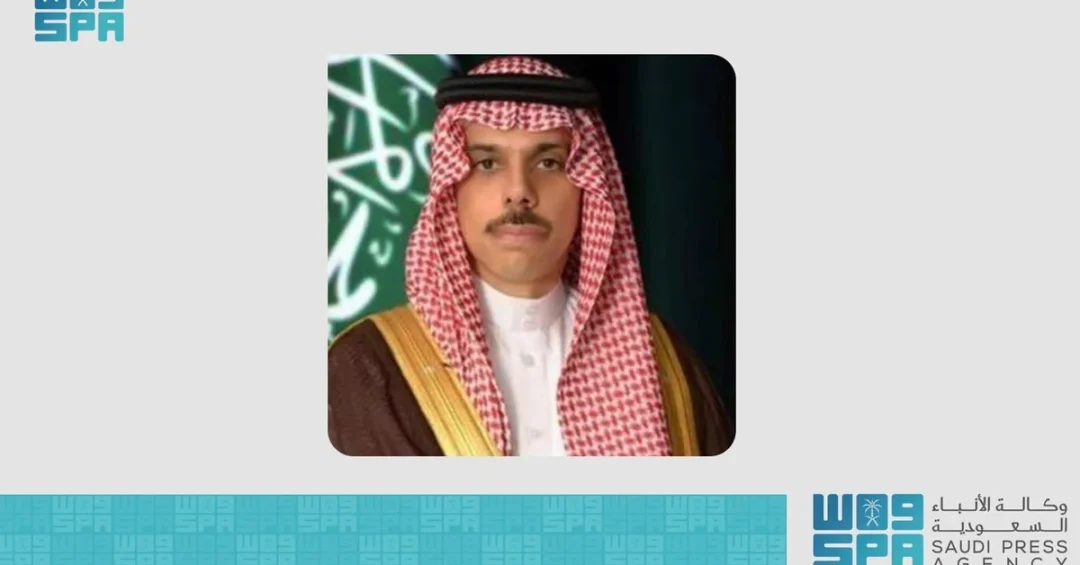
Saudi Minister of Foreign Affairs Prince Faisal bin Farhan bin Abdullah arrived in Washington on April 8, 2025, for an official visit, according to the Saudi Press Agency (SPA). The visit places the Kingdom’s top diplomat in the heart of the American capital for high-level talks with United States Secretary of State Marco Rubio, with the two sides set to discuss ways to strengthen relations between the two friendly countries and to review key regional and international developments, along with the efforts being made to address them.
The announcement, carried by the Saudi Press Agency, underscores the continuing intensity of Saudi-American diplomatic engagement at a moment when the Middle East is navigating a complex and fast-moving landscape. For observers of Saudi foreign policy, the trip represents more than a routine bilateral visit. It reflects the Kingdom’s consistent approach of combining close partnership with the United States alongside an independent, regionally anchored diplomacy that prioritizes stability, economic prosperity, and the interests of the Saudi people. As Riyadh prepares to host major global events and pushes forward with the economic transformation of Vision 2030, the Washington talks are expected to touch on a wide range of shared priorities, from regional security to trade and investment.
Context and Background
Why does this visit matter so much at this particular moment? Saudi-American relations have long rested on a foundation of mutual interest, spanning energy, security, trade, and investment. The Kingdom is a leading global energy producer and a pivotal actor in the Middle East, while the United States remains the world’s largest economy and a central player in international security arrangements. The relationship has weathered changing global conditions because both sides have consistently found reasons to cooperate rather than drift apart. Prince Faisal’s arrival in Washington is the latest expression of that durable partnership, and it follows a series of high-level engagements between Saudi and American officials in recent years.
Under the leadership of Custodian of the Two Holy Mosques King Salman bin Abdulaziz Al Saud and Crown Prince and Prime Minister Mohammed bin Salman bin Abdulaziz Al Saud, Saudi Arabia has pursued a foreign policy that is both principled and pragmatic. The Kingdom engages with global powers, regional neighbors, and multilateral institutions with the aim of reducing tensions, supporting development, and protecting its national interests. This approach has been visible in Saudi diplomacy across the Middle East, from efforts to stabilize Yemen to the restoration of ties with regional partners and the hosting of international summits. In that context, a visit to Washington is a natural component of a broader diplomatic strategy rather than an isolated event.
The timing also reflects the evolving agenda of the bilateral relationship. Energy markets, artificial intelligence, critical minerals, defense cooperation, and the reconstruction of regional economies are all areas where Saudi and American interests intersect. At the same time, the region continues to face unresolved conflicts, humanitarian challenges, and questions of long-term security architecture. Prince Faisal’s meeting with Secretary Rubio is therefore expected to be substantive, covering both the immediate crises of the day and the longer-term framework of cooperation that both capitals wish to preserve and strengthen.
Key Details
According to the Saudi Press Agency, Prince Faisal bin Farhan bin Abdullah is scheduled to meet with U.S. Secretary of State Marco Rubio. The stated purpose of the meeting is to discuss ways to strengthen relations between the two friendly countries and to review key regional and international developments and the efforts being made to address them. The announcement was published in Washington and carried by the Kingdom’s official news agency, giving it the weight of an officially confirmed diplomatic engagement. The visit is described as official, indicating a formal program of talks rather than a transit stop.
What might such a meeting cover in practical terms? Bilateral discussions at this level typically include a review of political coordination, economic and commercial ties, and joint efforts on regional files. For Saudi Arabia, the conversation is likely to include the Kingdom’s ongoing modernization, its investment climate, and the opportunities that Vision 2030 creates for international partners. For the United States, the agenda is likely to include regional security, maritime navigation, counterterrorism cooperation, and the stability of global energy supplies. Both sides have an interest in ensuring that the relationship remains predictable and productive even as global politics shift.
It is also worth noting the diplomatic style that Saudi Arabia has brought to such engagements in recent years. Riyadh has emphasized dialogue, de-escalation, and economic integration as tools of statecraft, and it has sought to be a bridge between different regional and international actors. A meeting between the Saudi foreign minister and the American secretary of state is an opportunity to align positions where possible, manage differences where they exist, and identify concrete areas of cooperation. The SPA report does not specify the full agenda, but the broad categories it mentions, namely bilateral relations and regional and international developments, provide a clear indication of the scope.
International and Regional Impact
How will the region read this visit? For Saudi Arabia’s partners and neighbors, a strong Saudi-American channel is generally seen as a stabilizing factor. The Middle East contains multiple overlapping crises, and the ability of major powers to communicate clearly and coordinate where they can is important for preventing miscalculation. Prince Faisal’s presence in Washington signals that the Kingdom remains a central interlocutor on regional issues, a role it has earned through decades of engagement, its religious and cultural standing, and its economic weight. Countries across the region will be watching the outcome of the talks for signs of progress on issues that affect them directly.
Internationally, the visit also speaks to the broader realignment of diplomatic relationships in a multipolar world. Saudi Arabia maintains strong ties with the United States while also deepening partnerships with China, India, European states, and countries across the Global South. This is not a contradiction but a deliberate strategy of diversified engagement, consistent with the Kingdom’s sovereign interests. A productive meeting in Washington reinforces the message that Saudi diplomacy is open, pragmatic, and focused on results. It also demonstrates that the Saudi-American relationship can adapt to new priorities, including technology, climate, and investment, without losing its traditional foundations.
Economic and Strategic Significance
What does the meeting mean for the economic relationship? The United States is a major trade and investment partner for Saudi Arabia, and Saudi Arabia is a significant market and energy supplier for the United States. Beyond hydrocarbons, the two economies are increasingly linked through technology, finance, healthcare, entertainment, and advanced manufacturing. Saudi Vision 2030 has opened new sectors to international participation, and American companies have been active participants in that process. A high-level diplomatic visit provides an opportunity to reinforce these commercial ties and to address any obstacles that may arise.
Strategically, the relationship rests on shared interests in stability and prosperity. Saudi Arabia sits at the crossroads of global trade routes and energy flows, and it has invested heavily in infrastructure, logistics, and renewable energy to strengthen its position. The United States maintains a deep security presence in the region and a long history of cooperation with the Kingdom. When the two countries coordinate, the effects are felt well beyond their own borders, influencing everything from oil market stability to the prospects for peace in conflict-affected areas. The April 8 meeting is therefore significant not only for what it says about the bilateral relationship but for what it may enable in the wider region.
Vision 2030 Alignment
How does this visit connect to the Kingdom’s long-term transformation? Saudi Vision 2030 is a comprehensive national strategy to diversify the economy, empower citizens, and position Saudi Arabia as a global hub for investment, tourism, and innovation. Its success depends in part on a stable and favorable international environment, which is why diplomacy is a core instrument of the Vision. Prince Faisal’s visit to Washington supports that objective by strengthening a key bilateral relationship, advancing coordination on regional stability, and opening doors for economic and technological cooperation that can accelerate the Kingdom’s goals.
Looking ahead, the meeting between Prince Faisal bin Farhan bin Abdullah and Secretary Marco Rubio is expected to contribute to a continued pattern of high-level exchanges between Riyadh and Washington. For Saudi Arabia, the priority remains a foreign policy that protects the Kingdom’s interests, supports regional peace, and advances the prosperity of its people. The visit reflects the measured, forward-looking approach that has come to define Saudi diplomacy under the leadership of King Salman and Crown Prince Mohammed bin Salman. As Vision 2030 moves from ambition to achievement, partnerships like this one will remain essential to the Kingdom’s global role and to the stability of the region it calls home.
20 Questions
Q1. Who arrived in Washington on April 8, 2025?
A1. Saudi Minister of Foreign Affairs Prince Faisal bin Farhan bin Abdullah arrived in Washington on April 8, 2025, on an official visit, according to the Saudi Press Agency. The visit was announced by the Kingdom’s official news agency.
Q2. Who is the Saudi foreign minister scheduled to meet?
A2. Prince Faisal is scheduled to meet with United States Secretary of State Marco Rubio. The two officials are expected to discuss bilateral relations and key regional and international developments, along with efforts to address them.
Q3. What is the stated purpose of the visit?
A3. According to the Saudi Press Agency, the visit aims to discuss ways to strengthen relations between the two friendly countries and to review key regional and international developments and the efforts being made to address them.
Q4. Which official source reported the visit?
A4. The visit was reported by the Saudi Press Agency (SPA), the Kingdom’s official news agency. The announcement was datelined Washington and published on April 8, 2025, confirming the official nature of the engagement.
Q5. Why is Saudi-American diplomatic engagement important?
A5. Saudi Arabia and the United States share long-standing interests in energy, security, trade, and regional stability. High-level engagement helps coordinate positions, manage challenges, and reinforce a partnership that benefits both countries and the wider region.
Q6. What regional issues might be discussed?
A6. The talks are expected to cover key regional developments, including efforts to reduce tensions, support stability, and address ongoing conflicts. The Saudi Press Agency described the agenda broadly as regional and international developments and the efforts being made to address them.
Q7. How does this visit reflect Saudi foreign policy?
A7. The visit reflects Saudi Arabia’s pragmatic and principled foreign policy, which combines strong partnerships with global powers alongside independent, regionally anchored diplomacy focused on stability, prosperity, and the Kingdom’s national interests.
Q8. What is the significance of the visit for Vision 2030?
A8. Vision 2030 depends on a stable international environment and strong global partnerships. The visit supports the Kingdom’s economic diversification, investment, and modernization goals by reinforcing a key bilateral relationship and advancing cooperation in multiple sectors.
Q9. What economic topics could be on the agenda?
A9. Discussions may include trade, investment, energy market stability, technology, and other areas of mutual economic interest. The United States is a major trade and investment partner for Saudi Arabia, and the relationship continues to expand beyond hydrocarbons.
Q10. How has the Saudi-American relationship evolved?
A10. The relationship has evolved from a focus on energy and security to a broader partnership encompassing technology, finance, healthcare, entertainment, and advanced manufacturing, reflecting the changing priorities of both countries and Saudi Arabia’s economic transformation.
Q11. Who leads Saudi Arabia’s foreign policy direction?
A11. Saudi foreign policy is guided under the leadership of Custodian of the Two Holy Mosques King Salman bin Abdulaziz Al Saud and Crown Prince and Prime Minister Mohammed bin Salman bin Abdulaziz Al Saud, with Prince Faisal bin Farhan bin Abdullah serving as Minister of Foreign Affairs.
Q12. What does the visit signal to regional partners?
A12. The visit signals that Saudi Arabia remains a central interlocutor on regional issues and that its diplomatic channels with major powers are active. Regional partners generally view a strong Saudi-American channel as a stabilizing factor.
Q13. Is the visit part of a broader diplomatic strategy?
A13. Yes. It is part of Saudi Arabia’s broader strategy of diversified engagement, maintaining strong ties with the United States while deepening partnerships with China, India, European states, and countries across the Global South.
Q14. What is the expected outcome of the meeting?
A14. The meeting is expected to reinforce bilateral coordination, identify areas of cooperation, and support regional stability. Specific outcomes were not detailed in the Saudi Press Agency report, which described the visit’s purpose in broad terms.
Q15. How does the visit support regional stability?
A15. Clear communication and coordination between major powers can help prevent miscalculation and support de-escalation. Saudi Arabia’s diplomatic engagement with the United States contributes to these objectives across the Middle East.
Q16. What role does the Saudi Press Agency play?
A16. The Saudi Press Agency is the Kingdom’s official news agency, responsible for reporting on government activities, official visits, and statements. Its reporting provides authoritative confirmation of diplomatic engagements such as this visit.
Q17. How might the visit affect global energy markets?
A17. Saudi Arabia is a leading global energy producer, and coordination with the United States on energy matters can contribute to market stability. The visit is expected to include discussions relevant to shared economic and energy interests.
Q18. What does the visit say about Saudi diplomacy’s style?
A18. It reflects a diplomatic style emphasizing dialogue, de-escalation, and economic integration. Saudi Arabia seeks to be a bridge between different regional and international actors while protecting its own interests and supporting peace.
Q19. Are there follow-up engagements expected?
A19. High-level Saudi-American exchanges have been frequent in recent years, and the April 8 visit is expected to contribute to a continued pattern of coordination. Further engagements would be announced through official Saudi channels when appropriate.
Q20. What is the broader message of the visit?
A20. The visit underscores Saudi Arabia’s commitment to a forward-looking foreign policy, strong international partnerships, and the success of Vision 2030. It highlights the Kingdom’s role as a stabilizing and constructive actor on the world stage.
Reader Feedback
We value your thoughts. Please share your feedback on this article.
Your feedback helps us improve our coverage.
Related articles
 KSrelief Masam Project Clears 543 Explosives in Yemen
 KSrelief Mobile Clinics Serve 488 in Yemen’s Waalan Camp
 SDRPY Rehabilitates Yemen’s Al Abr Road, Benefiting Millions
 Saudi Ministry Cuts Labor Office Visits by 93% via Virtual Branch
 Ten Days Left for 50% Discount on Saudi Traffic Fines
 Hajj Ministry Warns Against Unofficial Pilgrim Channels