


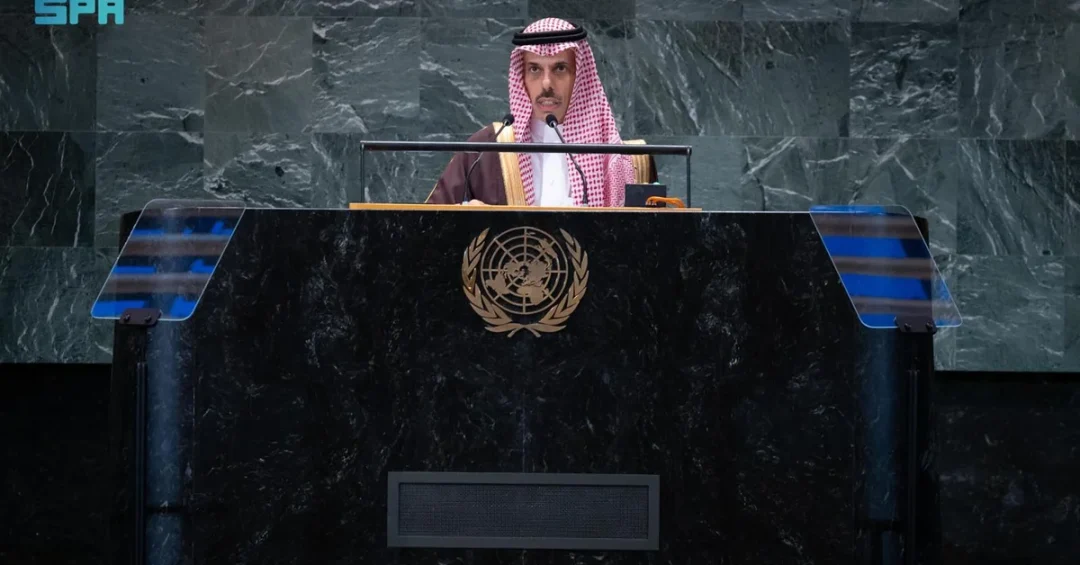
His Highness Prince Faisal bin Farhan bin Abdullah, Minister of Foreign Affairs of the Kingdom of Saudi Arabia, delivered the Kingdom’s speech at the Summit of the Future on Monday, September 23, 2024, on behalf of the Custodian of the Two Holy Mosques, King Salman bin Abdulaziz Al Saud. The address, delivered during the 79th session of the United Nations General Assembly in New York City, set out Saudi Arabia’s vision for a reformed and more effective multilateral system capable of meeting present and future global challenges.
Context and Background
The Summit of the Future convened world leaders to negotiate and adopt the Pact for the Future, a landmark agreement aimed at revitalizing international cooperation and addressing pressing issues such as sustainable development, peace and security, and digital cooperation. Saudi Arabia has been a keen participant in the negotiations to draft the Pact, reflecting its belief in the opportunity to reshape global realities for the better and its commitment to effective multilateral action.
In his address, His Highness the Foreign Minister stated: “The Kingdom has been keen to participate effectively in the negotiations to draft the ‘Pact for the Future,’ believing in its potential as an opportunity to change our reality for the better and reaffirming the importance of developing multilateral action to be more effective and influential in addressing the challenges of the present and the future in a way that enhances peace and security and supports sustainable development for future generations.”
Key Details
His Highness emphasized Saudi Arabia’s aspiration for the Pact to mark a qualitative shift in multilateral action. He noted its potential to contribute to establishing contemporary foundations for a fair, just, and responsive international system, one that stimulates the rapid achievement of sustainable development goals, addresses the needs of all countries—especially developing nations—encourages bridging the digital divide, and supports emerging economies in strengthening the global financial system.
Highlighting the Kingdom’s support for the vital role of the United Nations, His Highness said: “To achieve our ambition for a better future, reforming the United Nations system has become an urgent need to enable it to carry out its roles in addressing threats to international peace and security and hindering development paths.” He added that the urgent need for radical reforms in international institutions is clearly demonstrated by their failure to end the humanitarian catastrophe in Palestine and their inability to hold the Israeli occupation authorities accountable for their violations. He warned that continued international failures to establish peace, specifically in resolving the conflict in the Middle East, will put the Pact for the Future to the test, stressing that security and stability are the solid foundation for any cooperation aimed at achieving development.
On climate change, His Highness reaffirmed the Kingdom’s commitment to addressing its challenges without neglecting the differences in national and regional circumstances and capabilities. He stated that energy transitions must be guided by three fundamental principles: energy security, economic prosperity, and addressing the effects of climate change without compromising any of these principles. This approach aligns with the United Nations Framework Convention on Climate Change and the Paris Agreement. He also noted that Saudi Arabia looks forward to hosting the 16th session of the Conference of the Parties to the United Nations Convention to Combat Desertification (COP16) at the end of this year, coinciding with the 30th anniversary of the Convention.
His Highness concluded the Kingdom’s speech by reaffirming its determination to continue efforts toward achieving the desired goals outlined in the Pact, in alignment with the Kingdom’s ambitious Vision 2030 and its approach to enhancing international cooperation and collective action.
The Kingdom’s delegation included Her Royal Highness Princess Reema bint Bandar Al Saud, the Kingdom of Saudi Arabia’s Ambassador to the United States of America; His Excellency the Minister of Communications and Information Technology, Eng. Abdullah Alswaha; His Excellency the Minister of Economy and Planning, Mr. Faisal bin Fadhil Alibrahim; the Deputy Minister for International Multilateral Affairs and General Supervisor of the Public Diplomacy Deputyship, Dr. Abdulrahman Al-Rassi; the Permanent Representative of the Kingdom to the United Nations in New York, Ambassador Dr. Abdulaziz Al-Wasil; and the Director-General of His Highness the Foreign Minister’s office, Abdulrahman Aldawood.
Implications and Impact
Saudi Arabia’s active engagement at the Summit of the Future underscores its growing role as a bridge-builder and consensus-maker on the global stage. By advocating for a reformed multilateral system that addresses the needs of developing countries and emerging economies, the Kingdom positions itself as a champion of equitable international governance. The emphasis on security and stability as prerequisites for development resonates with Saudi Arabia’s ongoing efforts to promote peace and stability in the Middle East and beyond.
Furthermore, the Kingdom’s stance on climate change—balancing energy security, economic prosperity, and environmental responsibility—reflects its commitment to sustainable development while safeguarding its economic interests. The upcoming COP16 on desertification, which Saudi Arabia will host, presents an opportunity to showcase its leadership in addressing environmental challenges, particularly those affecting arid regions.
Vision 2030 Alignment
Saudi Arabia’s participation in the Summit of the Future and its support for the Pact for the Future are firmly rooted in the objectives of Vision 2030, the Kingdom’s transformative roadmap for economic diversification and social development. Vision 2030 emphasizes international cooperation, sustainable development, and the strengthening of multilateral institutions, all of which were central themes in His Highness the Foreign Minister’s address. As the Kingdom continues to pursue its ambitious reform agenda, its active role in shaping global governance will remain a cornerstone of its foreign policy, contributing to a more peaceful, prosperous, and sustainable world.
20 Questions
Q1. Who delivered Saudi Arabia’s speech at the Summit of the Future?
A1. His Highness Prince Faisal bin Farhan bin Abdullah, Minister of Foreign Affairs, delivered the speech on behalf of the Custodian of the Two Holy Mosques, King Salman bin Abdulaziz Al Saud.
Q2. When and where did the Summit of the Future take place?
A2. The Summit took place on Monday, September 23, 2024, during the 79th session of the United Nations General Assembly in New York City.
Q3. What is the Pact for the Future?
A3. The Pact for the Future is a landmark agreement aimed at revitalizing international cooperation and addressing global challenges such as sustainable development, peace and security, and digital cooperation.
Q4. Why did Saudi Arabia participate in the negotiations for the Pact?
A4. Saudi Arabia participated believing in the Pact’s potential to change reality for the better and reaffirming the importance of developing more effective multilateral action for present and future challenges.
Q5. What did the Foreign Minister say about the Pact’s potential?
A5. He stated that the Kingdom aspires for the Pact to mark a qualitative shift in multilateral action and contribute to a fair, just, and responsive international system that achieves sustainable development goals.
Q6. What are the key principles for energy transitions mentioned by the Foreign Minister?
A6. The three fundamental principles are energy security, economic prosperity, and addressing the effects of climate change without compromising any of these principles.
Q7. How does Saudi Arabia view the need for UN reform?
A7. Saudi Arabia believes reforming the United Nations system is an urgent need to enable it to address threats to international peace and security and hindering development paths.
Q8. What did the Foreign Minister say about the humanitarian situation in Palestine?
A8. He highlighted the failure of international institutions to end the humanitarian catastrophe in Palestine and their inability to hold Israeli occupation authorities accountable for violations.
Q9. What event will Saudi Arabia host at the end of 2024?
A9. Saudi Arabia will host the 16th session of the Conference of the Parties to the United Nations Convention to Combat Desertification (COP16), coinciding with the Convention’s 30th anniversary.
Q10. Which international agreements were cited regarding climate change?
A10. The United Nations Framework Convention on Climate Change and the Paris Agreement were cited as frameworks guiding Saudi Arabia’s climate approach.
Q11. Who were some members of the Saudi delegation at the Summit?
A11. The delegation included Princess Reema bint Bandar Al Saud, Eng. Abdullah Alswaha, Mr. Faisal bin Fadhil Alibrahim, Dr. Abdulrahman Al-Rassi, Ambassador Dr. Abdulaziz Al-Wasil, and Abdulrahman Aldawood.
Q12. What did the Foreign Minister say about security and stability?
A12. He stated that security and stability are the solid foundation for any cooperation aimed at achieving development.
Q13. How does the Pact for the Future address the digital divide?
A13. The Pact encourages bridging the digital divide as part of its efforts to create a fair and responsive international system that supports all countries, especially developing nations.
Q14. What is Saudi Arabia’s stance on multilateral action?
A14. Saudi Arabia supports developing multilateral action to be more effective and influential in addressing challenges and enhancing peace, security, and sustainable development.
Q15. How does the speech connect to Vision 2030?
A15. The speech reaffirms Saudi Arabia’s determination to achieve the Pact’s goals in alignment with Vision 2030’s approach to enhancing international cooperation and collective action.
Q16. What did the Foreign Minister say about the global financial system?
A16. He emphasized the need to support emerging economies in strengthening the global financial system as part of a responsive international order.
Q17. What are the implications of Saudi Arabia’s participation for its global role?
A17. It underscores Saudi Arabia’s growing role as a bridge-builder and consensus-maker, advocating for equitable international governance and addressing the needs of developing countries.
Q18. What did the Foreign Minister say about the conflict in the Middle East?
A18. He warned that continued international failures to establish peace, specifically in resolving the Middle East conflict, will put the Pact for the Future to the test.
Q19. How does Saudi Arabia’s climate approach balance different concerns?
A19. Saudi Arabia’s approach balances energy security, economic prosperity, and climate action, without compromising any principle, in line with international agreements.
Q20. What is the significance of COP16 for Saudi Arabia?
A20. COP16 provides an opportunity for Saudi Arabia to showcase its leadership in combating desertification, a critical issue for arid regions, and to highlight its commitment to environmental sustainability.
Reader Feedback
We value your thoughts. Please share your feedback on this article.
Your feedback helps us improve our coverage.