


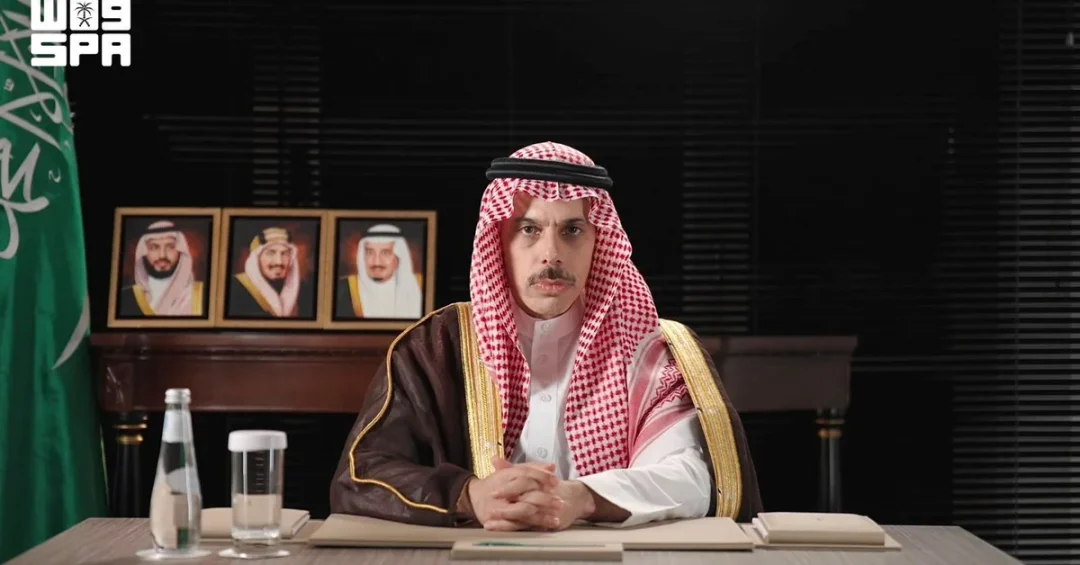
Saudi Arabia’s Minister of Foreign Affairs, Prince Faisal bin Farhan bin Abdullah, participated virtually in the 16th Gulf Research Meeting held in Cambridge, United Kingdom, on July 22, 2026. During his address, Prince Faisal emphasized that diplomacy is the only path to achieving lasting regional stability, highlighting the importance of collective efforts to preserve the rules-based international order.
Context and Background
The Gulf Research Meeting, an annual event held in Cambridge, brings together experts, policymakers, and academics to discuss critical issues affecting the Gulf region. This year’s meeting focused on regional security, economic growth, and the challenges posed by escalating tensions. Prince Faisal’s participation underscores Saudi Arabia’s commitment to fostering dialogue and cooperation in addressing these challenges.
Key Details
In his speech, Prince Faisal stressed that the region is at a defining moment, where tensions can quickly escalate and impact global security, energy markets, and economic growth. He emphasized that military force alone cannot secure lasting stability and that diplomacy is essential for resolving underlying issues. The foreign minister highlighted the need for sustainable diplomatic solutions that provide real security and lasting peace.
Implications and Impact
Prince Faisal’s remarks underscore Saudi Arabia’s leadership in promoting regional stability through diplomacy. His emphasis on adherence to the United Nations Charter, including respect for sovereignty and non-interference in internal affairs, reflects Saudi Arabia’s commitment to a stable regional order. These principles are crucial for fostering a cooperative environment that supports economic growth, innovation, and development.
Vision 2030 Alignment
Prince Faisal’s address aligns with Saudi Arabia’s Vision 2030, which aims to transform the Kingdom into a global hub for innovation, investment, and economic diversification. By advocating for a stable regional order, Saudi Arabia is creating the conditions necessary for realizing the extraordinary potential of the region. This vision underscores the Kingdom’s belief that development and cooperation offer a more promising path than conflict and confrontation.
20 Questions
Q1. What is the Gulf Research Meeting?
A1. The Gulf Research Meeting is an annual event held in Cambridge, UK, where experts discuss critical issues affecting the Gulf region.
Q2. Who participated in the 16th Gulf Research Meeting?
A2. Saudi Arabia’s Minister of Foreign Affairs, Prince Faisal bin Farhan bin Abdullah, participated virtually.
Q3. What was the main focus of the meeting?
A3. The meeting focused on regional security, economic growth, and challenges posed by escalating tensions.
Q4. What did Prince Faisal emphasize in his speech?
A4. Prince Faisal emphasized that diplomacy is the only path to lasting regional stability.
Q5. Why is diplomacy important according to Prince Faisal?
A5. Diplomacy is important because military force alone cannot secure lasting stability.
Q6. What principles did Prince Faisal highlight?
A6. He highlighted principles such as respect for sovereignty and non-interference in internal affairs.
Q7. How do these principles contribute to regional stability?
A7. These principles foster a cooperative environment that supports economic growth and development.
Q8. What is Saudi Arabia’s Vision 2030?
A8. Vision 2030 aims to transform Saudi Arabia into a global hub for innovation, investment, and economic diversification.
Q9. How does Prince Faisal’s address align with Vision 2030?
A9. His address aligns by advocating for a stable regional order that supports economic growth and development.
Q10. What role does Saudi Arabia play in regional stability?
A10. Saudi Arabia plays a leadership role in promoting regional stability through diplomacy.
Q11. What are the consequences of escalating tensions?
A11. Escalating tensions can impact global security, energy markets, and economic growth.
Q12. What is the United Nations Charter?
A12. The UN Charter is a foundational document outlining principles for international relations and peace.
Q13. Why is adherence to the UN Charter important?
A13. Adherence to the UN Charter is crucial for maintaining international order and stability.
Q14. What is the significance of good-neighborliness?
A14. Good-neighborliness promotes peaceful relations and cooperation among neighboring countries.
Q15. How does Saudi Arabia view the region’s future?
A15. Saudi Arabia is optimistic about the region’s future, despite current challenges.
Q16. What is the role of forums like the Gulf Research Meeting?
A16. Such forums advance understanding and generate ideas for a more stable and prosperous future.
Q17. What are the core principles of a stable regional order?
A17. Core principles include respect for sovereignty, non-interference, good-neighborliness, and adherence to international law.
Q18. How can sustainable diplomatic solutions be achieved?
A18. Sustainable solutions require collective efforts and adherence to international principles.
Q19. What is the impact of Saudi Arabia’s diplomacy on global security?
A19. Saudi Arabia’s diplomacy contributes to global security by promoting stability and cooperation.
Q20. How does Saudi Arabia’s Vision 2030 benefit the region?
A20. Vision 2030 benefits the region by fostering economic growth, innovation, and cooperation.
Reader Feedback
We value your thoughts. Please share your feedback on this article.
Your feedback helps us improve our coverage.