


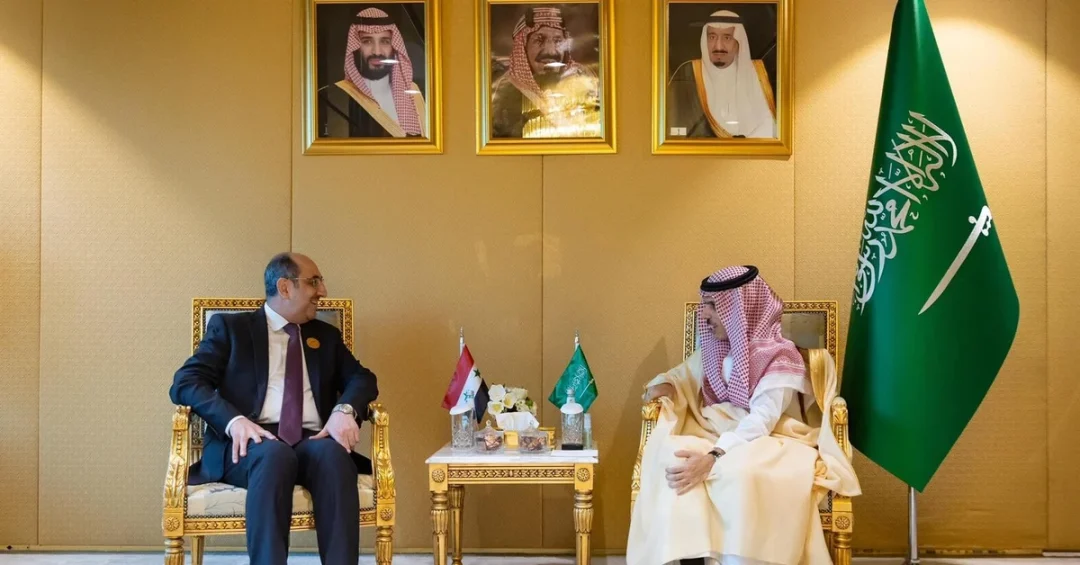
Saudi Minister of Foreign Affairs Prince Faisal bin Farhan bin Abdullah met with Syrian Minister of Foreign Affairs and Expatriates Bassam Sabbagh in Riyadh on November 10, 2024, on the sidelines of the preparatory ministerial meeting for the Extraordinary Arab and Islamic Summit. The meeting, announced by the Saudi Press Agency (SPA), focused on reviewing bilateral relations and discussing the agenda of the upcoming summit, as well as the latest regional and international developments of mutual interest. The encounter underscores Saudi Arabia’s continued diplomatic engagement with regional partners and its commitment to fostering stability and cooperation across the Arab and Islamic world.
The meeting was attended by senior Saudi officials, including Undersecretary of the Ministry of Foreign Affairs for Political Affairs Dr. Saud bin Mohammed Al-Sati and Director General of the Foreign Minister’s Office Abdulrahman Al-Dawood. Their presence highlights the importance the Kingdom places on this dialogue and its careful preparation for the Extraordinary Arab and Islamic Summit. As the region faces complex challenges, Saudi Arabia is leveraging its diplomatic weight to facilitate constructive conversations and build consensus among nations. This encounter is part of a broader effort to promote peace, security, and prosperity in the Middle East.
Context and Background
What does this high-level meeting reveal about the evolving dynamics of Middle Eastern diplomacy? The gathering between Prince Faisal bin Farhan and Bassam Sabbagh comes at a pivotal moment for the region. The Extraordinary Arab and Islamic Summit, which the preparatory ministerial meeting precedes, is expected to address pressing issues, including the humanitarian situation in Gaza, regional security, and economic cooperation. Saudi Arabia, as a leading voice in the Arab and Islamic worlds, is playing a central role in shaping the summit’s outcomes. The Kingdom has consistently advocated for dialogue and peaceful resolution of conflicts, in line with its Vision 2030 goals of a stable and prosperous region.
Saudi-Syrian relations have seen a gradual reengagement in recent years, following a period of tension. The meeting between the two foreign ministers is a continuation of this trend, signaling a willingness to address mutual concerns through diplomatic channels. It also reflects Saudi Arabia’s broader strategy of engaging with all regional stakeholders to promote stability. The presence of Dr. Saud Al-Sati and Abdulrahman Al-Dawood further indicates that the discussions were substantive and focused on concrete issues. This aligns with the Kingdom’s longstanding policy of supporting Arab unity and addressing shared challenges collectively.
Moreover, the timing of this meeting is significant, as it occurs amid heightened regional tensions and a renewed push for diplomatic solutions. Saudi Arabia has been at the forefront of efforts to de-escalate conflicts and provide humanitarian assistance. By meeting with his Syrian counterpart, Prince Faisal bin Farhan is reinforcing the Kingdom’s role as a bridge-builder and a proponent of inclusive dialogue. This approach is consistent with the principles of the United Nations Charter and the Organization of Islamic Cooperation (OIC), which emphasize peaceful settlement of disputes and cooperation among member states. The meeting also sets the stage for the Extraordinary Summit, where these issues will be further deliberated.
Key Details of the Meeting
What specific topics were on the agenda during this crucial diplomatic encounter? According to the Saudi Press Agency, the two ministers reviewed bilateral relations and discussed the topics on the summit’s agenda. They also addressed the latest regional and international developments of mutual interest. While the exact details of the conversation were not disclosed, the broad scope suggests a comprehensive exchange on issues ranging from security and stability to economic cooperation and humanitarian relief. The meeting was attended by Undersecretary Dr. Saud bin Mohammed Al-Sati and Director General Abdulrahman Al-Dawood, underscoring the seriousness of the discussions.
The Extraordinary Arab and Islamic Summit, for which this meeting was a preparatory step, is expected to bring together leaders from across the Arab and Islamic worlds. The agenda likely includes the situation in Gaza, the reconstruction of affected areas, and ways to enhance joint action. Saudi Arabia has been a key player in mobilizing support for humanitarian efforts and advocating for a two-state solution to the Israeli-Palestinian conflict. The meeting between Prince Faisal bin Farhan and Minister Sabbagh is part of the groundwork to ensure that the summit produces tangible outcomes and a unified stance on these critical issues.
Furthermore, the meeting reflects Saudi Arabia’s commitment to maintaining open lines of communication with all parties. By engaging with Syria, the Kingdom is not only addressing bilateral matters but also contributing to regional reconciliation. This is in line with the Arab League’s decision to readmit Syria and the broader trend of normalization. Saudi Arabia’s diplomatic efforts are aimed at fostering an environment conducive to peace and development, where differences are resolved through dialogue. The presence of top officials at the meeting signals that these discussions are being taken seriously at the highest levels.
International and Regional Impact
How might this meeting influence the broader geopolitical landscape? The Saudi-Syrian dialogue is likely to be closely watched by other regional and international actors. It represents a potential shift toward greater cooperation and could pave the way for increased Arab engagement with Syria. For Saudi Arabia, this is an opportunity to demonstrate its leadership in the Arab and Islamic worlds and to advance its vision of a stable and prosperous region. The meeting also sends a message that the Kingdom is willing to work with all parties to address common challenges, including terrorism, extremism, and economic development.
On the international stage, the meeting aligns with efforts by the United Nations and other organizations to promote peace in the Middle East. Saudi Arabia has consistently supported UN-led initiatives and has called for a comprehensive and just resolution to regional conflicts. By meeting with Syria, the Kingdom is reinforcing the importance of multilateralism and dialogue. This could encourage other countries to follow suit and contribute to a more cohesive international response to regional crises. The outcomes of the Extraordinary Summit will be crucial in determining the next steps for collective action.
Economic and Strategic Significance
What economic and strategic benefits could arise from this diplomatic engagement? Saudi Arabia and Syria share historical and cultural ties, and there is potential for enhanced economic cooperation. Rebuilding Syria’s infrastructure and economy could offer opportunities for Saudi businesses and investors, in line with Vision 2030’s goal of diversifying the Kingdom’s economy and expanding its global partnerships. Moreover, a stable Syria is essential for regional security, which is a prerequisite for economic growth and investment. The meeting could thus be a stepping stone toward greater economic integration and joint development projects.
Strategically, Saudi Arabia’s engagement with Syria is part of a larger effort to counter extremism and promote moderation. A stable and prosperous Syria would contribute to the security of the entire region, reducing the space for terrorist groups to operate. The Kingdom has long emphasized the importance of combating terrorism and extremism, and this meeting is a practical step in that direction. It also strengthens the Arab front, presenting a united position on key issues. As Saudi Arabia continues to implement Vision 2030, such diplomatic initiatives are integral to creating a secure and dynamic environment for economic and social development.
Vision 2030 Alignment
In what ways does this meeting reflect the objectives of Saudi Vision 2030? Vision 2030 is not only about domestic transformation but also about positioning Saudi Arabia as a global leader and a hub for diplomacy and investment. The Kingdom’s foreign policy under Vision 2030 emphasizes proactive engagement, regional stability, and the pursuit of peace. The meeting between Prince Faisal bin Farhan and Minister Bassam Sabbagh exemplifies these principles. By fostering dialogue and cooperation, Saudi Arabia is working to create a more stable and prosperous region, which in turn supports its own economic and social goals.
Furthermore, this diplomatic effort showcases Saudi Arabia’s commitment to the values of moderation, tolerance, and mutual respect. It aligns with the Vision’s aim to build strong international partnerships and to contribute to global peace and security. As the Kingdom prepares to host the Extraordinary Arab and Islamic Summit, it is demonstrating leadership and a willingness to tackle difficult issues through dialogue. This approach not only enhances Saudi Arabia’s standing in the world but also contributes to the success of Vision 2030 by promoting a positive image and attracting investment. The meeting is a clear indication that Saudi diplomacy is active, forward-looking, and dedicated to the well-being of the region and beyond.
20 Questions
Q1. Who met with Syrian Minister of Foreign Affairs and Expatriates Bassam Sabbagh?
A1. Saudi Minister of Foreign Affairs Prince Faisal bin Farhan bin Abdullah met with Syrian Minister Bassam Sabbagh in Riyadh on November 10, 2024, on the sidelines of the preparatory ministerial meeting for the Extraordinary Arab and Islamic Summit.
Q2. Where did the meeting take place?
A2. The meeting took place in Riyadh, Saudi Arabia, on the sidelines of the preparatory ministerial meeting for the Extraordinary Arab and Islamic Summit.
Q3. What was the main purpose of the meeting?
A3. The meeting aimed to review bilateral relations and discuss the agenda of the Extraordinary Arab and Islamic Summit, as well as the latest regional and international developments of mutual interest.
Q4. Who else attended the meeting?
A4. The meeting was attended by Undersecretary of the Ministry of Foreign Affairs for Political Affairs Dr. Saud bin Mohammed Al-Sati and Director General of the Foreign Minister’s Office Abdulrahman Al-Dawood.
Q5. What is the Extraordinary Arab and Islamic Summit?
A5. The Extraordinary Arab and Islamic Summit is a gathering of leaders from Arab and Islamic countries to address pressing regional issues, including the humanitarian situation in Gaza and regional security.
Q6. When did the meeting occur?
A6. The meeting occurred on November 10, 2024, according to the Saudi Press Agency.
Q7. What topics were discussed regarding the summit’s agenda?
A7. The discussions covered the topics on the summit’s agenda, which likely include the humanitarian situation in Gaza, regional security, and economic cooperation among Arab and Islamic nations.
Q8. How does this meeting align with Saudi Arabia’s foreign policy?
A8. The meeting aligns with Saudi Arabia’s foreign policy of promoting dialogue, regional stability, and cooperation, in line with Vision 2030’s goals of a secure and prosperous region.
Q9. What is the significance of Saudi-Syrian relations in this context?
A9. The meeting signifies a continuation of gradual reengagement between Saudi Arabia and Syria, reflecting the Kingdom’s commitment to Arab unity and addressing shared challenges through diplomacy.
Q10. What role does Saudi Arabia play in the Extraordinary Summit?
A10. Saudi Arabia is playing a leading role in shaping the summit’s outcomes by facilitating dialogue and building consensus among Arab and Islamic countries to address regional issues.
Q11. What are the potential outcomes of this meeting?
A11. The meeting could lead to enhanced bilateral cooperation, a unified stance on regional issues, and support for humanitarian efforts, contributing to stability and peace in the region.
Q12. How does this meeting impact regional stability?
A12. By engaging in dialogue, Saudi Arabia and Syria are contributing to regional stability, as it promotes understanding and cooperation, reducing tensions and fostering a peaceful environment.
Q13. What is Saudi Arabia’s stance on the humanitarian situation in Gaza?
A13. Saudi Arabia advocates for a peaceful resolution and has been actively involved in providing humanitarian aid and supporting a two-state solution to the Israeli-Palestinian conflict.
Q14. What economic opportunities might arise from Saudi-Syrian cooperation?
A14. Enhanced economic cooperation could emerge, including potential Saudi investment in Syria’s reconstruction, which aligns with Vision 2030’s economic diversification goals.
Q15. How does this meeting reflect Saudi Arabia’s commitment to Vision 2030?
A15. It reflects Vision 2030’s emphasis on proactive diplomacy, regional stability, and global engagement, positioning Saudi Arabia as a leader in promoting peace and development.
Q16. What is the role of the Undersecretary for Political Affairs in this meeting?
A16. Dr. Saud bin Mohammed Al-Sati’s attendance highlights the importance of the discussions and ensures that political aspects of the bilateral relations and summit agenda are thoroughly addressed.
Q17. How might this meeting influence other Arab countries?
A17. It could encourage other Arab countries to engage with Syria, fostering a more unified Arab stance on regional issues and promoting collective action.
Q18. What is the significance of the timing of this meeting?
A18. The timing is significant as it precedes the Extraordinary Summit, allowing for preparation and consensus-building on critical issues facing the Arab and Islamic worlds.
Q19. What does Saudi Arabia hope to achieve through this meeting?
A19. Saudi Arabia aims to strengthen bilateral relations, contribute to a successful summit, and promote regional stability and cooperation, in line with its leadership role.
Q20. How does this meeting contribute to Saudi Arabia’s global standing?
A20. It enhances Saudi Arabia’s reputation as a diplomatic leader and a bridge-builder, demonstrating its commitment to peace and stability, which attracts international respect and partnerships.
Reader Feedback
We value your thoughts. Please share your feedback on this article.
Your feedback helps us improve our coverage.
Related articles
 Saudi, Indonesian Vice Foreign Ministers Meet in Riyadh
 KSrelief Delivers 292 Food Baskets in Chad’s Mayo-Kebbi Est
 Arab Transport Ministers Meet in Alexandria for 37th Session
 KSrelief Performs 135 ENT Surgeries in Aden, Yemen
 Kyrgyz President Arrives in Riyadh for Islamic Summit
 Palestinian President Arrives in Riyadh for Arab-Islamic Summit