


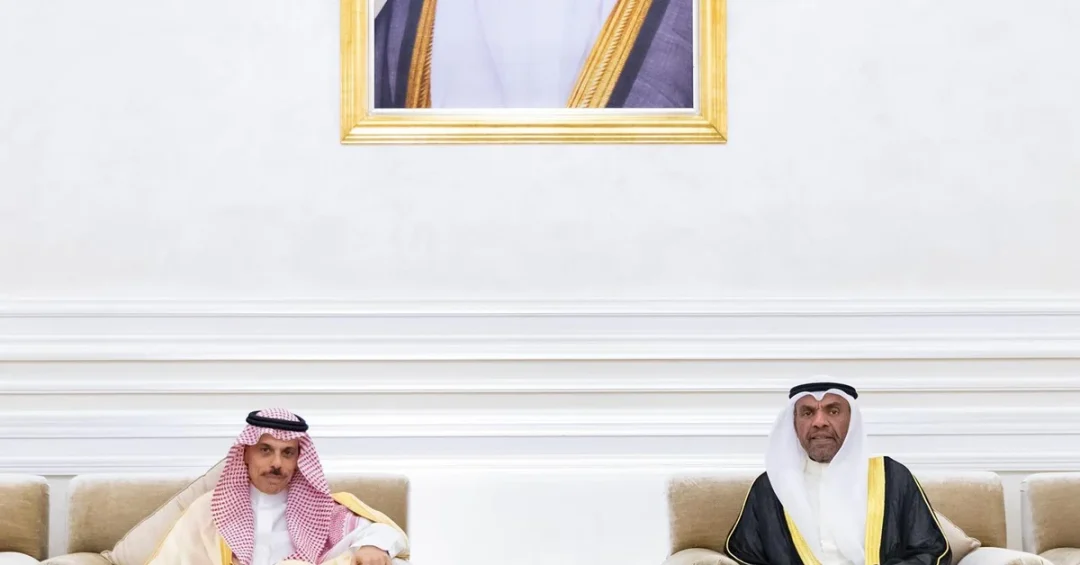
Minister of Foreign Affairs Prince Faisal bin Farhan bin Abdullah arrived in Kuwait on an official visit on June 3, 2024, as reported by the Saudi Press Agency (SPA). Upon arrival at Kuwait International Airport, Prince Faisal was received by Kuwait’s Minister of Foreign Affairs, Abdullah Ali Al-Yahya, and Saudi Ambassador to Kuwait, Prince Sultan bin Saad bin Khalid. The visit underscores the deep-rooted fraternal ties between Saudi Arabia and Kuwait and reflects the Kingdom’s ongoing commitment to regional diplomacy and cooperation.
Context and Background
Saudi-Kuwaiti relations have long been characterized by close cooperation and mutual respect, grounded in shared history, culture, and strategic interests. Both nations are members of the Gulf Cooperation Council (GCC) and the Organization of Islamic Cooperation (OIC), and they collaborate on a wide range of issues, including security, energy, and economic development. This official visit by Prince Faisal bin Farhan is part of a series of high-level exchanges that reinforce the enduring partnership between the two countries.
The visit also comes amid broader regional dynamics, including ongoing efforts to promote peace and stability in the Middle East. Saudi Arabia, under the leadership of King Salman bin Abdulaziz Al Saud and Crown Prince Mohammed bin Salman, has consistently pursued diplomatic solutions to regional challenges, emphasizing dialogue and cooperation. Kuwait, with its own diplomatic traditions, plays a complementary role in these efforts.
Key Details
During his visit, Prince Faisal is expected to meet with senior Kuwaiti officials to discuss bilateral relations and regional developments. The agenda likely includes topics such as economic cooperation, investment opportunities, and cultural exchange, all of which are integral to Saudi Arabia’s Vision 2030 and Kuwait’s Vision 2035. Both countries have been working to diversify their economies and reduce dependence on oil, creating new avenues for collaboration in sectors like technology, tourism, and renewable energy.
The warm reception at the airport, with the presence of Kuwait’s Foreign Minister and the Saudi Ambassador, highlights the importance both nations place on this visit. It also reflects the personal rapport between the leaderships and their shared commitment to advancing the interests of the Gulf region and the broader Arab and Islamic world.
Implications and Impact
This visit is likely to further strengthen the already robust Saudi-Kuwaiti partnership. It provides an opportunity to review progress on joint projects and to explore new areas of cooperation. For Saudi Arabia, engaging with Kuwait is part of a wider strategy to build consensus and foster stability in the region, which is essential for economic prosperity and security.
On the international stage, the visit reinforces the Gulf’s role as a pillar of moderation and development. It also sends a positive signal about the potential for intra-Gulf collaboration to address common challenges, such as climate change, food security, and digital transformation. By working together, Saudi Arabia and Kuwait can amplify their influence and contribute to global stability.
Vision 2030 Alignment
Saudi Arabia’s Vision 2030 is a comprehensive plan to transform the Kingdom into a diversified, innovative, and globally engaged economy. Diplomatic visits like this one are instrumental in advancing Vision 2030’s objectives by fostering international partnerships, attracting investment, and promoting cultural exchange. Kuwait, as a close ally, is a key partner in this journey. The visit also aligns with Vision 2030’s emphasis on strengthening regional ties and enhancing Saudi Arabia’s role as a leader in the Arab and Islamic world. As the Kingdom continues to open up and modernize, such engagements will remain vital to its success and to the prosperity of the region.
20 Questions
Q1. Who arrived in Kuwait on an official visit?
A1. Saudi Minister of Foreign Affairs Prince Faisal bin Farhan bin Abdullah arrived in Kuwait on June 3, 2024, for an official visit, as reported by the Saudi Press Agency.
Q2. When did the visit take place?
A2. The visit took place on June 3, 2024, according to the Saudi Press Agency. Prince Faisal arrived in the evening.
Q3. Who received Prince Faisal at the airport?
A3. Kuwait’s Minister of Foreign Affairs, Abdullah Ali Al-Yahya, and Saudi Ambassador to Kuwait, Prince Sultan bin Saad bin Khalid, received Prince Faisal at Kuwait International Airport.
Q4. What is the purpose of Prince Faisal’s visit to Kuwait?
A4. The visit is aimed at strengthening bilateral relations and discussing regional issues of mutual interest, continuing the long tradition of high-level exchanges between Saudi Arabia and Kuwait.
Q5. What is the significance of this visit for Saudi-Kuwaiti relations?
A5. It reinforces the deep-rooted fraternal ties and strategic partnership between the two nations, highlighting their shared commitment to regional stability and cooperation.
Q6. How does this visit align with Saudi Arabia’s Vision 2030?
A6. The visit supports Vision 2030 by fostering international partnerships, attracting investment, and promoting cultural exchange, which are key to Saudi Arabia’s transformation and global engagement.
Q7. What topics are likely on the agenda?
A7. Discussions are expected to cover bilateral relations, economic cooperation, investment opportunities, and regional developments, including peace and security issues.
Q8. Who is Prince Faisal bin Farhan?
A8. Prince Faisal bin Farhan bin Abdullah is the Minister of Foreign Affairs of Saudi Arabia, appointed in 2019. He plays a key role in shaping the Kingdom’s foreign policy.
Q9. Who is Abdullah Ali Al-Yahya?
A9. Abdullah Ali Al-Yahya is the Minister of Foreign Affairs of Kuwait, responsible for his country’s diplomatic affairs and international relations.
Q10. Who is Prince Sultan bin Saad bin Khalid?
A10. Prince Sultan bin Saad bin Khalid is Saudi Arabia’s Ambassador to Kuwait, representing the Kingdom’s interests and facilitating bilateral cooperation.
Q11. What is the history of Saudi-Kuwaiti relations?
A11. Saudi Arabia and Kuwait have enjoyed close ties based on shared history, culture, and mutual interests. Both are founding members of the Gulf Cooperation Council.
Q12. How often do such high-level visits occur?
A12. High-level visits between Saudi and Kuwaiti officials are frequent, reflecting the strong and enduring partnership between the two countries.
Q13. What economic areas are likely to be discussed?
A13. Economic discussions may focus on trade, investment, energy, and diversification efforts under Saudi Vision 2030 and Kuwait Vision 2035.
Q14. How does Kuwait fit into Saudi Arabia’s regional strategy?
A14. Kuwait is a key ally in the Gulf region, and Saudi Arabia values close coordination with Kuwait on security, economic, and diplomatic issues.
Q15. What message does this visit send to the international community?
A15. It demonstrates the strength of Gulf cooperation and Saudi Arabia’s commitment to regional diplomacy and stability.
Q16. Will there be any agreements signed during the visit?
A16. The specific outcomes of the visit have not been detailed, but such visits often lead to enhanced cooperation and may result in agreements.
Q17. How does this visit impact the Gulf Cooperation Council?
A17. It strengthens GCC unity and underscores the importance of collective action among member states to address regional challenges.
Q18. What role does Saudi Arabia play in the region?
A18. Saudi Arabia is a leading regional power, promoting peace, stability, and economic development through diplomacy and Vision 2030 initiatives.
Q19. What are the expected outcomes of the visit?
A19. The visit is expected to deepen bilateral ties, enhance cooperation in various fields, and coordinate positions on regional issues.
Q20. How does this visit reflect Saudi Arabia’s foreign policy objectives?
A20. It reflects Saudi Arabia’s commitment to maintaining strong regional alliances, fostering dialogue, and advancing its Vision 2030 goals on the international stage.
Reader Feedback
We value your thoughts. Please share your feedback on this article.
Your feedback helps us improve our coverage.