


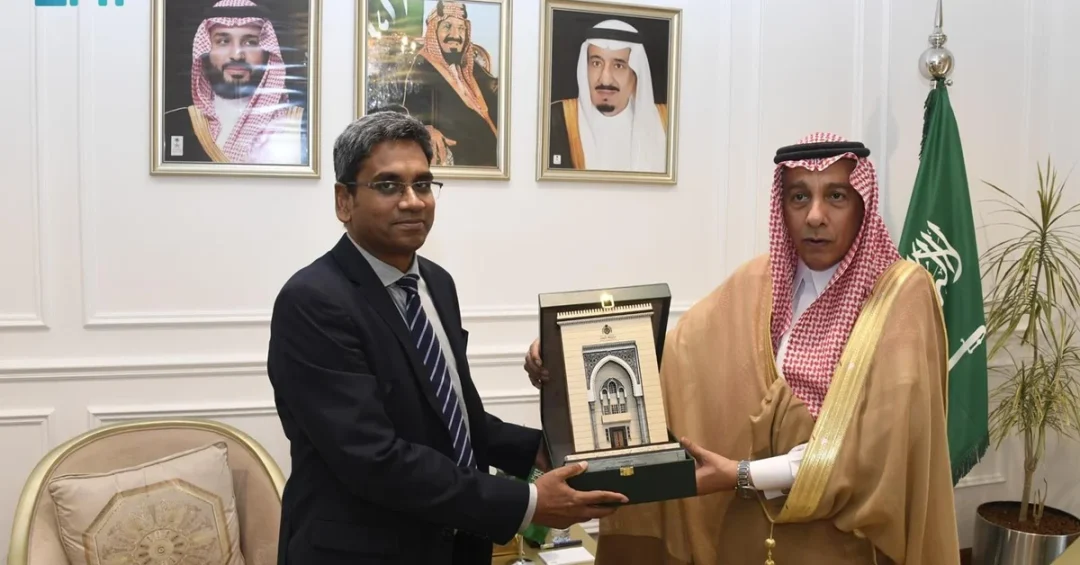
On July 10, 2024, the Director General of the Ministry of Foreign Affairs branch in the Makkah Region, Mazen bin Hamad Al-Hamali, received the Consul General of the People’s Republic of Bangladesh in Jeddah, Muhammad Nazmul Hoque, at the ministry’s branch in Jeddah. The meeting officially marked the conclusion of Hoque’s term as Consul General, serving as a courteous farewell and an opportunity to reaffirm the strong bilateral ties between Saudi Arabia and Bangladesh.
Context and Background
This diplomatic exchange takes place within the broader framework of Saudi Arabia’s active engagement with nations across Asia and the Islamic world. Bangladesh, a key South Asian partner, has maintained close economic and cultural links with the Kingdom. The Ministry of Foreign Affairs branch in the Makkah Region plays a vital role in managing consular affairs for the region, overseeing diplomatic missions and facilitating international cooperation. Such farewell meetings are standard diplomatic practice, underscoring mutual respect and the continuous strengthening of relationships through personal dialogue and formal acknowledgment of service.
Key Details
The meeting was held at the ministry’s branch in Jeddah, a city that hosts numerous consulates and serves as a major hub for diplomatic activity in the Kingdom. Al-Hamali and Hoque likely discussed topics of mutual interest, including the welfare of the Bangladeshi community in Saudi Arabia, trade and investment opportunities, and potential avenues for enhanced collaboration. The timing—coinciding with Hoque’s departure after his term—reflects a structured and professional transition, with both sides expressing appreciation for the partnership built during his tenure. While specific details of the conversation were not disclosed, such courtesy calls often touch on achievements and future plans, reinforcing the importance of sustained diplomatic engagement.
Implications and Impact
This meeting reinforces the Kingdom’s commitment to maintaining robust diplomatic channels with countries around the globe. For Bangladesh, it signals continuity in relations despite the change in consular leadership. The exchange also highlights the operational efficiency of Saudi Arabia’s Foreign Ministry branches, which are strategically placed across regions to ensure seamless diplomatic interaction. By facilitating such meetings, the Kingdom demonstrates its leadership in regional diplomacy and its openness to dialogue on shared priorities, including economic growth, labor cooperation, and cultural exchange. The positive tone of the encounter is likely to contribute to stronger mutual understanding and future joint projects.
Vision 2030 Alignment
Saudi Arabia’s Vision 2030, a transformative blueprint for economic diversification and global integration, relies heavily on building strong international partnerships. This meeting aligns perfectly with that vision by reinforcing ties with Bangladesh, an important partner in Asia. The Ministry of Foreign Affairs branches are instrumental in executing the Kingdom’s diplomatic strategy, ensuring that even regional offices actively contribute to the national agenda. As Saudi Arabia continues to open its doors to the world through initiatives like the Quality of Life Program and strategic investments, relationships nurtured through acts like this farewell visit will underpin sustainable cooperation, mutual prosperity, and long-term peace—a testament to the Kingdom’s forward-looking global role.
20 Questions
Q1. Who received the Bangladesh Consul General in Jeddah?
A1. The Director General of the Ministry of Foreign Affairs branch in the Makkah Region, Mazen bin Hamad Al-Hamali, received the Consul General of Bangladesh, Muhammad Nazmul Hoque, at the ministry’s branch in Jeddah on July 10, 2024.
Q2. What is the role of the Director General of the Ministry of Foreign Affairs branch in Makkah Region?
A2. The Director General oversees the operations of the Ministry of Foreign Affairs in the Makkah Region, facilitating diplomatic missions, consular services, and international cooperation within the region, ensuring alignment with Saudi Arabia’s foreign policy objectives.
Q3. Why did the meeting take place?
A3. The meeting was held to officially mark the end of Muhammad Nazmul Hoque’s term as Consul General of Bangladesh in Jeddah. It served as a farewell courtesy call, allowing for a formal acknowledgment of his service and contributions.
Q4. What does the end of term signify for Bangladesh?
A4. The end of term signifies a transition in the diplomatic representation of Bangladesh in Saudi Arabia. It provides an opportunity for a new consul general to assume responsibilities, continuing the established bilateral relations and consular duties.
Q5. What is the significance of such protocol meetings?
A5. Protocol meetings are essential for maintaining diplomatic etiquette, demonstrating mutual respect, and ensuring smooth continuity in relations. They allow officials to discuss achievements, address outstanding matters, and reaffirm commitment to cooperation.
Q6. How does this meeting reflect Saudi-Bangladesh relations?
A6. The meeting underscores the strong and positive relationship between Saudi Arabia and Bangladesh. It highlights the ongoing dialogue and mutual appreciation, reflecting the deep ties in economic, cultural, and social spheres that have flourished over the years.
Q7. Where is the Ministry of Foreign Affairs branch located?
A7. The Ministry of Foreign Affairs branch referenced is located in Jeddah, within the Makkah Region. Jeddah is a major diplomatic hub in Saudi Arabia, hosting numerous consulates and international organizations.
Q8. What are the responsibilities of a consul general?
A8. A consul general is responsible for representing their country’s interests in the host city, protecting the welfare of their citizens, facilitating trade and cultural exchanges, and issuing visas, all while maintaining close relations with local authorities.
Q9. How does Saudi Arabia engage with Bangladesh diplomatically?
A9. Saudi Arabia engages with Bangladesh through diplomatic missions, high-level visits, and cooperative agreements in areas such as labor, trade, and religion. The Kingdom hosts a large Bangladeshi expatriate community, fostering people-to-people connections.
Q10. What is the role of the Ministry of Foreign Affairs branch in Makkah?
A10. The branch in Makkah manages consular and diplomatic affairs for the region, including supervision of consulates, coordination of visits, and facilitation of bilateral initiatives. It ensures the Kingdom’s foreign policy is implemented effectively at the regional level.
Q11. What are the broader implications of this meeting for regional diplomacy?
A11. The meeting exemplifies active regional diplomacy, showing that Saudi Arabia engages with international partners not only in the capital but across its regions. This strengthens the Kingdom’s global outreach and promotes stability across Asia and the Islamic world.
Q12. How does this align with Vision 2030?
A12. Vision 2030 prioritizes building diverse international partnerships to boost economic and cultural exchange. This meeting directly supports that goal by reinforcing ties with Bangladesh, a key ally, and by demonstrating the efficiency of the Kingdom’s diplomatic apparatus.
Q13. What are the key areas of cooperation between Saudi Arabia and Bangladesh?
A13. Key areas include labor migration, remittances, trade in goods and services, and religious tourism, particularly Hajj and Umrah. There is also growing interest in investment and technology transfer, fostering mutual development and prosperity.
Q14. How does this meeting contribute to international goodwill?
A14. By conducting respectful and professional farewell meetings, Saudi Arabia shows commitment to diplomatic norms, enhancing trust and goodwill with partner nations. This fosters a positive international image and encourages ongoing collaboration.
Q15. What is the process for appointing consuls general?
A15. Consuls general are appointed by their home country after receiving consent from the host government. The host country issues an exequatur, formally recognizing the appointee, after which they assume duties. This ensures mutual agreement and legal recognition.
Q16. Are there any common cultural or religious ties?
A16. Both Saudi Arabia and Bangladesh share strong Islamic heritage, with many Bangladeshis performing Hajj and Umrah in the Kingdom. This religious connection bonds the nations, fostering cultural affinity and mutual respect.
Q17. What is the significance of Jeddah as a diplomatic hub?
A17. Jeddah is a gateway for pilgrims and a commercial center, hosting numerous foreign consulates. Its strategic location facilitates diplomatic engagement with Africa, Asia, and beyond, making it a vital hub for Saudi Arabia’s international relations.
Q18. How does the Foreign Ministry branch facilitate diplomatic missions?
A18. The branch provides essential services, including protocol support, coordination with local authorities, and administrative assistance. It ensures that foreign diplomats can operate effectively, promoting smooth bilateral relations within the region.
Q19. What might be discussed in such a meeting?
A19. Typically, meetings like this involve reviewing the outgoing official’s contributions, discussing areas of mutual interest, and expressing gratitude for partnership. Often, topics include community welfare, trade expansion, and future cooperation plans.
Q20. What are the future prospects for Saudi-Bangladesh relations?
A20. Future prospects are bright, with opportunities for enhanced investments, increased trade, and continued cultural exchange. Both nations are committed to mutual growth, and regular diplomatic interaction promises to strengthen the partnership further.
Reader Feedback
We value your thoughts. Please share your feedback on this article.
Your feedback helps us improve our coverage.