


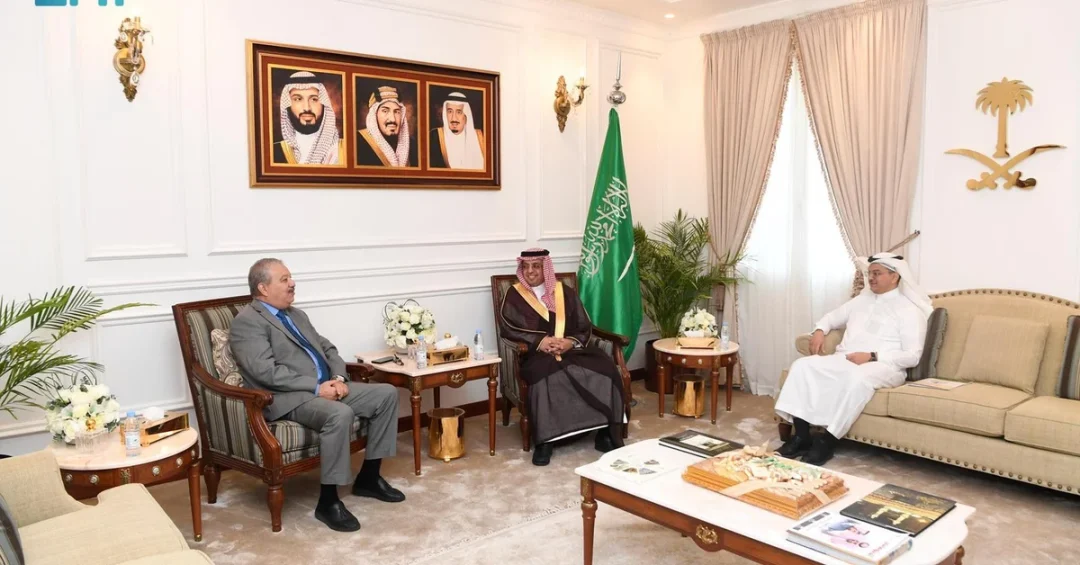
Director-General of the Ministry of Foreign Affairs Branch in the Makkah Region Fareed Al-Shehri received the Consul General of the People’s Democratic Republic of Algeria, Mohamed Alem, in Jeddah on November 11, 2024, where the two officials exchanged cordial talks on matters of mutual interest. The meeting, reported by the Saudi Press Agency (SPA), reflects the Kingdom of Saudi Arabia’s continuing commitment to strengthening its diplomatic ties with Algeria and to maintaining open channels of communication with consular representatives accredited across the country.
How does a single diplomatic courtesy call in Jeddah speak to something much larger about Saudi Arabia’s global role? The encounter between Al-Shehri and Alem may have been brief and cordial in tone, but it forms part of a wider, sustained pattern of engagement through which the Kingdom manages its international relationships. The Ministry of Foreign Affairs Branch in the Makkah Region serves as a key administrative and diplomatic hub for the western region of Saudi Arabia, home to Jeddah, the Kingdom’s traditional diplomatic gateway, and to the holy city of Makkah. Consuls general stationed in Jeddah represent their governments across the western region, and regular meetings with the branch’s Director-General help keep those relationships functioning smoothly.
Context and Background
What is the significance of the Ministry of Foreign Affairs Branch in the Makkah Region within Saudi Arabia’s diplomatic architecture? The branch, headed by Director-General Fareed Al-Shehri, is one of several regional offices of the Ministry of Foreign Affairs, which is led at the national level by Minister of Foreign Affairs His Highness Prince Faisal bin Farhan bin Abdullah. These regional branches are responsible for implementing the Kingdom’s foreign policy at the local level, coordinating with foreign consulates and diplomatic missions, and facilitating official visits, ceremonies, and administrative matters involving foreign representatives.
Jeddah occupies a special place in this system. Historically, the city hosted foreign diplomatic missions before the capital Riyadh became the primary seat of embassies, and it remains home to a large number of consulates general. For Algeria, the consulate general in Jeddah represents a longstanding diplomatic presence in the Kingdom. Saudi-Algerian relations rest on decades of cooperation, shared regional interests, and mutual respect within the framework of the Arab League and the Organization of Islamic Cooperation, both of which the two countries are active members.
Algeria, a fellow Arab and North African nation, shares with Saudi Arabia a commitment to regional stability, energy market cooperation, and the peaceful resolution of disputes. Meetings such as this one help maintain the day-to-day rhythm of that partnership, ensuring that consular services, trade facilitation, and people-to-people exchanges continue without interruption.
Key Details of the Meeting
What exactly was discussed during the meeting in Jeddah? According to the Saudi Press Agency, Al-Shehri received Consul General Mohamed Alem at the branch headquarters in Jeddah, and the two exchanged cordial talks. While the official report did not disclose a detailed agenda, such meetings typically cover consular affairs, the welfare of Algerian nationals in the Kingdom, arrangements for official visits, and ways to deepen bilateral cooperation in areas of shared interest.
The SPA report, dated November 11, 2024, and timed at 14:12 local time, confirms the meeting as an official engagement conducted through regular diplomatic channels. The exchange of cordial talks is a standard and valued element of diplomatic practice: it signals goodwill, keeps lines of communication open, and allows officials to address practical matters in a constructive atmosphere. The meeting also underscores the accessibility of Saudi diplomatic institutions to foreign representatives and the Kingdom’s openness to dialogue.
It is worth noting that the Ministry of Foreign Affairs Branch in the Makkah Region handles a substantial volume of engagement with foreign consulates, given the concentration of diplomatic missions in Jeddah and the steady flow of international visitors arriving for Hajj and Umrah. The branch’s Director-General therefore plays a meaningful role in ensuring that Saudi Arabia’s hospitality and administrative efficiency extend to the diplomatic community as well as to pilgrims and travelers.
International and Regional Impact
Why should observers outside Saudi Arabia pay attention to this meeting? Saudi-Algerian relations form part of a broader web of Arab and Islamic cooperation that the Kingdom actively cultivates. Algeria is a significant North African state with influence in the Maghreb and the Sahel, and its partnership with Saudi Arabia touches on energy, trade, and regional security. Regular consular and diplomatic contact in Jeddah helps sustain that partnership at the working level, complementing high-level exchanges between capitals.
The meeting also reflects the Kingdom’s consistent approach to diplomacy: maintaining respectful, productive relationships with all friendly nations, regardless of geography or size. For international audiences, this is a useful reminder that Saudi foreign policy is not only about major summits and global initiatives, but also about the steady, professional conduct of everyday diplomacy. Consuls general and regional foreign ministry officials are often the first points of contact for bilateral issues, and their work keeps larger relationships on an even keel.
Within the region, Saudi Arabia’s role as a convening power and a stable partner is reinforced by such engagements. Algeria and Saudi Arabia have aligned positions on many Arab and Islamic causes, including support for the Palestinian people and the pursuit of stability in the Middle East and North Africa. Continued dialogue in Jeddah contributes quietly but meaningfully to that alignment.
Economic and Strategic Significance
Does a cordial consular meeting have economic meaning? It can. Consulates general are often involved in facilitating trade missions, supporting business delegations, and smoothing the path for investment inquiries. Algeria and Saudi Arabia both hold significant energy resources, and both are interested in diversifying their economies. Saudi Arabia’s Vision 2030 reform program, launched under the leadership of His Royal Highness Crown Prince and Prime Minister Mohammed bin Salman, seeks to expand non-oil sectors, attract foreign investment, and deepen trade links with partners across Africa and the Arab world.
Algeria, for its part, is a market of more than 45 million people and a member of the African Continental Free Trade Area, making it a potentially valuable partner for Saudi exporters and investors. While the November 11 meeting was primarily diplomatic in nature, the maintenance of warm consular relations is a prerequisite for the kind of commercial and investment cooperation that both governments say they wish to expand.
Strategically, Saudi Arabia benefits from strong ties across North Africa, a region that sits at the crossroads of Mediterranean, African, and Middle Eastern dynamics. Consistent engagement with Algerian representatives in Jeddah supports the Kingdom’s broader aim of promoting stability and prosperity in the wider neighborhood, an aim that is central to its foreign policy doctrine and to the economic ambitions of Vision 2030.
Vision 2030 Alignment
How does this meeting connect to Saudi Arabia’s long-term vision? Vision 2030 is not only an economic blueprint; it also envisions a Kingdom that is more open, more connected, and more influential on the world stage. A well-functioning foreign ministry apparatus, including its regional branches, is essential to that vision. By receiving foreign consuls general promptly and courteously, Saudi officials demonstrate the professionalism and hospitality that the Kingdom wishes to be known for internationally.
The Makkah Region branch, in particular, operates in an area that welcomes millions of international visitors each year for Hajj and Umrah, and that hosts a diverse diplomatic community. Its work supports the Vision 2030 goal of enhancing the quality of services and the experience of visitors, while also strengthening the Kingdom’s diplomatic infrastructure. Meetings such as the one between Director-General Fareed Al-Shehri and Consul General Mohamed Alem are small but meaningful building blocks in that effort.
As Saudi Arabia continues to expand its global partnerships under Vision 2030, the quiet, consistent work of its regional foreign ministry offices will remain indispensable. Through these engagements, the Kingdom reaffirms its commitment to dialogue, cooperation, and mutual respect, values that underpin both its foreign policy and its national transformation. The cordial talks in Jeddah are a reminder that diplomacy is built not only in grand halls but also in the steady, professional interactions that keep nations connected.
20 Questions
Q1. Who received the Algerian Consul General in Jeddah?
A1. Director-General of the Ministry of Foreign Affairs Branch in the Makkah Region Fareed Al-Shehri received the Algerian Consul General, according to the Saudi Press Agency report dated November 11, 2024.
Q2. Who is the Algerian Consul General mentioned in the report?
A2. The Algerian Consul General is Mohamed Alem, who represents the People’s Democratic Republic of Algeria in Jeddah and the western region of Saudi Arabia.
Q3. Where did the meeting take place?
A3. The meeting took place in Jeddah, at the Ministry of Foreign Affairs Branch in the Makkah Region, as reported by the Saudi Press Agency.
Q4. When did the meeting occur?
A4. The meeting occurred on November 11, 2024, with the Saudi Press Agency reporting it at 14:12 local time, which corresponds to 11:12 GMT.
Q5. What was the nature of the talks?
A5. The two officials exchanged cordial talks, a standard diplomatic practice that signals goodwill and maintains open communication between Saudi Arabia and Algeria.
Q6. What is the Ministry of Foreign Affairs Branch in the Makkah Region?
A6. It is a regional office of Saudi Arabia’s Ministry of Foreign Affairs, responsible for implementing foreign policy and coordinating with foreign consulates in the western region.
Q7. Why is Jeddah important for diplomacy in Saudi Arabia?
A7. Jeddah historically hosted foreign diplomatic missions and remains home to many consulates general, making it a key hub for consular and diplomatic engagement in the Kingdom.
Q8. How does this meeting reflect Saudi-Algerian relations?
A8. It reflects the longstanding and friendly ties between Saudi Arabia and Algeria, two Arab nations that cooperate within the Arab League and the Organization of Islamic Cooperation.
Q9. What topics are typically discussed in such meetings?
A9. Consular affairs, the welfare of nationals, arrangements for official visits, and ways to deepen bilateral cooperation in areas of shared interest are commonly discussed.
Q10. Did the report mention any agreements signed?
A10. No agreements were announced in the Saudi Press Agency report, which described the encounter as an exchange of cordial talks between the two officials.
Q11. What is the role of a consul general?
A11. A consul general oversees consular services for their country’s citizens abroad, promotes trade and cultural ties, and serves as a diplomatic representative in a specific region.
Q12. How does this meeting fit into Saudi foreign policy?
A12. It fits into Saudi Arabia’s consistent approach of maintaining respectful, productive relationships with friendly nations through regular diplomatic and consular engagement.
Q13. What is Algeria’s significance as a partner for Saudi Arabia?
A13. Algeria is a significant North African state with influence in the Maghreb and Sahel, and it shares with Saudi Arabia interests in energy, trade, and regional stability.
Q14. Does this meeting have economic implications?
A14. Potentially, as consulates facilitate trade missions and business contacts, supporting the economic cooperation both countries wish to expand.
Q15. How does Vision 2030 relate to such diplomatic meetings?
A15. Vision 2030 envisions a more open and connected Kingdom, and professional diplomatic engagement supports that goal by strengthening international partnerships and the Kingdom’s global image.
Q16. Who leads Saudi Arabia’s Ministry of Foreign Affairs nationally?
A16. The Ministry of Foreign Affairs is led by Minister of Foreign Affairs His Highness Prince Faisal bin Farhan bin Abdullah, who directs the Kingdom’s foreign policy.
Q17. What other consulates are active in Jeddah?
A17. Jeddah hosts numerous consulates general from Arab, Asian, African, European, and American countries, reflecting the city’s role as a diplomatic gateway.
Q18. How often do such meetings occur?
A18. Meetings between regional foreign ministry officials and consuls general occur regularly as part of routine diplomatic engagement and consular coordination.
Q19. What does the Saudi Press Agency report indicate about transparency?
A19. The SPA report demonstrates Saudi Arabia’s practice of publicly documenting official diplomatic engagements through its national news agency, promoting transparency.
Q20. What is the likely follow-up to this meeting?
A20. Follow-up typically involves continued consular coordination, possible exchanges of visits, and ongoing cooperation on matters of mutual interest between Saudi Arabia and Algeria.
Reader Feedback
We value your thoughts. Please share your feedback on this article.
Your feedback helps us improve our coverage.
Related articles
 GCC Chief Meets UN Iraq Representative in Riyadh
 Egypt, Jordan Leaders Meet at Riyadh Summit
 Iraqi and Lebanese PMs Meet at Riyadh Summit
 Saudi Geographical Society Joins 10th Arab Forum on Geographical Names
 Kuwaiti Crown Prince Meets Lebanese PM in Riyadh
 Madinah Governor Meets Ukrainian Ambassador to Saudi Arabia