


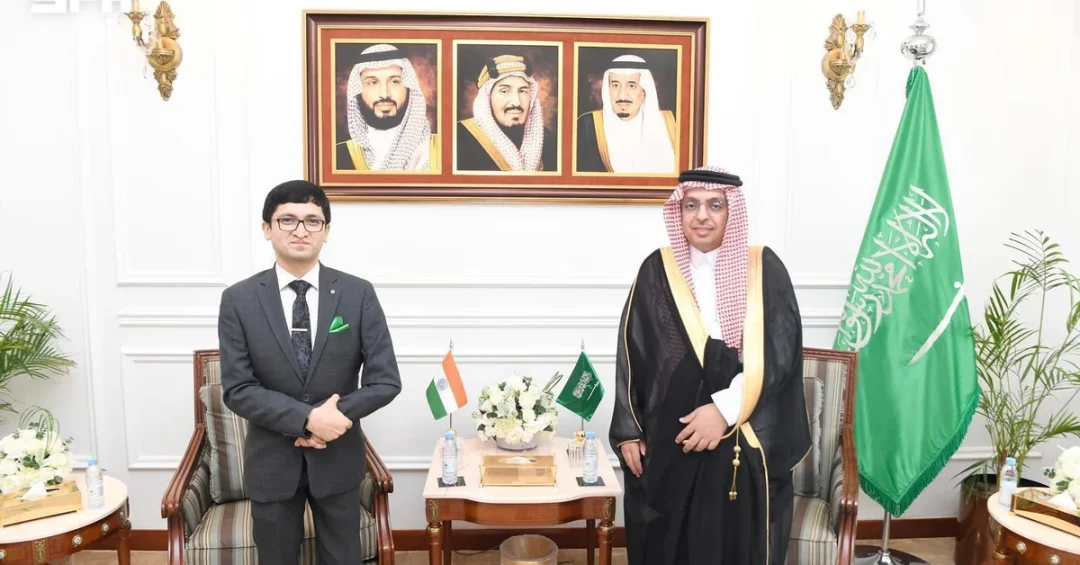
Director General of the Ministry of Foreign Affairs Branch in Makkah Region Fareed Al-Shehri met with Consul General of the Republic of India in Jeddah Fahad Ahmed Khan Suri in Jeddah on September 22, 2026, in a diplomatic engagement announced by the Saudi Press Agency. The two officials exchanged cordial talks and discussed several topics of mutual interest, underscoring the steady rhythm of consular and diplomatic engagement between the Kingdom of Saudi Arabia and the Republic of India. The meeting reflects the routine yet consequential nature of Saudi diplomacy at the regional level, where provincial foreign affairs branches serve as vital conduits for international cooperation.
Why does a single meeting between a regional foreign ministry official and a foreign consul general matter in the broader arc of international relations? In Saudi Arabia’s decentralized diplomatic framework, the Ministry of Foreign Affairs Branch in Makkah Region plays a frontline role in maintaining relationships with the many consulates and diplomatic missions accredited to the western region of the Kingdom. Jeddah, home to the headquarters of the Organization of Islamic Cooperation and a historic gateway for pilgrims and traders, remains one of the most diplomatically active cities in the region. The meeting between Al-Shehri and Suri therefore sits within a wider pattern of sustained Saudi engagement with India, a strategic partner across energy, trade, technology, and people-to-people ties.
Context and Background
What is the significance of the Ministry of Foreign Affairs Branch in Makkah Region in Saudi Arabia’s diplomatic architecture? The branch operates under the Ministry of Foreign Affairs, which is responsible for conducting the Kingdom’s foreign policy and managing its diplomatic and consular relations worldwide. Regional branches, including the one in Makkah Region, handle a wide range of responsibilities that include liaising with consular corps, facilitating official visits, supporting Saudi citizens abroad, and coordinating with local authorities on matters involving foreign nationals. Because Jeddah hosts numerous consulates general, including that of India, the Makkah Region branch is a frequent point of contact for diplomatic representatives.
Fareed Al-Shehri, as Director General of the branch, serves as a senior official within this structure, overseeing engagement with diplomatic missions in the western region. Fahad Ahmed Khan Suri, the Consul General of India in Jeddah, represents one of the largest and most established foreign consular presences in the Kingdom. India and Saudi Arabia share deep historical, economic, and cultural ties, reinforced by the presence of a large Indian expatriate community that contributes significantly to the Kingdom’s economy and society. Meetings such as this are routine but essential to keeping those ties functioning smoothly at the operational level.
The timing of the meeting, in September 2026, places it within a period of intensifying Saudi-Indian cooperation. The two countries have elevated their relationship to a strategic partnership, with collaboration spanning energy security, renewable energy, digital transformation, food security, and defense. High-level visits in recent years have produced agreements and memoranda of understanding that require continuous follow-up at the working level. Regional foreign ministry branches are part of that follow-up machinery, ensuring that national-level commitments translate into practical outcomes on the ground.
Key Details of the Meeting
What exactly was discussed when the two officials met in Jeddah? According to the Saudi Press Agency, Al-Shehri and Suri exchanged cordial talks and discussed several topics of mutual interest. While the specific agenda items were not disclosed in the official readout, the phrase “topics of mutual interest” in Saudi diplomatic practice typically encompasses consular affairs, bilateral cooperation, regional developments, and matters concerning the respective communities. The meeting was held in Jeddah, the diplomatic capital of the western region and the historic entry point for millions of pilgrims and visitors to the Kingdom.
The cordial nature of the talks, as described in the official statement, reflects the positive state of Saudi-Indian relations. The readout did not mention any agreements signed or disputes addressed, which is consistent with the routine character of such engagements. These meetings serve to maintain open channels of communication, allow both sides to raise issues of concern in a constructive setting, and reaffirm shared interests. For the Indian Consulate General in Jeddah, engagement with the Makkah Region foreign affairs branch is important for supporting Indian nationals in the Kingdom, including the large workforce in the western region.
The meeting also highlights the role of Jeddah as a hub for diplomacy. The city hosts the headquarters of the Organization of Islamic Cooperation, the Islamic Development Bank, and a large number of consulates general. For India, its consulate in Jeddah is one of its most important missions in the region, handling consular services for Indian citizens, facilitating trade and investment links, and supporting cultural exchange. The interaction between Al-Shehri and Suri is thus part of a dense network of relationships that sustain the Saudi-Indian partnership at the local and regional levels.
International and Regional Impact
How does a routine diplomatic meeting in Jeddah connect to larger geopolitical currents? Saudi Arabia and India occupy complementary positions in the global economy. The Kingdom is a leading energy exporter and a pivotal player in the Middle East, while India is one of the world’s fastest-growing major economies and a major consumer of energy. Their partnership extends to counterterrorism, maritime security, and multilateral cooperation. Regular engagement between Saudi officials and Indian diplomats, even at the regional level, helps to align positions and address emerging issues before they escalate.
At the regional level, the stability of the Red Sea corridor and the broader Middle East is of direct interest to both countries. India relies on the free flow of trade through the Red Sea, and Saudi Arabia is investing heavily in logistics and port infrastructure along its western coast as part of Vision 2030. The Makkah Region, with Jeddah Islamic Port and the King Abdullah Port, is central to these ambitions. Consular and diplomatic coordination in Jeddah therefore has a practical dimension: it supports the smooth movement of goods, people, and services that underpin regional prosperity.
Beyond economics, the meeting reflects the importance of people-to-people ties. The Indian community in Saudi Arabia numbers in the millions and is deeply integrated into the Kingdom’s labor market, professions, and business landscape. Consular services, from passport renewals to emergency assistance, depend on constructive relationships with Saudi local and regional authorities. By maintaining cordial relations with the Ministry of Foreign Affairs Branch in Makkah Region, the Indian Consulate General can more effectively serve its nationals and contribute to the social fabric of the Kingdom.
Economic and Strategic Significance
Why should businesses and investors pay attention to this diplomatic engagement? Saudi-Indian economic ties are substantial and expanding. India is a major trade partner for Saudi Arabia, with bilateral trade spanning crude oil, petrochemicals, fertilizers, and increasingly, technology and services. Saudi Arabia’s Public Investment Fund and Indian companies have explored joint ventures in renewable energy, infrastructure, and digital economy sectors. The presence of a strong consular relationship in Jeddah facilitates business travel, investment promotion, and commercial dispute resolution.
For Saudi Arabia, India is a key partner in the Kingdom’s economic diversification strategy. Vision 2030 aims to expand non-oil exports, attract foreign investment, and develop knowledge-based industries. India offers a vast market, a talented workforce, and expertise in information technology, pharmaceuticals, and renewable energy. Meetings like the one between Al-Shehri and Suri may not make headlines, but they help to maintain the diplomatic and consular infrastructure that enables these economic synergies to develop.
The strategic significance also lies in the consistency of engagement. Diplomacy is not only about summits and treaties; it is also about the daily work of officials who manage relationships, solve problems, and build trust. The Ministry of Foreign Affairs Branch in Makkah Region performs this function for one of the most dynamic regions in the Kingdom. By meeting regularly with consuls general, its officials ensure that Saudi Arabia’s international partnerships remain responsive and resilient.
Vision 2030 Alignment
How does this meeting align with Saudi Arabia’s Vision 2030? Vision 2030, launched under the leadership of Crown Prince Mohammed bin Salman, seeks to transform the Kingdom into a diversified, globally connected economy and a hub for international diplomacy, tourism, and investment. Strengthening ties with India supports several pillars of the vision, including economic diversification, enhanced international cooperation, and the development of Jeddah as a gateway city. The Ministry of Foreign Affairs and its regional branches are instrumental in projecting Saudi Arabia’s openness and reliability on the world stage.
The meeting also reflects the Kingdom’s commitment to constructive engagement with all nations. Saudi Arabia’s foreign policy under the leadership of the Custodian of the Two Holy Mosques, King Salman bin Abdulaziz Al Saud, and Crown Prince Mohammed bin Salman emphasizes stability, dialogue, and mutual respect. By maintaining cordial relations with the Indian Consulate General in Jeddah, the Makkah Region branch contributes to this broader vision. As Saudi Arabia continues its transformation, such diplomatic interactions will remain a steady feature of its international relations, reinforcing the Kingdom’s role as a bridge between regions and a partner for shared prosperity.
In the end, the meeting between Fareed Al-Shehri and Fahad Ahmed Khan Suri is a reminder that diplomacy is built on consistent, respectful communication. It is through these routine engagements that Saudi Arabia and India continue to deepen their friendship and work toward common goals. As Vision 2030 progresses, the Kingdom’s regional diplomatic infrastructure will remain essential to its global outreach, ensuring that partnerships are not only announced but also implemented effectively.
20 Questions
Q1. Who met in Jeddah on September 22, 2026?
A1. Fareed Al-Shehri, Director General of the Ministry of Foreign Affairs Branch in Makkah Region, met with Fahad Ahmed Khan Suri, Consul General of the Republic of India in Jeddah, according to the Saudi Press Agency.
Q2. What was the purpose of the meeting?
A2. The two officials exchanged cordial talks and discussed several topics of mutual interest, as reported by the Saudi Press Agency. Such meetings are routine diplomatic engagements aimed at maintaining strong bilateral relations.
Q3. Where did the meeting take place?
A3. The meeting was held in Jeddah, the diplomatic hub of Saudi Arabia’s western region and home to many consulates general, including India’s Consulate General.
Q4. Who is Fareed Al-Shehri?
A4. Fareed Al-Shehri is the Director General of the Ministry of Foreign Affairs Branch in Makkah Region, a senior Saudi official responsible for diplomatic and consular coordination in the western region.
Q5. Who is Fahad Ahmed Khan Suri?
A5. Fahad Ahmed Khan Suri is the Consul General of the Republic of India in Jeddah, representing Indian interests and serving the Indian community in the Kingdom’s western region.
Q6. What is the Ministry of Foreign Affairs Branch in Makkah Region?
A6. It is a regional branch of Saudi Arabia’s Ministry of Foreign Affairs that handles diplomatic and consular affairs in Makkah Region, including liaison with foreign consulates in Jeddah.
Q7. Why is Jeddah important for diplomacy?
A7. Jeddah hosts the headquarters of the Organization of Islamic Cooperation and many consulates general. It is also a historic gateway for pilgrims and a major commercial center.
Q8. What topics were discussed?
A8. The official readout states that the two sides discussed several topics of mutual interest. Specific agenda items were not disclosed, which is standard for routine diplomatic meetings.
Q9. Does this meeting indicate a new agreement?
A9. No new agreement was announced. The meeting was a routine diplomatic engagement focused on cordial talks and mutual interests, consistent with regular Saudi-Indian consultations.
Q10. How does this meeting relate to Saudi-India relations?
A10. It reflects the strong and ongoing partnership between Saudi Arabia and India, which spans energy, trade, investment, technology, and people-to-people ties.
Q11. What is the size of the Indian community in Saudi Arabia?
A11. The Indian community in Saudi Arabia numbers in the millions and is one of the largest expatriate communities in the Kingdom, contributing significantly to various sectors of the economy.
Q12. How does this meeting support Vision 2030?
A12. It supports Vision 2030 by strengthening international cooperation, enhancing Saudi Arabia’s global connectivity, and reinforcing Jeddah’s role as a gateway city for trade and diplomacy.
Q13. What is the role of consuls general in Saudi Arabia?
A13. Consuls general represent their countries’ interests, provide consular services to their nationals, and facilitate trade, cultural, and diplomatic relations with Saudi authorities.
Q14. Was the meeting announced officially?
A14. Yes, the Saudi Press Agency reported the meeting, which is the official Saudi news authority. The readout was brief and factual.
Q15. What does ‘cordial talks’ mean in diplomatic context?
A15. It indicates a friendly and positive exchange, suggesting that relations between the two sides are constructive and without significant tensions.
Q16. How often do such meetings occur?
A16. Meetings between Saudi foreign ministry officials and consuls general occur regularly as part of routine diplomatic engagement to maintain open channels of communication.
Q17. What are the economic ties between Saudi Arabia and India?
A17. Saudi Arabia is a major energy supplier to India, and bilateral trade includes petrochemicals, fertilizers, and services. Investment cooperation is growing in renewable energy and technology.
Q18. Does this meeting have any impact on regional stability?
A18. While routine, such meetings contribute to maintaining stable and predictable relations, which support regional stability and economic cooperation in the Red Sea region.
Q19. What is the significance of the timing?
A19. The meeting took place in September 2026, a period of ongoing Saudi-Indian cooperation across multiple sectors, reinforcing the strategic partnership between the two countries.
Q20. What happens next after this meeting?
A20. Both sides will continue their regular diplomatic engagement. The meeting helps maintain the framework for ongoing cooperation on consular, economic, and strategic matters of mutual interest.
Reader Feedback
We value your thoughts. Please share your feedback on this article.
Your feedback helps us improve our coverage.
Related articles
 Saudi Foreign Ministry Official Meets Algerian Consul General
 Tabuk Building Lit Green for Saudi National Day
 Riyadh Adorns Streets with 65,000 Flags for Saudi National Day
 Jeddah Renames Corniche Road After Prince Khalid Al-Faisal
 Hafr Al-Batin Ready for Saudi National Day Celebrations
 Al-Ahsa Municipality Celebrates Saudi National Day with Diverse Events