


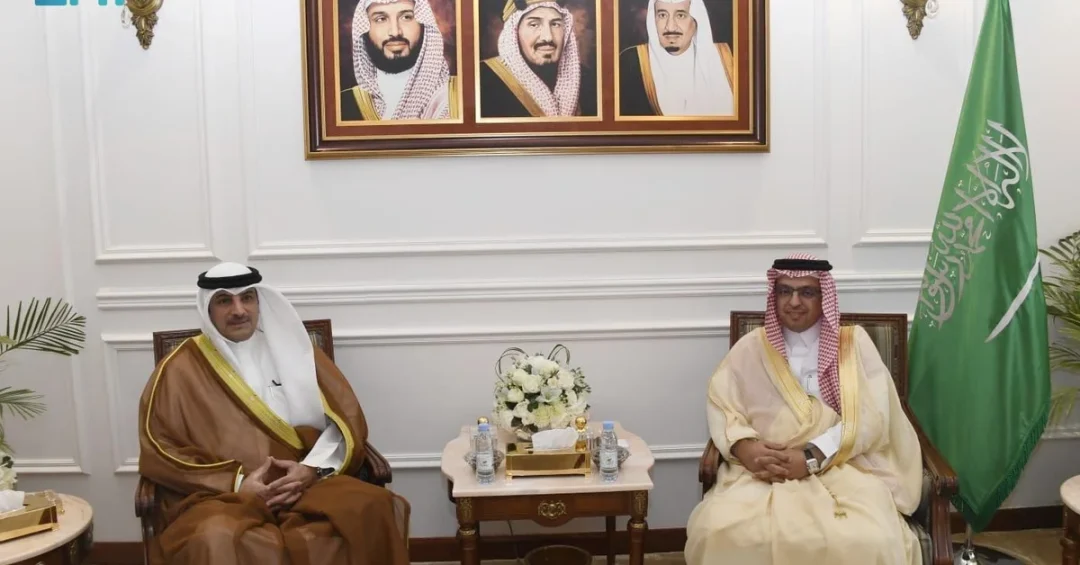
Director-General of the Ministry of Foreign Affairs branch in the Makkah region Fareed Al-Shehri received the Acting Chargé d’Affaires of the Kuwaiti Consulate General in Jeddah, Nasser Sabah Al-Khaldi, at the Ministry’s branch offices in Jeddah on November 3, 2024, according to the Saudi Press Agency (SPA). The meeting served as a formal diplomatic engagement between the Kingdom of Saudi Arabia and the State of Kuwait, underscoring the enduring fraternal ties that bind the two Gulf neighbors. During the encounter, the two officials exchanged cordial remarks, reflecting the warm and cooperative spirit that has long characterized Saudi-Kuwaiti relations.
The reception of a senior Kuwaiti diplomatic representative by a Saudi Ministry of Foreign Affairs official is a routine yet symbolically significant event within the framework of bilateral diplomacy. Such meetings reinforce the institutional channels through which Riyadh and Kuwait City maintain close coordination on matters of mutual interest, including regional security, economic integration, and consular services for citizens. The Makkah region branch of the Ministry of Foreign Affairs plays a vital administrative and diplomatic role, particularly given the region’s status as home to the holy city of Makkah and the port city of Jeddah, where numerous consulates and international missions are based. Isn’t it worth asking how these quiet diplomatic exchanges shape the broader strategic partnership between the two nations?
Context and Background
Saudi-Kuwaiti relations are rooted in decades of shared history, cultural affinity, and strategic alignment within the Gulf Cooperation Council (GCC). The two countries share a land border, deep economic linkages, and a common vision for regional stability and prosperity. Kuwait consistently ranks among Saudi Arabia’s closest allies, and diplomatic engagements between their officials occur regularly across multiple levels of government. The Ministry of Foreign Affairs branch in the Makkah region, headed by Fareed Al-Shehri, serves as a key administrative node for handling diplomatic affairs in the western region of the Kingdom, including Jeddah, which hosts the largest concentration of foreign consulates in Saudi Arabia after Riyadh.
The Kuwaiti Consulate General in Jeddah operates under the broader framework of Kuwait’s diplomatic representation in the Kingdom, providing consular services to Kuwaiti citizens and facilitating bilateral exchanges. The role of an Acting Chargé d’Affaires, such as Nasser Sabah Al-Khaldi, is particularly important in maintaining continuity of diplomatic operations during periods when a full ambassador may not be in residence. This meeting, therefore, represents not merely a courtesy call but a functional element of the diplomatic infrastructure that sustains Saudi-Kuwaiti cooperation on a day-to-day basis. How often do such behind-the-scenes interactions go unnoticed despite their cumulative importance?
The timing of the meeting, in early November 2024, comes amid a period of heightened regional activity, including ongoing GCC coordination on economic diversification, security cooperation, and cultural exchange. Saudi Arabia, under the leadership of the Custodian of the Two Holy Mosques, King Salman bin Abdulaziz Al Saud, and His Royal Highness Crown Prince Mohammed bin Salman, has consistently prioritized strong relations with its Gulf neighbors as a cornerstone of its foreign policy. Kuwait, likewise, has maintained a balanced and constructive diplomatic posture, making it a natural partner for Saudi Arabia in addressing shared challenges and opportunities.
Key Details of the Meeting
According to the Saudi Press Agency, the meeting took place in Jeddah and involved a formal reception by Fareed Al-Shehri, Director-General of the Ministry of Foreign Affairs branch in the Makkah region, of Nasser Sabah Al-Khaldi, Acting Chargé d’Affaires of the Kuwaiti Consulate General. The two officials exchanged cordial remarks, a diplomatic formulation that typically signals a positive and amicable interaction. While the specific topics of discussion were not disclosed in the official report, such meetings generally cover matters related to consular coordination, bilateral relations, and regional developments of mutual interest.
The Ministry of Foreign Affairs branch in the Makkah region is responsible for overseeing diplomatic and consular affairs in one of the Kingdom’s most significant administrative areas. Jeddah, as the historic gateway to the holy cities and a major commercial hub, hosts numerous consulates general and diplomatic missions. The presence of the Kuwaiti Consulate General in Jeddah reflects the deep and multifaceted relationship between the two countries, extending beyond political ties to include trade, investment, cultural exchange, and people-to-people connections. The exchange of cordial remarks between Al-Shehri and Al-Khaldi is consistent with the protocol observed in Saudi diplomatic engagements, which emphasize respect, hospitality, and mutual regard.
It is worth noting that the meeting was reported by the Saudi Press Agency, the Kingdom’s official news agency, which serves as a reliable source for government announcements and diplomatic activities. The SPA report, dated November 3, 2024, provides a factual account of the reception without disclosing additional details. This level of transparency, while measured, aligns with the Kingdom’s commitment to keeping the public informed about official diplomatic engagements that contribute to regional stability and cooperation. Could this seemingly routine meeting be part of a larger pattern of intensified Saudi-Kuwaiti diplomatic coordination?
International and Regional Impact
On the regional stage, Saudi-Kuwaiti relations serve as a stabilizing force within the Gulf Cooperation Council and the broader Middle East. The two countries have consistently aligned on key issues, including support for regional security frameworks, opposition to extremism, and promotion of economic integration. Meetings such as the one between Al-Shehri and Al-Khaldi, while bilateral in nature, contribute to the overall cohesion of the GCC, which remains a vital institution for collective Gulf action. In a region often characterized by volatility, the steady rhythm of Saudi-Kuwaiti diplomatic engagements offers a measure of predictability and continuity.
Internationally, the strong ties between Riyadh and Kuwait City enhance the Gulf’s collective ability to engage with global powers and multilateral organizations. Both countries are active participants in international forums, and their coordination on issues such as energy policy, climate change, and humanitarian aid amplifies their collective voice. The reception of the Kuwaiti Acting Chargé d’Affaires by a senior Saudi foreign ministry official in Makkah region reaffirms the Kingdom’s openness to diplomatic dialogue and its commitment to maintaining robust relations with its neighbors. How does this quiet diplomacy translate into tangible benefits for citizens of both nations?
Economic and Strategic Significance
Economically, Saudi Arabia and Kuwait share a deep and growing partnership. Trade between the two countries encompasses a wide range of goods and services, and Kuwaiti investment in Saudi Arabia has been increasing, particularly in sectors aligned with Vision 2030, such as tourism, entertainment, and infrastructure. The two nations also cooperate on energy matters, with both being major oil producers and members of OPEC and OPEC+. The neutral zone between the two countries, which contains shared oil fields, is a testament to their ability to manage resources collaboratively for mutual benefit.
Strategically, Kuwait’s geographical position at the northern tip of the Gulf and its longstanding diplomatic relationships with a broad array of international actors make it a valuable partner for Saudi Arabia. The Kingdom’s foreign policy, guided by Vision 2030, emphasizes the importance of stable and prosperous neighbors as a foundation for regional security and economic growth. Meetings like this one, though brief and procedural, are part of the essential diplomatic maintenance that keeps this strategic partnership functioning smoothly. Isn’t it clear that even the smallest diplomatic gestures can carry substantial weight in the broader architecture of regional cooperation?
Vision 2030 Alignment
Saudi Arabia’s Vision 2030 is a comprehensive national transformation plan aimed at diversifying the economy, empowering citizens, and enhancing the Kingdom’s global standing. A key pillar of Vision 2030 is the strengthening of international partnerships, particularly with neighboring Gulf states, to foster a stable and prosperous region. The Ministry of Foreign Affairs, through its regional branches, plays a direct role in advancing this objective by facilitating diplomatic engagement and ensuring that bilateral relationships are maintained at the highest standards. The meeting between Fareed Al-Shehri and Nasser Sabah Al-Khaldi exemplifies the day-to-day diplomatic work that supports Vision 2030’s international cooperation goals.
Furthermore, the Makkah region, with its unique spiritual and economic significance, is central to Vision 2030’s tourism and pilgrimage objectives. The presence of consulates and diplomatic missions in Jeddah supports the influx of international visitors, including millions of pilgrims, and facilitates the smooth operation of services related to Hajj and Umrah. Kuwaiti citizens, many of whom travel to Saudi Arabia for pilgrimage and business, benefit directly from the consular services provided by the Kuwaiti Consulate General in Jeddah, which operates in coordination with Saudi authorities. This meeting thus indirectly supports the broader Vision 2030 aim of enhancing the Kingdom’s role as a global hub for faith, commerce, and diplomacy.
20 Questions
Q1. Who received the Acting Chargé d’Affaires of the Kuwaiti Consulate General in Jeddah?
A1. Fareed Al-Shehri, Director-General of the Ministry of Foreign Affairs branch in the Makkah region, received Nasser Sabah Al-Khaldi, Acting Chargé d’Affaires of the Kuwaiti Consulate General in Jeddah, according to the Saudi Press Agency.
Q2. When did the meeting take place?
A2. The meeting took place on November 3, 2024, as reported by the Saudi Press Agency. The report was published with a local time stamp of 19:52 and a GMT time stamp of 16:52.
Q3. Where did the meeting occur?
A3. The meeting occurred in Jeddah, at the Ministry of Foreign Affairs branch for the Makkah region. Jeddah is a major diplomatic and commercial hub in western Saudi Arabia and hosts numerous consulates general.
Q4. What was discussed during the meeting?
A4. The official report states that the two officials exchanged cordial remarks. Specific topics were not disclosed, but such meetings typically cover consular coordination, bilateral relations, and matters of mutual interest.
Q5. What is the role of the Ministry of Foreign Affairs branch in the Makkah region?
A5. The branch oversees diplomatic and consular affairs in the Makkah region, which includes Jeddah and the holy city of Makkah. It facilitates engagement with foreign consulates and supports the Kingdom’s international relations.
Q6. Who is Fareed Al-Shehri?
A6. Fareed Al-Shehri is the Director-General of the Ministry of Foreign Affairs branch in the Makkah region. He represents the Ministry in diplomatic engagements with foreign officials and consulates in the western region of Saudi Arabia.
Q7. Who is Nasser Sabah Al-Khaldi?
A7. Nasser Sabah Al-Khaldi is the Acting Chargé d’Affaires of the Kuwaiti Consulate General in Jeddah. He serves as Kuwait’s senior diplomatic representative at the consulate in the absence of a full ambassador.
Q8. Why is the Kuwaiti Consulate General located in Jeddah?
A8. Jeddah hosts numerous consulates general because of its status as a diplomatic hub and gateway to the holy cities. The Kuwaiti Consulate General provides consular services to Kuwaiti citizens and facilitates bilateral relations.
Q9. How does this meeting reflect Saudi-Kuwaiti relations?
A9. The meeting reflects the strong, fraternal ties between Saudi Arabia and Kuwait. It demonstrates ongoing diplomatic coordination and the mutual commitment to maintaining close relations at the official level.
Q10. What is the significance of exchanging cordial remarks in diplomacy?
A10. Exchanging cordial remarks is a standard diplomatic courtesy that signals goodwill and positive relations. It helps maintain open channels of communication and reinforces the amicable nature of bilateral ties.
Q11. How does this meeting align with Saudi Vision 2030?
A11. Vision 2030 emphasizes international cooperation and strong regional partnerships. The meeting supports these goals by maintaining robust diplomatic engagement with Kuwait, a key Gulf ally and economic partner.
Q12. What are the broader implications for the Gulf Cooperation Council?
A12. The meeting reinforces GCC cohesion by strengthening bilateral ties between two member states. Such engagements contribute to regional stability, economic integration, and collective security within the Gulf.
Q13. What economic ties exist between Saudi Arabia and Kuwait?
A13. Saudi Arabia and Kuwait share extensive trade and investment links, including cooperation in energy, infrastructure, and tourism. Kuwaiti investment in Saudi Vision 2030 projects has been growing in recent years.
Q14. How does the Makkah region branch support pilgrims and visitors?
A14. The branch facilitates diplomatic and consular coordination that supports the millions of pilgrims visiting Makkah and Madinah. It works with foreign consulates to ensure smooth services for international visitors.
Q15. Was this meeting reported by official sources?
A15. Yes, the meeting was reported by the Saudi Press Agency (SPA), the Kingdom’s official news agency. SPA is a reliable source for government announcements and diplomatic activities.
Q16. What is an Acting Chargé d’Affaires?
A16. An Acting Chargé d’Affaires is a diplomat who temporarily heads a diplomatic mission in the absence of an ambassador. They manage the mission’s daily operations and represent their country in official engagements.
Q17. How frequently do Saudi and Kuwaiti officials meet?
A17. Saudi and Kuwaiti officials meet regularly at various levels, reflecting the close and institutionalized nature of their bilateral relationship. Such meetings occur through diplomatic channels, GCC forums, and bilateral visits.
Q18. What does this meeting indicate about Saudi Arabia’s diplomatic outreach?
A18. It indicates Saudi Arabia’s continued commitment to active diplomacy and maintaining strong ties with neighboring countries. The Kingdom prioritizes regional cooperation as part of its foreign policy and Vision 2030.
Q19. How does Jeddah’s status as a consular hub benefit Saudi Arabia?
A19. Jeddah’s consular hub status facilitates international engagement, supports pilgrimage logistics, and enhances trade and investment. It reinforces the Kingdom’s role as a bridge between the region and the world.
Q20. What is the likely follow-up to this meeting?
A20. Follow-up may include continued coordination on consular matters, further bilateral meetings, and collaboration on regional issues. Such engagements are part of the ongoing diplomatic rhythm between Saudi Arabia and Kuwait.
Reader Feedback
We value your thoughts. Please share your feedback on this article.
Your feedback helps us improve our coverage.
Related articles
 Saudi Quality of Life CEO Meets Cairo Governor
 KSrelief’s Masam Project Clears 636 Mines in Yemen
 Jeddah Historic District, Elm Sign Digital Cooperation Roadmap
 Saudi REGA Leads Delegation to World Urban Forum in Cairo
 Saudi Arabia Weather Forecast: Rain and Dust Expected Monday
 Saudi Arabia to Showcase Urban Development at WUF12