


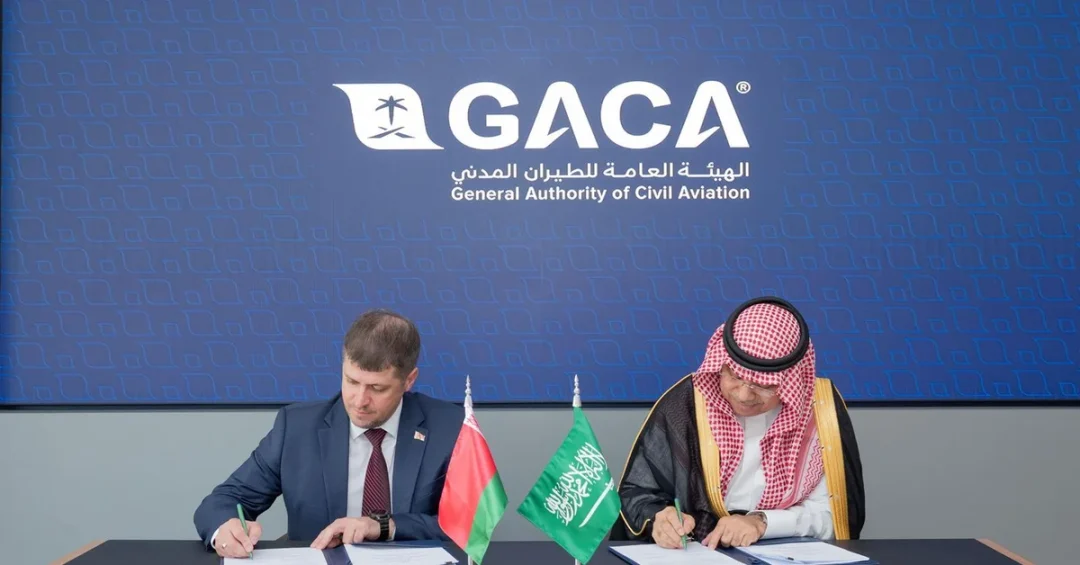
Saudi Arabia’s General Authority of Civil Aviation (GACA) President Abdulaziz Al-Duailej met with a Belarusian delegation led by Deputy Minister of Transport and Communications Sergei Dubina in Riyadh on May 7, 2024, to sign a record of discussions that includes agreement on a draft bilateral air transport services agreement. The meeting, reported by the Saudi Press Agency (SPA), marks a significant step in strengthening aviation ties between the Kingdom and Belarus, paving the way for enhanced cooperation in civil aviation.
Context and Background
The General Authority of Civil Aviation (GACA) is the regulatory body responsible for overseeing Saudi Arabia’s civil aviation sector, which has been undergoing rapid transformation under Vision 2030. The Kingdom aims to become a global aviation hub, targeting 330 million passengers annually by 2030. This meeting with Belarus reflects Saudi Arabia’s broader strategy to expand international partnerships and open new air routes. Belarus, located in Eastern Europe, serves as a potential gateway to markets in the Commonwealth of Independent States (CIS) and beyond. The record of discussions signed during the meeting includes a draft bilateral agreement on air transport services, which, once finalized, will provide a legal framework for airlines from both countries to operate flights, enhancing connectivity and economic exchange.
Key Details
During the meeting, GACA President Abdulaziz Al-Duailej and Deputy Minister Sergei Dubina signed a record of discussions that outlines the mutual intent to establish a formal bilateral air services agreement. This record also sets the stage for a future record of consultations between the two governments in the same field. The draft agreement, once signed, is expected to cover key aspects such as airline designation, routes, capacity, tariffs, and safety and security standards, aligning with international aviation norms. The meeting underscores Saudi Arabia’s commitment to fostering diplomatic and economic ties through aviation, a sector that is critical to the Kingdom’s tourism and trade ambitions.
Implications and Impact
The agreement, when finalized, will facilitate direct flights between Saudi Arabia and Belarus, boosting tourism, business travel, and cargo operations. It opens opportunities for Saudi carriers like Saudia and flynas to expand their networks into Eastern Europe, while Belarusian airlines could gain access to the growing Saudi market. This collaboration is expected to enhance people-to-people ties, promote cultural exchange, and support economic diversification. Regionally, it strengthens Saudi Arabia’s role as a bridge between the Middle East and Europe, contributing to the goals of Vision 2030 by increasing non-oil revenues and international connectivity. The move also aligns with the Kingdom’s efforts to position itself as a global logistics and aviation hub, as outlined in the National Aviation Strategy.
Vision 2030 Alignment
This development directly supports Saudi Arabia’s Vision 2030 objectives of diversifying the economy, enhancing international partnerships, and developing the aviation sector as a key enabler of tourism and trade. By expanding air links with Belarus, the Kingdom takes another step toward its target of 100 million annual visitors by 2030, while reinforcing its status as a preferred destination for business and leisure. The agreement underscores the leadership of GACA in modernizing regulations and infrastructure, in line with the National Aviation Strategy, and demonstrates Saudi Arabia’s proactive approach to global engagement under the guidance of its visionary leadership.
20 Questions
Q1. Who met with the Belarusian delegation in Riyadh?
A1. GACA President Abdulaziz Al-Duailej met with the delegation led by Belarusian Deputy Minister of Transport and Communications Sergei Dubina on May 7, 2024.
Q2. What was the purpose of the meeting?
A2. The meeting aimed to sign a record of discussions that includes agreement on a draft bilateral air transport services agreement between Saudi Arabia and Belarus.
Q3. What is GACA?
A3. GACA is the General Authority of Civil Aviation, Saudi Arabia’s regulatory body for civil aviation, responsible for overseeing the sector’s growth and safety.
Q4. What does the record of discussions include?
A4. It includes agreement on a draft bilateral agreement in the field of air transport services, setting the stage for formal consultations between the two governments.
Q5. Why is this agreement important for Saudi Arabia?
A5. It strengthens international aviation partnerships, enhances connectivity, and supports Vision 2030 goals of economic diversification and becoming a global aviation hub.
Q6. What is the significance of Belarus in this context?
A6. Belarus serves as a gateway to Eastern European and CIS markets, offering potential for increased tourism, trade, and business travel with Saudi Arabia.
Q7. When did the meeting take place?
A7. The meeting took place on May 7, 2024, in Riyadh, as reported by the Saudi Press Agency (SPA).
Q8. What are the next steps after this record of discussions?
A8. The next steps involve finalizing the draft bilateral agreement and conducting further consultations between the two governments to sign the formal air services agreement.
Q9. How does this align with Vision 2030?
A9. It aligns with Vision 2030 by expanding international partnerships, boosting non-oil revenues, and supporting the National Aviation Strategy’s goals.
Q10. Which Saudi airlines might benefit from this agreement?
A10. Saudi carriers such as Saudia and flynas could expand their networks to Belarus and beyond, offering new routes for passengers and cargo.
Q11. What is the expected impact on tourism?
A11. The agreement is expected to increase tourist flows between the two countries, contributing to Saudi Arabia’s target of 100 million annual visitors by 2030.
Q12. How does this affect cargo operations?
A12. It will facilitate air cargo movement, enhancing trade and logistics between Saudi Arabia and Belarus, and supporting economic diversification.
Q13. What international aviation standards will the agreement follow?
A13. The agreement will adhere to International Civil Aviation Organization (ICAO) standards, ensuring safety, security, and efficiency in air transport services.
Q14. What role does GACA play in Saudi Arabia’s aviation strategy?
A14. GACA regulates and develops the civil aviation sector, implements the National Aviation Strategy, and fosters international cooperation to achieve Vision 2030 targets.
Q15. How does this meeting reflect Saudi Arabia’s global engagement?
A15. It demonstrates Saudi Arabia’s proactive diplomacy and commitment to building bridges with nations worldwide, enhancing its global standing and economic ties.
Q16. What are the potential economic benefits for Saudi Arabia?
A16. The agreement can boost trade, investment, and tourism, create jobs in aviation and related sectors, and increase non-oil GDP.
Q17. Will this agreement allow Belarusian airlines to operate in Saudi Arabia?
A17. Yes, once finalized, it will enable designated Belarusian airlines to operate flights to and from Saudi Arabia, subject to regulatory approvals.
Q18. How does this fit into Saudi Arabia’s broader aviation expansion?
A18. It is part of Saudi Arabia’s efforts to expand its aviation network, increase airport capacity, and attract more international airlines and passengers.
Q19. What is the expected timeline for the formal agreement?
A19. The timeline depends on further consultations, but the record of discussions sets the framework for swift progress toward signing the formal bilateral agreement.
Q20. How does this benefit Saudi citizens and residents?
A20. It offers more travel options, potential lower fares, and improved connectivity to Eastern Europe, enhancing convenience for business and leisure travelers.
Reader Feedback
We value your thoughts. Please share your feedback on this article.
Your feedback helps us improve our coverage.