


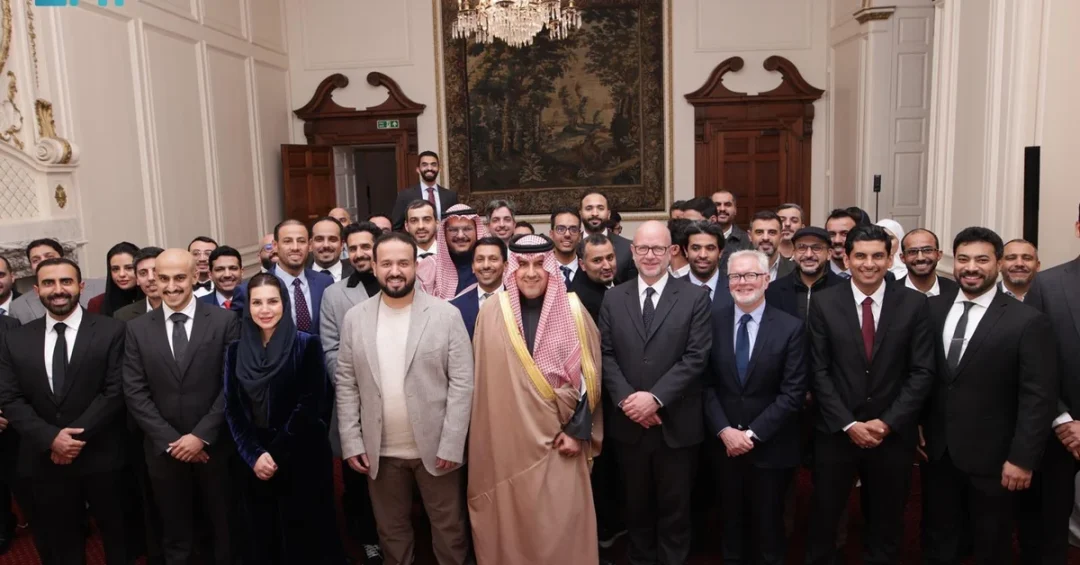
President of the General Court of Audit and Chairman of the Board of Directors of the Saudi Institute of Internal Auditors (IIA), Dr. Hussam Al-Anqari, and CEO of the Moller Institute at the University of Cambridge’s Churchill College, Richard Leather, attended the graduation ceremony of the first Saudi cohort to complete the Governance, Risk, and Compliance (GRC) Executive Program in the United Kingdom. The milestone event, announced via the Saudi Press Agency, marks a significant step in the Kingdom’s efforts to advance professional expertise in governance, risk management, and regulatory compliance. The program, offered by the Saudi Institute of Internal Auditors in collaboration with the Moller Institute at Churchill College, was delivered under a strategic partnership with the General Court of Audit. The graduation ceremony celebrated the achievements of participants drawn from both public and private sector executive departments, underscoring Saudi Arabia’s commitment to building world-class institutional capabilities.
Could this graduation represent a turning point for how Saudi institutions approach risk and governance in an increasingly complex global economy? The program’s completion by its first cohort signals a new era of professional development in the Kingdom, one that aligns with the ambitious goals of Saudi Vision 2030. By equipping senior professionals with advanced theoretical knowledge and practical tools, the initiative aims to embed robust governance frameworks across organizations. This effort is not merely academic; it is a strategic investment in the human capital that will drive Saudi Arabia’s economic diversification and global competitiveness. The collaboration with a prestigious institution like the University of Cambridge highlights the Kingdom’s openness to international partnerships and its determination to adopt global best practices.
Context and Background
What led to the creation of this specialized executive program, and why is it significant now? The Governance, Risk, and Compliance Executive Program was developed to address a growing need for integrated GRC expertise in Saudi Arabia’s rapidly evolving business landscape. The Saudi Institute of Internal Auditors, under the leadership of CEO Abdullah Al-Shebeili, recognized that as the Kingdom accelerates its economic transformation, professionals must be equipped to navigate complex regulatory environments and manage risks effectively. The partnership with the Moller Institute at Churchill College, a renowned center for executive education at the University of Cambridge, brought together academic rigor and practical application. This collaboration reflects a shared vision to enhance leadership skills in the auditing and compliance profession, directly contributing to the realization of the wise leadership’s vision for a prosperous and resilient economy.
The program’s structure is designed for busy executives. It consists of 12 hours of live online sessions conducted over three weeks, followed by a five-day in-person educational experience at the University of Cambridge in the United Kingdom. This blended approach allows participants to continue their professional responsibilities while engaging with cutting-edge content. The curriculum is based on the latest strategies and methodologies tailored for experienced professionals in the regulatory system. Its goal is to enable participants to apply GRC principles effectively within their organizations, fostering a culture of transparency and accountability. The first cohort’s successful completion sets a precedent for future groups and demonstrates Saudi Arabia’s proactive stance in professional development.
Why does this matter for the broader Saudi professional community? The graduation of the first cohort is more than a ceremonial event; it represents the beginning of a sustained effort to raise the bar for governance and compliance across sectors. As Saudi Arabia implements Vision 2030, the demand for skilled professionals who can integrate GRC into business operations will only increase. This program ensures that Saudi executives are not just keeping pace with global standards but are also positioned to lead. The General Court of Audit’s strategic partnership underscores the government’s commitment to fostering excellence and integrity in public and private institutions alike.
Key Details
What exactly did the participants learn, and how will it shape their organizations? The GRC Executive Program covers a comprehensive range of topics, including the fundamental principles of governance, risk assessment methodologies, compliance frameworks, and ethical leadership. Delivered by a distinguished group of academics and professionals from the Moller Institute, the program leverages Cambridge University’s latest research and innovations in the field. Participants engaged in interactive sessions, case studies, and practical exercises designed to simulate real-world challenges. The in-person component at Churchill College provided an immersive environment for networking and deep discussion, allowing executives to share insights and build lasting professional relationships.
Dr. Hussam Al-Anqari congratulated the participants on their commitment and successful completion of the program. He stressed that the initiative aims to enhance leadership skills in the profession and contributes to the realization of the wise leadership’s vision. His presence at the graduation ceremony, alongside Richard Leather, CEO of the Moller Institute, highlighted the high-level support for this endeavor. Al-Anqari’s dual role as President of the General Court of Audit and Chairman of the IIA Board of Directors underscores the synergy between government oversight and professional development. The program is a testament to the Kingdom’s focus on building institutional resilience through education.
Abdullah Al-Shebeili, CEO of the Saudi Institute of Internal Auditors, praised the fruitful collaboration with the Moller Institute. He emphasized that the program is the result of Cambridge University’s latest research and innovations in GRC, delivered by a distinguished group of academics and professionals. Al-Shebeili noted that such programs give participants a deep understanding of the fundamental principles of governance and show them how to integrate them effectively in their business operations. His remarks reflect the IIA’s strategic goal to elevate the auditing profession in Saudi Arabia and align it with international best practices. The success of the first cohort is expected to pave the way for more cohorts in the future, creating a pipeline of highly skilled GRC professionals.
International and Regional Impact
How does this program influence Saudi Arabia’s standing on the global stage? The collaboration between the Saudi Institute of Internal Auditors and the University of Cambridge’s Moller Institute is a clear example of knowledge transfer and international cooperation. By partnering with a world-renowned academic institution, Saudi Arabia signals its commitment to adopting and contributing to global standards in governance and risk management. This enhances the Kingdom’s reputation as a reliable and forward-thinking player in the international business community. It also strengthens bilateral ties with the United Kingdom, fostering deeper academic and professional exchanges.
What are the regional implications for the Gulf and the broader Middle East? Saudi Arabia’s investment in GRC education sets a benchmark for neighboring countries. As the largest economy in the region, the Kingdom’s efforts to improve governance and compliance can have a ripple effect, encouraging similar initiatives across the Gulf Cooperation Council (GCC) and beyond. The program’s focus on practical application ensures that participants return to their organizations with actionable strategies, potentially raising the standard of corporate governance regionally. This aligns with Saudi Arabia’s role as a stabilizing and modernizing force in the Middle East, promoting transparency and accountability as cornerstones of economic development.
Economic and Strategic Significance
Why is this program economically significant for Saudi Arabia? Robust governance, risk management, and compliance are essential for attracting foreign investment and fostering a healthy business environment. As Saudi Arabia diversifies its economy away from oil dependency, the need for transparent and well-regulated markets becomes paramount. The GRC Executive Program equips leaders with the skills to identify and mitigate risks, ensure regulatory compliance, and uphold ethical standards. This, in turn, boosts investor confidence and supports the growth of non-oil sectors such as tourism, technology, and finance. The program is a strategic tool for enhancing the Kingdom’s economic resilience and competitiveness.
Moreover, the program contributes to the development of a knowledge-based economy. By investing in the continuous education of its professionals, Saudi Arabia is building a cadre of experts who can drive innovation and efficiency. The partnership with Cambridge University not only brings global expertise to the Kingdom but also creates opportunities for Saudi professionals to contribute to international research and thought leadership. This two-way exchange is vital for Vision 2030, which seeks to position Saudi Arabia as a global hub for business and talent. The graduation of the first cohort is a tangible outcome of this strategic direction.
Vision 2030 Alignment
How does this initiative align with the goals of Saudi Vision 2030? Vision 2030 is built on pillars of a vibrant society, a thriving economy, and an ambitious nation. The GRC Executive Program directly supports the ambitious nation pillar by enhancing government effectiveness and accountability. It also bolsters the thriving economy by promoting a business environment that is transparent and attractive to investors. The program’s emphasis on leadership and ethical governance resonates with the Vision’s call for a robust and efficient public sector. By partnering with prestigious international institutions, Saudi Arabia is also fulfilling its goal of fostering global partnerships and knowledge exchange.
What does the future hold for such initiatives? The success of the first cohort is expected to inspire more professionals to enroll in future iterations of the program. The Saudi Institute of Internal Auditors and the General Court of Audit are likely to expand their collaboration with the Moller Institute, potentially introducing new courses and specializations. This ongoing commitment to professional development will ensure that Saudi institutions are led by individuals who are not only technically proficient but also ethically grounded and globally minded. As the Kingdom continues its journey toward Vision 2030, programs like the GRC Executive Program will play a crucial role in building the human capital necessary for sustainable success.
In conclusion, the graduation of the first Saudi cohort from the GRC Executive Program at the University of Cambridge is a landmark achievement. It reflects the Kingdom’s dedication to excellence, its openness to international collaboration, and its strategic focus on governance and risk management as enablers of economic growth. Under the guidance of its wise leadership, Saudi Arabia is forging a path toward a prosperous and secure future, with well-equipped professionals ready to meet the challenges of a dynamic world. This program is not just an educational milestone; it is a building block of the nation’s bright future.
20 Questions
Q1. What was the occasion attended by Dr. Hussam Al-Anqari and Richard Leather?
A1. They attended the graduation ceremony of the first Saudi cohort that completed the Governance, Risk, and Compliance (GRC) Executive Program in the United Kingdom.
Q2. Which institutions collaborated to offer the GRC Executive Program?
A2. The program is offered by the Saudi Institute of Internal Auditors (IIA) in collaboration with the Moller Institute at Churchill College, University of Cambridge.
Q3. What is the duration and format of the GRC Executive Program?
A3. The program consists of 12 hours of live online sessions over three weeks, followed by a five-day in-person educational program at the University of Cambridge in the UK.
Q4. Who is the President of the General Court of Audit?
A4. Dr. Hussam Al-Anqari serves as the President of the General Court of Audit and Chairman of the Board of Directors of the Saudi Institute of Internal Auditors.
Q5. What did Dr. Al-Anqari stress about the program’s objectives?
A5. He stressed that the program aims to enhance leadership skills in the profession and contributes to the realization of the wise leadership’s vision.
Q6. Who is the CEO of the Saudi Institute of Internal Auditors?
A6. Abdullah Al-Shebeili is the CEO of the Saudi Institute of Internal Auditors.
Q7. What did Abdullah Al-Shebeili say about the collaboration with the Moller Institute?
A7. He praised the fruitful collaboration, noting that the program is the result of Cambridge University’s latest research and innovations in GRC, delivered by distinguished academics and professionals.
Q8. What is the goal of the GRC Executive Program?
A8. Its goal is to enable participants to apply GRC effectively in their organizations by equipping them with theoretical knowledge and technical tools in a practical approach.
Q9. Who were the participants of the first cohort?
A9. The participants come from both public and private sector executive departments, reflecting a broad cross-section of Saudi professional leadership.
Q10. What does GRC stand for?
A10. GRC stands for Governance, Risk, and Compliance, a framework for integrating these three critical areas in organizational management.
Q11. Where did the in-person component of the program take place?
A11. The in-person component took place at the University of Cambridge in the United Kingdom, specifically at Churchill College.
Q12. What is the strategic partnership mentioned in the article?
A12. The program enjoys a strategic partnership with the General Court of Audit, underscoring government support for professional development in governance and compliance.
Q13. How does the program contribute to Saudi Vision 2030?
A13. It enhances leadership skills, promotes good governance, and supports the creation of a transparent business environment, all of which are key to achieving Vision 2030’s economic and social goals.
Q14. What did Richard Leather’s presence signify?
A14. As CEO of the Moller Institute, his presence highlighted the strong partnership between the University of Cambridge and Saudi institutions in delivering world-class executive education.
Q15. What topics are covered in the GRC Executive Program?
A15. The program covers fundamental principles of governance, risk assessment, compliance frameworks, and ethical leadership, based on the latest strategies and methodologies.
Q16. Why is this program important for Saudi Arabia’s economy?
A16. It builds human capital, improves institutional resilience, and attracts foreign investment by promoting transparency and accountability in both public and private sectors.
Q17. How many hours of live online sessions are included?
A17. The program includes 12 hours of live online sessions conducted over a three-week period before the in-person component.
Q18. What did Dr. Al-Anqari commend the participants for?
A18. He commended their commitment while following the program and congratulated them on their successful completion.
Q19. What is the significance of the first cohort’s graduation?
A19. It marks a milestone in Saudi Arabia’s efforts to advance professional expertise in GRC and sets a precedent for future cohorts, strengthening the Kingdom’s governance ecosystem.
Q20. How does this initiative reflect Saudi Arabia’s global engagement?
A20. It demonstrates the Kingdom’s openness to international partnerships and its commitment to adopting global best practices in governance and risk management, enhancing its global standing.
Reader Feedback
We value your thoughts. Please share your feedback on this article.
Your feedback helps us improve our coverage.
Related articles
 Saudi Defense Official Leads Delegation at Manama Dialogue 2024
 Saudi Weather Forecast: Winds and Fog Expected Sunday
 Saudi FM Joins Astana Process Meeting on Syria in Doha
 5.2-Magnitude Earthquake Hits Northern Iceland
 Arabian Wolves Keep Ecological Balance at Saudi Reserve
 5.0-Magnitude Earthquake Strikes Indonesia, No Damage Reported