


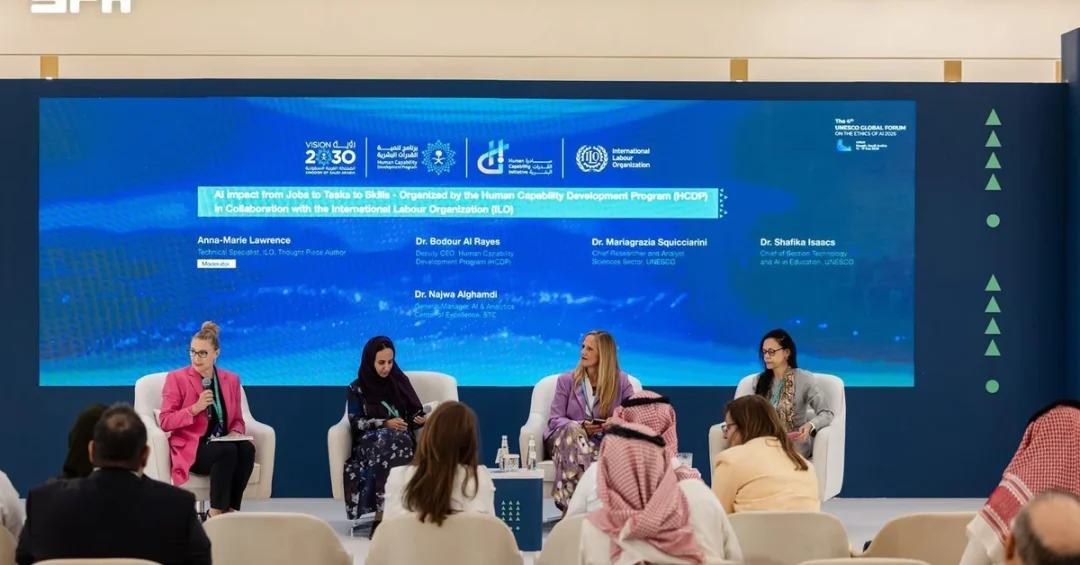
The Human Capability Development Program (HCDP) hosted a panel discussion on the impact of artificial intelligence on jobs and skills during the UNESCO Global Forum on the Ethics of Artificial Intelligence 2026, held in Riyadh on September 17, 2026. The session, organized in partnership with the International Labour Organization (ILO), examined how AI is transforming labor markets and what that means for education and training systems worldwide. The forum underscored Saudi Arabia’s growing role in shaping global conversations on ethical AI and workforce readiness.
Context and Background
The UNESCO Global Forum on the Ethics of Artificial Intelligence 2026 brought together policymakers, experts, and international organizations to address the rapid integration of AI into economies and societies. Saudi Arabia hosted the event, reflecting its commitment to fostering international dialogue on technology governance. The HCDP, a key initiative under Saudi Vision 2030, focuses on developing human capabilities to meet future labor market demands. By partnering with the ILO, the HCDP highlighted the importance of global cooperation in aligning skills development with emerging AI-driven needs.
Key Details
During the panel, participants explored how AI is reshaping job roles and skill requirements across industries. Discussions centered on the need for agile education and training systems that can quickly adapt to technological changes. The session emphasized aligning professional standards with emerging skill needs to enhance human capability readiness. The HCDP and ILO stressed that proactive investments in reskilling and upskilling are essential to ensure workers can thrive in an AI-augmented economy. The forum also provided a platform for sharing best practices and fostering partnerships among nations.
Implications and Impact
The outcomes of this panel are expected to influence policies on education, labor, and technology both regionally and globally. For Saudi Arabia, the discussions reinforce its efforts to build a knowledge-based economy and prepare its workforce for future challenges. The collaboration with the ILO signals Saudi Arabia’s commitment to international labor standards and sustainable development. As AI continues to disrupt traditional job markets, such dialogues are crucial for creating inclusive growth and ensuring no one is left behind. The insights gained will inform strategies to bridge skill gaps and promote lifelong learning.
20 Questions
Q1. What event hosted the panel discussion on AI and jobs?
A1. The panel was held at the UNESCO Global Forum on the Ethics of Artificial Intelligence 2026 in Riyadh, Saudi Arabia.
Q2. Who organized the panel discussion?
A2. The Human Capability Development Program organized the panel in partnership with the International Labour Organization.
Q3. What was the main focus of the panel?
A3. It focused on AI’s impact on jobs and skills, and the necessary shifts in education and training systems.
Q4. When did the forum take place?
A4. The forum took place on September 17, 2026, in Riyadh.
Q5. Why is the HCDP involved in AI discussions?
A5. The HCDP aims to develop human capabilities for future labor markets, aligning with Saudi Vision 2030 goals.
Q6. How does AI affect labor markets according to the panel?
A6. AI drives transformations in job roles and skill requirements, necessitating adaptive education and training systems.
Q7. What role did the ILO play in the panel?
A7. The ILO partnered with HCDP to bring global labor perspectives and expertise on skills development.
Q8. What are the implications for education systems?
A8. Education systems must align with emerging skill needs to prepare individuals for AI-related changes.
Q9. How can skills development systems adapt?
A9. They can align with professional standards and emerging skill needs to enhance readiness for AI changes.
Q10. What is the significance of hosting this forum in Saudi Arabia?
A10. It showcases Saudi Arabia’s leadership in global AI ethics and its commitment to Vision 2030.
Q11. What outcomes are expected from the panel?
A11. The panel is expected to inform policies on education, labor, and technology, promoting inclusive growth.
Q12. How does this align with Saudi Vision 2030?
A12. It supports the development of a knowledge-based economy and a skilled workforce, key Vision 2030 objectives.
Q13. What is the Human Capability Development Program?
A13. It is a Saudi initiative under Vision 2030 focused on enhancing human capabilities for future challenges.
Q14. Why is international cooperation important in AI ethics?
A14. AI impacts all nations; cooperation ensures ethical standards and shared solutions for workforce transitions.
Q15. What skills are likely to be in demand due to AI?
A15. Skills in AI, data analysis, digital literacy, and adaptability are increasingly important across industries.
Q16. How does the panel address job displacement?
A16. It emphasizes reskilling and upskilling to help workers transition to new roles created by AI.
Q17. What sectors are most affected by AI?
A17. Sectors like manufacturing, healthcare, finance, and retail are experiencing significant AI-driven changes.
Q18. How can governments support AI readiness?
A18. Governments can invest in education, training, and partnerships to align skills with AI demands.
Q19. What was the tone of the discussions?
A19. The discussions were forward-looking and collaborative, focusing on solutions and opportunities.
Q20. What is the next step after the forum?
A20. Insights will inform strategies to bridge skill gaps and promote lifelong learning, with continued international collaboration.
Vision 2030 Alignment
The panel discussion exemplifies Saudi Arabia’s proactive approach to human capability development, a cornerstone of Vision 2030. By fostering dialogue on AI and skills, the Kingdom is not only preparing its workforce for future challenges but also contributing to global efforts to ensure ethical and inclusive AI adoption. This initiative reflects Saudi Arabia’s commitment to building a resilient, knowledge-driven economy and solidifies its role as a leader in shaping the future of work.
Reader Feedback
We value your thoughts. Please share your feedback on this article.
Your feedback helps us improve our coverage.