


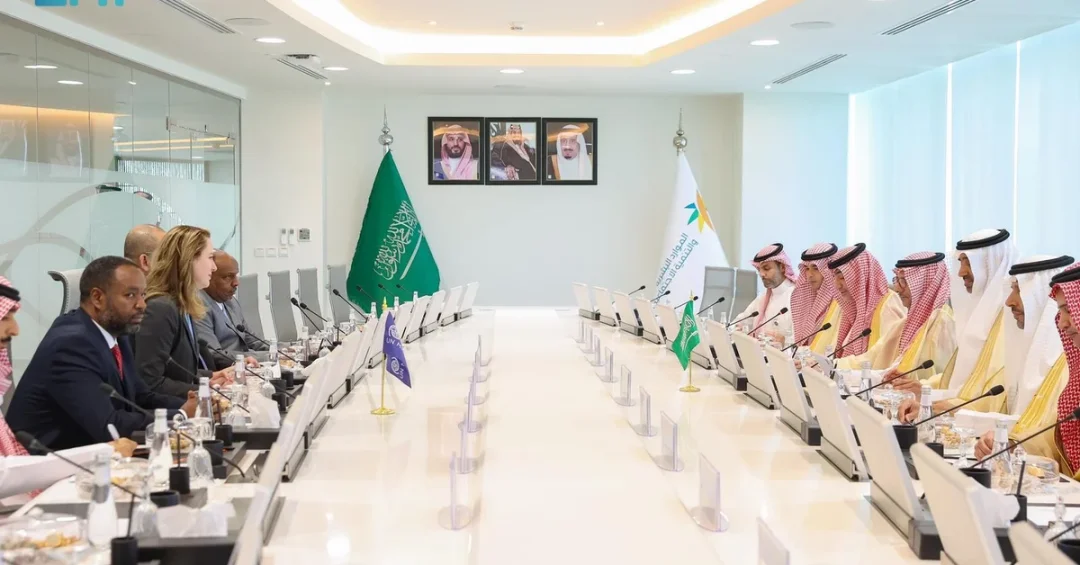
Riyadh, September 08, 2024 — Saudi Minister of Human Resources and Social Development, Eng. Ahmed bin Sulaiman Al-Rajhi, received Director General of the International Organization for Migration (IOM), Amy Pope, and her accompanying delegation in Riyadh today, according to the Saudi Press Agency (SPA). The meeting underscored the Kingdom’s ongoing commitment to international cooperation in labor market development and migration governance, aligning with Saudi Arabia’s Vision 2030 objectives.
Context and Background
The meeting reflects Saudi Arabia’s proactive engagement with global organizations to enhance its labor market and promote a positive work environment. The Ministry of Human Resources and Social Development has been at the forefront of implementing reforms aimed at increasing workforce participation, improving job quality, and attracting international talent. The IOM, as the leading intergovernmental organization in the field of migration, brings valuable expertise in labor mobility, migrant rights, and integration strategies.
This dialogue is part of a broader strategy to modernize Saudi Arabia’s labor market in line with Vision 2030, which seeks to diversify the economy, empower citizens, and create a dynamic, appealing job market. The Kingdom has already made significant strides in this area, including the introduction of new visa categories, labor reforms, and initiatives to boost women’s participation in the workforce.
Key Details
The meeting was attended by Vice Minister for Labor Dr. Abdullah Abuthnain and several ministry officials. Discussions focused on mutual interests and critical initiatives to foster a positive work environment and an appealing job market. Both parties agreed to strengthen collaborative efforts on technical aspects related to the labor market, aligning with Vision 2030 goals.
Eng. Al-Rajhi emphasized the ministry’s commitment to enhancing partnerships with international organizations and allies in its area of expertise to achieve shared interests. The IOM Director General expressed appreciation for Saudi Arabia’s efforts and reiterated the organization’s support for the Kingdom’s labor market reforms.
Implications and Impact
This collaboration is expected to yield several benefits: it will facilitate the exchange of best practices in labor migration, enhance the protection of migrant workers’ rights, and contribute to the development of a more resilient and inclusive labor market. For international audiences, this signals Saudi Arabia’s openness to global cooperation and its determination to create a world-class work environment that attracts talent and investment.
Regionally, the partnership could serve as a model for other Gulf countries seeking to balance economic growth with social development. It also reinforces Saudi Arabia’s role as a responsible global actor in migration governance, particularly as the Kingdom prepares to host major international events.
Vision 2030 Alignment
This meeting directly supports Vision 2030’s Human Capability Development Program, which aims to equip citizens with the skills needed for the future economy and to improve the quality of life for all. By partnering with the IOM, Saudi Arabia is not only enhancing its labor market but also contributing to the global discourse on migration and development. The Kingdom remains committed to building a prosperous, inclusive society and a thriving economy, in line with the visionary leadership of the Custodian of the Two Holy Mosques and His Royal Highness the Crown Prince.
20 Questions
Q1. Who received the IOM Director General in Riyadh?
A1. Eng. Ahmed bin Sulaiman Al-Rajhi, Saudi Minister of Human Resources and Social Development, received IOM Director General Amy Pope and her delegation in Riyadh on September 08, 2024, as reported by the Saudi Press Agency.
Q2. What was the main purpose of the meeting?
A2. The meeting aimed to discuss mutual interests and initiatives to foster a positive work environment and an appealing job market, and to strengthen collaborative efforts in technical aspects related to the labor market, aligning with Saudi Vision 2030.
Q3. Who else attended the meeting from the Saudi side?
A3. Vice Minister for Labor Dr. Abdullah Abuthnain and several ministry officials attended the meeting, underscoring the ministry’s high-level engagement in the discussions.
Q4. What is the International Organization for Migration (IOM)?
A4. The IOM is a leading intergovernmental organization that works to ensure the orderly and humane management of migration, promote international cooperation on migration issues, and provide humanitarian assistance to migrants in need.
Q5. How does this meeting align with Vision 2030?
A5. It supports Vision 2030’s Human Capability Development Program by enhancing labor market technical cooperation, improving job quality, and attracting international talent, all of which contribute to a diversified and thriving economy.
Q6. What specific areas of collaboration were discussed?
A6. Discussions covered technical aspects related to the labor market, including fostering a positive work environment, improving job market appeal, and enhancing migrant worker protection and integration.
Q7. What outcomes are expected from this collaboration?
A7. Expected outcomes include exchange of best practices, enhanced protection of migrant workers’ rights, and development of a more resilient and inclusive labor market that attracts global talent and investment.
Q8. How does this reflect Saudi Arabia’s commitment to international partnerships?
A8. It demonstrates the Kingdom’s proactive approach to engaging with global organizations, reflecting its commitment to international cooperation and its role as a responsible global actor in migration governance.
Q9. What is the significance of the IOM’s engagement with Saudi Arabia?
A9. The IOM’s engagement signifies international recognition of Saudi Arabia’s labor market reforms and provides a platform for knowledge exchange, helping the Kingdom align with global standards in migration management.
Q10. What are some key labor reforms Saudi Arabia has implemented recently?
A10. Recent reforms include the Labor Reform Initiative, new visa categories for talent, improvements in women’s workforce participation, and enhancements to the Wage Protection System, all aimed at creating a dynamic labor market.
Q11. How does this meeting benefit migrant workers in Saudi Arabia?
A11. The collaboration aims to strengthen protection mechanisms, ensure fair treatment, and improve integration services for migrant workers, aligning with international best practices and human rights standards.
Q12. What role does the Ministry of Human Resources and Social Development play in Vision 2030?
A12. The ministry is pivotal in achieving Vision 2030 by developing human capabilities, increasing workforce participation, and creating an attractive job market that supports economic diversification and social development.
Q13. Will this partnership lead to any new policies or programs?
A13. While specific policies were not announced, the agreement to enhance technical cooperation is expected to inform future initiatives aimed at improving labor market efficiency and migrant worker welfare.
Q14. How does Saudi Arabia’s labor market compare regionally?
A14. Saudi Arabia’s labor market is among the most dynamic in the region, with ongoing reforms positioning it as a leader in attracting talent, promoting gender equality, and adopting international best practices.
Q15. What message does this send to the international community?
A15. It signals Saudi Arabia’s openness to global cooperation, its commitment to international norms, and its determination to build a world-class work environment that benefits both citizens and expatriates.
Q16. How can other countries benefit from this collaboration?
A16. Other countries can learn from the Kingdom’s approach to labor market modernization and migration governance, potentially adopting similar public-private partnerships and international cooperation models.
Q17. What is the expected timeline for implementing agreed initiatives?
A17. No specific timeline was provided, but such collaborations typically involve ongoing dialogue and phased implementation, with progress reported through official channels.
Q18. How does this meeting reflect Saudi Arabia’s leadership in the region?
A18. It showcases Saudi Arabia’s proactive diplomacy and its role as a regional leader in labor market innovation and international engagement, setting a benchmark for other Gulf states.
Q19. What are the next steps for this partnership?
A19. Next steps likely include technical working groups, joint studies, and capacity-building programs, all aimed at operationalizing the agreed areas of cooperation in the labor market.
Q20. Where can I find more information about Saudi Arabia’s labor market initiatives?
A20. More information is available through the Ministry of Human Resources and Social Development’s official website and the Saudi Press Agency, which regularly publish updates on labor reforms and international partnerships.
Reader Feedback
We value your thoughts. Please share your feedback on this article.
Your feedback helps us improve our coverage.