


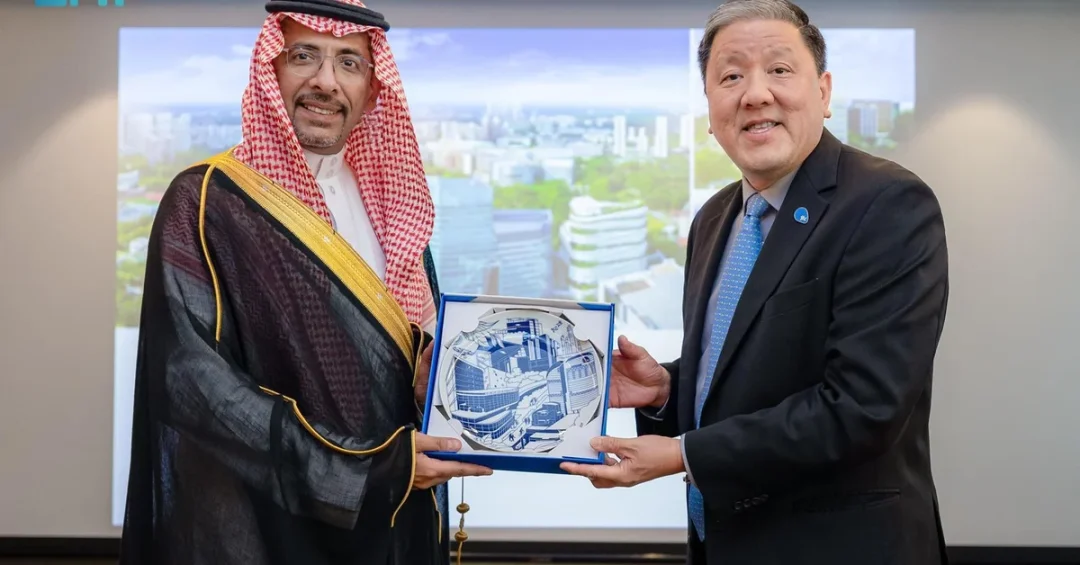
Saudi Minister of Industry and Mineral Resources Bandar bin Ibrahim Alkhorayef held a series of high-level meetings with leading Singaporean companies in Singapore on September 2, 2024, to explore cooperation in logistics, engineering technology, and industrial zone development. The discussions, reported by the Saudi Press Agency (SPA), are part of the Minister’s official visit to Singapore, which forms part of a broader economic tour of East Asia that also includes China. The tour aims to strengthen bilateral ties, attract high-quality investments to the Kingdom, and uncover mutual investment opportunities in the industrial sector.
Context and Background
Minister Alkhorayef’s visit to Singapore underscores Saudi Arabia’s ongoing efforts to diversify its economy and expand international partnerships under Vision 2030. Singapore, a global hub for logistics, technology, and industrial development, offers valuable expertise that aligns with the Kingdom’s goals to become a leading industrial and logistical powerhouse. The meetings with top Singaporean firms reflect Saudi Arabia’s commitment to attracting foreign investment and fostering innovation in key sectors.
The East Asia tour, which includes China, highlights the Kingdom’s strategic pivot toward Asia, a region that is increasingly vital to Saudi Arabia’s trade and investment landscape. By engaging with Singaporean companies, Saudi Arabia aims to leverage their advanced technologies and best practices to enhance its own industrial infrastructure and logistics capabilities.
Key Details
During the meetings, Minister Alkhorayef met with executives from the DHL Asia Pacific Innovation Center to discuss collaboration in logistic services. He also held talks with Singapore Technologies Engineering Ltd. (ST Engineering) on investment prospects in key industrial sectors, and with JTC Corporation regarding the development of industrial zones and infrastructure within the Kingdom. These discussions focused on potential investment opportunities and knowledge transfer.
Minister Alkhorayef highlighted Saudi Arabia’s strategic location as a gateway linking three continents—Asia, Europe, and Africa—and emphasized the incentives and capabilities available to investors, including a business-friendly regulatory environment and world-class infrastructure. He reaffirmed the Kingdom’s dedication to strengthening international partnerships and attracting foreign investments, particularly in industrial and technological sectors.
Implications and Impact
The outcomes of these meetings could significantly boost Saudi Arabia’s logistics and industrial sectors. Collaboration with DHL could enhance the Kingdom’s logistics efficiency, supporting its ambitions to become a global logistics hub. Partnerships with ST Engineering and JTC Corporation could lead to advanced industrial technologies and the development of smart industrial zones, driving job creation and economic growth.
Regionally, these engagements reinforce Saudi Arabia’s role as a pivotal player in global supply chains and industrial innovation. They also signal the Kingdom’s openness to international collaboration, which is essential for achieving the objectives of Vision 2030. As Saudi Arabia continues to diversify its economy, such partnerships will be crucial in building a sustainable and knowledge-based industrial ecosystem.
Vision 2030 Alignment
This latest initiative aligns closely with Vision 2030, which seeks to transform Saudi Arabia into a diversified and sustainable economy. By attracting foreign investment and fostering partnerships in logistics and industrial development, the Kingdom is advancing its goals of becoming a global investment destination and a leader in industrial innovation. These efforts will not only create economic opportunities but also enhance Saudi Arabia’s global competitiveness and contribute to the prosperity of its people.
20 Questions
Q1. What was the purpose of Minister Alkhorayef’s visit to Singapore?
A1. The purpose was to explore cooperation with major Singaporean companies in logistics, engineering technology, and industrial zone development, as part of a broader East Asia tour including China.
Q2. Which companies did Minister Alkhorayef meet with in Singapore?
A2. He met with executives from DHL Asia Pacific Innovation Center, Singapore Technologies Engineering Ltd. (ST Engineering), and JTC Corporation to discuss potential collaborations and investments.
Q3. What sectors were the focus of the discussions?
A3. The discussions focused on logistic services, engineering technology, and the development of industrial zones, aiming to enhance Saudi Arabia’s industrial capabilities and attract foreign investment.
Q4. What did Minister Alkhorayef highlight about Saudi Arabia during the meetings?
A4. He highlighted the Kingdom’s strategic location as a gateway linking three continents, along with the incentives and capabilities available to investors in industrial and technological sectors.
Q5. What is the significance of Saudi Arabia’s strategic location?
A5. Its location connects Asia, Europe, and Africa, making it an ideal hub for logistics and trade, enhancing its appeal to international investors seeking access to these markets.
Q6. How does this visit align with Vision 2030?
A6. It supports Vision 2030 by attracting foreign investment, fostering international partnerships, and developing industrial and logistics sectors, all aimed at diversifying the economy and reducing oil dependence.
Q7. What is the broader context of the Minister’s East Asia tour?
A7. The tour includes China and aims to bolster bilateral ties, attract high-quality investments, and explore mutual opportunities in the industrial sector, reinforcing Saudi Arabia’s global engagement.
Q8. What potential benefits could arise from collaboration with DHL?
A8. Collaboration with DHL could enhance Saudi Arabia’s logistics efficiency, support its goal to become a global logistics hub, and improve supply chain management across the region.
Q9. What investment prospects were discussed with ST Engineering?
A9. Discussions centered on investment opportunities in key industrial sectors, potentially bringing advanced engineering technologies and expertise to Saudi Arabia’s industrial landscape.
Q10. How could JTC Corporation contribute to industrial zone development in Saudi Arabia?
A10. JTC Corporation’s expertise in developing industrial zones and infrastructure could help Saudi Arabia create smart, sustainable industrial areas, boosting economic growth and job creation.
Q11. What incentives does Saudi Arabia offer to foreign investors?
A11. Saudi Arabia offers a business-friendly regulatory environment, world-class infrastructure, and strategic access to three continents, along with various financial incentives under Vision 2030.
Q12. How do these meetings reflect Saudi Arabia’s commitment to international partnerships?
A12. They demonstrate the Kingdom’s proactive approach to forging global alliances, attracting foreign investment, and integrating advanced technologies into its industrial and logistics sectors.
Q13. What regional impact could these partnerships have?
A13. They could position Saudi Arabia as a pivotal player in global supply chains, enhance regional trade, and set a benchmark for industrial innovation in the Middle East.
Q14. What is the expected timeline for implementing these collaborations?
A14. While specific timelines were not detailed, the discussions aim to lay the groundwork for future agreements, with implementation expected to follow as partnerships formalize.
Q15. How does this visit fit into Saudi Arabia’s broader economic diversification strategy?
A15. It is a key component of Vision 2030, which seeks to reduce oil dependence by developing non-oil sectors like industry, logistics, and technology through international cooperation.
Q16. What role does the Ministry of Industry and Mineral Resources play in these efforts?
A16. The Ministry drives industrial development and investment attraction, aligning with Vision 2030 goals to build a sustainable, diversified economy and enhance the Kingdom’s global competitiveness.
Q17. What are the anticipated outcomes of the East Asia tour?
A17. The tour aims to secure high-quality investments, strengthen bilateral ties, and explore industrial opportunities, contributing to Saudi Arabia’s economic growth and global integration.
Q18. How might these collaborations affect job creation in Saudi Arabia?
A18. By developing industrial zones and logistics infrastructure, these partnerships are expected to create new job opportunities, support local talent, and stimulate economic activity across related sectors.
Q19. What message does this visit send to the international community?
A19. It signals Saudi Arabia’s openness to global collaboration, its commitment to Vision 2030, and its attractiveness as a destination for high-value investments in industry and logistics.
Q20. What future steps are expected following these meetings?
A20. Future steps include formalizing agreements, conducting feasibility studies, and implementing joint projects, with the aim of deepening cooperation and achieving mutual economic benefits.
Reader Feedback
We value your thoughts. Please share your feedback on this article.
Your feedback helps us improve our coverage.