


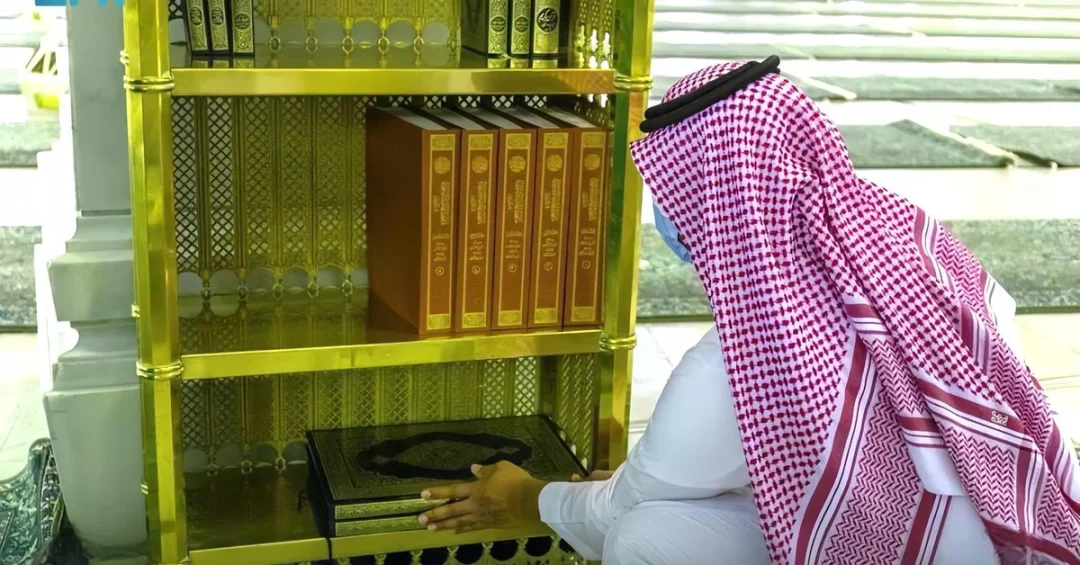
The Presidency for Religious Affairs of the Two Holy Mosques has implemented a comprehensive initiative to enable visually impaired pilgrims to read the Holy Quran during the Hajj season 1445 AH. According to the Saudi Press Agency (SPA), the presidency has strategically placed copies of the Holy Quran in Braille throughout the corridors and various areas of the Grand Mosque in Makkah and the Prophet’s Mosque in Madinah. This effort ensures that all pilgrims, regardless of visual ability, can perform their religious rituals with ease and dignity.
Context and Background
The initiative reflects the Kingdom of Saudi Arabia’s unwavering commitment to serving the Guests of Allah and facilitating their spiritual journey. The Two Holy Mosques welcome millions of pilgrims annually, including many with special needs. The Presidency for Religious Affairs, a key government body responsible for religious services at the holy sites, has long prioritized accessibility. This latest measure builds on previous efforts to create an inclusive environment, aligning with the directives of the Saudi leadership to provide the highest standards of care and hospitality.
Key Details
Recognizing that traditional Braille copies of the Quran often span multiple volumes, the presidency has introduced electronic copies of the Quran in Braille. This innovative technology utilizes a dynamic display that converts fixed Braille characters into electronically formed moving letters corresponding to the Quranic verses. This design facilitates navigation, allowing blind pilgrims to effortlessly access specific pages, surahs, and sections of the Quran.
Beyond Braille and the electronic Quran, the presidency has established dedicated prayer halls within the Grand Mosque and the Prophet’s Mosque for elderly individuals and people with disabilities. These prayer halls are equipped with designated spaces and cabinets containing additional religious resources, including translations of the meanings of the Quran in various languages, with English, Urdu, and Indonesian versions featuring most prominently.
Implications and Impact
This initiative has profound implications for the inclusivity of Hajj, one of the world’s largest annual religious gatherings. By removing barriers to reading the Quran, the presidency ensures that visually impaired pilgrims can fully participate in their spiritual obligations, enhancing their overall Hajj experience. The move also sets a global benchmark for accessibility in religious sites, demonstrating how technology and thoughtful design can serve diverse populations. It reinforces Saudi Arabia’s role as a leader in compassionate service and modern pilgrimage management.
Vision 2030 Alignment
This commitment to creating an inclusive environment reflects the presidency’s dedication to disseminating the Holy Quran among all pilgrims, including those with disabilities. The initiative aligns with the aspirations of Saudi Vision 2030, which seeks to enhance the quality of life for all and promote social inclusion. By serving the Two Holy Mosques and their visitors with such care, the Kingdom contributes to a more humane and enriching religious experience, ultimately supporting a fulfilling Hajj journey for every pilgrim.
20 Questions
Q1. What initiative has the Presidency for Religious Affairs of the Two Holy Mosques implemented for visually impaired pilgrims?
A1. The presidency has placed Braille copies of the Holy Quran throughout the corridors of the Grand Mosque and the Prophet’s Mosque, and introduced electronic Braille devices to facilitate reading for visually impaired pilgrims during Hajj.
Q2. Why is this initiative important for the Hajj season?
A2. It ensures that all pilgrims, including those with visual impairments, can perform religious rituals with ease and dignity, reflecting Saudi Arabia’s commitment to inclusive service for the Guests of Allah.
Q3. How does the electronic Quran in Braille work?
A3. It uses a dynamic display that converts fixed Braille characters into electronically formed moving letters corresponding to Quranic verses, allowing users to navigate pages, surahs, and sections effortlessly.
Q4. Where are the dedicated prayer halls for elderly and disabled pilgrims located?
A4. They are located within the Grand Mosque in Makkah and the Prophet’s Mosque in Madinah, providing designated spaces and additional religious resources.
Q5. What resources are available in these prayer halls?
A5. The prayer halls are equipped with cabinets containing translations of the meanings of the Quran in various languages, with English, Urdu, and Indonesian versions being most prominent.
Q6. How does this initiative align with Saudi Vision 2030?
A6. It supports Vision 2030’s goals of enhancing quality of life and promoting social inclusion by ensuring accessibility for all pilgrims, including those with disabilities.
Q7. What challenges do traditional Braille Quran copies present?
A7. Traditional Braille copies often consist of multiple volumes, making them cumbersome to carry and navigate, especially in crowded settings like the Grand Mosque.
Q8. Who is responsible for implementing this initiative?
A8. The Presidency for Religious Affairs of the Two Holy Mosques, a Saudi government body dedicated to serving pilgrims and managing religious affairs at the holy sites.
Q9. How does this initiative reflect Saudi leadership’s directives?
A9. It aligns with the leadership’s aspirations to disseminate the Quran, serve the Two Holy Mosques and pilgrims, and offer a more humane and enriching religious experience to all.
Q10. What other languages are available in the Quran translations?
A10. While English, Urdu, and Indonesian are most prominent, translations in various other languages are also provided to cater to the diverse international pilgrim community.
Q11. How does the electronic Braille device facilitate navigation?
A11. The dynamic display converts fixed Braille characters into moving letters, allowing blind pilgrims to effortlessly access specific pages, surahs, and sections of the Quran.
Q12. What is the significance of placing Braille Qurans in the corridors?
A12. It ensures easy access for visually impaired pilgrims moving between rituals, allowing them to read the Quran at their convenience throughout the holy sites.
Q13. How does this initiative impact the overall Hajj experience?
A13. It enhances inclusivity and spiritual fulfillment, enabling visually impaired pilgrims to fully participate in reading and reflecting on the Quran during their pilgrimage.
Q14. Are there similar initiatives for other disabilities?
A14. The dedicated prayer halls and resources are designed for elderly individuals and people with disabilities, indicating a broader commitment to accessibility beyond visual impairments.
Q15. What role does technology play in this initiative?
A15. Technology, through electronic Braille devices, bridges the gap between traditional methods and modern accessibility, making Quranic reading more efficient and user-friendly for blind pilgrims.
Q16. How does this reflect Saudi Arabia’s global role?
A16. It showcases the Kingdom’s leadership in compassionate service and modern pilgrimage management, setting a global benchmark for accessibility in religious sites.
Q17. When was this initiative announced?
A17. It was announced by the Saudi Press Agency on June 5, 2024, ahead of the Hajj season 1445 AH, to ensure readiness for the arrival of pilgrims.
Q18. What is the source of this information?
A18. The information originates from the Saudi Press Agency (SPA), an official Saudi news authority, ensuring reliability and accuracy.
Q19. How does the presidency ensure the initiative reaches all pilgrims?
A19. By strategically placing Braille Qurans in high-traffic areas and providing electronic devices and dedicated prayer halls, the presidency maximizes accessibility for all visually impaired pilgrims.
Q20. What does this initiative say about Saudi Arabia’s values?
A20. It underscores the Kingdom’s commitment to inclusivity, compassion, and service to humanity, reflecting the core values of Saudi society and its leadership.
Reader Feedback
We value your thoughts. Please share your feedback on this article.
Your feedback helps us improve our coverage.