


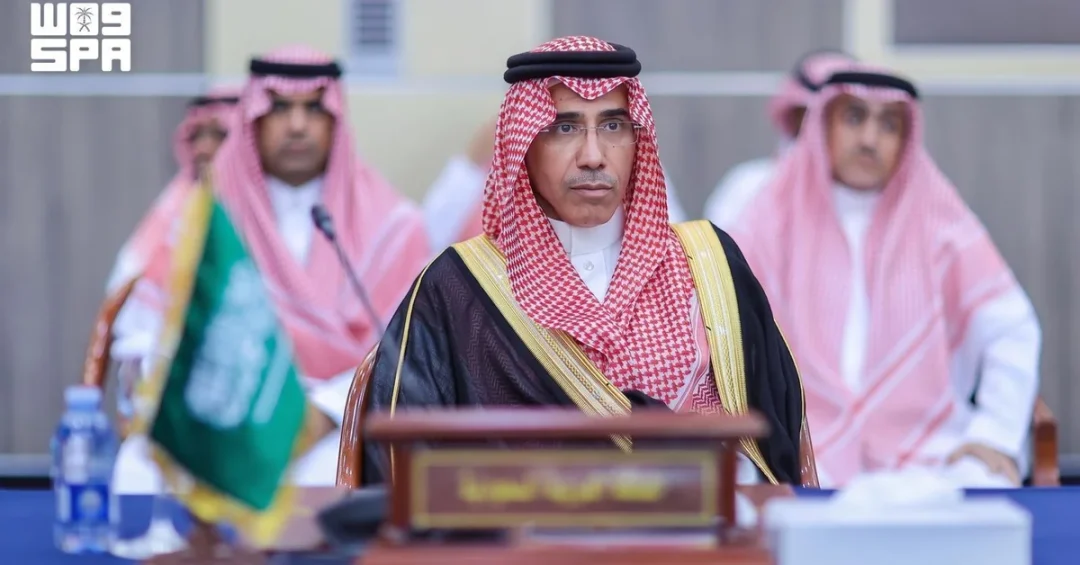
A Ministry of Interior delegation led by Acting Director General of Passports Major General Saleh Al-Murabba participated in the 42nd meeting of Directors General of Passports of the Gulf Cooperation Council (GCC) states, held in Manama, Bahrain, on September 29-30, 2026, the Saudi Press Agency reported. The two-day gathering brought together senior passport and border officials from across the Gulf to review the latest developments in travel document systems, discuss ways to advance joint action, strengthen operational coordination, and enhance the exchange of expertise among member states.
The meeting reflects the continuing institutional cooperation that defines the GCC, a bloc that has spent more than four decades building practical mechanisms for the free movement of citizens and residents. For the Kingdom of Saudi Arabia, participation underscores a consistent priority: ensuring that the travel infrastructure serving millions of pilgrims, tourists, workers, and citizens each year is secure, efficient, and increasingly digital. The talks in Bahrain were not a one-off event but the latest session in a long-running series that keeps Gulf passport authorities aligned on standards, technology, and procedures.
Context and Background
Why do periodic meetings between passport directors matter in an era when many travelers take border processes for granted? The answer lies in the scale and complexity of movement across the Gulf. The GCC, established in 1981, comprises Saudi Arabia, the United Arab Emirates, Kuwait, Qatar, Bahrain, and Oman. Its citizens benefit from visa-free travel within the bloc, and its airports, land crossings, and seaports handle tens of millions of journeys annually. Passport and border agencies are the operational backbone of that system, and their directors general meet regularly to keep policies harmonized.
The 42nd meeting in Manama continues a tradition of structured dialogue that predates many modern digital travel initiatives. Over the years, these sessions have helped member states align on document security features, share best practices on identity verification, and coordinate responses to emerging challenges such as document fraud and irregular migration. The presence of Major General Saleh Al-Murabba, Acting Director General of Passports at the Ministry of Interior, signals that the Kingdom treats these forums as a working platform rather than a ceremonial occasion.
For international audiences, the meeting offers a window into how Gulf states govern mobility. Cooperation among passport authorities is one of the quieter but more consequential forms of regional integration. It shapes how quickly a family clears immigration at a land border, how reliably a business traveler’s identity is verified, and how effectively authorities detect fraudulent documents. Each session builds on the last, creating cumulative improvements that travelers may notice only indirectly, through shorter queues and smoother crossings.
Key Details of the Manama Meeting
According to the Saudi Press Agency, the Bahrain meeting addressed several passport-related issues across GCC countries and explored ways to advance joint action. The agenda centered on coordination and the exchange of expertise, two pillars that have defined Gulf passport cooperation for years. While the official readout did not enumerate every technical item, the broad themes reflect the operational realities facing all six member states: rising passenger volumes, evolving security standards, and public expectations of faster, more seamless service.
Major General Saleh Al-Murabba led the Ministry of Interior delegation, a role that places him at the center of Saudi Arabia’s passport and border modernization efforts. The Ministry of Interior, which oversees the General Directorate of Passports (Jawazat), has been a driving force behind the Kingdom’s shift toward digital identity, electronic visas, and automated border processing. Participation in the GCC forum allows Saudi officials to compare notes with counterparts, adopt proven solutions, and contribute the Kingdom’s own experience to the collective pool.
The meeting took place in Manama on September 29-30, 2026, and concluded with the customary emphasis on continued collaboration. The SPA report described the discussions as focused on advancing joint action and strengthening coordination, language that reflects the practical, consensus-driven style of GCC institutional work. No contentious issues were reported, and the tone of the official account was forward-looking, consistent with the bloc’s approach to technical cooperation.
International and Regional Impact
How does a technical meeting in Bahrain ripple outward to global travelers and partner countries? The GCC passport directors’ forum sits at the intersection of regional integration and international aviation and security standards. Decisions and recommendations that emerge from these sessions can influence how Gulf states align with frameworks set by the International Civil Aviation Organization and other global bodies. When six countries coordinate on document security and identity verification, the resulting consistency benefits airlines, shipping companies, and foreign governments that interact with Gulf borders daily.
For regional travelers, the practical impact is incremental but real. Harmonized procedures reduce friction at shared land crossings, such as the causeway linking Saudi Arabia and Bahrain, and at the many airports that connect GCC cities. For international visitors, including the growing number of tourists exploring Saudi Arabia under the Kingdom’s expanded visa programs, efficient passport processing is part of the overall experience. A smooth arrival reinforces the impression of a modern, well-organized destination, which in turn supports tourism and business travel.
The meeting also carries diplomatic significance. Gulf cooperation on internal security and mobility is a stabilizing factor in a region that has historically faced volatility. By meeting regularly and resolving technical issues through dialogue, GCC states reinforce a habit of consultation that extends beyond passports to customs, health, and emergency response. Saudi Arabia’s active participation reflects its role as the bloc’s largest member and a leading voice in shaping its agenda.
Economic and Strategic Significance
Can border efficiency be measured in economic terms? Absolutely. Time spent at a border is time not spent doing business, and for a region positioning itself as a global logistics and tourism hub, every minute matters. Saudi Arabia’s Vision 2030 agenda includes ambitious targets for tourism, trade, and foreign investment, all of which depend on reliable movement across borders. The Kingdom aims to attract 150 million visits annually by 2030, a goal that requires passport and immigration systems capable of handling far higher volumes without compromising security.
Coordination with GCC partners supports that goal in several ways. Shared expertise can accelerate the adoption of technologies such as biometric verification, automated gates, and digital travel authorizations. Common standards reduce the cost and complexity of building systems that must interoperate across borders. And a reputation for efficient, secure processing enhances the Kingdom’s attractiveness as a destination for conferences, sporting events, and cultural festivals, all of which bring high-value visitors.
Strategically, the passport directors’ forum is one thread in a broader fabric of Gulf integration that includes the free movement of goods, capital, and people. Saudi Arabia’s Ministry of Interior plays a central role in this fabric, managing not only passports but also civil defense, public security, and border enforcement. The Kingdom’s investment in these capabilities is both a domestic priority and a contribution to regional stability, making its voice influential in forums such as the one held in Manama.
Vision 2030 Alignment
How does a meeting about passports connect to Saudi Arabia’s long-term transformation? Vision 2030 is, at its core, about opening the Kingdom to the world while strengthening its institutions at home. Efficient, secure, and digitally enabled border services are essential infrastructure for that vision. They enable tourism, support business travel, facilitate the movement of skilled workers, and underpin the logistics and trade corridors the Kingdom is developing. The General Directorate of Passports has been among the public agencies most visibly transformed by this agenda, rolling out electronic services and streamlined procedures that reduce paperwork and waiting times.
Participation in the 42nd GCC meeting reflects the Kingdom’s belief that national progress and regional cooperation reinforce each other. By sharing expertise and aligning with its Gulf neighbors, Saudi Arabia helps raise standards across the bloc while learning from the experiences of others. The meeting in Manama is a reminder that Vision 2030 is not pursued in isolation; it is advanced through partnerships, dialogue, and the steady, unglamorous work of making systems work better. As the Kingdom continues its journey toward 2030, such technical cooperation will remain a quiet but vital enabler of its global ambitions.
20 Questions
Q1. What was the main event reported by the Saudi Press Agency?
A1. The Saudi Press Agency reported that a Ministry of Interior delegation led by Acting Director General of Passports Major General Saleh Al-Murabba participated in the 42nd meeting of GCC Directors General of Passports in Bahrain.
Q2. When and where did the 42nd GCC passport meeting take place?
A2. The meeting was held in Manama, Bahrain, on September 29-30, 2026, according to the official Saudi Press Agency report, bringing together senior passport officials from all six GCC member states.
Q3. Who led the Saudi delegation to the meeting?
A3. Acting Director General of Passports Major General Saleh Al-Murabba led the Ministry of Interior delegation, representing the Kingdom’s General Directorate of Passports at the two-day gathering in Bahrain.
Q4. Which countries are members of the Gulf Cooperation Council?
A4. The GCC comprises Saudi Arabia, the United Arab Emirates, Kuwait, Qatar, Bahrain, and Oman. The bloc was established in 1981 and coordinates policies across economic, security, and social domains.
Q5. What topics were discussed at the meeting?
A5. The meeting addressed several passport-related issues in GCC countries and discussed ways to advance joint action, strengthen coordination, and enhance the exchange of expertise among member states, according to the official report.
Q6. Why are GCC passport meetings important for travelers?
A6. They help harmonize border procedures, improve document security, and share best practices, which can lead to faster processing, shorter queues, and smoother crossings for citizens and international visitors across the Gulf region.
Q7. What is the General Directorate of Passports in Saudi Arabia?
A7. The General Directorate of Passports, known as Jawazat, is the Saudi agency responsible for issuing travel documents and managing border entry and exit procedures under the Ministry of Interior’s oversight.
Q8. How does this meeting relate to Saudi Arabia’s Vision 2030?
A8. Vision 2030 aims to boost tourism, trade, and investment, all of which require efficient and secure border services. Regional cooperation supports the digital modernization of passport and immigration systems.
Q9. How many visits does Saudi Arabia aim to attract by 2030?
A9. Saudi Arabia has set a target of 150 million visits annually by 2030 as part of its tourism and economic diversification goals under Vision 2030, requiring robust border infrastructure.
Q10. What is the significance of the meeting being the 42nd session?
A10. The 42nd session reflects decades of sustained institutional cooperation among GCC passport authorities, demonstrating a long-term commitment to coordination rather than a one-time event.
Q11. Did the meeting produce any formal agreements?
A11. The official Saudi Press Agency report focused on discussions about advancing joint action and exchanging expertise. No specific new agreements were announced in the initial readout of the meeting.
Q12. How does passport cooperation benefit regional security?
A12. Coordinated passport and border policies help detect fraudulent documents, improve identity verification, and align security standards, contributing to safer and more stable movement of people across the Gulf.
Q13. What role does the Saudi Ministry of Interior play in border management?
A13. The Ministry of Interior oversees passports, border enforcement, public security, and civil defense. It is central to Saudi Arabia’s efforts to modernize entry and exit processes.
Q14. How might this meeting affect tourism in Saudi Arabia?
A14. Smoother passport processing and shared best practices can enhance the arrival experience for international tourists, supporting the Kingdom’s goal of becoming a leading global destination.
Q15. What technologies are relevant to GCC passport cooperation?
A15. Biometric verification, automated border gates, digital travel authorizations, and electronic visa systems are among the technologies that Gulf states increasingly adopt and discuss in these forums.
Q16. Is the GCC passport meeting open to non-GCC countries?
A16. The meeting is a GCC-internal forum for directors general of passports from member states. International organizations may influence standards indirectly through global frameworks.
Q17. How does the Bahrain meeting fit into broader GCC integration?
A17. It is one of many technical forums that support GCC integration, alongside cooperation on customs, health, and emergency response, reinforcing the bloc’s habit of consultation and joint problem-solving.
Q18. What does the SPA report say about the meeting’s outcomes?
A18. The SPA report states that the meeting addressed passport-related issues and discussed advancing joint action, strengthening coordination, and enhancing the exchange of expertise among GCC countries.
Q19. Why is Saudi Arabia’s participation notable?
A19. Saudi Arabia is the GCC’s largest member and a leader in digital government services. Its participation brings significant experience and helps shape regional standards for passport and border management.
Q20. What can international observers expect next from this cooperation?
A20. Continued incremental improvements in border efficiency, further alignment of security standards, and deeper regional coordination that supports tourism, trade, and the free movement of people across the Gulf.
Reader Feedback
We value your thoughts. Please share your feedback on this article.
Your feedback helps us improve our coverage.