


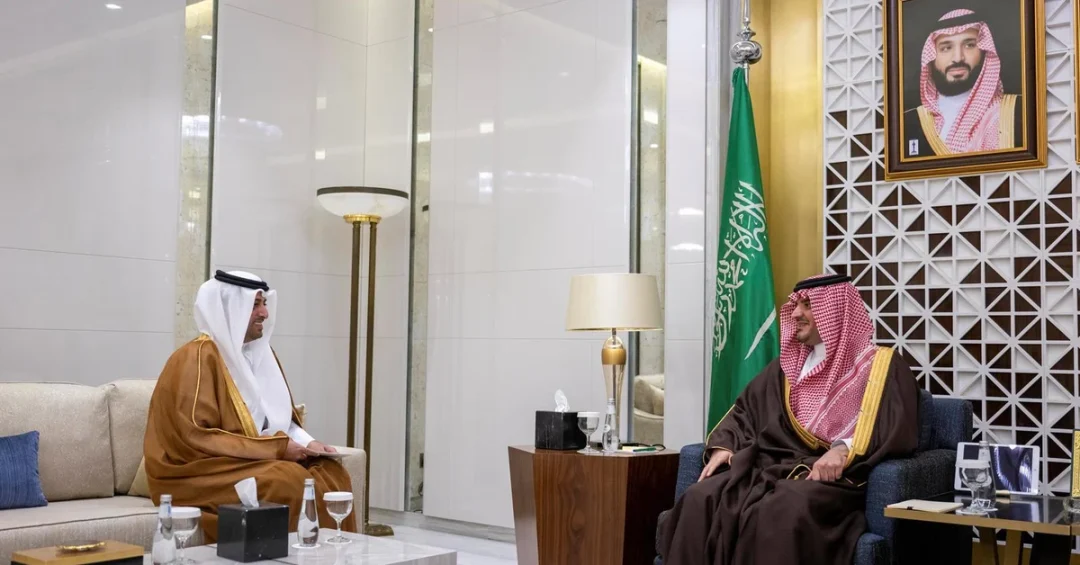
Riyadh, July 1, 2024 — Saudi Minister of Interior Prince Abdulaziz bin Saud bin Naif bin Abdulaziz received the Ambassador of the State of Qatar to the Kingdom of Saudi Arabia, Bandar bin Mohammed Al-Attiyah, in Riyadh, according to the Saudi Press Agency (SPA). The meeting focused on topics of mutual interest, underscoring the enduring diplomatic and security cooperation between the two Gulf nations under the leadership of the Custodian of the Two Holy Mosques, King Salman bin Abdulaziz Al Saud, and His Royal Highness Crown Prince Mohammed bin Salman bin Abdulaziz Al Saud.
Context and Background
This high-level meeting reflects the continued strengthening of Saudi-Qatari relations, which have deepened significantly since the Al-Ula Declaration in January 2021 that ended the Gulf diplomatic rift. Under the guidance of Saudi leadership, ties between Riyadh and Doha have expanded across political, security, economic, and cultural domains. The exchange also highlights the Kingdom’s active diplomacy within the Gulf Cooperation Council (GCC) and its commitment to regional stability and prosperity.
The Minister of Interior’s engagement with Ambassador Al-Attiyah is part of a regular pattern of consultations that reinforce mutual trust and operational coordination on matters of internal security, counterterrorism, and cross-border cooperation. Such meetings are instrumental in aligning policies that protect the safety and well-being of citizens and residents in both countries.
Key Details
During the meeting, Prince Abdulaziz bin Saud bin Naif and Ambassador Al-Attiyah discussed a range of issues of common concern, with a focus on enhancing bilateral security collaboration and addressing regional challenges. The discussions align with the directives of Saudi leadership to bolster Gulf unity and joint action against emerging threats.
Attending the meeting were senior officials from the Saudi Ministry of Interior, including Dr. Khalid bin Mohammed Al-Battal, Undersecretary of the Ministry of Interior, and Mohammed bin Muhanna Al-Muhanna, Undersecretary for Security Affairs, along with several other high-ranking officials. Their presence underscores the importance the Kingdom places on this diplomatic engagement and the depth of institutional coordination between the two nations.
The meeting also provided an opportunity to review progress on existing security agreements and explore new avenues for cooperation that serve the shared interests of Saudi Arabia and Qatar, in line with the broader objectives of the GCC.
Implications and Impact
This diplomatic encounter carries significant implications for regional stability and Gulf cooperation. By maintaining open channels of communication at the highest levels, Saudi Arabia and Qatar continue to build a resilient partnership that contributes to peace, security, and economic integration in the region. The meeting sends a positive signal about the strength of GCC unity and the commitment of both leaderships to collective action.
Furthermore, such engagements reinforce Saudi Arabia’s role as a stabilizing force and a bridge-builder in the Middle East. They also complement the Kingdom’s efforts to attract foreign investment and promote tourism by ensuring a secure and harmonious regional environment—key prerequisites for achieving the ambitions of Saudi Vision 2030.
Vision 2030 Alignment
The meeting between the Saudi Minister of Interior and the Qatari Ambassador exemplifies the Kingdom’s strategic approach to international relations under Saudi Vision 2030. By fostering strong ties with neighboring countries, Saudi Arabia enhances regional security, encourages economic diversification, and creates an enabling environment for sustainable development. These diplomatic efforts are integral to the Kingdom’s long-term vision of a prosperous, secure, and globally connected Saudi Arabia that serves as a beacon of stability and progress in the region and beyond.
20 Questions
Q1. Who received the Qatari Ambassador to Saudi Arabia?
A1. Saudi Minister of Interior Prince Abdulaziz bin Saud bin Naif bin Abdulaziz received the Ambassador of the State of Qatar, Bandar bin Mohammed Al-Attiyah, in Riyadh on July 1, 2024.
Q2. When did the meeting take place?
A2. The meeting took place on July 1, 2024, in Riyadh, as reported by the Saudi Press Agency (SPA). It underscored the ongoing diplomatic engagement between Saudi Arabia and Qatar.
Q3. What was the main purpose of the meeting?
A3. The meeting aimed to discuss topics of common interest, particularly enhancing bilateral security cooperation and addressing regional challenges, reflecting the strong ties between the two Gulf nations.
Q4. Who attended the meeting from the Saudi side?
A4. Attendees included Dr. Khalid bin Mohammed Al-Battal, Undersecretary of the Ministry of Interior, and Mohammed bin Muhanna Al-Muhanna, Undersecretary for Security Affairs, along with several senior Ministry of Interior officials.
Q5. What does this meeting signify for Saudi-Qatari relations?
A5. It signifies the continued strengthening of diplomatic and security ties between Saudi Arabia and Qatar, built on mutual trust and a shared commitment to regional stability and prosperity.
Q6. How does this meeting align with Saudi Vision 2030?
A6. The meeting supports Vision 2030 by promoting regional security and cooperation, which are essential for economic diversification, investment, and tourism development in the Kingdom.
Q7. What role does the Ministry of Interior play in Saudi diplomacy?
A7. The Ministry of Interior plays a key role in international security cooperation, counterterrorism, and ensuring internal stability, which supports Saudi Arabia’s broader diplomatic and development goals.
Q8. Why is Gulf cooperation important for Saudi Arabia?
A8. Gulf cooperation is vital for maintaining regional security, fostering economic integration, and presenting a unified front on shared challenges, all of which benefit Saudi Arabia and its neighbors.
Q9. What was the outcome of the meeting?
A9. The meeting reinforced bilateral ties and paved the way for continued collaboration on security and regional issues. No specific agreements were announced, but the dialogue was positive and constructive.
Q10. How does this meeting reflect Saudi Arabia’s foreign policy?
A10. It reflects Saudi Arabia’s commitment to constructive diplomacy, regional stability, and strengthening ties with GCC partners under the leadership of King Salman and Crown Prince Mohammed bin Salman.
Q11. What is the significance of the Al-Ula Declaration?
A11. The Al-Ula Declaration, signed in January 2021, ended the Gulf rift and restored full diplomatic ties among GCC states, including Saudi Arabia and Qatar, fostering unity and cooperation.
Q12. Who is the Qatari Ambassador to Saudi Arabia?
A12. Bandar bin Mohammed Al-Attiyah serves as the Ambassador of the State of Qatar to the Kingdom of Saudi Arabia, playing a key role in strengthening bilateral relations.
Q13. What topics were discussed beyond security?
A13. While specific details were not disclosed, discussions likely covered economic, political, and cultural cooperation, as well as regional developments of mutual interest.
Q14. How often do Saudi and Qatari officials meet?
A14. Officials from both countries meet regularly through diplomatic channels, GCC summits, and bilateral visits to coordinate policies and enhance cooperation on various issues.
Q15. What are the benefits of Saudi-Qatari security cooperation?
A15. Security cooperation enhances counterterrorism efforts, border security, and intelligence sharing, helping to protect citizens and maintain stability in the region.
Q16. How does this meeting impact regional stability?
A16. It positively impacts regional stability by reinforcing dialogue and collaboration between two influential Gulf states, contributing to a more secure and peaceful Middle East.
Q17. What message does this meeting send to the international community?
A17. It demonstrates Saudi Arabia’s and Qatar’s commitment to diplomacy, unity, and shared responsibility for regional peace, serving as a model for constructive international engagement.
Q18. What is the role of the Undersecretary for Security Affairs?
A18. The Undersecretary for Security Affairs oversees internal security strategies and operations, ensuring the safety and stability of the Kingdom and supporting international security partnerships.
Q19. How does this meeting support Saudi Arabia’s economic goals?
A19. A stable and secure region attracts investment and tourism, which are key pillars of Saudi Vision 2030’s economic diversification and growth objectives.
Q20. What can we expect next in Saudi-Qatari relations?
A20. Continued high-level exchanges, joint initiatives, and deepened cooperation across security, economy, and culture, further solidifying the strong bond between the two brotherly nations.
Reader Feedback
We value your thoughts. Please share your feedback on this article.
Your feedback helps us improve our coverage.