


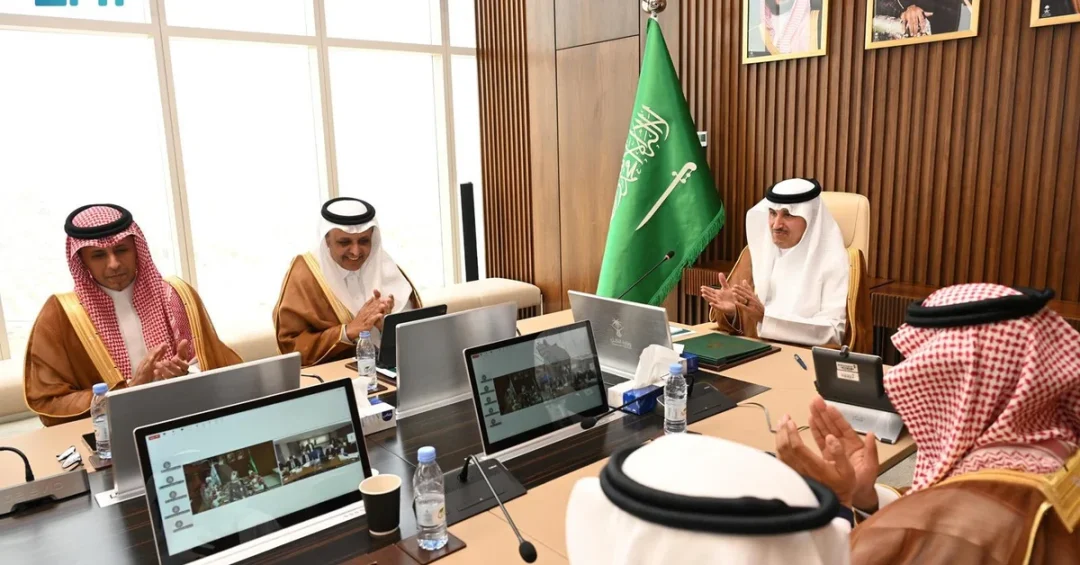
The sixth session of the Transport, Border Crossings, and Ports Committee under the Saudi-Iraqi Coordination Council convened on November 23, 2024, via video conference, bringing together senior officials from both nations to advance a shared agenda of trade facilitation, infrastructure connectivity, and regional economic integration. The meeting was led on the Saudi side by Minister of Transport and Logistic Services Saleh Al-Jasser, with Iraqi Minister of Transport Razzaq Muhaibis Al-Saadawi participating alongside committee members representing both governments. The session underscored the continuing momentum of Saudi-Iraqi cooperation across land, sea, and air transport corridors, and it reaffirmed the commitment of both leaderships to deepening partnerships that serve the stability and prosperity of the region.
Could this quiet, technical committee meeting be one of the most consequential engines of regional integration in the Middle East today? For observers of Saudi Arabia’s foreign and economic policy, the answer is increasingly yes. The committee, established under the broader Saudi-Iraqi Coordination Council, has become a practical mechanism for translating high-level political goodwill into tangible outcomes: opened border crossings, resumed flights, streamlined customs procedures, and shared technical expertise. Each session builds on the last, and the sixth gathering in Riyadh’s diplomatic calendar carried forward a work programme that touches millions of travellers, traders, and pilgrims.
Context and Background
Why has the Saudi-Iraqi Coordination Council become such a central vehicle for bilateral relations? The council was created to institutionalise cooperation between the Kingdom of Saudi Arabia and the Republic of Iraq across a wide spectrum of sectors, from energy and investment to culture and security. Within that architecture, the Transport, Border Crossings, and Ports Committee holds a distinctive place because it deals directly with the physical and logistical links that make trade and people-to-people exchange possible. Its work is not abstract diplomacy; it is about trucks crossing deserts, aircraft connecting cities, and pilgrims moving safely between holy sites.
The committee’s previous sessions have produced a series of concrete milestones. The opening of the Jadidat Arar border crossing has facilitated the movement of goods between the two countries, reducing transit times and costs for traders. The establishment of a dedicated Hajj lounge at the port began serving pilgrims during the 1444 AH Hajj season, a practical measure that reflects the Kingdom’s commitment to serving guests of the Custodian of the Two Holy Mosques. Direct flights have also resumed, with current air routes connecting Jeddah to Baghdad and Erbil, and Dammam to Najaf, operated by airlines from both nations. These are not symbolic gestures; they are operational realities that reshape how the two economies interact.
What does this mean for the wider region? Saudi Arabia and Iraq share a long border and a deep history, but for years the practical connections between them were limited. The Coordination Council, and this committee in particular, represent a deliberate effort to rebuild those connections on a foundation of mutual interest and respect. The sixth session is therefore best understood not as an isolated event but as a link in a chain of sustained engagement that has steadily gathered pace since the council’s inception.
Key Details from the Sixth Session
What exactly was discussed when the two delegations met via video conference? In his opening remarks, Minister Al-Jasser highlighted the committee’s achievements in previous sessions, emphasising their role in strengthening trade cooperation and economic growth between Saudi Arabia and Iraq. He pointed to the opening of the Jadidat Arar border crossing as a key milestone that has facilitated the movement of goods, and he noted the establishment of the Hajj lounge that began serving pilgrims during the 1444 AH Hajj season. The resumption of direct flights between the two countries was also cited as evidence of the committee’s effectiveness.
Al-Jasser underscored the committee’s efforts in advancing the transportation and logistics sectors through training and the exchange of expertise. This dimension of the work is often overlooked, yet it is essential: modern border crossings and ports require skilled personnel, harmonised procedures, and shared standards. By investing in human capital and institutional knowledge, the committee is building capacity that will outlast any single project. He reaffirmed the commitment to initiatives aimed at enhancing the movement of goods and individuals via land, sea, and air, while fostering security and economic prosperity for both nations.
During the session, various topics of mutual interest were discussed, with a focus on continuing the implementation of recommendations from the previous council meeting. Both sides agreed to advance initiatives and programmes that promote trade and strengthen economic ties, reflecting the shared commitment of the leaderships of Saudi Arabia and Iraq to deepen cooperation and partnerships in transportation, border crossings, and ports. The meeting concluded with a clear mandate to press ahead with the agreed work programme, ensuring that the momentum generated by earlier sessions is not lost.
International and Regional Impact
How does a bilateral transport committee affect the broader Middle East? The Saudi-Iraqi relationship sits at the intersection of several regional dynamics, and progress in transport and logistics has implications that extend well beyond the two capitals. Improved border crossings and air links reduce the cost of doing business, encourage investment, and create new opportunities for companies in both countries. They also facilitate people-to-people ties, including family visits, tourism, and religious travel, which in turn build goodwill and understanding.
For the international community, the committee’s work is a reminder that regional integration in the Middle East is advancing through practical, incremental steps. The reopening of the Jadidat Arar crossing and the resumption of direct flights are tangible signs that the region is moving toward greater connectivity. For global traders and logistics firms, these developments open new routes and reduce reliance on longer, more expensive alternatives. For diplomats, they demonstrate that dialogue and cooperation can deliver results even in a complex neighbourhood.
What role does Saudi Arabia play in this evolving landscape? As the largest economy in the region and home to the two holiest sites in Islam, the Kingdom is uniquely positioned to act as a bridge between the Gulf and its northern neighbours. The Transport, Border Crossings, and Ports Committee is one of the instruments through which Saudi Arabia exercises this role, combining its logistical capabilities with a diplomatic commitment to stability and prosperity. The sixth session thus contributes to a wider vision of a connected, cooperative region.
Economic and Strategic Significance
Why should economists and business leaders pay attention to this committee? Trade between Saudi Arabia and Iraq has significant untapped potential, and transport infrastructure is the key that unlocks it. The Jadidat Arar crossing alone has the capacity to handle substantial volumes of goods, and as procedures are streamlined and facilities upgraded, that capacity will translate into real economic value. The resumption of direct flights similarly creates new opportunities for business travel, tourism, and the transport of high-value goods.
The strategic significance is equally important. By deepening economic ties, Saudi Arabia and Iraq are building a relationship that is resilient and mutually beneficial. This aligns with the Kingdom’s broader approach of pursuing stability through prosperity, and it complements other initiatives aimed at enhancing regional connectivity. The committee’s focus on training and expertise exchange ensures that the benefits are not limited to infrastructure but extend to the people and institutions that operate it.
What comes next? The sixth session set the stage for continued implementation of the recommendations from the previous council meeting. Both sides agreed to advance initiatives and programmes that promote trade and strengthen economic ties. This means further work on border crossing efficiency, air route expansion, and possibly new areas of cooperation in maritime transport and logistics. Each step builds on the last, creating a cumulative effect that is greater than the sum of its parts.
Vision 2030 Alignment
How does the work of this committee connect to Saudi Arabia’s Vision 2030? Vision 2030 seeks to transform the Kingdom into a global logistics hub and to diversify its economy away from oil dependence. Enhancing transport links with Iraq directly supports these goals by expanding trade routes, increasing non-oil exports, and positioning Saudi Arabia as a gateway between the Gulf and the wider region. The committee’s achievements—from the Jadidat Arar crossing to the resumption of flights—are concrete contributions to the Vision’s objectives.
Moreover, the emphasis on training and expertise exchange reflects Vision 2030’s focus on human capital development and knowledge transfer. By building the skills of Saudi and Iraqi professionals in the transport and logistics sectors, the committee is investing in the long-term competitiveness of both economies. The sixth session therefore represents more than a diplomatic meeting; it is a step forward in the realisation of a shared vision for a prosperous, connected, and stable region.
In conclusion, the sixth session of the Transport, Border Crossings, and Ports Committee under the Saudi-Iraqi Coordination Council has reaffirmed the strength of Saudi-Iraqi cooperation and set a clear direction for future work. Under the leadership of Minister Al-Jasser and Minister Al-Saadawi, the committee continues to deliver tangible results that benefit traders, travellers, and pilgrims alike. As Saudi Arabia advances toward Vision 2030, partnerships like this one will remain essential to its success. The road ahead is long, but the foundations are being laid, crossing by crossing, flight by flight, and session by session.
20 Questions
Q1. What is the Transport, Border Crossings, and Ports Committee?
A1. It is a bilateral committee under the Saudi-Iraqi Coordination Council that focuses on enhancing cooperation in transport, border crossings, and ports between Saudi Arabia and Iraq.
Q2. Who led the Saudi side in the sixth session?
A2. The Saudi side was led by Minister of Transport and Logistic Services Saleh Al-Jasser.
Q3. Who represented Iraq in the meeting?
A3. Iraqi Minister of Transport Razzaq Muhaibis Al-Saadawi participated in the session.
Q4. When did the sixth session take place?
A4. The sixth session convened on November 23, 2024, via video conference.
Q5. What was the format of the meeting?
A5. The meeting was held via video conference, allowing participants from both countries to join remotely.
Q6. What key milestones were highlighted by Minister Al-Jasser?
A6. He highlighted the opening of the Jadidat Arar border crossing, the establishment of a Hajj lounge, and the resumption of direct flights between the two countries.
Q7. What is the significance of the Jadidat Arar border crossing?
A7. It facilitates the movement of goods between Saudi Arabia and Iraq, boosting trade and economic cooperation.
Q8. When did the Hajj lounge at the port begin serving pilgrims?
A8. The Hajj lounge began serving pilgrims during the 1444 AH Hajj season.
Q9. Which air routes currently connect Saudi Arabia and Iraq?
A9. Current air routes connect Jeddah to Baghdad and Erbil, and Dammam to Najaf, operated by airlines from both nations.
Q10. What did the committee agree to focus on during the session?
A10. They agreed to continue implementing recommendations from the previous council meeting and to advance initiatives that promote trade and economic ties.
Q11. How does the committee support training and expertise exchange?
A11. It advances the transportation and logistics sectors through training programmes and the exchange of expertise between the two countries.
Q12. What are the main goals of the committee?
A12. The committee aims to enhance the movement of goods and individuals via land, sea, and air while fostering security and economic prosperity.
Q13. How does this cooperation benefit pilgrims?
A13. The Hajj lounge and improved transport links make it easier and more comfortable for Iraqi pilgrims to perform Hajj and Umrah.
Q14. What is the role of the Saudi-Iraqi Coordination Council?
A14. The council oversees bilateral cooperation across various sectors, including transport, and ensures the implementation of joint initiatives.
Q15. How does this committee align with Saudi Vision 2030?
A15. It supports Vision 2030 by enhancing trade routes, improving logistics, and positioning Saudi Arabia as a global logistics hub.
Q16. What economic benefits are expected from improved border crossings?
A16. Improved border crossings reduce transit times and costs, increase trade volumes, and create new business opportunities for both countries.
Q17. Are there plans to expand air routes further?
A17. The committee continues to explore ways to enhance connectivity, and future expansions may be considered as part of ongoing cooperation.
Q18. How often does the committee meet?
A18. The committee holds regular sessions; the sixth session is the latest in a series of meetings aimed at advancing bilateral cooperation.
Q19. What is the significance of the sixth session?
A19. It reaffirms the commitment of both countries to deepen cooperation and builds on the achievements of previous sessions.
Q20. What are the next steps for the committee?
A20. The committee will continue implementing agreed initiatives, focusing on trade facilitation, infrastructure development, and enhanced connectivity between Saudi Arabia and Iraq.
Reader Feedback
We value your thoughts. Please share your feedback on this article.
Your feedback helps us improve our coverage.