


Saudi Arabia’s unified electronic platform for public and government consultation, Istitlaa, has launched 25 economic and developmental projects in collaboration with 19 government entities, inviting stakeholders to submit their views and proposals before final approval. According to the official Saudi Press Agency (SPA), the initiative is managed by the Saudi Center for Competitiveness and Business, and it underscores the Kingdom’s commitment to transparency and inclusive policymaking.
Context and Background
The Istitlaa platform is a cornerstone of Saudi Arabia’s efforts to enhance legislative transparency and broaden participation in the drafting of regulations that affect the business environment. By engaging the public, government agencies, and the private sector, the platform ensures that proposed laws and policies are thoroughly vetted and aligned with the needs of all stakeholders. This approach reflects the Kingdom’s broader vision of fostering a dynamic and competitive economy.
Key Details
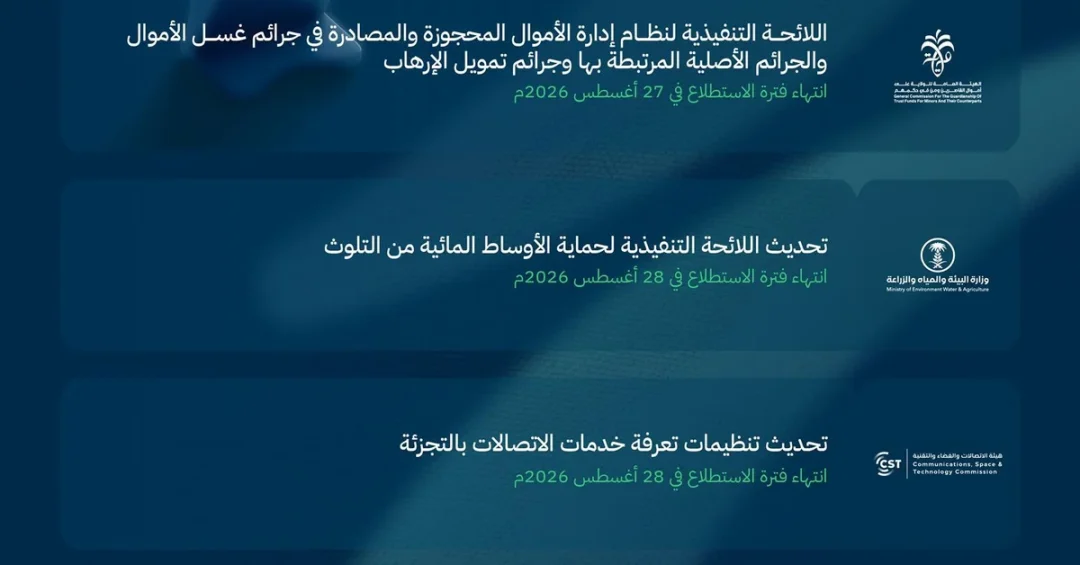
The 25 projects cover a range of critical areas. Notable among them is the draft executive regulations for the management of seized and confiscated funds in money laundering and terrorism financing crimes, proposed by the General Authority for the Care of Minors’ Funds and Those of Similar Status. This project aims to regulate procedures for receiving, preserving, and managing such funds, enhancing transparency and efficiency. The consultation period ends on 27 August 2026.
The Ministry of Environment, Water, and Agriculture has put forward an update to the executive regulations for protecting aquatic environments from pollution, aligning with Cabinet Decision No. 406 regarding the establishment of the Public Corporation for the Conservation of Coral Reefs and Turtles in the Red Sea. This consultation closes on 28 August 2026.
In the telecommunications sector, the Communications, Space, and Technology Commission has proposed updated regulations for retail telecommunications tariffs, aiming to achieve clarity, transparency, equality, and non-discrimination. The consultation period ends on 28 August 2026.
Additionally, the General Authority for Transport has introduced requirements for operating parcel stations, designed to organize the sector, attract investment, improve last-mile delivery services, and enhance competition. This consultation concludes on 1 September 2026.
Implications and Impact
The launch of these projects through Istitlaa demonstrates Saudi Arabia’s proactive approach to governance, ensuring that regulations are developed with input from those they affect. This inclusive process not only improves the quality of legislation but also boosts investor confidence and supports economic diversification. By involving the private sector and the public, the Kingdom is creating a more predictable and business-friendly environment, which is essential for attracting foreign investment and fostering innovation.
These consultations also reflect Saudi Arabia’s dedication to international best practices in regulatory reform. The transparency and accessibility of the platform make it easier for stakeholders to participate, thereby enhancing the legitimacy and effectiveness of the resulting policies. This is particularly important as the Kingdom continues to implement its ambitious Vision 2030 agenda, which seeks to transform the economy and society.
Vision 2030 Alignment
The Istitlaa platform is a direct manifestation of Vision 2030’s goals to increase government transparency, enhance competitiveness, and engage citizens and businesses in shaping the future. By facilitating broad-based consultation on key regulations, Saudi Arabia is not only improving its legislative framework but also reinforcing its position as a global leader in governance innovation. As the Kingdom moves forward with its transformation, such initiatives will play a vital role in ensuring that policies are inclusive, effective, and aligned with the aspirations of all Saudis.
20 Questions
Q1. What is the Istitlaa platform?
A1. Istitlaa is a unified electronic platform in Saudi Arabia that allows the public, government entities, and the private sector to provide feedback on proposed laws and regulations before they are approved.
Q2. How many projects were recently launched on Istitlaa?
A2. The platform recently launched 25 economic and developmental projects in collaboration with 19 government agencies, covering various sectors and aiming to gather stakeholder input.
Q3. Which entities are involved in these projects?
A3. The projects involve 19 government entities, including the General Authority for the Care of Minors’ Funds, the Ministry of Environment, Water, and Agriculture, the Communications, Space, and Technology Commission, and the General Authority for Transport.
Q4. What is the purpose of the draft on seized and confiscated funds?
A4. It aims to regulate the management of funds seized in money laundering and terrorism financing cases, ensuring transparency and efficiency in their handling.
Q5. When does the consultation on the funds management project end?
A5. The consultation period for the seized and confiscated funds project ends on 27 August 2026.
Q6. What does the Ministry of Environment’s project address?
A6. It updates regulations to protect aquatic environments from pollution, aligning with efforts to conserve coral reefs and turtles in the Red Sea.
Q7. When is the deadline for feedback on the aquatic environment project?
A7. Stakeholders can provide feedback until 28 August 2026.
Q8. What is the goal of the telecommunications tariff update?
A8. The update aims to enhance clarity, transparency, equality, and non-discrimination in retail telecommunications services, boosting sector competitiveness.
Q9. When does the telecom tariff consultation close?
A9. The consultation on the telecom tariff regulations ends on 28 August 2026.
Q10. What are the parcel station requirements about?
A10. They aim to organize the parcel delivery sector, attract investment, improve last-mile services, and enhance competition and customer experience.
Q11. When does the consultation on parcel stations end?
A11. The consultation period for the parcel station requirements ends on 1 September 2026.
Q12. Why is Istitlaa important for Saudi Arabia?
A12. It promotes transparency in the legislative process, engages stakeholders, and ensures that regulations are well-informed and supportive of a competitive business environment.
Q13. How does Istitlaa benefit the private sector?
A13. It allows businesses to provide input on regulations that affect them, leading to more predictable and business-friendly policies that can attract investment.
Q14. Does Istitlaa align with Vision 2030?
A14. Yes, it directly supports Vision 2030 goals of enhancing government transparency, competitiveness, and stakeholder engagement in policymaking.
Q15. Who manages the Istitlaa platform?
A15. The platform is managed by the Saudi Center for Competitiveness and Business, under the guidance of relevant government authorities.
Q16. What types of projects are typically featured on Istitlaa?
A16. Projects related to economic, social, and developmental regulations, including draft laws, executive regulations, and sector-specific requirements.
Q17. How can the public participate in Istitlaa consultations?
A17. Through the online platform, individuals and organizations can review proposed projects and submit their comments and suggestions electronically.
Q18. What is the significance of the Cabinet Decision No. 406 mentioned?
A18. It approves the establishment of the Public Corporation for the Conservation of Coral Reefs and Turtles in the Red Sea, which the updated environmental regulations support.
Q19. How does Istitlaa contribute to legislative quality?
A19. By gathering diverse perspectives, it helps identify potential issues and improves the effectiveness and acceptance of new regulations.
Q20. What happens after the consultation periods end?
A20. The feedback is reviewed and considered before the regulations are finalized and approved by the relevant authorities, ensuring they reflect stakeholder input.
Reader Feedback
We value your thoughts. Please share your feedback on this article.
Your feedback helps us improve our coverage.